Best Books on Renaissance Art, in Reading Order
This curriculum takes a beginner from the broad sweep of Renaissance art history into its most defining themes — the Florentine revolution, the mathematics of perspective, the High Renaissance titans, and the Northern masters — before arriving at advanced scholarly and visual analysis. Each stage builds the vocabulary, historical context, and visual literacy needed to go deeper in the next, so that by the end the reader can engage with primary sources and specialist arguments with genuine confidence.
Foundations: The Big Picture
BeginnerGain a confident overview of what the Renaissance was, when and where it happened, and why it matters — building the chronological and geographical framework for everything that follows.
▸ Study plan for this stage
Pace: 4–5 weeks, ~40–50 pages/day (approximately 280–350 pages total across both books)
- The Renaissance as a deliberate revival of classical Greco-Roman culture and values, not a sudden break from the Middle Ages
- Chronological framework: the Italian Renaissance (14th–16th centuries) as the epicenter, spreading northward to Flanders and beyond
- Geographical centers of Renaissance innovation: Florence, Rome, Venice, and their distinct artistic contributions
- Humanism as the intellectual foundation: the shift toward human dignity, individual achievement, and secular subjects alongside religious themes
- Key technological and material innovations: linear perspective, oil painting, printmaking, and their impact on artistic practice
- The patronage system: how wealthy families (Medici, Sforza, etc.) and the Church shaped artistic production and ambition
- Major artistic periods within the Renaissance: Early Renaissance, High Renaissance, and Mannerism, with distinct characteristics
- The relationship between Renaissance art and broader historical forces: trade, politics, religious reform, and the rediscovery of classical texts
- What defines the Renaissance as a historical period, and how does it differ from the medieval period that preceded it?
- Why did the Renaissance begin in Italy, and what geographical and economic factors made Florence, Rome, and Venice particularly important centers?
- How did humanism influence Renaissance art, and what new subjects and themes emerged as a result?
- What were the major technical innovations in Renaissance art (perspective, oil painting, etc.), and how did they change what artists could depict?
- Who were the primary patrons of Renaissance art, and how did the patronage system shape artistic production?
- How did Renaissance art spread from Italy to Northern Europe, and what regional variations emerged?
- What is the chronological sequence of the Early Renaissance, High Renaissance, and Mannerism, and what characterizes each period?
- Create a timeline poster or digital document spanning 1300–1600 that marks major Renaissance periods, key artists mentioned in both books, and significant historical events (e.g., fall of Constantinople, invention of the printing press). Include at least 15 dated entries.
- Map the major Renaissance centers (Florence, Rome, Venice, Milan, Northern Europe) and annotate each with: the ruling family or patron, 2–3 signature artistic innovations, and 1–2 representative artists from Gombrich and Johnson.
- Select 5 artworks discussed in the books (e.g., Giotto, Botticelli, Leonardo, Michelangelo, Jan van Eyck) and write a 1-paragraph analysis for each explaining: the technical innovation it demonstrates, the humanist values it reflects, and which patron or context shaped it.
- Sketch or photograph 3 examples of linear perspective in Renaissance paintings (from the books or online museum collections) and annotate them to show vanishing points and orthogonal lines; write a brief explanation of how this technique changed artistic representation.
- Create a comparison chart of Early Renaissance vs. High Renaissance vs. Mannerism, with rows for: time period, key artists, dominant themes, technical focus, and geographical centers. Use specific examples from both books.
- Write a 500-word reflection: 'Why did the Renaissance matter?' addressing how it bridged medieval and modern worldviews, and how the technical and intellectual innovations discussed in Gombrich and Johnson still influence art today.
Next up: This foundational stage equips you with the chronological spine, geographical anchors, and core concepts (humanism, patronage, technical innovation) needed to dive deeper into specific artists, movements, and regional traditions in subsequent stages.
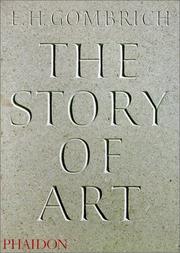
The single best entry point into art history for any beginner; its clear, story-driven prose introduces Renaissance figures like Giotto, Botticelli, Leonardo, and Dürer in a way that feels natural and never overwhelming.
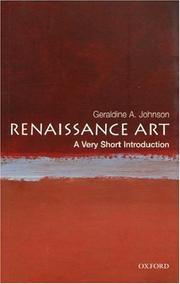
A compact, up-to-date scholarly primer that sharpens the beginner's understanding of what 'Renaissance' actually means and surveys its key themes — patronage, humanism, and style — before deeper reading begins.
The Florentine Breakthrough
BeginnerUnderstand how and why Florence became the cradle of Renaissance art, from Giotto's revolution through Masaccio, Donatello, and Botticelli, and grasp the role of civic pride and Medici patronage.
▸ Study plan for this stage
Pace: 4–5 weeks, ~25–30 pages/day. Burckhardt (weeks 1–2, ~180 pages); Vasari selections on Giotto, Masaccio, Donatello, Botticelli (weeks 3–5, ~150 pages).
- Giotto's break from medieval flatness: how he introduced spatial depth, naturalism, and emotional humanity to painting, laying the foundation for Renaissance art
- Florence's civic identity and republican values: how the city-state's political structure and wealth fueled artistic competition and patronage
- The Medici as cultural architects: how their banking fortune and strategic patronage shaped artistic production and made Florence the artistic capital of Italy
- Masaccio's technical revolution: linear perspective, anatomical accuracy, and chiaroscuro as tools for depicting a more convincing, three-dimensional world
- Donatello's sculptural innovations: how he revived classical form while introducing psychological depth and contrapposto to free-standing sculpture
- Botticelli's synthesis: how he merged classical learning, Neoplatonic philosophy, and Florentine elegance into a distinctly Renaissance aesthetic
- The relationship between patronage, competition, and artistic excellence: how Burckhardt's concept of the Renaissance as a rebirth of individualism and classicism manifests in Florence's art
- Vasari's biographical method: understanding how his Lives shapes our interpretation of these artists as geniuses and innovators, not anonymous craftsmen
- What specific formal innovations did Giotto introduce to painting, and why did Vasari consider him the founder of modern art?
- How did Florence's republican government and merchant wealth create conditions for artistic patronage that differed from other Italian cities?
- What role did the Medici family play in commissioning and promoting Renaissance art, and how did their patronage shape the careers of Masaccio, Donatello, and Botticelli?
- Explain the technical and conceptual differences between Masaccio's approach to perspective and anatomy and the medieval painting that preceded him.
- How did Donatello use classical sculpture as a model while still creating works that were distinctly Renaissance in their psychological realism?
- What philosophical and aesthetic ideas (including Neoplatonism) influenced Botticelli's work, and how do his paintings reflect Florentine humanist culture?
- Create a timeline mapping Giotto, Masaccio, Donatello, and Botticelli alongside key Medici patronage events and political moments in Florence (use Burckhardt's historical context and Vasari's biographical dates).
- Analyze Vasari's descriptions of Giotto and Masaccio side-by-side: identify the specific language he uses to praise their 'naturalism' and 'innovation,' then compare to his treatment of pre-Giotto artists to see how he constructs the narrative of progress.
- Draw or sketch (roughly) a scene using medieval flat, gold-background composition, then redraw it using Masaccio's principles of linear perspective and chiaroscuro; annotate the differences.
- Read Vasari's life of Donatello and identify 3–4 anecdotes that reveal his character or working method; discuss how these stories support Burckhardt's thesis about Renaissance individualism.
- Create a patronage map: list 3–5 major commissions for each artist (Giotto, Masaccio, Donatello, Botticelli) mentioned in Vasari, noting the patron, date, and work; identify patterns in who commissioned what and why.
- Write a short comparative essay (500–750 words) on how Burckhardt's concept of 'the development of the individual' in the Renaissance manifests in the careers and innovations of two of these four artists, using specific examples from both texts.
Next up: This stage establishes Florence as the birthplace of Renaissance art and introduces the key formal innovations (perspective, anatomy, classicism) and patronage structures that will enable you to understand how these ideas spread to other Italian cities and evolved in the hands of later masters.

The foundational text that defined how the world thinks about the Renaissance; reading it now gives the learner the intellectual scaffolding — individualism, humanism, the 'discovery of the world' — that all later art-historical arguments respond to.
Written by a Renaissance artist himself, this is the primary source for the Florentine story; Vasari's vivid biographies of Giotto, Brunelleschi, Masaccio, and Botticelli bring the period to life and show how contemporaries understood artistic progress.
Seeing in Space: Perspective and Form
IntermediateMaster the intellectual and technical revolution of linear perspective and understand how the conquest of three-dimensional space on a flat surface transformed Renaissance painting and architecture.
▸ Study plan for this stage
Pace: 6–7 weeks, ~40–50 pages/day. Week 1–2: "Brunelleschi's Dome" (complete narrative); Weeks 3–4: "On Painting" (Alberti's treatise); Weeks 5–6: "On Sculpture" (Alberti's treatise); Week 7: Review and synthesis.
- Linear perspective as a mathematical system: Brunelleschi's demonstration and Alberti's codification of vanishing points, orthogonals, and the picture plane
- The conquest of three-dimensional space on a flat surface: how Renaissance artists moved beyond medieval flatness to create convincing depth and spatial illusion
- Brunelleschi's dome as both engineering feat and symbol of Renaissance mastery over form and space, connecting practical construction to artistic vision
- Alberti's theoretical framework: the role of geometry, proportion, and the eye of the beholder in creating harmonious compositions
- The relationship between architecture and painting: how perspective principles apply across disciplines and how Brunelleschi's architectural innovations informed pictorial theory
- The intellectual revolution: how perspective transformed the artist from craftsperson to learned mathematician and theorist
- Composition and visual hierarchy: using perspective to guide the viewer's eye and organize narrative and symbolic meaning within the frame
- The human figure in space: how perspective affects the representation of bodies, drapery, and movement within constructed environments
- What was Brunelleschi's perspective demonstration, and why was it so revolutionary for Renaissance artists and architects?
- How does Alberti define the picture plane, and what role do vanishing points and orthogonals play in his system of linear perspective?
- What was the technical challenge of building the dome of Florence Cathedral, and how did Brunelleschi's solution demonstrate Renaissance principles of spatial mastery?
- According to Alberti, what is the relationship between mathematics, proportion, and beauty in painting and sculpture?
- How does perspective function as both a technical tool and an intellectual framework that elevated the status of the artist in Renaissance society?
- In what ways do Alberti's principles of perspective apply differently to painting versus sculpture, and what does this reveal about how Renaissance thinkers understood three-dimensional form?
- Construct a one-point perspective drawing using Alberti's method: establish a vanishing point, draw orthogonals receding into space, and place a simple architectural form (a building facade or interior) within the grid. Annotate the vanishing point, picture plane, and orthogonals.
- Analyze a Renaissance painting (such as Masaccio's 'Trinity' or Piero della Francesca's work) by identifying the vanishing point, orthogonals, and how the artist uses perspective to organize the composition and direct the viewer's eye. Write a 2–3 page analysis.
- Create a scaled architectural sketch of a simple interior or courtyard using two-point perspective, demonstrating how Brunelleschi's principles apply to three-dimensional space. Include measurements and proportional relationships.
- Compare a medieval painting with a Renaissance painting of similar subject matter, identifying how perspective and spatial representation differ. Write a 1–2 page comparison essay grounded in specific visual evidence.
- Sketch the dome of Florence Cathedral from multiple angles, then write a 1-page reflection on how Brunelleschi's engineering solution relates to the visual principles of perspective discussed in Alberti.
- Design a simple interior room or architectural space on paper using Alberti's proportional system. Justify your proportional choices by referencing specific principles from 'On Painting' or 'On Sculpture'.
Next up: This stage establishes perspective and spatial form as the foundational intellectual and technical tools of the Renaissance, preparing you to explore how artists deployed these tools to represent narrative, emotion, and the human figure in subsequent stages of the curriculum.
A gripping narrative about the man who invented linear perspective and built the Florence Cathedral dome; it grounds the abstract concept of perspective in a real, thrilling engineering story before the reader tackles more technical accounts.

The 15th-century treatise that codified perspective for artists; reading the actual primary source — short and accessible in modern translation — lets the learner hear the Renaissance theory of vision directly from its most articulate advocate.
The High Renaissance Masters
IntermediateEngage deeply with Leonardo, Michelangelo, and Raphael as individual artistic personalities, understanding their techniques, rivalries, patrons, and lasting influence on Western art.
▸ Study plan for this stage
Pace: 8–10 weeks, ~40–50 pages/day. Allocate roughly 3 weeks for Isaacson's Leonardo (600 pages), 3–4 weeks for Stone's Michelangelo novel (650 pages), and 2–3 weeks for King's Sistine Chapel history (400 pages), with 1 week for review and synthesis.
- Leonardo's empirical method: how his obsessive observation of nature, anatomy, and optics shaped both his art and scientific inquiry, and why he left so many works unfinished
- Michelangelo's sculptural vision and its translation to painting: understanding how his training as a sculptor informed his approach to the human form, composition, and the Sistine ceiling
- The patron-artist relationship in the High Renaissance: how the Medici, the Pope, and other powerful figures shaped artistic commissions, creative freedom, and competition between masters
- Technical mastery across media: perspective, anatomy, color theory, fresco technique, and how each master innovated within and sometimes against Renaissance conventions
- Artistic rivalry and temperament: the documented tensions between Leonardo, Michelangelo, and Raphael, and how personality, ambition, and ego influenced their work and legacies
- The concept of the 'Renaissance man': how Leonardo embodied the ideal of universal genius, and how this myth shaped later views of artistic creativity
- Unfinished works and artistic legacy: why incompletion matters (Leonardo's paintings, Michelangelo's sculptures) and how these masters influenced subsequent generations despite—or because of—their incomplete projects
- How did Leonardo's scientific interests and observational methods directly influence his approach to painting and composition? Cite specific examples from his notebooks or paintings discussed in Isaacson's biography.
- Compare Michelangelo's sculptural training with his approach to the Sistine Chapel ceiling. How did his background as a sculptor shape his treatment of the human figure and spatial composition?
- What role did patronage play in shaping the careers and artistic choices of Leonardo, Michelangelo, and Raphael? How did their relationships with the Medici and papal courts differ?
- Analyze the documented rivalry between Leonardo and Michelangelo. What were the sources of tension, and how did competition influence their artistic development?
- Why did Leonardo leave so many paintings unfinished, and what does this reveal about his artistic process and priorities? How does Stone's novelistic treatment illuminate Michelangelo's different approach to completion?
- Based on King's account of the Sistine Chapel commission, explain how political, religious, and personal circumstances shaped Michelangelo's creation of the ceiling. What obstacles did he face?
- Create a detailed timeline mapping the lives, major commissions, and rivalries of Leonardo, Michelangelo, and Raphael (1452–1520). Annotate key patronage relationships and note which works were completed vs. abandoned.
- Sketch or study high-resolution images of Leonardo's anatomical drawings (from his notebooks) alongside his paintings (e.g., The Last Supper, Mona Lisa). Write a 500-word analysis of how his anatomical knowledge shaped his compositions.
- Read excerpts from Leonardo's actual notebooks (referenced in Isaacson) and Michelangelo's letters/poetry (referenced in Stone and King). Identify recurring themes in their thinking about art, nature, and creation.
- Analyze the Sistine Chapel ceiling using King's detailed descriptions: map out the theological narrative, identify the major figures, and explain Michelangelo's compositional choices and technical innovations in fresco.
- Write comparative character sketches of Leonardo, Michelangelo, and Raphael based on biographical details from all three books. Focus on temperament, work habits, ambitions, and how personality shaped artistic output.
- Visit a museum with works by these masters (or use high-quality online collections) and spend 20–30 minutes with one painting or sculpture by each artist. Document your observations about technique, composition, and emotional impact, then cross-reference with insights from the books.
Next up: This stage establishes the individual genius and technical mastery of the High Renaissance's greatest figures, providing the foundation to explore how their innovations spread, were adapted, and eventually challenged by subsequent artistic movements and generations.

A richly illustrated, deeply researched biography that uses Leonardo's notebooks to reveal his scientific curiosity and artistic method; it is the ideal first deep-dive into a single High Renaissance master.

A meticulously researched biographical novel of Michelangelo that makes the Sistine Chapel and the Pietà viscerally real; its narrative momentum carries the reader through the political and personal drama of the High Renaissance.
A non-fiction companion to Stone's novel, focusing specifically on the Sistine Chapel commission with scholarly precision; reading it after Stone deepens and fact-checks the reader's understanding of the same events.
The Northern Renaissance and Synthesis
ExpertUnderstand how Renaissance ideas transformed art north of the Alps — through Van Eyck, Dürer, Holbein, and Bruegel — and develop a comparative, critical perspective on the whole movement.
▸ Study plan for this stage
Pace: 8–10 weeks total: Weeks 1–6 cover "Early Netherlandish Painting" (~25–30 pages/day, reading in two halves — first the theoretical/historical chapters, then the catalogue analyses); Weeks 7–10 cover "The Ambassadors' Secret" (~20 pages/day, pausing frequently to study the painting's details alongside
- Disguised symbolism: Panofsky's thesis that everyday objects in Netherlandish painting carry layered theological and moral meanings beneath their realistic surfaces
- The 'Eyckian revolution': Jan van Eyck's mastery of oil glazing, atmospheric perspective, and mirror/reflective surfaces as tools for depicting a spiritually charged physical world
- Iconographic method: how to read a painting by moving from pre-iconographic description → iconographic analysis → iconological interpretation (Panofsky's three-tier framework)
- The Flemish-Italian exchange: how Northern naturalism and Southern humanism influenced each other, and why the Northern path to the Renaissance differed fundamentally from the Italian one
- Astronomical and anamorphic imagery in Holbein's 'The Ambassadors': North's argument that the objects on the shelves encode a precise astronomical moment and a meditation on mortality
- Anamorphosis and perspective distortion: how Holbein's skull forces the viewer to physically shift position, making the act of looking itself a moral experience
- The role of the patron and diplomatic context: how the identities and ambitions of Jean de Dinteville and Georges de Selve shaped every detail of 'The Ambassadors'
- Synthesis thinking: comparing Northern and Italian Renaissance art not as lesser/greater but as two distinct visual philosophies responding to the same cultural pressures
- According to Panofsky, what distinguishes 'disguised symbolism' from overt religious iconography, and can you identify at least two examples from Van Eyck's work he analyzes?
- How does Panofsky's three-tier iconological method work in practice — walk through all three levels using one specific Netherlandish painting discussed in 'Early Netherlandish Painting'.
- What is John David North's central argument about the astronomical instruments in 'The Ambassadors,' and what evidence from the painting does he use to support a specific date and time?
- How does the anamorphic skull in 'The Ambassadors' function both as a technical feat and as a philosophical statement, according to North's analysis?
- In what ways do Panofsky and North each use non-painterly evidence (documents, theology, astronomy, biography) to unlock meaning in visual art — and what does this tell you about the limits of 'just looking'?
- Having read both books, how would you characterize the Northern Renaissance as distinct from the Italian Renaissance — in terms of spirituality, realism, symbolism, and relationship to the viewer?
- Symbol hunt with Panofsky: Choose one Van Eyck or Van der Weyden work analyzed in 'Early Netherlandish Painting,' print or pull up a high-resolution image, and annotate every object using Panofsky's three tiers — write one sentence per tier for at least five objects.
- Iconology journal: After each major chapter of 'Early Netherlandish Painting,' write a half-page entry answering: 'What would I have missed in this painting if I had only looked, and not read?' Build this into a running log to review at the end.
- The Ambassadors close-looking exercise: Before reading North's interpretation of any given shelf object, write your own hypothesis about what it might mean. Then read North's analysis and compare — note where your intuition aligned or diverged and why.
- Anamorphosis experiment: Find an online anamorphic image generator or draw a simple anamorphic shape yourself. Experiencing the distortion firsthand will make Holbein's skull — and North's discussion of viewer positioning — viscerally concrete.
- North–South comparison chart: Create a two-column table contrasting at least six specific features (use of light, treatment of the human body, role of landscape, relationship to theology, patronage context, symbolic method) between a Netherlandish work from Panofsky and 'The Ambassadors' from North.
- Capstone synthesis essay (500–700 words): Using evidence drawn only from these two books, argue for or against this claim: 'Northern Renaissance painters were more interested in the experience of the viewer than their Italian contemporaries.' Cite specific paintings and authors' arguments.
Next up: By mastering Panofsky's iconological method and North's model of decoding a single masterwork in exhaustive depth, the reader now has both a broad comparative framework and a close-reading toolkit — the ideal foundation for tackling more advanced or thematic studies of Renaissance art, such as the High Renaissance, Mannerism, or the art-and-science intersection.
The landmark scholarly study of Van Eyck and his Flemish successors; Panofsky's concept of 'disguised symbolism' gives the reader an advanced analytical tool for reading Northern Renaissance imagery that cannot be found elsewhere.
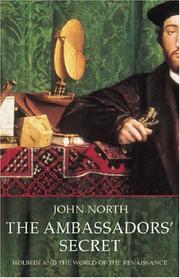
A brilliant close reading of Holbein's most famous painting that unpacks its hidden symbols, anamorphic skull, and political context — a perfect capstone that shows how to apply everything learned to a single, inexhaustible masterwork.
Discussion
Keep reading
Paths that share books, cover the same subject, or open a related topic.