Best Books on the History of Italy, in Reading Order
Italy is older as an idea than as a country, so this path reads backwards from that problem: first a single-volume sweep of the whole peninsula, then the city-state and Renaissance world that made Italians before there was an Italy, then the unification that welded them together, and finally the fascist and republican century that has been arguing about the result ever since. Each stage assumes the vocabulary of the one before, so by the end you can read a Ginsborg or a Bosworth without needing footnotes explained.
The whole peninsula in one sweep
BeginnerHold the full arc — Rome to the Republic — in your head as a single narrative, so every later specialist book has somewhere to attach.
▸ Study plan for this stage
Pace: Four to five weeks for about 1,030 pages. Duggan's A Concise History of Italy (324 pages) takes about two weeks and is the spine — read it first and take a chronology out of it. Hearder's A Short History (263 pages) is shorter still and can be read in a week as a second pass over the same ground wit
- The peninsula's defining condition: repeatedly conquered, repeatedly divided, and politically unified only from 1861, so that Italy is much older as a cultural idea than as a state
- The recurring regional divisions — the Kingdom of the Two Sicilies in the south, the Papal States across the centre, Piedmont, the Venetian and Milanese territories, Tuscany — which is the map you need for every later stage
- Metternich's remark that Italy was a geographical expression, and the fact that it was a factual description rather than merely an insult
- Foreign domination as a constant: Spanish, Austrian and French rule over various parts across centuries, which is the condition the Risorgimento defined itself against
- Campanilismo — loyalty to one's own bell tower — as Gilmour's organising idea about identity operating at the level of the town rather than the nation
- Gilmour's thesis that unification flattened a genuinely plural peninsula and that the process was closer to a Piedmontese annexation than to a national awakening
- The southern question, visible from 1861 onward, and the persistent economic and political divergence that no government since has resolved
- The famous line attributed to d'Azeglio that Italy having been made, Italians must now be made — which states the whole problem of the next three stages in nine words
- Name the main political units of the peninsula around 1815 and say who ruled each.
- Why did Italy unify so late compared with France, Spain or England? What were the specific obstacles?
- What is campanilismo, and what evidence does Gilmour offer that it outlasted unification?
- What is Gilmour's central objection to the standard Risorgimento narrative, and what would it take to refute him?
- Where do Duggan and Hearder allocate their pages differently, and what does the difference in emphasis tell you about each one's view of what matters?
- Draw the peninsula's political map at four dates — 1300, 1500, 1815 and 1861 — on one page each. The transformation between the last two is the subject of stage three and the earlier two are stage two.
- Build a single chronology from Duggan, with roughly thirty entries. You will annotate it throughout the path.
- Write 300 words stating Gilmour's argument in its strongest form, then note which of Duggan's facts support it and which cut against.
- List five regional differences — dialect, cuisine, agriculture, law, church relations — that predate 1861. Gilmour's case rests on their persistence and checking a few makes it concrete.
Next up: The survey establishes that Italians had strong local identities long before a national one; the next stage goes to the period when those local identities were at their most powerful and most creative.
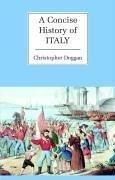
The most efficient single volume on the whole country, and by the historian whose bigger book you will read in stage three. Start here so the later Duggan feels like a deepening rather than a first encounter.
Hearder gives more room to the medieval and early-modern centuries that Duggan compresses, which is exactly the ground stage two occupies. Read as a second pass, not a repeat.
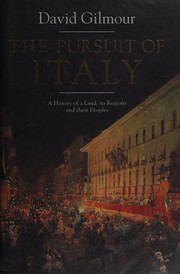
Gilmour's argument — that unification flattened a genuinely plural peninsula — is the interpretive frame the rest of the path either supports or contests. Meeting it early makes you a more sceptical reader of the unification narrative.
Before Italy: city-states and the Renaissance
IntermediateUnderstand why Italians had strong civic and regional identities long before a national one, and where the Renaissance sits in that story.
▸ Study plan for this stage
Pace: Five to six weeks for about 760 pages. Burckhardt (398 pages) is a nineteenth-century work of cultural history organised in six thematic parts rather than chronologically, and it takes three weeks read that way — do not expect narrative. The House of Medici (364 pages) reads far more easily, about t
- The communal revolution and the rise of self-governing city-states — Florence, Venice, Milan, Genoa, Siena — as the political form that made civic identity primary
- Burckhardt's six theses, taken in his own order: the state as a work of art, the development of the individual, the revival of antiquity, the discovery of the world and of man, society and festival, and morality and religion
- Individualism as Burckhardt's central and most contested claim — that the Renaissance Italian was the first modern man, which medievalists have been attacking for over a century
- Reading Burckhardt as a document of 1860, written by a Swiss scholar amid the rise of nation-states, whose picture of a lost civic culture is not innocent of its own moment
- The condottiere and the signoria: how republics became princely states, which is the political trajectory Burckhardt calls the state as a work of art
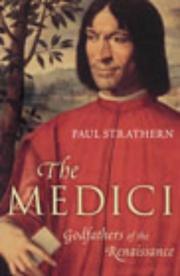
- Medici power as banking power — the bank, its branches, its papal account, and the fact that political control in Florence was exercised for decades without an office
- Patronage as an instrument: what Cosimo and Lorenzo bought and why, and the direct connection between commercial wealth and the art the period is remembered for
- The Pazzi conspiracy of 1478 and the Savonarola episode as the two moments that show what Medici control actually rested on and what happened when it failed
- What are Burckhardt's six parts, and which one carries most of his argument?
- What does Burckhardt mean by the state as a work of art, and which states is he describing?
- What is the standard medievalist objection to Burckhardt's individualism thesis?
- How did the Medici control Florence without formally ruling it, and when did that change?
- What did the Pazzi conspiracy reveal about the basis of Medici power, and what did the aftermath change?
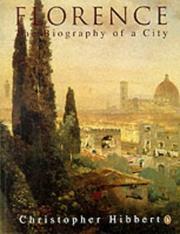
- How does Hibbert's account of patronage modify or confirm Burckhardt's picture of the Renaissance?
- Summarise each of Burckhardt's six parts in three sentences. The exercise forces you to notice that the book is an argument in six movements rather than a history.
- Draw the Medici family across three centuries with the key figures marked, plus the two popes. The tree is the structure of Hibbert's book and having it makes the narrative followable.
- Take one work of art commissioned by a Medici and write a paragraph on who paid for it, why, and what political purpose it served. That paragraph is the whole argument about patronage.
- Write 500 words assessing Burckhardt's individualism thesis using Hibbert's evidence. You now have a nineteenth-century theory and a set of twentieth-century biographies to test it against, which is exactly how the debate has actually run.
Next up: Strong civic identities and a peninsula of separate states are the raw material the Risorgimento had to work with, and the next stage is about how a national movement was assembled out of them.

The book that invented the modern idea of the Renaissance, and still the argument every later historian is answering. Read it as a nineteenth-century document as much as a history.

One family, followed across three centuries, turns Burckhardt's abstractions into banking, patronage and dynastic politics you can actually follow. It also shows how a city-state's power was built and lost.
Making a nation: the Risorgimento
IntermediateFollow unification from conspiracy to kingdom, and see why the new state's legitimacy was contested from the first day.
▸ Study plan for this stage
Pace: Seven to nine weeks for about 1,730 pages. Riall's Garibaldi (496 pages) first, over three weeks — read it before the survey histories so you can recognise the myth-making in them. Mack Smith's Modern Italy (542 pages) takes three weeks and is political history at a steady pace. Duggan's The Force o
- The Risorgimento's competing programmes: Mazzini's republican democracy, Gioberti's federalism under the papacy, and Cavour's Piedmontese monarchical expansion — the third won, and the first two account for much of the new state's illegitimacy in the eyes of its own supporters
- Cavour's method: French alliance, engineered war with Austria in 1859, plebiscites conducted under conditions that guaranteed the result
- The Expedition of the Thousand in 1860 and the meeting at Teano, where a republican general handed the south to a king — the single most consequential improvisation in the whole story
- Riall's argument that Garibaldi was a manufactured celebrity: the red shirt, the portraits, the memorabilia, the international press, and a deliberate image-making operation which she reconstructs in detail
- The new kingdom's structural problems: Piedmontese law and administration imposed wholesale, brigandage in the south suppressed by military occupation, and a franchise limited to a tiny fraction of the population
- Trasformismo as the liberal state's characteristic political practice — governing by absorbing opposition rather than by contesting it — and Mack Smith's unsentimental verdict on what it did to Italian politics
- The liberal state's failures compounding: Adwa in 1896, the Libyan war of 1911, entry into the First World War, and the mutilated victory that followed
- Duggan's organising theme of the persistent gap between what Italy was promised — moral regeneration, greatness, a nation worthy of Rome — and what its citizens actually got, which is the frame that makes stage four intelligible
- What were the three main programmes for unification, and why did Cavour's win?
- What actually happened at Teano, and what were Garibaldi's alternatives?
- How was Garibaldi's image constructed, and who did the constructing? Give three specific mechanisms from Riall.
- What is trasformismo, and what is Mack Smith's objection to it?
- Why was the southern situation after 1861 described by contemporaries as a civil war, and how was it handled?
- What is the gap Duggan's book is organised around, and where does he first identify it?
- Build a Risorgimento timeline from 1848 to 1870, ending with the taking of Rome, and mark for each event whether it was driven by Piedmont, by the democrats, or by foreign powers. The balance of that list is the argument about who made Italy.
- Take one Garibaldi image or artefact described by Riall and write a paragraph on what it was designed to communicate and to whom. This is the exercise that converts the celebrity thesis from a claim into an observation.
- Compare the plebiscite results of 1860 with the franchise and the conditions under which they were held. Ten minutes with the figures does more for your scepticism than any amount of commentary.
- Write two pages judging whether unification was a national movement or a Piedmontese conquest, using Riall, Mack Smith, Duggan and Gilmour. Say plainly which side of the argument you land on.
Next up: A state founded on a promise it could not keep, governed by absorption rather than contest, and defeated by its own war aims is the precondition for what comes next, which is why fascism belongs in the same path rather than in a separate one.
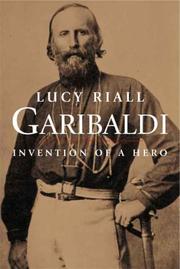
Riall treats Garibaldi as a manufactured celebrity rather than a hero, which is the sharpest available way into how unification was sold to a population that had not asked for it. Read before the survey histories so you can spot the myth-making in them.

The classic political history of the united kingdom, unsentimental about the liberal state's failures. Mack Smith's judgements set the terms of the debate that Duggan and Gilmour are still arguing with.
Duggan's full-length history from 1796 onward, organised around the persistent gap between what Italy was promised and what it got. Having read the concise version first, you can read this for the argument rather than the chronology.
Fascism, the Republic and Italy now
IntermediateExplain how the liberal state produced Mussolini, how the postwar Republic was built on repudiating him, and why its politics remain unstable.
▸ Study plan for this stage
Pace: Nine to eleven weeks for about 2,050 pages. Mussolini's Italy (692 pages) takes three to four weeks and is social history rather than biography, so read it for texture. A History of Contemporary Italy (592 pages) needs three weeks and is the essential bridge to the present. Cosa Nostra (483 pages) t
- Fascism as a product of the liberal state's failures rather than as a rupture with them, which is why the previous stage was the prerequisite for this one
- Bosworth's method and his central corrective: fascism's totalitarian claims outran its actual reach, and much of Italian life carried on through patronage, family and local accommodation beneath the rhetoric
- The imperial project in Ethiopia from 1935, the racial laws of 1938, and the German alliance as the sequence that turned a repressive regime into a criminal one
- Ginsborg's postwar arc: the Christian Democrat hegemony, the economic miracle of the late fifties and early sixties, the mass internal migration from south to north, and the transformation of everyday life
- 1968, the Hot Autumn and the years of lead — terrorism from both extremes, the Moro kidnapping and murder in 1978, and the strategy of tension
- Clientelism as the operating system of postwar politics, particularly in the south, connecting Ginsborg's account directly to Dickie's
- Dickie's central claim, which reframes everything else: the Mafia emerged with and through the Italian state after 1860, in the lemon groves around Palermo, and functioned as a means of exercising power within the state rather than as an alternative to it
- Jones on Berlusconi-era Italy: media concentration, the courts, and dietrologia — the national habit of assuming that behind every event lies a hidden explanation, which the previous forty years arguably justified
- How does Bosworth's social history change the picture of fascism you get from a biography of Mussolini?
- What is the evidence for and against genuine popular consent to the regime in the 1930s?
- What did the economic miracle change about Italian society, and what did it not change?
- What were the years of lead, and what were the competing explanations for the violence at the time?
- State Dickie's argument about the Mafia's origins. Why is it more damaging than the view of the Mafia as an anti-state?
- What does Jones mean by dietrologia, and after reading Ginsborg and Dickie, is it paranoia or reasonable inference?
- Extend your chronology from stage one through 1922, 1943, 1948, 1968, 1978, 1992 and the Berlusconi years. The completed timeline from Rome to the present is the artefact of the whole path.
- Take one of Duggan's promises from the previous stage and trace what fascism claimed to do about it. The continuity is the reason the two stages are adjacent.
- Write 500 words on the relationship between the Italian state and the Mafia using Dickie and Ginsborg together. Then check that argument against the southern question as you understood it after stage three.
- Write a final two-page answer to the question that opened the path: whether Italy is a nation or a state containing many. Use at least one book from each stage, and note where Gilmour's frame from the first stage held up and where the later reading undermined it.
Next up: This is the end of the path — the sweep, the city-states, unification and the century since — and the natural next step is either a regional history that tests Gilmour's plurality thesis in one place, or the Roman and medieval periods this path deliberately compressed.
A social history of what fascism actually felt like to live under, rather than another biography of the dictator. It depends on the liberal-state failures documented in the previous stage.
The standard account of 1943 onward — reconstruction, the economic miracle, the years of lead — and the essential bridge from fascism to the present.
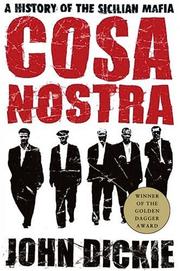
Dickie shows the Mafia as a product of the Italian state rather than an alternative to it, which reframes everything in Ginsborg about southern politics and clientelism.
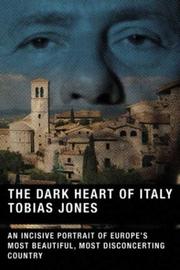
A journalist's account of Berlusconi-era Italy that lands hardest once you know the century behind it. The right book to finish on, because it makes the history feel unfinished.
Discussion
Keep reading
Paths that share books, cover the same subject, or open a related topic.