Best Books on the Lewis and Clark Expedition, in Reading Order
The Corps of Discovery covered eight thousand miles in twenty-eight months and lost one man, and the reason we know so much about it is that its commanders wrote almost every day. This path therefore does something most subjects do not allow: it moves from the modern narrative straight into the primary source, because the journals are readable and they are the whole basis of the literature. From there it turns to the peoples the expedition depended on and misunderstood, to the natural science it produced, and finally to the wider imperial context and what became of the men afterwards.
The Story
BeginnerFollow the expedition end to end — the Missouri, the Mandan winter, the Bitterroots, the Columbia and the return — and understand Jefferson's purpose in sending it.
▸ Study plan for this stage
Pace: 3 weeks for 521 pages, ~25 pages a day. Undaunted Courage was published in 1996 and reads as a product of its moment: Ambrose is openly admiring of Lewis, and his scholarly practices were criticised after his death. Read it for momentum and the route, and pencil a question mark beside every judgemen
- Jefferson's commission: a Northwest Passage for commerce first, and natural history, cartography and Indian diplomacy alongside it
- The Louisiana Purchase of 1803 arriving after the expedition was already planned, which changed the legal status of the journey but not its purpose
- The Corps of Discovery as a military unit — enlisted men, a court-martial and floggings on the outward leg, and the fact that it is a US Army expedition, not an exploring party
- The route in five acts: the Missouri to the Mandan villages, the winter of 1804–05, the portage at Great Falls and the Bitterroot crossing, the Columbia to the Pacific, and the divided return of 1806
- The Bitterroot crossing in September 1805 as the near-catastrophe of the whole enterprise, and the Nez Perce who prevented it becoming one
- Sacagawea's actual role — interpreter through a chain of languages, guide over one stretch she knew from childhood, and a woman's presence signalling non-hostile intent
- Sergeant Charles Floyd, the only fatality, and what killing one man in twenty-eight months tells you about the expedition's luck and its discipline
- Ambrose's Lewis: a man of extraordinary competence in the field and visible instability afterwards, which frames the biography question in the last stage
- What was Jefferson actually commissioning, in order of his own stated priorities? Where in the instructions does commerce sit relative to science?
- Name the three points at which the expedition could plausibly have failed completely, and what saved it in each case.
- Sacagawea is the most famous member of the party. What did she actually do, according to Ambrose, and which of the popular claims about her does he not support?
- Ambrose is unusually admiring of Lewis. Find two places where the admiration visibly shapes the interpretation and say what a more sceptical writer would do with the same material.
- The expedition returned convinced the Northwest Passage did not exist. What exactly had they established, and what was still open?
- Draw the route on a real map — Camp Dubois, the Missouri, Fort Mandan, Great Falls, Lemhi Pass, the Lolo Trail, Fort Clatsop, and the split return — with dates at each. Every book in this path will refer to these places by name.
- Build a roster of the permanent party from Ambrose: about thirty-three people on the western leg, with each one's role. Keep it; the last stage follows what became of them.
- Write 300 words on what the expedition ate and how it was obtained across the four seasons of 1805, using Ambrose's account. Food supply is the constraint that determines the entire schedule.
- Pick one of Ambrose's character judgements about Lewis, write it out, and note what evidence he cites for it. Return to this note after reading the Danisi biography in the final stage.
Next up: With the route and the roster in your head, the journals become readable as a daily record rather than as raw material, and you will start noticing where Ambrose smoothed things.

The popular narrative that put the expedition back into general readership, organised around Meriwether Lewis. It is frankly admiring of its subject and Ambrose's scholarship has been criticised on other books; read it for the momentum and treat the judgements as provisional.
Read the Journals
BeginnerGo to the source: the daily entries, the spelling, the weather, the food, and the difference between what happened and what the histories make of it.
▸ Study plan for this stage
Pace: 4 weeks. DeVoto's one-volume abridgement, first published in 1953, is the standard reading edition — long, but it is a diary, so twenty or thirty entries a session works better than fixed page counts. Read the entries for a date, then find the same date in your route map. Note that DeVoto abridges h
- The journals as a legal and scientific obligation — Jefferson ordered multiple sets kept, which is why several men wrote and why the record survives
- Clark's spelling, which is famously erratic and is a feature of the source, not an editorial failure
- The daily categories the captains actually recorded: course and distance, weather, latitude, game killed, and specimens
- Where the entries thin out — the Bitterroot crossing has some of the shortest entries in the whole record, which is itself evidence about the conditions
- What the journals do not contain: almost nothing about the men's inner lives, very little about the court-martials after the fact, and almost no reflection
- The gap between a journal entry and a narrative chapter, and how much interpretation Ambrose added to any given day
- DeVoto's editorial hand: what he cut, in what proportion, and the mid-century framing of his introduction
- Reading the Indian encounters at first hand, where the captains record what was said through three languages of translation
- Take any five consecutive days and list what the captains actually recorded. What proportion of the entry is measurement rather than narrative?
- Find a day covered in a full page by Ambrose and compare it with the journal entry for the same date. What did Ambrose add, and where did he get it?
- The Bitterroot entries are short and flat. What can you infer from the flatness, and what would you be over-reading?
- Choose one council with a tribal delegation and reconstruct the translation chain — English to French to Hidatsa to Shoshone, or whatever the entry gives. How much confidence should anyone have in the recorded speech?
- DeVoto's introduction was written in 1953. What does it assume about the expedition's meaning that a modern editor would state differently?
- Keep a reading journal in the captains' own format for one week of your own life: course and distance travelled, weather, what you ate, what you observed. It teaches, faster than any argument, what the form permits and what it excludes.
- Pick three days at Fort Mandan in January 1805 and transcribe the entries with the original spelling intact, then write out a modernised version. Note every place where modernising forced you to choose an interpretation.
- Make a list of every animal and plant the captains describe as new to them across the outbound journey, with the date. You will check this list against Cutright in the next stage.
- Take the Great Falls portage — roughly a month in June and July 1805 — and reconstruct it day by day from the entries alone, then write a 400-word narrative of it. Compare your narrative with Ambrose's chapter.
Next up: Having read the councils and trade negotiations in the captains' own words, Ronda's reframing of those same passages as diplomacy between nations will send you straight back to them.

DeVoto's one-volume abridgement is the standard reading edition — enough to feel the expedition day by day without the full apparatus. Read it right after Ambrose, while the route is fresh, and you will start catching where the narrative smoothed things over.
The People They Met
IntermediateSee the expedition from the other side — as an encounter with sovereign nations whose food, horses and guides made it possible.
▸ Study plan for this stage
Pace: 2–3 weeks for 310 pages. Ronda's book, published in 1984, is organised tribe by tribe rather than chronologically, so read it with the journals open — the method is to have him send you back to a passage you read flat.
- The reframing: the expedition passed through sovereign nations with their own diplomacy, trade networks and interests, and survived on their sufferance
- The Mandan and Hidatsa villages as an established trade centre with British and French traders already present — the Corps wintered inside an existing economy, not on a frontier
- The Shoshone horse transaction at Lemhi Pass, without which the party could not have crossed the mountains at all
- The Nez Perce decision not to kill the starving party on the western side of the Bitterroots, and what the tribal tradition says about how close that came
- The Chinook and the lower Columbia trade, where the expedition met people long experienced with maritime traders and unimpressed by its goods
- The council script the captains repeated at each meeting — a new father in Washington, peace among tribes, trade — and how it was received by people with existing rivalries
- Ronda reading the journals against the grain: what the captains recorded without understanding, and what their misreadings reveal
- Sacagawea's position reconsidered, including her status as a captive taken by the Hidatsa and sold or gambled to Charbonneau
- Take the standard council speech the captains delivered. What did it actually offer, and why would a Teton Sioux leader in 1804 have found it unpersuasive?
- What did the Shoshone get out of the horse trade, and what did they need from the Americans that the Americans could not supply?
- Ronda argues the expedition depended on Indian food, horses, guides and geographic knowledge at nearly every stage. List five specific dependencies with dates.
- The Chinook drove hard bargains and the captains complained about it in the journals. What does Ronda say that complaint reveals about the captains' expectations?
- Where do the journals record an encounter that the captains clearly misunderstood at the time? Give an example and explain what Ronda thinks was happening.
- Take the Teton Sioux confrontation of September 1804 and write two accounts of it, each about 400 words: one from the journal entries alone, one incorporating Ronda's reading. Set them side by side.
- Build a table of the eight or ten nations the expedition dealt with substantially, with location, what the Corps received from them, what the Corps gave, and the outcome of the relationship.
- Reread the Nez Perce section of the journals after Ronda's chapter and mark every passage where the captains record hospitality without registering that they were at anyone's mercy.
- Write 300 words on Sacagawea as Ronda presents her, and note every point where your prior impression came from something other than a source.
Next up: The diplomatic dimension established, the remaining question is what the expedition was commissioned to produce — the science and the maps — and how well it delivered.
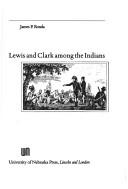
The book that reframed the whole field, reading the journals as a record of diplomacy between the Corps and the Mandan, Shoshone, Nez Perce and Chinook. Read it immediately after the journals: it will send you back to passages you passed over.
The Science and the Route
IntermediateUnderstand what the expedition was actually commissioned to do — botany, zoology, cartography, ethnography — and how well it did it.
▸ Study plan for this stage
Pace: 5–6 weeks. Cutright is 506 pages and Lavender 444. Read Cutright with your species list from the journals stage beside you. Both books are old — Cutright dates from 1969 and Lavender from 1988 — and neither reflects the last three decades of scholarship, though Cutright remains the standard on the n
- Lewis's preparation: weeks in Philadelphia with Benjamin Smith Barton, Benjamin Rush and Andrew Ellicott, learning botany, medicine and celestial navigation before departure
- The scientific yield — roughly 178 plants and 122 animals described as new to science, including the grizzly, the prairie dog, the pronghorn and the Douglas fir
- What happened to the collections: specimens shipped downriver from Fort Mandan, the Philadelphia herbarium, and the material that was lost, misplaced or never published
- The publication failure — Lewis never produced the scientific volumes he was commissioned to write, and the natural history was not properly credited for a century
- Clark's cartography, which is the expedition's most durable technical achievement: the 1810 master map corrected the shape of the West
- Celestial navigation in practice — chronometer failures, latitude by sextant, and the accumulated error in the longitude
- Lavender on the Northwest Passage as commercial theory: the fur trade, the British and Canadian competition, and why finding a water route mattered financially
- Two authors on the same events: Ambrose organises around Lewis's character, Lavender around geography and commerce, and the difference is instructive
- What did Lewis study in Philadelphia in 1803, with whom, and how much of it can you see being used in the journals?
- Take five species from your list and trace each through Cutright: how it was described, whether a specimen survived, and when it was formally named. Who got the credit?
- Why did the scientific results have so little immediate impact? Distinguish Lewis's failure to publish from the loss of specimens.
- How accurate was Clark's map, and where are its largest errors? What kind of error does the instrumentation make inevitable?
- Lavender emphasises the fur trade and imperial competition where Ambrose emphasises Lewis. Which frame better explains why the expedition happened at all?
- Check your species list from the journals stage against Cutright's catalogue. Mark each entry as correctly identified at the time, misidentified, or already known — and count the three categories.
- Take one full journal description of a new species — the prairie dog and the grizzly are the best-written — and rewrite it as a modern field description with the diagnostic characters separated from the anecdote.
- Work one latitude determination by hand from a journal entry: given the observed altitude of the sun and the date, compute latitude and compare it with the true value for that location. It shows immediately why longitude was the harder problem.
- Write a 500-word comparison of how Ambrose and Lavender each explain the decision to send the expedition, listing the causes each names and the weight each assigns.
Next up: You now know what the expedition was for and what it produced, which is the frame needed to place it in three centuries of continental exploration and to follow the men after 1806.

The classic account of the expedition's natural history: the specimens, the descriptions of species new to science, and what happened to the collections. The best answer to why Jefferson sent a soldier who had studied botany.
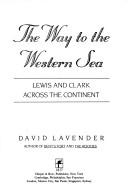
A narrative history stronger than Ambrose on geography and on the search for the Northwest Passage that motivated the whole enterprise. Read it as the second telling, once you know the story well enough to notice what a different author emphasises.
The Wider Frame
BeginnerPlace the expedition in the imperial contest for the continent, follow the men afterwards, and know where the complete scholarly text lives.
▸ Study plan for this stage
Pace: 8+ weeks, and not all of it straight reading. DeVoto's The Course of Empire is 647 pages of narrative from 1952 and deserves five or six weeks. Morris's The Fate of the Corps is 284 pages and reads quickly. Danisi's Meriwether Lewis is a 426-page argumentative biography. Moulton's complete scholarly
- DeVoto's frame: Lewis and Clark as the end of three centuries of European attempts on the continent, from Coronado and Cartier through La Vérendrye and Mackenzie
- The imperial contest — Spain, France, Britain and the young United States all with claims, and the expedition as an act of possession as much as of discovery
- Alexander Mackenzie's 1793 crossing to the Pacific, which preceded Lewis and Clark by a decade and is the fact that motivated Jefferson's urgency
- What became of the men: Clark's long career as Indian agent and governor, Colter and the fur trade, Charbonneau and the fragmentary record of Sacagawea's death, and Ordway and Gass as journal-keepers
- Lewis's death at Grinder's Stand in October 1809, and the standard interpretation as suicide, argued from his known depression and Clark's and Jefferson's own conclusions
- Danisi's minority case for murder or accident, built on the circumstances at the inn and on Lewis's governorship of Upper Louisiana and its financial disputes — clearly argued and rejected by most historians
- Moulton's thirteen-volume edition as the final authority on what the journals say, with the botanical, zoological and cartographic apparatus the earlier editions lacked
- The distance between an expedition's own record and the two centuries of use later made of it
- What does DeVoto's three-century frame change about the expedition's significance? Is Lewis and Clark a beginning, an ending, or both?
- Given Mackenzie's crossing in 1793, what exactly was left to discover? Answer in terms of what Jefferson wanted rather than in terms of geography.
- Set out the standard suicide case for Lewis's death and Danisi's alternative side by side. Which specific pieces of evidence do they interpret differently, and which does each side simply not address?
- Morris follows the men after 1806. Which of them ended well, and what does the pattern say about what the expedition was worth to the people who did it?
- Take one disputed factual point from anywhere in this path and resolve it against Moulton. What did the popular accounts get wrong, and does it matter?
- Pick three questions you noted as uncertain across the earlier stages and look each one up in Moulton, online or in a library. Write down the journal text and whether it settles the matter.
- Write a 600-word obituary of Meriwether Lewis as of 1809, using only what a contemporary could have known. Then write a 300-word note on which of the modern disputes you had to write around.
- Extend your roster from stage one with each man's fate from Morris: date of death, occupation after 1806, and whether anything he wrote survives.
- Build a single timeline from Coronado in 1540 to Moulton's edition in 1983, marking the ten events DeVoto treats as decisive. It is the fastest way to see the expedition in proportion.
Next up: The path ends here; the natural continuations are the fur trade and the Astorians, Native histories of the plains and plateau written from tribal sources, or reading Moulton straight for a stretch of country you know.

The expedition set inside three centuries of European exploration of North America, from Coronado onward. The book that shows Lewis and Clark as the end of a long story rather than the beginning of one.
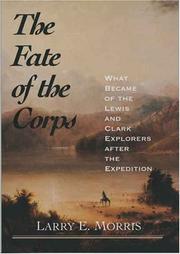
What happened to the members of the expedition after 1806, including Lewis's death and the fragmentary record of Sacagawea's later life. The natural epilogue, and unsentimental about it.

A detailed biography that argues against the standard suicide account of Lewis's death and reconstructs his governorship of Louisiana. A minority position, clearly argued; read it knowing most historians disagree.

Gary Moulton's complete scholarly edition — the full text with the botanical and cartographic apparatus, and the last word on any question of what the journals actually say. A reference to keep, not a book to read straight through.