The Lebanese Civil War: books to read, in order
Lebanon's war ran for fifteen years, had no single beginning and arguably no ending, and is described very differently depending on who is telling it. This path starts with the country's contested history, moves to the great narrative accounts of the fighting, then reads the war through the outside powers that fought inside it, and finishes with the settlement that stopped the shooting without resolving the argument. Several books here are openly partisan; the point is to know whose account you are reading, not to find a neutral one, because none exists.
The Country Before the War
BeginnerUnderstand the confessional political system, the demographic and economic pressures under it, and why Lebanese themselves cannot agree on what their country is
▸ Study plan for this stage
Pace: 5 weeks for about 950 pages. Harris's Lebanon (400pp) is a single volume covering fourteen centuries and is dense — two weeks. Salibi's A House of Many Mansions (247pp) is short and argumentative; a week, read carefully. Traboulsi's A History of Modern Lebanon (306pp) in ten days. All three cover th
- The confessional system is the structure everything runs through: a presidency reserved for a Maronite Christian, the premiership for a Sunni Muslim, the speakership for a Shia Muslim, and a parliament apportioned by sect on the basis of a 1932 census never repeated.
- The 1943 National Pact was an unwritten agreement, and its unwritten character is not incidental. It traded Christian abandonment of French protection for Muslim abandonment of union with Syria, and left the arithmetic frozen while the demography moved.
- Salibi's claim is that Lebanon's communities carry incompatible histories of the same country — a Phoenician-descended Christian refuge in one telling, an Arab province artificially severed in another — and that this, rather than any single grievance, is the war's foundation.
- Traboulsi writes as a Lebanese historian of the left, and organises the same events around class, land and economic power rather than sect. His account makes the Palestinian and Syrian chapters legible in a way a purely confessional reading cannot.
- Harris is the closest thing to a neutral scaffold here, and even he is making choices about where Lebanon begins. Use him for the chronology and the other two for the argument.
- The Palestinian presence after 1948 and again after 1970 changed both the demography and the balance of armed force. Note carefully how each of these three authors frames its arrival.
- You are being taught to identify a standpoint from the first chapter. On this subject the standpoint is part of the information, and a book that appears to have none usually has one it is not declaring.
- Describe the confessional allocation of offices and explain why the 1932 census is politically load-bearing sixty years later.
- What does Salibi mean by many mansions, and what is his evidence that the communities hold genuinely incompatible histories?
- How does Traboulsi's class-based account explain something that a sect-based account cannot?
- What was the 1958 crisis, and what did it show about the system's tolerances?
- For each of these three books, write one sentence naming the author's standpoint. If you cannot, you have not read closely enough yet.
- Take one event covered by all three — 1860, 1943 or 1958 — and set the three accounts side by side. Write out what each includes, what each omits, and what each treats as the cause.
- Draw the confessional allocation of the state on one page, then annotate it with what each community stood to lose from a recount. This is the war's arithmetic and you will need it for Taif.
- Salibi and Traboulsi disagree about whether sect or class is the primary axis. Find the strongest passage in each, then write a paragraph arguing for Salibi and a paragraph arguing for Traboulsi. Do not adjudicate at the end; the point is to be able to run both.
- Write down the three claims about Lebanon you held before starting, and next to each, which of these authors would dispute it and on what grounds.
Next up: You now know what the communities were arguing about; the next stage is the fifteen years in which they argued with weapons.

A single-volume history of Lebanon from the seventh century to 2011, published as 'Lebanon: A History, 600-2011' but catalogued under the bare title. Start here so the war arrives as the outcome of a long argument about who Lebanon belongs to, rather than as an inexplicable outbreak.
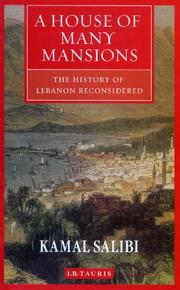
Salibi's central claim is that Lebanon's communities carry incompatible histories of the same country, and that this, not any single grievance, is the war's foundation. Read it immediately after Harris so you can see how the same events get told two ways.

A Lebanese leftist historian's account, organised around class and economic power rather than sect. It is the strongest available corrective to reading the war purely as Christians versus Muslims, and it makes the later Palestinian and Syrian chapters legible.
The War as It Was Lived and Reported
IntermediateFollow the fighting itself from 1975 to 1990, including Black Saturday, the camp wars, the Israeli invasion and Sabra and Shatila, and see what the war did to ordinary life in Beirut
▸ Study plan for this stage
Pace: 7 weeks for about 1,780 pages, and Fisk alone is a third of it. Pity the Nation (703pp) needs three weeks at 35 pages a day. From Beirut to Jerusalem (541pp) in two weeks, though only the Beirut half belongs to this stage. Makdisi's Beirut Fragments (253pp) in a week and Hage's De Niro's Game (280pp
- There is no agreed start date. The Ain al-Rummaneh bus attack of 13 April 1975 is the conventional one, and every book here explains why that date is a convenience rather than a cause.
- Fisk lived in Beirut throughout and reports as a witness with a case to make, openly angry and openly partisan, particularly about Israel and about the Phalange. He is indispensable and he is not a neutral chronicle, and he does not pretend to be.
- Friedman covered the same war for the New York Times and reached different conclusions about American and Israeli responsibility. He is placed after Fisk deliberately; reading them in this order is the stage's main exercise.
- The militias were the actual political units — Phalange and the Lebanese Forces, Amal, the PSP and the Druze, the PLO factions, the SLA in the south, and later Hezbollah. Learn their sponsors, their territories and their years.
- The Israeli invasion of June 1982, the siege of Beirut, the PLO's departure, Bashir Gemayel's assassination and the Sabra and Shatila massacre are one sequence over four months, and it is the most heavily disputed sequence in the war.
- Makdisi's memoir supplies the register the correspondents cannot: raising a family through the siege years, and what it took to stay. It is the answer to the question the war narratives leave open.
- Hage's novel is on the path because militia recruitment — why a young man joins — is the part that memoirists and historians consistently under-explain. Fiction is doing specific work here, not decorating the list.
- Reconstruct the phases of the war: 1975 to 1976, the Syrian entry, 1978, 1982, the camp wars, and the 1988 to 1990 end. Date each phase and name its principal combatants.
- Where do Fisk and Friedman most sharply diverge on the events of September 1982, and what does each rely on?
- What is Fisk's case, stated in three sentences without adjectives? Then Friedman's.
- What does Makdisi describe that neither correspondent does, and why can neither of them reach it?
- In De Niro's Game, what pulls one young man into the militia and the other away? Is the novel's answer compatible with what Fisk and Friedman report?
- Which of the four books would each of the war's factions object to most, and on what grounds?
- Trace one claim across two authors who disagree: take the events at Sabra and Shatila and set Fisk's account against Friedman's paragraph by paragraph. Note who each holds responsible, what each witnessed personally, and what each attributes to others. Do not resolve it; write down what would.
- Build a militia table — name, community, sponsor, territory, years active. Keep it beside you for the rest of the path, because stage three is about the sponsors and stage four about the one that never disarmed.
- Take a single week of the war covered by Fisk and by Makdisi and read both accounts of it. Write 200 words on what changes when the reporter becomes a resident.
- Both Fisk and Friedman were awarded major prizes for this work. Look up how each book was reviewed at publication in a British and an American outlet, and note whether the criticisms were about facts or about standpoint.
- Write out the ten proper nouns from this stage you could not have defined a month ago. That list is the vocabulary the next two stages assume.
Next up: You have the war as Lebanese and foreign witnesses saw it; now read the outside states that fought it from inside, in their own sources.
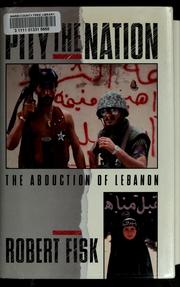
The essential reporter's history, written by a correspondent who lived in Beirut throughout. Fisk is openly angry and openly partisan, particularly about Israel and the Phalange, so read him as a witness with a case to make rather than as a neutral chronicle.
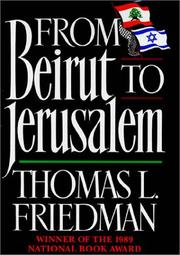
The Beirut half is the best-known American account of the war and won a National Book Award. Placed after Fisk deliberately: the two men covered the same events and reached different conclusions about American and Israeli responsibility.
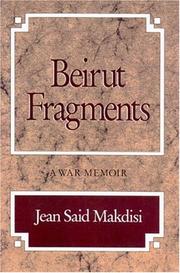
A civilian memoir of raising a family through the siege years, which is the register the correspondents' books cannot reach. It answers the question the war narratives leave open: what it was actually like to stay.
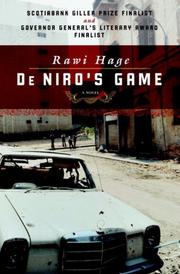
A novel by a writer who grew up in wartime Beirut, following two young men drawn into and away from the militias. Fiction earns its place here because militia recruitment is the one part of the war that memoirists and historians consistently under-explain.
The Outside Powers That Fought Inside
IntermediateTrace the Palestinian, Israeli and Syrian interventions, understand why each entered and what each wanted, and read the Israeli record on the 1982 invasion and the massacres that followed
▸ Study plan for this stage
Pace: 5 weeks for roughly 1,370 pages, though the graphic novel is short. Rabinovich's The War for Lebanon 1970-1985 (262pp) in a week — it is analytical and drier than anything in the previous stage, which is the point. Schiff and Ya'ari's Israel's Lebanon War in ten days. Folman and Polonsky's Waltz wit
- Three interventions with three logics: the Palestinian armed presence established after 1970, Syria's entry in 1976 — initially against the Palestinian and leftist alliance — and Israel's incursions of 1978 and 1982. Each entered for its own reasons and each acquired Lebanese clients.
- Rabinovich writes as an Israeli scholar and later diplomat, and his value here is organisation: he shows how the three interventions interlocked rather than narrating them in sequence.
- Schiff and Ya'ari were Israeli journalists whose reporting helped force the Kahan Commission, the Israeli inquiry that found Ariel Sharon bore personal responsibility for failing to prevent the massacre and recommended his removal as defence minister. Their book is a damning account of the 1982 inva
- That provenance matters to how the book functions on this path: it carries weight with readers who discount Fisk, and it is evidence that the harshest Israeli criticism of the war came from Israelis.
- Folman is an Israeli veteran reconstructing his own suppressed memory of the night of the massacre. Read it as testimony about memory and complicity rather than as a source for events — you already have the events from Schiff.
- Hirst's argument is that Lebanon became the arena in which every regional conflict was fought by proxy, and he carries the story past 1990 into the Hariri assassination and the 2006 war.
- Syria's occupation, which outlasted the war by fifteen years, begins here and is the subject of the final stage. Track what Syria wanted at each entry point, because the answer changes.
- Why did Syria intervene in 1976, and against whom? Why is that the fact most often left out of summaries of the war?
- What were Israel's stated and unstated objectives in June 1982, and how does Rabinovich distinguish between them?
- What did the Kahan Commission find, what did it not investigate, and what did it change?
- How does Waltz with Bashir's treatment of memory differ from a witness account, and what can a reconstructed memory establish?
- State Hirst's proxy-arena thesis and name one event it explains well and one it explains badly.
- Set Rabinovich's Israeli scholarly framing against Traboulsi's Lebanese leftist framing from stage one. What does each treat as the war's driving force?
- Trace one claim across two authors who disagree: Israeli responsibility for Sabra and Shatila as Fisk states it and as Schiff and Ya'ari state it. Both are damning and they are not the same charge. Write out the difference precisely.
- Check a finding against its source: locate the Kahan Commission's published conclusions and compare them with how Schiff and Ya'ari, Fisk and Folman each characterise them.
- Take your militia table from stage two and add a sponsor column with dates. Several militias changed sponsors mid-war, and the changes are the clearest evidence for Hirst's thesis.
- Read Waltz with Bashir immediately after finishing Schiff and Ya'ari, in one sitting. Then write 200 words on what the graphic form does that prose does not — and whether that is evidence or effect.
- Write a paragraph arguing that the Lebanese civil war is best explained as a Lebanese conflict that outsiders exploited, and a paragraph arguing it is best explained as a regional conflict fought on Lebanese ground. Both have serious scholarship behind them; leave both standing.
Next up: The fighting stops in the next stage, which is not the same as the argument stopping.
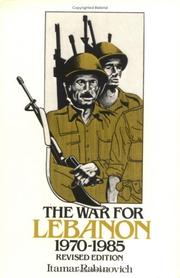
An Israeli scholar's analytical account of how the Palestinian presence and the Syrian and Israeli interventions interlocked. It is drier than Fisk and better organised, which is exactly what you need after two narrative volumes.
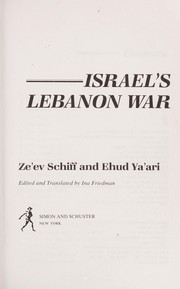
Written with Ehud Ya'ari, two Israeli journalists whose reporting on Sabra and Shatila helped force the Kahan Commission. A damning account of the 1982 invasion produced from inside Israel, which is why it carries weight with readers who distrust Fisk.
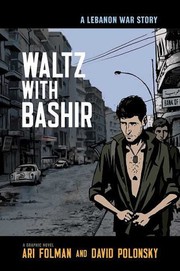
The graphic-novel version of Folman's film, in which an Israeli veteran reconstructs his own suppressed memory of the night of the massacres. Read after Schiff, when you already know what happened, so the book works as testimony about memory rather than as your source for the events.
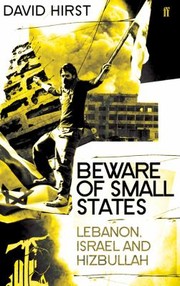
Hirst's argument is that Lebanon became the arena where every regional conflict was fought out by proxy. It carries the story past 1990 into the Hariri assassination and the 2006 war, which is the bridge to the final stage.
Taif and the Peace That Settled Nothing
IntermediateUnderstand the Taif Agreement, the Syrian occupation it legitimised, the rise of Hezbollah as the one militia that never disarmed, and why Lebanese politics still runs on wartime logic
▸ Study plan for this stage
Pace: 4 weeks for around 900 pages. Norton's Hezbollah: A Short History is exactly that and reads in a few evenings. Young's The Ghosts of Martyrs Square (336pp) in ten days. Cambanis's A Privilege to Die (336pp) in ten days. Young and Cambanis both deal with the 2005 assassination of Rafik Hariri and the
- The 1989 Taif Agreement rebalanced the confessional formula — parity in parliament rather than a Christian majority, powers moved from the presidency to the cabinet — and required militia disarmament, and it legitimised the Syrian military presence that ran Lebanon until 2005.
- Hezbollah was the one militia that did not disarm, on the grounds that it was a resistance to Israeli occupation of the south rather than a militia. That exemption is the central fact of post-war Lebanese politics.
- Norton is a former UN observer in south Lebanon and writes as an analyst rather than as an advocate or a prosecutor. His is the standard concise scholarly account of the movement.
- Young writes as a Lebanese journalist from a liberal, anti-Syrian standpoint that he states openly, and his book is the clearest explanation of why Taif produced a state that could not govern.
- Cambanis reports from inside Hezbollah's constituency on why the movement commands genuine loyalty rather than only fear. Read after Young precisely because the two books describe the same organisation from opposite ends.
- The 2005 Hariri assassination, the Cedar Revolution and the Syrian withdrawal, then the 2006 war with Israel, are the sequence in which the post-war settlement visibly stopped holding.
- Nothing in Taif addressed the war itself: there was a general amnesty, no truth process, and no accounting for the roughly 17,000 disappeared. The absence of a settled national account of the war is why Salibi's argument from stage one still applies.
- Wartime logic persists in the political system — the same families, the same sectarian allocation, the same external patrons — which is the sense in which the war did not end so much as demobilise.
- What did Taif change, what did it leave intact, and what did it explicitly decline to address?
- On what grounds was Hezbollah exempted from disarmament, and who accepted that argument at the time?
- How does Norton account for Hezbollah's origins, and what does he treat as still unsettled?
- What is Young's diagnosis of the post-war state, and where does his declared standpoint most affect his reading?
- What does Cambanis find in Hezbollah's constituency that Young's account does not accommodate?
- After the whole path: can you state four accounts of what the war was about, attribute each to a named author, and identify which one you find strongest and why?
- Trace one claim across two authors who disagree: Young on Hezbollah as an armed state-within-a-state against Cambanis on Hezbollah as a genuine social movement with a constituency. Set the passages side by side and write out which parts of the disagreement are factual and which are about standpoint.
- Read the text of the Taif Agreement itself — it is short and available — and compare it against Young's characterisation of it. Note anything Young emphasises that the document does not say, and anything the document says that he passes over.
- Return to the confessional diagram you drew in stage one and redraw it as Taif left it. The two pages side by side are the clearest possible summary of what fifteen years of war changed.
- Take the general amnesty of 1991 and write a paragraph defending it as the price of ending the fighting, then a paragraph against it as the reason the war has no agreed account. Both are argued seriously in Lebanon.
- Write 600 words for someone starting this path tomorrow, naming at least five books and, for each, the standpoint from which it is written. If you can do that, the path has done its job — the aim was never a neutral version, because there is not one.
Next up: The path ends without a consensus account, which is the accurate condition of the subject and the reason each author's standpoint had to be named as you went.
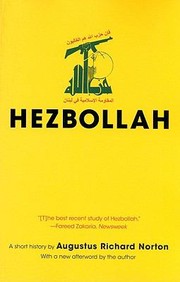
The standard concise scholarly account of the movement that emerged from the war and outlived it. Norton is a former UN observer in south Lebanon and writes as an analyst rather than an advocate or a prosecutor.

A Lebanese journalist's account of the post-war Syrian order, the Hariri assassination and the 2005 protests, written from a liberal anti-Syrian standpoint he does not hide. The clearest explanation of why Taif produced a state that could not govern.

Reported from inside Hezbollah's constituency, on why the movement commands genuine loyalty rather than only fear. Last because it only makes sense once you know the war that produced its community.
Discussion
Keep reading
Paths that share books, cover the same subject, or open a related topic.