Best Books on the History of Lebanon, in Order
This curriculum builds from a solid structural understanding of Lebanon's political architecture to the lived experience of its civil war, then zooms into the foreign forces that shaped and shattered the country, before arriving at the modern collapse. Because the learner starts at an intermediate level, the path skips basic introductions and moves directly into analytical history, layering complexity stage by stage so that each book's arguments rest on vocabulary and context established by the one before it.
The Architecture of a Fragile State
IntermediateUnderstand how Lebanon's confessional political system was constructed, why it was inherently unstable, and how sectarian identity became the organizing logic of the state.
▸ Study plan for this stage
Pace: 4–5 weeks, ~40–50 pages/day. Begin with "A House of Many Mansions" (approximately 2.5 weeks), then move to "The Modern History of Lebanon" (approximately 2 weeks). Allocate 2–3 days for review and synthesis at the end.
- The confessional system as a power-sharing mechanism: how religious communities were formally allocated political representation and state resources
- The historical roots of sectarian fragmentation: how Lebanon's geographic, religious, and cultural diversity predated the modern state and shaped its institutional design
- The National Pact (1943) as the founding compromise: its terms, signatories, and the assumptions about Christian-Muslim demographic balance it encoded
- Structural instability built into confessionalism: why the system's rigid formulas could not accommodate demographic change, economic inequality, or shifting regional power dynamics
- Sectarian identity as state logic: how confessionalism transformed religious affiliation from one aspect of identity into the primary organizing principle for citizenship, patronage, and political participation
- The role of external powers (France, Britain, regional actors) in constructing and sustaining Lebanon's political architecture
- The contradiction between liberal constitutional ideals and communal power-sharing: how Lebanon's formal institutions masked informal sectarian hierarchies and exclusions
- What were the key provisions of the 1943 National Pact, and what demographic assumptions did it rest upon?
- How did Lebanon's geographic and religious diversity in earlier periods (covered in Salibi's historical narrative) shape the confessional system that emerged in the 20th century?
- Why was the confessional system inherently unstable, and what specific structural flaws made it vulnerable to crisis?
- How did the confessional system transform sectarian identity from a cultural or religious marker into the primary basis for political rights and state access?
- What role did external powers play in constructing and maintaining Lebanon's political architecture, and how did this affect the state's autonomy?
- How did the gap between Lebanon's liberal constitutional framework and its communal power-sharing reality create contradictions that destabilized the state?
- Create a detailed organizational chart of the confessional system showing which positions were allocated to which communities, the numerical ratios, and how this changed over time (reference Salibi's descriptions in both books).
- Map Lebanon's major religious and ethnic communities geographically using evidence from 'A House of Many Mansions'—identify which regions were strongholds for which groups and how this geography constrained political power-sharing.
- Write a 2–3 page analysis of the 1943 National Pact as a historical document: what did it promise, to whom, and what did it assume about Lebanon's future?
- Trace one sectarian community (Maronites, Sunnis, Shias, or Druze) through both books, documenting how their political role, economic position, and relationship to the state evolved from pre-modern times through the mid-20th century.
- Create a timeline of key moments when the confessional system faced stress or crisis (as described in 'The Modern History of Lebanon'), and for each, identify which structural flaw was exposed.
- Debate exercise: Prepare arguments for why the confessional system was the only viable option for Lebanon given its diversity, then prepare counterarguments showing why it was doomed to fail—ground both in Salibi's evidence.
Next up: This stage establishes the institutional and ideological foundations of the Lebanese state, preparing you to examine how these structural contradictions erupted into actual conflict, state breakdown, and civil war in subsequent stages.
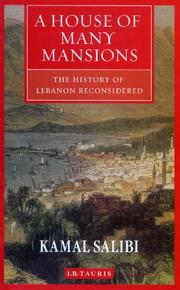
Salibi, Lebanon's foremost historian, dissects the competing national narratives — Phoenician, Arab, Christian, Muslim — that made a shared Lebanese identity impossible to agree on. Reading this first gives you the ideological fault lines before you study the wars they produced.
A concise, authoritative political history from the Mutasarrifate through independence and up to the eve of the civil war. It provides the chronological spine and institutional vocabulary — the National Pact, the confessional formula, the zu'ama — that every subsequent book assumes you know.
The Civil War: Inside the Inferno
IntermediateGrasp the causes, phases, and human texture of the 1975–1990 civil war, understanding both the structural forces and the individual militias, massacres, and negotiations that defined it.
▸ Study plan for this stage
Pace: 8–10 weeks, ~40–50 pages/day. "Pity the Nation" is approximately 600 pages; this pace allows for careful reading, note-taking, and reflection on dense historical narrative and analysis.
- The structural causes of the 1975 civil war: Palestinian presence, sectarian tensions, economic inequality, and Cold War proxy dynamics
- The role of militias and factions: Phalangists, PLO, Shiite organizations, Sunni groups, and their competing visions for Lebanon's future
- Key massacres and turning points: Sabra and Shatila, the Mountain War, the siege of Beirut, and how violence escalated and shifted power
- Fisk's eyewitness perspective: how a journalist embedded in the conflict documents atrocities, propaganda, and the human cost of war
- The fragmentation of Lebanese identity: how the war shattered national cohesion and deepened sectarian divisions
- International intervention: Syria's military presence, Israeli invasions, American and Soviet interests, and their impact on the war's trajectory
- The phases of the war: early chaos (1975–76), the Syrian intervention, the Israeli invasion (1982), the Shiite rise, and the path to ceasefire (1989–90)
- Civilian suffering and displacement: refugee camps, urban destruction, and the psychological toll of 15 years of conflict
- What were the primary structural causes that made Lebanon vulnerable to civil war in 1975, and how did the Palestinian presence exacerbate existing tensions?
- How did Fisk's reporting evolve as the war progressed, and what does his eyewitness account reveal about the relationship between journalists and violence?
- Describe the major phases of the war and identify 2–3 pivotal moments that shifted the balance of power among factions.
- What role did external actors (Syria, Israel, the superpowers) play in prolonging the conflict, and how did their interests diverge from Lebanese national interests?
- How did the war transform Lebanon's sectarian identity, and what evidence does Fisk provide of the breakdown of national unity?
- What were the human and material costs of the civil war as documented in 'Pity the Nation,' and how did civilian populations experience displacement and trauma?
- Create a timeline of major events from 1975–1990, marking key massacres, military operations, and peace attempts; annotate each with the primary actors and consequences.
- Map the territorial control of major factions at three points in the war (1976, 1982, 1989); note how geography shaped militia power and civilian vulnerability.
- Select three passages from Fisk's account of specific massacres or atrocities; analyze how his language conveys both journalistic detachment and moral outrage.
- Construct a faction chart listing the major militias (Phalangists, PLO, Amal, Hezbollah, etc.), their sectarian base, external sponsors, and stated goals; update it as the war progresses.
- Write a 500-word reflection on a single civilian's experience during the war as Fisk portrays it; use specific anecdotes from the book to illustrate the texture of daily life under conflict.
- Compare Fisk's account of a major event (e.g., the 1982 Israeli invasion or Sabra and Shatila) with another historical source; identify what Fisk emphasizes that others might downplay, and vice versa.
Next up: This stage establishes the historical foundations, key actors, and human dimensions of Lebanon's civil war, preparing you to examine the post-war reconstruction, sectarian politics, and ongoing regional tensions that continue to shape Lebanon today.
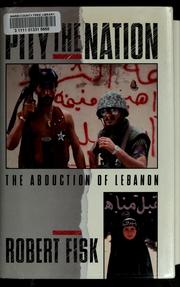
Fisk was on the ground throughout the war as The Times correspondent. His sweeping, visceral account is the essential eyewitness narrative — read it first in this stage to anchor the abstract politics of the previous stage in blood, street names, and faces.
Foreign Hands: Israel and Syria
IntermediateUnderstand how Israeli invasions and Syrian hegemony were not peripheral to Lebanon's crisis but central engines of it, and how each power used Lebanon as a theater for its own strategic goals.
▸ Study plan for this stage
Pace: 4–5 weeks, ~25–30 pages/day (approximately 700–800 pages total)
- Israel's strategic rationale for invading Lebanon: the PLO threat and the broader regional security calculus
- The 1982 invasion's stated objectives versus its actual scope and consequences
- How Israel's military occupation and proxy militias (particularly the SLA) deepened Lebanon's fragmentation
- Syria's role as both occupier and regional power broker, competing with Israel for influence
- The intersection of Israeli and Syrian interests in Lebanon and how each power weaponized Lebanese factions
- The civilian cost and humanitarian dimensions of foreign military intervention in Lebanon
- How external military intervention prevented Lebanese state consolidation and enabled sectarian conflict
- What were Israel's stated military objectives in invading Lebanon in 1982, and how did the actual scope of the invasion differ from these goals?
- How did Israel's occupation of southern Lebanon (and later the security zone) shape Lebanese politics and sectarian dynamics?
- What role did the SLA (South Lebanon Army) play in Israel's strategy, and how did it affect Lebanese sovereignty and cohesion?
- How did Syrian military presence and political influence in Lebanon compete with or complement Israeli interests?
- In what ways did Israeli and Syrian interventions prevent Lebanon from consolidating state authority and resolving its internal conflicts?
- What were the humanitarian and civilian consequences of Israeli military operations in Lebanon according to Schiff's account?
- Create a timeline of major Israeli military operations in Lebanon (1982–2000), marking stated objectives, actual outcomes, and civilian impact for each phase
- Map the territorial control of Israeli forces, the SLA, Syrian forces, and Lebanese state/militia actors at 3–4 key moments (1982, 1985, 1990, 2000); annotate how control shifted and why
- Write a 2–3 page strategic analysis: from Israel's perspective, what problem was Lebanon supposed to solve, and did the invasion achieve it? Support with specific examples from Schiff
- Identify 3–4 instances where Israeli military decisions directly enabled or exacerbated Lebanese sectarian conflict; explain the mechanism in each case
- Create a comparison chart of Israeli vs. Syrian objectives in Lebanon, their methods, and their points of conflict or alignment
- Interview or debate exercise: role-play a 1985 Israeli security cabinet meeting discussing whether the occupation is achieving its goals; use Schiff's evidence to argue different positions
Next up: This stage grounds you in how external military powers weaponized Lebanon's weakness, setting the stage to examine how Lebanese actors themselves navigated, resisted, or collaborated with these foreign forces—and how internal Lebanese politics both enabled and were shaped by foreign intervention.
Written by Israel's most respected military correspondent, this is the definitive account of the 1982 invasion — the decision-making in Tel Aviv, the siege of Beirut, and the Sabra and Shatila massacre. It is indispensable for understanding the Israeli dimension without polemics.
Hezbollah and the Post-War Order
ExpertAnalyze how Hezbollah emerged from the wreckage of the war to become a state-within-a-state, and how the Taif Agreement's flawed peace set the stage for the next cycle of crisis.
▸ Study plan for this stage
Pace: 4–5 weeks, ~40–50 pages/day (approximately 250–300 pages total)
- Hezbollah's origins in the Lebanese Civil War and Iranian Revolutionary Guard mentorship
- The organization's evolution from militant resistance to political party and state-within-a-state
- The Taif Agreement's structural weaknesses and failure to disarm militias or resolve sectarian power-sharing
- Hezbollah's dual identity: social services provider, political actor, and armed resistance movement
- Iran and Syria's role in sustaining Hezbollah as a proxy force and regional power broker
- The security apparatus: how Hezbollah built military capacity, intelligence networks, and parallel institutions
- Sectarian politics and Shiite empowerment in post-war Lebanon's confessional system
- How Hezbollah's state-building activities (hospitals, schools, courts) created loyalty and legitimacy beyond violence
- What were the specific conditions in Lebanon during the Civil War that enabled Hezbollah's emergence, and how did Iranian Revolutionary Guards shape its early ideology and structure?
- How did Hezbollah transition from a purely militant organization to a political party and service provider, and what advantages did this dual role provide?
- What were the critical flaws in the Taif Agreement that prevented genuine disarmament and allowed Hezbollah to maintain its armed wing?
- How did Hezbollah build a 'state-within-a-state' through social services, courts, and parallel institutions, and why was this more effective than military force alone in securing popular support?
- What role did Iran and Syria play in Hezbollah's survival and expansion, and how did regional geopolitics enable its consolidation of power?
- How did Hezbollah's sectarian identity as a Shiite organization both strengthen its base and complicate Lebanon's confessional political system?
- Create a timeline mapping Hezbollah's organizational evolution from 1982–2000, marking key moments of militancy, political entry, and institution-building; annotate how each phase responded to Lebanese state weakness
- Diagram Hezbollah's parallel state structures (courts, hospitals, schools, welfare networks) and compare them to Lebanese government institutions; identify which services compete directly with state functions
- Write a 2–3 page analysis of how the Taif Agreement's confessional power-sharing formula inadvertently empowered Hezbollah by guaranteeing Shiite representation without requiring disarmament
- Track Iran and Syria's material and ideological support to Hezbollah across the post-war period; create a chart showing weapons transfers, training, and political backing by year
- Conduct a comparative analysis: select two Hezbollah-controlled neighborhoods or regions and document how the organization's social services filled gaps left by the Lebanese state
- Debate or write a position paper: Was Hezbollah's state-building strategy (social services + political participation) a genuine path to legitimacy, or a sophisticated cover for a militia state?
Next up: This stage establishes how Hezbollah weaponized state weakness and sectarian politics to build an unaccountable parallel state, setting the conditions for the next stage's examination of how this fragmented, militia-dominated order collapsed into renewed conflict and state failure.

A detailed, sourced account of Hezbollah's origins, ideology, military wing, and international operations. Reading it here — after understanding the civil war and Syrian/Iranian patronage — makes its rise feel inevitable rather than mysterious.
The Modern Collapse
ExpertUnderstand the political economy of Lebanon's post-2019 collapse — the corruption, the Ponzi finance, the port explosion, and the hollowing out of the state — as the culmination of everything studied above.
▸ Study plan for this stage
Pace: 4–5 weeks, ~40–50 pages/day (approximately 300 pages total). Allocate 2–3 days per major section to allow for note-taking and reflection on how each conflict illuminates Lebanon's structural vulnerabilities.
- State collapse as the endpoint of sectarian fragmentation and foreign intervention: how Lebanon's post-2019 crisis is rooted in the institutional weaknesses Anderson documents across the Middle East
- The role of patronage networks and informal power structures in hollowing out state capacity: understanding how sectarian elites captured institutions rather than building them
- Regional proxy conflicts and their domestic economic costs: how Syria, Iran, Saudi Arabia, and others weaponized Lebanon's sectarian divisions, draining resources and preventing unified governance
- The financialization of state failure: connecting Anderson's analysis of institutional breakdown to Lebanon's Ponzi scheme banking model and currency collapse
- The port explosion as a symbol of state absence: how chronic corruption, lack of oversight, and the absence of functioning institutions created the conditions for catastrophe
- Comparative collapse: using Anderson's multi-country analysis to understand what made Lebanon uniquely vulnerable to total economic and political breakdown
- How does Anderson's account of sectarian conflict and state fragmentation in other Middle Eastern countries help explain the specific vulnerabilities that led to Lebanon's 2019 collapse?
- What role did foreign powers (Syria, Iran, Saudi Arabia, the US) play in undermining Lebanese state institutions, and how did this create the conditions for financial collapse?
- How did patronage networks and informal power structures replace formal state institutions in Lebanon, and what were the consequences for economic governance and financial regulation?
- What does Anderson reveal about the relationship between political corruption and the Ponzi finance scheme that characterized Lebanon's banking sector before 2019?
- How can the Beirut port explosion be understood as a symptom of deeper state collapse rather than merely an industrial accident?
- What structural similarities and differences does Anderson identify between Lebanon's collapse and the state failures he documents elsewhere in the region?
- Create a timeline mapping the key moments Anderson identifies in Lebanon's institutional breakdown (sectarian militarization, foreign intervention, banking deregulation) and annotate how each step weakened state capacity.
- Construct a patronage network diagram showing how Lebanon's major sectarian groups (Hezbollah, Amal, the Sunni establishment, Christian factions) captured state institutions and extracted resources, using specific examples from Anderson's narrative.
- Write a 2–3 page analytical memo titled 'From Institutional Weakness to Financial Collapse' that connects Anderson's account of political fragmentation to the mechanics of Lebanon's Ponzi banking model and currency crisis.
- Identify 3–4 moments in Anderson's account where foreign intervention directly undermined Lebanese state sovereignty or institutional development, and explain the economic consequences of each.
- Create a comparative chart analyzing how the state collapse patterns Anderson documents in Iraq, Syria, Yemen, and Palestine manifest specifically in Lebanon's post-2019 crisis.
- Write a detailed case study of the Beirut port explosion using Anderson's framework: what institutional failures, corruption networks, and absence of state oversight made it possible?
Next up: This stage equips you to recognize state collapse not as a sudden crisis but as the culmination of decades of institutional capture, sectarian fragmentation, and regional proxy warfare—preparing you to examine how Lebanon's citizens and civil society actors are attempting to rebuild or reimagine the state in the aftermath.

While broader than Lebanon alone, Anderson's Pulitzer-recognized long-form narrative traces how the regional order collapsed across the Arab world, giving essential comparative context for why Lebanon's failure is both unique and symptomatic of a wider unraveling.
Discussion
Keep reading
Paths that share books, cover the same subject, or open a related topic.