Best Books on Shia Islam, in Reading Order
Shia Islam is roughly a tenth of the Muslim world and the majority in Iran, Iraq, Azerbaijan and Bahrain, and it is badly served by writing that treats it as either a political bloc or a deviation. This path begins with the succession dispute and its meaning, moves to the standard scholarly descriptions of Shia doctrine, law and ritual, then goes back to the formative centuries where the historical evidence is thinnest and most argued over, and ends with the modern politics of Iran, Iraq and Lebanon.
The split, and why it still matters
BeginnerUnderstand the succession crisis after Muhammad's death, the killing of Husayn at Karbala, and how a dispute over leadership became a distinct religious tradition.
▸ Study plan for this stage
Pace: Three to four weeks. After the Prophet is 256 pages of narrative and reads in a week; The Shia Revival is 312 pages and takes two. Read Hazleton first for the events and Nasr second for why they are on the contemporary agenda. Both are entry points rather than authorities, and the honest framing for
- The succession question itself, stated neutrally: when Muhammad died in 632 there was no undisputed procedure for choosing a successor, and the dispute is over whether leadership should pass by community consensus or to the Prophet's family through Ali. Sunni and Shia traditions answer differently a
- Saqifa and the selection of Abu Bakr, the caliphates of Umar and Uthman, and Ali's eventual caliphate in 656 — the sequence of events on which both traditions largely agree even where they disagree profoundly about its meaning
- The First Fitna, the Battle of the Camel and Siffin, and the arbitration that produced the Kharijites. The early community's divisions are political and religious simultaneously and cannot be cleanly separated
- Karbala, 680: Husayn, grandson of the Prophet, killed with his companions by the forces of Yazid. This is the emotional and ritual centre of Shia Islam and the single most important event in the tradition after the Prophet's own life
- Why Karbala functions as it does — not merely as a historical grievance but as a paradigm of righteous suffering and refusal to accept illegitimate authority, which is why it is invoked in political contexts to this day
- Aisha's role in the early conflicts and Hazleton's treatment of it, which is the most novelistic part of her book and the place where her dramatisation is most visible. Take the shape of the events and reserve judgement on the interior motives she supplies
- Nasr's contemporary argument: the 2003 invasion of Iraq removed a Sunni-minority government ruling a Shia-majority country, and the resulting shift in regional power is the reason Shia politics moved onto Western policy agendas
- Where Nasr should be read carefully: his framing of a regional Shia revival was influential and was also contested, both for treating sect as the primary political variable and for a determinism about sectarian conflict that the last stage's books resist. Note the argument now and judge it in stage
- What exactly was in dispute at Saqifa, and what did each side claim about how a successor should be chosen?
- Narrate the events at Karbala in sequence. Why does the manner of Husayn's death matter as much as the fact of it?
- What does Karbala mean within Shia devotion, beyond its status as a historical event?
- Where can you tell Hazleton is dramatising — supplying motive, interiority or dialogue the sources do not provide? Name two passages
- State Nasr's thesis about the post-2003 regional shift in one paragraph. What would count as evidence against it?
- Both traditions accept most of the same seventh-century events. What, precisely, do they disagree about?
- Build a timeline from 632 to 680 marking the four caliphs, the First Fitna and Karbala. Keep the page; every book in the path attaches to it and stage three will make you annotate it with source dates.
- Draw the family relationships between Muhammad, Ali, Fatima, Hasan and Husayn. The genealogy is the argument in the succession dispute and drawing it once makes the claims legible.
- Write 200 words describing the succession dispute in terms both a Sunni and a Shia reader would recognise as fair. It is harder than it sounds and it is the discipline the whole path requires.
- Note every place Nasr treats sectarian identity as the primary driver of a political outcome. Keep the list for stage four, where Nakash, Takeyh and Norton give you the material to test it.
Next up: With the founding events in view, the next stage replaces the narrative with the scholarly description of what Shia Muslims actually believe and do.
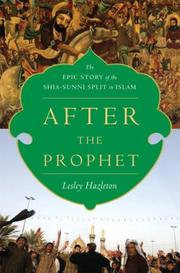
A narrative retelling of the succession crisis and Karbala that makes the human stakes vivid, which is the right first step for a subject usually introduced as a doctrinal footnote. Hazleton is a writer rather than an academic and the book dramatises, so treat it as an entry point and let the scholarly volumes correct the detail.
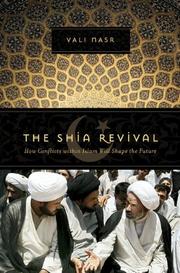
Nasr's argument that the 2003 invasion of Iraq shifted regional power toward Shia populations framed a decade of policy debate. It gives you the contemporary reason the subject is on the agenda, and it flags the sectarian dynamics the last stage examines properly.
The tradition described
IntermediateKnow what Shia Muslims actually believe and practise — the imamate, occultation, ijtihad and the marja'iyya, Ashura ritual — and how Twelver, Ismaili and Zaydi branches differ.
▸ Study plan for this stage
Pace: Eight to ten weeks. Haider's Shi'i Islam is 267 pages of academic writing and takes three weeks read carefully. Momen's An Introduction to Shi'i Islam is 420 pages and functions as a reference — read it over four weeks, or read the doctrine, law and ritual sections properly and use the rest for look
- The imamate as the doctrinal centre: the belief that leadership of the community belongs to divinely designated imams from the Prophet's family, possessing authoritative religious knowledge. This is the doctrine that distinguishes Shia Islam, and everything else in the tradition organises around it
- The three major branches Haider covers, which is his book's main advantage — Twelver (Ithna Ashari), Ismaili (Sevener) and Zaydi (Fiver) — differing over which line of imams continued and how much authority the imam holds. Treating Twelver Shiism as the whole is the most common error in general writ
- The Twelfth Imam and the doctrine of occultation: the lesser occultation with its four representatives, the greater occultation from 941, and the enormous consequence that the community has been without a present imam for over a thousand years
- Occultation as the engine of clerical authority — because the imam is absent, the question of who interprets in his absence becomes the tradition's central institutional problem, and the answer developed over centuries
- Ijtihad and taqlid: qualified scholars exercise independent legal reasoning, and lay believers follow a living marja al-taqlid of their choosing. That the source of emulation must be living is why Twelver religious authority is dynamic in a way that has no Sunni equivalent
- The marja'iyya as an institution — the hawza seminaries at Najaf and Qom, the khums religious tax that funds them independently of states, and the informal competition that produces senior maraji. This financial independence is why stage four's political story is possible
- Ashura and the ritual complex around it: the majlis mourning gathering, the ta'ziya passion play, processions, and the practices of self-mortification that are themselves debated within the tradition. Halm is the best guide to the lived texture
- Taqiyya, the permitted concealment of belief under threat, which is a real doctrine with a real history in periods of persecution and which is also frequently misrepresented in polemical writing. Get the scholarly account before encountering the polemical one
- What is the imamate, and how does it differ from the Sunni conception of the caliphate in both function and authority?
- Distinguish Twelver, Ismaili and Zaydi Shiism by the succession of imams each accepts and by how much authority they attribute to the imam
- What is the occultation, and how did the absence of the imam create the institutional problem that clerical authority answers?
- Explain ijtihad, taqlid and the marja al-taqlid. Why does it matter that the marja must be living?
- Describe the ritual observance of Ashura. Which practices are contested within the tradition itself, and on what grounds?
- What does taqiyya actually permit, in what circumstances, and how is it commonly misrepresented?
- Draw the lines of imams for all three branches on one page, marking where each branch diverges. Twenty minutes, and it fixes the single most confusing thing about the subject.
- Write out the chain from occultation to the modern marja'iyya as a numbered sequence of institutional developments. This is the argument that connects a ninth-century doctrine to a twenty-first-century political actor.
- Read Halm's description of a majlis and then, if you can, watch or attend a public Ashura observance in your own city — most large cities have one and they are generally open. Description and observation are different kinds of knowledge.
- Take one legal question and find how a current marja rules on it; several publish their rulings. Seeing ijtihad in operation is more instructive than reading its definition.
- Return to your 632 to 680 timeline and mark, beside each event, the earliest source that describes it and its date of compilation. The gaps you find are stage three's subject.
Next up: You now have the tradition as scholars describe it, which is the necessary preparation for the argument about whether the earliest sources can support any description at all.

The best current introduction: Haider covers all three major branches rather than treating Twelver Shiism as the whole, and is explicit about which historical claims rest on later sources. Start the scholarly reading here.
The long-standing reference work on Twelver Shiism — history, doctrine, law, ritual and geography in one volume. Older than Haider and correspondingly more traditional in its handling of the early period, but nothing has replaced it for coverage.
Halm is the leading German scholar of Shiism and writes with unusual economy about ritual life and popular piety, not just doctrine. Read it third for the texture the reference works flatten out.
The formative centuries, where the evidence is contested
IntermediateEngage with the early history directly, and understand why scholars disagree so sharply about what the earliest Islamic sources can be made to support.
▸ Study plan for this stage
Pace: Ten to twelve weeks, and this is the most demanding stage in the path. The Succession to Muhammad is 431 pages of close source criticism — four to five weeks, and slow going, because Madelung argues from the Arabic material in detail. The Charismatic Community is 323 pages and takes three to four we
- The source problem, which is the whole stage: the earliest narrative accounts of the seventh century were compiled in the eighth and ninth, by authors with theological and political commitments, in a tradition that transmitted material orally before writing it down. What that material can establish
- The sceptical school's position, which Madelung is writing against: sources this late, this partisan and this shaped by later doctrinal needs cannot be used to reconstruct events, and the historian must work from documentary, numismatic and external evidence instead
- Madelung's counter-position: the sources can be read critically rather than discarded, because their internal tensions and the material that runs against their authors' interests can be identified and used. He is explicit that this is a methodological choice
- Madelung's substantive conclusion, stated as what it is — an argument, not a consensus — that on the evidence of the sources Ali's claim to succeed was stronger than the Sunni tradition allows, and that the early caliphate is better read as dynastic politics than as principled consensus
- Dakake's different question, which complements rather than competes: not who should have succeeded but how devotion to the Prophet's family hardened into a distinct communal identity across the first two centuries. Politics becoming religion is a slow process and she traces it
- Walaya as Dakake's central concept — a bond of loyalty and devotion to the imams that is simultaneously personal, communal and religious, and that becomes the marker of belonging
- The role of persecution, exclusion and failed revolts in consolidating identity, which is a general mechanism in the formation of religious communities and is well documented here
- Watt's map of the early theological landscape: Kharijites, Murji'ites, Qadarites, Mu'tazila and the emerging Sunni synthesis, with Shia movements as one family among many. Seeing the whole field prevents the retrospective illusion that two traditions faced each other from the beginning
- State the source problem in early Islamic history precisely. What is the gap between the events and the earliest surviving narrative accounts?
- Give the sceptical school's argument and Madelung's response. Which methodological risk does each position accept?
- What is Madelung's central claim about the succession, and identify one point where it depends on accepting a source another scholar might reject
- What does Dakake mean by walaya, and how does it convert political loyalty into religious identity?
- Using Watt, place early Shia movements among the other sects and schools of the first two centuries. What does this wider view correct?
- After all three: what do you consider securely established about the seventh century, and what is reconstruction?
- Take one disputed episode — the events at Saqifa are ideal — and write out what each of your books says about it, with the source each relies on. One page, three columns. This is the stage's core exercise and it makes the methodological problem tangible.
- Return to the timeline you annotated at the end of stage two and mark each event as securely attested, plausibly attested or contested. The proportion in the third category surprises most readers.
- Write 500 words arguing the sceptical position against Madelung as strongly as you can, then a paragraph on why you do or do not find it decisive. Doing this properly is what separates reading history from consuming it.
- Trace Dakake's account of one specific community's development across the two centuries she covers and write it as a short narrative. Her material is dense and rendering it as a story is how you find out whether you followed it.
- Draw Watt's landscape of early sects as a diagram with the theological questions that divide them on the connecting lines. The picture makes clear that the Sunni-Shia division was one of several and not initially the most prominent.
Next up: Having seen how contested the tradition's origins are, the final stage watches how that tradition is invoked, adapted and sometimes instrumentalised in modern politics.
Madelung reads the early Arabic sources closely and concludes that Ali's claim was stronger than the Sunni tradition allows. His willingness to use those sources at all puts him against the sceptical school, which holds that material written centuries later cannot establish seventh-century events — that methodological argument is the central one in early Islamic history, and this is the book to meet it in.
A study of how Shia identity formed in the first two centuries, tracing loyalty to the family of the Prophet as it hardened into a distinct communal and religious commitment. It answers the question Madelung's political narrative leaves open: how a faction became a faith.

Watt maps the whole early landscape of sects and theological schools, so Shiism appears as one movement among many rather than in isolation. Dated in places, still the clearest map of the terrain.
Shia politics in the modern Middle East
IntermediateFollow how clerical authority, revolution and minority politics have played out in Iran, Iraq and Lebanon, and separate religious tradition from the political movements that invoke it.
▸ Study plan for this stage
Pace: Ten to twelve weeks. The Shi'is of Iraq is 326 pages of social history and takes three to four weeks. Reaching for Power is 248 pages and reads faster, about two weeks, and assumes the first book. Guardians of the Revolution and Hezbollah: A Short History are both accessible and take about two to th
- Nakash's foundational finding in The Shi'is of Iraq, which surprises nearly everyone: Iraq's Shia majority is relatively recent, formed largely in the nineteenth century as settling tribes converted, driven by the shrine cities and by Ottoman land policy. A community often described as ancient is in
- The shrine cities of Najaf and Karbala as economic and scholarly centres, and the transnational character of clerical authority, which sits awkwardly with any national state
- Nakash's wider argument in Reaching for Power: Shia communities across the Arab world — Iraq, Lebanon, Bahrain, Saudi Arabia's Eastern Province — have generally pursued representation within existing states rather than revolution, and reading them as an Iranian bloc mistakes the politics
- The quietist versus activist question in clerical thought, which is the single most important distinction in this stage: Khomeini's wilayat al-faqih, guardianship of the jurist, is a specific and historically novel doctrine of direct clerical rule, and Sistani's Najaf tradition rejects it in favour
- Takeyh's method in Guardians of the Revolution: taking ideological commitments seriously as real motivations while insisting that Iranian foreign policy also responds to factional competition, national interest and circumstance. Neither pure ideology nor pure realism explains the record
- The factional structure of the Iranian state — competing centres of power, elected and unelected institutions, the Revolutionary Guard's growth into an economic actor — which is why the state's behaviour is often inconsistent
- Norton on Hezbollah's trajectory: formed amid the Israeli invasion of 1982 and the Lebanese civil war, transformed into a parliamentary party, a social service provider and a military force. The organisation is best understood through Lebanon's confessional system and the Shia community's historical
- The synthesis to arrive at: sectarian identity is real and consequential and is a poor primary explanation. Where sectarian conflict occurs, these books consistently find state weakness, exclusion from power and elite mobilisation doing the causal work
- How and when did Iraq's Shia majority form, according to Nakash? Why does that finding matter for how Iraqi politics is described?
- Explain wilayat al-faqih and the Najaf quietist position. Why can you not predict a cleric's politics from his theology alone?
- How does Takeyh balance ideology and interest in explaining Iranian foreign policy? Give one episode where each is the better explanation
- Trace Hezbollah's transformation from militia to political party. What did Lebanon's confessional system contribute to that trajectory?
- Go back to your stage-one list of Nasr's claims. Which of them do Nakash, Takeyh and Norton support, and which do they undercut?
- Where sectarian violence has occurred in the region, what do these books identify as the causal factors beyond sect itself?
- Write a one-page comparison of Najaf and Qom as centres of religious authority — history, doctrine on clerical rule, relationship to their states, present influence. This single page explains more about regional politics than any account organised by country.
- Take the list of Nasr's sectarian-determinist claims from stage one and mark each supported, qualified or contradicted by the four books in this stage. This is the exercise the path's structure was built for.
- Pick one recent regional event and write two explanations of it — one primarily sectarian, one primarily about state capacity and elite incentives. Then say which fits the evidence better and what would change your mind.
- Read a current statement or ruling from a senior marja alongside a statement from the Iranian government on the same issue. Where they diverge is the practical proof that tradition and state are not the same thing.
- Write a final one-page answer to the question this path exists to answer: what is Shia Islam, and what is it not? Keeping the religious tradition, the historical communities and the political movements distinct in a single page is the whole discipline of the subject.
Next up: This is the end of the path — the founding events, the tradition as described by scholars, the contested early history and the modern politics — and you can now read reporting on the region and tell when sect is doing explanatory work and when it is standing in for something else.
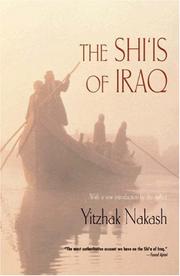
The standard history of how Iraq's Shia majority formed and how it related to the Ottoman and then Iraqi state. It is the necessary background to everything written about Iraq after 2003.
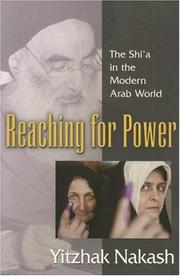
Nakash's follow-up widens the frame to Shia communities across the Arab world and their pursuit of political representation. Read it directly after the Iraq study, which it assumes.

A history of Iranian foreign policy since 1979 that takes the regime's ideological commitments seriously without reducing its behaviour to them. It is the corrective to accounts that read Iranian strategy straight off Shia doctrine.
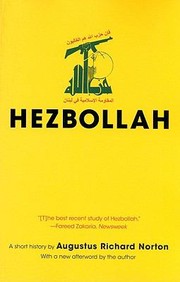
Norton has studied Lebanon's Shia community since the 1980s, and this is the clearest short account of how a militia became a party, a social service network and a regional actor. The right place to finish, because it shows the tradition operating in politics at close range.
Discussion
Keep reading
Paths that share books, cover the same subject, or open a related topic.