Understand the modern Middle East
This curriculum moves from the broad sweep of modern Middle Eastern history down into its sharpest fault lines — the post-Ottoman order, the Israeli-Palestinian conflict, Iran and the Gulf, and the ideological forces still reshaping the region. Each stage builds the vocabulary and mental map needed to make sense of the next, starting with accessible narrative history and ending with analytically demanding works that argue competing interpretations.
Building the Map: Origins of the Modern Middle East
BeginnerUnderstand how the modern Middle East was created — the collapse of the Ottoman Empire, the drawing of borders by European powers, and the foundational tensions that still define the region.
▸ Study plan for this stage
Pace: 10–12 weeks total: ~5–6 weeks per book at roughly 25–35 pages/day, reading 5 days a week. Start with Fromkin's "A Peace to End All Peace" (covers 1914–1922 in depth, ~600 pages), then move directly into Rogan's "The Arabs" (~550 pages), which broadens the lens to Arab peoples across the full arc of
- The Ottoman Empire's structure and its long decline — understanding what existed before the modern states helps explain why their collapse was so consequential (Fromkin, Parts I–II)
- World War I as the pivot point: how the war gave Britain and France the opportunity and motivation to redraw the Middle East (Fromkin, Parts III–V)
- Competing and contradictory promises — the Hussein-McMahon Correspondence, the Sykes-Picot Agreement, and the Balfour Declaration, and how they planted the seeds of lasting conflict (Fromkin, Parts IV–VI)
- Mandate system and artificial borders: how European powers created Iraq, Syria, Lebanon, Transjordan, and Palestine with little regard for ethnic, sectarian, or tribal realities (Fromkin, Part VII; Rogan, Chapters 5–7)
- Arab nationalism: its intellectual origins in the Nahda (Arab cultural renaissance), its promises, and its repeated frustrations at the hands of colonial powers (Rogan, Chapters 3–6)
- The Palestinian question as a recurring fault line — from the Balfour Declaration through the 1948 Nakba — and how Rogan frames it from an Arab perspective (Rogan, Chapters 6–8)
- The role of oil in transforming the region's geopolitics and the relationship between Gulf states and Western powers in the 20th century (Rogan, Chapters 9–11)
- Post-colonial state-building and its failures: why many modern Middle Eastern states struggled to build legitimacy, and the rise of authoritarian regimes as a response (Rogan, Chapters 10–14)
- According to Fromkin, what were the three major contradictory promises Britain made between 1915 and 1917, to whom were they made, and why did British officials believe they could honor all three simultaneously?
- How did the Sykes-Picot Agreement reflect European imperial assumptions about the Middle East, and in what ways did the borders it inspired differ from the political and social realities on the ground?
- Rogan argues that Arab history in the modern era is largely a story of agency alongside — and resistance to — outside interference. What evidence from both books supports or complicates this view?
- How did the collapse of the Ottoman Empire create a power vacuum, and why did the solutions imposed at the Paris Peace Conference (1919) fail to produce stable states?
- What is the Nakba, how does Rogan describe its causes and consequences, and how does it connect to the earlier Balfour Declaration that Fromkin details?
- By the end of both books, which foundational tensions from the post-WWI settlement are still visibly unresolved in the contemporary Middle East, and which book gives you a better framework for understanding why?
- Draw the map twice: First, sketch the Ottoman Empire's territorial extent circa 1900 from memory using Fromkin's early chapters as a guide. Then, after finishing both books, draw the post-WWI mandate borders. Compare the two and annotate where the biggest mismatches between borders and populations occurred.
- Create a 'Promises Timeline': Build a simple chronological chart (paper or digital) logging every major promise, agreement, or declaration made by Britain and France between 1914 and 1922 (Hussein-McMahon, Sykes-Picot, Balfour, Treaty of Sèvres, Treaty of Lausanne). Note who made each promise, to whom, and whether it was kept — this directly mirrors Fromkin's central argument.
- Perspective journals: After finishing each major section of Rogan's 'The Arabs,' write a short (1-page) journal entry from the perspective of an Arab living through that moment — an Ottoman Arab in 1916, a Palestinian in 1948, an Egyptian in 1956. This forces active engagement with Rogan's emphasis on Arab agency and experience.
- Debate the mandate system: Write two short paragraphs (one for, one against) the proposition: 'The borders drawn by Britain and France after WWI were the primary cause of instability in the modern Middle East.' Use specific evidence from both Fromkin and Rogan. This builds the habit of using sources to argue multiple sides.
- Glossary building: As you read, maintain a running glossary of 20–30 key terms — Mandate, Nahda, Nakba, Hashemite, Zionism, Caliphate, Sykes-Picot, Wahhabi, Pan-Arabism, etc. Write each definition in your own words and note the page where you first encountered it in either book.
- Connecting to today: Choose one current news story about the Middle East (e.g., conflict in Gaza, political instability in Lebanon, or tensions in Iraq) and write a one-page memo tracing its roots back to at least one specific event or decision covered in Fromkin or Rogan. This is the core skill the entire stage is building.
Next up: Mastering the colonial origins and foundational tensions of the modern Middle East in this stage equips the reader to move into deeper thematic or country-specific studies — whether the Arab-Israeli conflict, the politics of oil, political Islam, or individual state histories — with a firm structural map of why the region looks the way it does today.
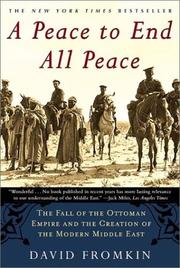
The essential starting point: a sweeping, readable narrative of how Britain and France carved up the Ottoman world after WWI and invented the modern map. Establishes the historical baseline every later book assumes you know.

A comprehensive yet accessible history of the Arab world from the Ottoman period to the present, told from an Arab perspective. Fills in the human and political story that Fromkin's diplomatic history leaves out.
The Core Conflict: Israel, Palestine, and Zionism
BeginnerGrasp the full arc of the Israeli-Palestinian conflict — its ideological roots, key wars, and competing national narratives — well enough to evaluate different viewpoints critically.
▸ Study plan for this stage
Pace: 10–12 weeks total. Week 1–3: "The Lemon Tree" (~30 pages/day, ~250 pages); Week 4–7: "Israel" by Martin Gilbert (~25 pages/day, ~800 pages — the most demanding read, allow extra time); Week 8–10: "The Ethnic Cleansing of Palestine" (~25 pages/day, ~250 pages). Reserve weeks 11–12 for review, synthes
- Zionism as a political ideology: its 19th-century European origins, internal diversity (political, cultural, revisionist), and the logic of Jewish national self-determination that drives it
- The Palestinian national narrative: the concept of sumud (steadfast endurance), the meaning of al-Nakba ('the Catastrophe' of 1948), and the centrality of the right of return
- The Lemon Tree's 'two families, one house' framework: how a single shared physical space (the house in al-Ramla/Ramla) embodies the competing claims of Israelis and Palestinians at a human level
- Martin Gilbert's chronological-diplomatic lens: the role of the British Mandate, the 1947 UN Partition Plan, and the successive Arab-Israeli wars (1948, 1956, 1967, 1973, 1982) in shaping the modern state of Israel
- Ilan Pappé's thesis of 'Plan Dalet' (Plan D): the argument that the expulsion of ~700,000 Palestinians in 1948 was a deliberate, planned act of ethnic cleansing rather than a by-product of war
- Historiographical debate — 'New Historians' vs. traditional Zionist historiography: understanding that the same events (1948, the refugee crisis, village destructions) are interpreted through radically different evidentiary and moral frameworks
- The refugee question as an ongoing political reality: UNRWA, the Palestinian diaspora, and why the 1948 displacement remains the central unresolved issue in peace negotiations
- Critical source literacy: recognizing how each author's positionality (Tolan as a narrative journalist, Gilbert as a pro-Israel historian, Pappé as a post-Zionist Israeli scholar) shapes selection of evidence, tone, and conclusion
- After reading 'The Lemon Tree,' can you explain how the story of Bashir Khairi and Dalia Eshkenazi illustrates the broader collision of Israeli and Palestinian national identities — and why Tolan chose a single house as his narrative anchor?
- Based on Martin Gilbert's account in 'Israel,' what were the key military, diplomatic, and demographic turning points between 1948 and the Oslo Accords, and how does Gilbert frame Israeli military actions as defensive rather than expansionist?
- What is Ilan Pappé's central argument in 'The Ethnic Cleansing of Palestine,' what primary evidence does he marshal for Plan Dalet, and what specific criticisms have historians leveled at his methodology?
- How do Gilbert and Pappé interpret the same event — the 1948 War — differently? What does each author emphasize, what does each omit, and what does that tell you about the role of national narrative in historiography?
- What is the 'right of return,' why is it non-negotiable for most Palestinians (as illustrated in 'The Lemon Tree'), and why does it present an existential dilemma for the Jewish-majority state that Gilbert describes?
- Having read all three books, can you articulate at least two internally coherent but mutually contradictory viewpoints on who bears primary moral responsibility for the Palestinian refugee crisis — and what evidence each side would cite?
- Dual-narrative timeline: Draw a single chronological timeline from 1880 to 2000. Above the line, mark key events as Gilbert frames them (Zionist congresses, wars, Israeli achievements); below the line, mark the same period as Pappé and Tolan frame it (waves of displacement, Nakba villages, refugee milestones). Visually identify where the two narratives diverge most sharply.
- Character empathy journal: While reading 'The Lemon Tree,' keep a two-column journal — one column for Dalia's perspective, one for Bashir's. After finishing the book, write a single 300-word paragraph that steelmans each character's position without dismissing the other.
- Source interrogation worksheet: For one specific event covered by both Gilbert and Pappé (e.g., the fall of Haifa in April 1948 or the Deir Yassin massacre), write out each author's account side by side. List: (a) facts both agree on, (b) facts only one mentions, (c) the interpretive framing each uses, and (d) what additional primary source you would need to adjudicate between them.
- Concept definition cards: Create flashcards for 15 key terms drawn directly from the three books — e.g., Nakba, Aliyah, Plan Dalet, Haganah, Irgun, sumud, UNRWA, Partition Plan, Law of Return, Oslo Accords — writing the term on one side and a definition grounded in how each book uses it on the other.
- Structured debate preparation: Write two short position papers (200–300 words each) — one defending Gilbert's interpretive framework, one defending Pappé's — as if preparing for a formal debate. Then write a 150-word reflection on which argument you found harder to write and why.
- Synthesis essay: After completing all three books, write a 600–800 word essay answering: 'Is the Israeli-Palestinian conflict primarily a conflict over land, over identity, or over historical memory — and do Tolan, Gilbert, and Pappé agree?' Cite specific passages from each book.
Next up: By internalizing the competing narratives, key wars, and historiographical fault lines of the Israeli-Palestinian conflict, the reader has built the analytical scaffolding needed to engage with the broader regional dynamics — Arab nationalism, Cold War interventions, oil politics, and Islamist movements — that the next stage of the curriculum will explore across the wider Middle East.
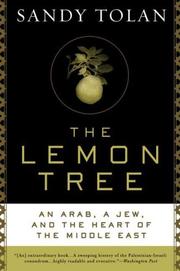
A single shared house in Israel/Palestine becomes the lens for the entire conflict. Deeply human and scrupulously balanced, it is the ideal first book on this topic before tackling denser histories.
A thorough, fact-rich narrative of Israel's founding and development. Read after The Lemon Tree to get the structural and political history behind the personal stories.
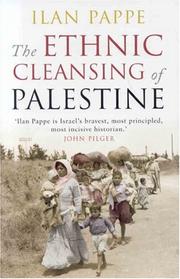
A prominent Israeli historian's forceful Palestinian-centered account of 1948. Deliberately placed after Gilbert to give the reader a fully argued counter-narrative and sharpen critical thinking about sources.
Islam, Nationalism, and Political Identity
IntermediateUnderstand the ideological forces — Arab nationalism, political Islam, and sectarianism — that have driven revolutions, wars, and movements across the region.
▸ Study plan for this stage
Pace: 6–8 weeks total: Weeks 1–3 on "The Arab Cold War" (~25–30 pages/day, including re-reading dense political passages); Weeks 4–7 on "No God but God" (~20–25 pages/day, pausing to reflect on theological arguments); Week 8 reserved for synthesis, review, and completing exercises.
- Arab nationalism (Nasserism) as a secular, pan-Arab ideology and its rivalry with Ba'athism — explored through Kerr's analysis of Nasser vs. the Ba'ath Party in Egypt, Syria, and Iraq
- The Arab Cold War as an intra-regional ideological contest between 'revolutionary' republics and 'reactionary' monarchies, distinct from but entangled with the US–Soviet Cold War
- The role of propaganda, radio, and political rhetoric in constructing pan-Arab identity across borders, as detailed in Kerr's case studies
- The failure of Arab unity projects (e.g., the UAR) and what Kerr reveals about how personal ambition and state interests undermine ideological solidarity
- The origins of Islam and the early schism between Sunni and Shia — Aslan's historical narrative as the foundation for understanding modern sectarian conflict
- Political Islam as a modern ideological response to colonialism, authoritarianism, and cultural dislocation — Aslan's treatment of reformers, revolutionaries, and jihadists
- The tension between Islamic universalism and ethnic/national identity, and how Aslan shows this plays out from the Prophet's era through the 20th century
- Sectarianism as both a genuine theological divide and a politically weaponized tool — a thread connecting both Kerr and Aslan
- According to Kerr, what were the core ideological differences between Nasserism and Ba'athism, and why did those differences make genuine Arab unity structurally difficult?
- How does Kerr define the 'Arab Cold War,' and in what ways did it mirror or diverge from the global superpower rivalry of the same era?
- What does Aslan argue about the relationship between the original Islamic community (the umma) and political authority — and how does that argument explain later Sunni–Shia tensions?
- How does Aslan trace the emergence of modern political Islam (e.g., the Muslim Brotherhood, Wahhabism, revolutionary Shi'ism) as responses to specific historical crises rather than timeless religious impulses?
- Taken together, how do Kerr and Aslan help explain why secular Arab nationalism largely declined by the 1970s–80s while political Islam rose to fill the ideological vacuum?
- What does each author reveal about the relationship between religious identity and national identity in the Middle East — are they competing, complementary, or context-dependent?
- Timeline construction: Build a single master timeline spanning 600 CE to 1970, marking key events from Aslan (the Hijra, Battle of Karbala, colonial mandates, the Iranian Revolution's precursors) alongside Kerr's political events (1952 Egyptian Revolution, 1958 UAR, 1967 War). Look for moments where the two narratives intersect or illuminate each other.
- Ideology comparison chart: Create a two-column (or more) chart comparing Arab nationalism, Ba'athism, and political Islam across dimensions such as: source of legitimacy, vision of the state, attitude toward the West, role of religion, and key leaders. Use direct quotes or paraphrases from Kerr and Aslan as evidence.
- Close-reading exercise on rhetoric: Select one of Kerr's quoted political speeches or communiqués and one of Aslan's quoted religious texts or fatwas. Write a 1–2 page analysis of how each text constructs identity (who is 'us,' who is 'them,' what is the enemy) and what emotional or ideological work the language is doing.
- Counterfactual essay: Write a 500-word response to the question — 'If the United Arab Republic had survived beyond 1961, how might the trajectory of political Islam in the region have differed?' Draw explicitly on arguments from both Kerr and Aslan.
- Annotated map exercise: Using a blank map of the Middle East, annotate at least 8 countries with: (a) the dominant ideological force at play in the 1950s–60s per Kerr, and (b) the dominant religious/sectarian dynamic per Aslan. Add brief notes on how those two layers interact in each case.
- Discussion or journal prompt — personal synthesis: After finishing both books, write a one-page reflection answering: 'Which is a more powerful driver of political behavior in the modern Middle East — ethnic/national identity or religious identity?' Cite specific evidence from both Kerr and Aslan, and acknowledge where the books complicate a simple answer.
Next up: By mapping the ideological blueprints — pan-Arabism, political Islam, and sectarianism — laid out in Kerr and Aslan, the reader is now equipped to understand the concrete state-level conflicts, wars, and geopolitical rivalries that translate these ideas into historical events in the next stage.
A concise classic on the rivalry between Nasser's Egypt and other Arab states in the 1950s–60s. Introduces the logic of Arab nationalism and inter-Arab competition that echoes in every later conflict.
An accessible, widely-read account of Islam's history and the internal struggle over its future. Provides the religious and intellectual vocabulary needed to understand Islamist movements without reductionism.
Iran, the Gulf, and the Architecture of Power
IntermediateUnderstand the Iranian Revolution and its regional consequences, the Gulf states and oil politics, and the Sunni-Shia rivalry that structures so much of today's conflicts.
▸ Study plan for this stage
Pace: 6–7 weeks total: Weeks 1–3 for "All the Shah's Men" (~25–30 pages/day, ~220 pages), and Weeks 4–7 for "The Shia Revival" (~20–25 pages/day, ~280 pages). Allow one buffer day per week for note review and reflection.
- The 1953 CIA/MI6-backed coup (Operation Ajax) that overthrew Iranian PM Mohammad Mosaddegh and its long shadow over U.S.–Iran relations
- Oil nationalization as a sovereign and anti-colonial act, and how Western economic interests shaped Cold War interventionism in the Middle East
- The Pahlavi monarchy's dependence on foreign backing and how that dependence delegitimized the Shah in Iranian eyes, feeding the 1979 Revolution
- The 1979 Islamic Revolution as a direct blowback to decades of Western interference — Kinzer's central thesis connecting 1953 to 1979
- The theological and historical roots of the Sunni–Shia split: the succession crisis after the Prophet Muhammad's death, the Battle of Karbala, and the figure of Imam Hussein
- Shia political theology — the concept of martyrdom, clerical authority (wilayat al-faqih), and how Khomeini weaponized Shia identity into a revolutionary ideology
- The post-2003 Iraq War as a geopolitical earthquake that empowered Shia communities across the region and triggered Sunni Arab fears of a 'Shia Crescent'
- Gulf state power (especially Saudi Arabia) as the anchor of Sunni political order, and how the Saudi–Iranian rivalry functions as a proxy framework for regional conflicts in Lebanon, Iraq, Bahrain, and Yemen
- According to Kinzer, how did the 1953 coup directly create the conditions for the 1979 Islamic Revolution — what was the chain of cause and effect?
- What were Mosaddegh's core arguments for nationalizing Iranian oil, and why did the British and Americans find them so threatening beyond mere economics?
- How does Vali Nasr define the 'Shia Revival,' and what specific event does he identify as its triggering catalyst?
- What is wilayat al-faqih (guardianship of the jurist), and how did Khomeini transform a quietist religious concept into an instrument of political power?
- How do Kinzer and Nasr together explain why ordinary Iranians — secular and religious alike — came to view the United States with deep suspicion by 1979?
- According to Nasr, in which specific countries is the Sunni–Shia rivalry most consequential, and what local factors in each country amplify the broader regional competition between Saudi Arabia and Iran?
- **Annotated Timeline:** Build a single master timeline spanning 1908–2006 that integrates both books — mark the discovery of Iranian oil, the 1953 coup, the Revolution, the Iran–Iraq War, and the 2003 Iraq invasion. Annotate each event with one sentence explaining its role in either book's argument.
- **Thesis Stress-Test:** Write a one-page response to this prompt: 'Kinzer argues that 1953 caused 1979. Is this convincing, or does it oversimplify Iranian history?' Use only evidence from All the Shah's Men, then note what Nasr's account of Shia theology adds or complicates.
- **Sectarian Map Exercise:** Draw or annotate a blank map of the Middle East marking the approximate Shia-majority or significant-Shia-minority populations in Iran, Iraq, Lebanon, Bahrain, Saudi Arabia's Eastern Province, and Yemen. For each country, write two sentences from Nasr's framework explaining the local political stakes.
- **Character/Faction Profile Cards:** Create brief profile cards (index cards or a table) for the key actors in both books — Mosaddegh, the Shah, Khomeini, and the major Shia political movements Nasr discusses (e.g., Hezbollah, SCIRI/ISCI, Sadrists). Note each actor's goals, power base, and relationship to Iran.
- **Comparative Lens Journal Entry:** After finishing both books, write a 300–400 word journal entry answering: 'What would Mosaddegh think of the Islamic Republic?' Use Kinzer's portrait of Mosaddegh's secular nationalism and Nasr's account of clerical power to construct a reasoned, evidence-based answer.
- **Current Events Bridge:** Find one news article (no older than 12 months) about either the Saudi–Iranian rivalry or U.S.–Iran tensions. Write a paragraph explaining how the frameworks from Kinzer and Nasr help make sense of the story — and where those frameworks fall short.
Next up: By grounding the reader in Iran's revolutionary logic and the sectarian architecture of Gulf power, this stage builds the essential lens for understanding the next layer of regional complexity — the Israeli-Palestinian conflict, Arab nationalism, and the post-Arab Spring fractures — where the same fault lines of foreign intervention, identity politics, and state legitimacy reappear in new forms.
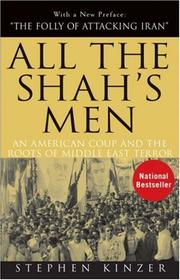
The story of the 1953 CIA coup in Iran — a pivotal event that explains Iranian distrust of the West and the conditions that made the 1979 Revolution possible. Short, gripping, and essential context.
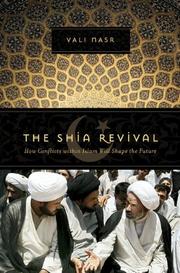
The definitive account of the Sunni-Shia divide and how Iran's revolution unleashed a sectarian contest for regional dominance. Directly explains the fault lines in Iraq, Lebanon, Yemen, and Syria.
The Contemporary Disorder: Wars, Uprisings, and What Comes Next
ExpertAnalyze the forces — state failure, jihadism, foreign intervention, and the Arab Spring's aftermath — that have produced today's Middle East, and evaluate competing frameworks for understanding where the region is headed.
▸ Study plan for this stage
Pace: 8–10 weeks total: Weeks 1–5 for "The Looming Tower" (~30–35 pages/day, 5 days/week), and Weeks 6–10 for "The New Middle East" (~25–30 pages/day, 5 days/week). Reserve one day per week for review, note synthesis, and exercise work.
- The ideological genealogy of jihadism: how figures like Sayyid Qutb and Abdullah Azzam shaped al-Qaeda's worldview, as traced in The Looming Tower
- The institutional failures of the FBI and CIA — bureaucratic rivalry, siloed intelligence, and missed warnings — as structural (not merely personal) causes of 9/11
- The role of state sponsorship, safe havens (Sudan, Afghanistan), and transnational networks in enabling non-state armed groups
- The Arab Spring as a rupture event: why Danahar frames 2011 not as a democratic wave but as the collapse of the post-colonial Arab state bargain
- The divergent trajectories of Arab Spring countries — Tunisia's partial transition, Egypt's counter-revolution, Syria and Libya's descent into civil war — and what explains the variation
- Foreign intervention as a double-edged variable: how outside powers (Gulf states, Iran, Turkey, the West) simultaneously responded to and deepened regional disorder
- The competition between state actors, jihadist movements, and popular civil society as three distinct forces vying to fill post-authoritarian vacuums
- Competing analytical frameworks for the region's future: civilizational-conflict models vs. political-economy models vs. geopolitical realignment models
- According to Wright in The Looming Tower, what specific ideological and organizational decisions by bin Laden and Zawahiri transformed al-Qaeda from a regional militant network into a global jihadist project — and how did U.S. policy failures enable that transformation?
- How does Wright use the FBI–CIA rivalry as a microcosm of broader systemic dysfunction? What does this reveal about how democratic states struggle to respond to asymmetric threats?
- Danahar argues that the Arab Spring exposed the fundamental illegitimacy of the post-1967 Arab state. What evidence does he marshal for this claim, and where does it hold up least convincingly?
- Comparing at least two country cases from The New Middle East (e.g., Egypt and Syria, or Libya and Bahrain), what variables best explain why some states experienced negotiated transition, some counter-revolution, and some outright collapse?
- How do Wright and Danahar together illuminate the relationship between jihadism and state failure — does jihadism cause state failure, exploit it, or both? Use specific examples from both books.
- What frameworks does Danahar offer for understanding where the Middle East is headed, and what are the strongest critiques of each? Which do you find most analytically persuasive and why?
- Ideological Mapping (Looming Tower): Build a one-page 'genealogy of jihadism' diagram tracing the intellectual lineage from Qutb → Azzam → bin Laden → Zawahiri, annotating each node with the key doctrinal contribution and the historical context that radicalized each figure.
- Intelligence Failure Autopsy (Looming Tower): Write a 600-word structured memo — as if addressed to a 9/11 Commission — identifying the three most consequential institutional failures Wright documents, distinguishing between failures of information, failures of analysis, and failures of coordination.
- Country Trajectory Matrix (New Middle East): Create a comparative table for at least five Arab Spring countries covered by Danahar. Columns should include: pre-2011 regime type, key grievances, external intervention (who and how), outcome by 2013, and one 'hinge moment' that determined the trajectory.
- Cross-Book Synthesis Essay: Write a 900–1,200-word analytical essay arguing whether the disorder documented in both books is best understood as (a) a product of ideology (jihadism), (b) a product of structural state failure, or (c) a product of external interference. Use evidence from both Wright and Danahar, and explicitly steelman the two positions you ultimately reject.
- Primary Source Dialogue: Find and read one primary source referenced or implied by each book — e.g., a declassified CIA memo from the 9/11 Commission archive for Wright, and a speech by an Arab Spring leader (Morsi, Gaddafi, or Assad) for Danahar. Write a one-paragraph reflection on how the primary source complicates or confirms each author's argument.
- Forecasting Exercise (New Middle East): Based solely on the analytical frameworks Danahar presents, write a 400-word structured forecast for one country he covers, specifying which variables you are tracking, what outcome you predict, and what single development would most cause you to revise your forecast.
Next up: By establishing the deep ideological roots of jihadism (Wright) and the structural collapse of the Arab state order (Danahar), this stage equips the reader with the causal vocabulary needed to engage more advanced historiographical and policy debates — whether the next stage focuses on comparative democratization, the geopolitics of great-power competition in the region, or the long-term futures o
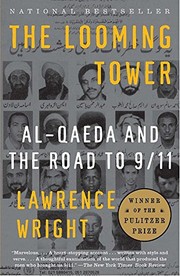
A Pulitzer Prize-winning narrative of the rise of al-Qaeda that traces jihadism from its Egyptian and Saudi roots to 9/11. Synthesizes religion, politics, and biography into the most readable account of modern Islamist militancy.

A BBC bureau chief's on-the-ground account of the Arab Spring and its violent aftermath across the region. Brings the curriculum up to the present and forces the reader to apply everything learned in earlier stages to living events.
Discussion
Keep reading
Paths that share books, cover the same subject, or open a related topic.