The Indian Rebellion of 1857: books to read, in order
In 1857 much of the Bengal Army mutinied, north Indian towns and countryside rose behind it, the last Mughal emperor was declared its figurehead, and the British answer was a campaign of reprisals that ended Company rule and began the Raj. What the event should be called is itself the argument — mutiny, rebellion, uprising, first war of independence — and this path is built to let you form a view. It begins with the Company conquest that made the revolt possible, moves through the narrative, then to the rural and dynastic grievances underneath it, and closes on violence, memory and the nationalist claim.
What the rebellion was against
BeginnerUnderstand how a trading company came to rule India, what annexation and the doctrine of lapse did to Indian rulers, and how Company government worked before 1857.
▸ Study plan for this stage
Pace: Seven to nine weeks for two long books. The Anarchy is around 575 pages of fast narrative history and takes three to four weeks at twenty-five pages a day. India Conquered is a similar length but is a scholarly argument rather than a story, and will take four to five weeks — fifteen pages a sitting
- How a chartered trading company acquired a private army and territorial sovereignty — the central fact The Anarchy exists to explain, and the precondition for everything in 1857
- Plassey, Buxar and the grant of the diwani: the point at which the Company became a tax-collecting government in Bengal rather than a merchant with forts
- The sepoy army as the instrument of the conquest — Indian soldiers under British officers, which is why a mutiny in that army was a constitutional crisis rather than a disciplinary one
- The doctrine of lapse and the annexations of the 1840s and 1850s, which dispossessed ruling houses and created a class of aggrieved elites with retinues, revenues and grievances
- The annexation of Awadh in 1856, the most consequential of them, and the recruiting ground for a large part of the Bengal Army
- Wilson's counter-argument: that the British Indian state was improvised, anxious and far less coherent than either imperial or nationalist accounts suggest, and that its violence often followed from its incomprehension
- The tension between the two books as the path's first methodological lesson — Dalrymple's driving narrative and Wilson's structural scepticism describe the same state and disagree about what kind of thing it was
- Land revenue settlements as the mechanism by which Company rule reached villages that never saw a European, which the third stage will need
- How did the Company move from trading rights to sovereignty? Name the three or four specific steps rather than describing a drift.
- What did the doctrine of lapse actually do, and to whom? Be able to name at least two states and what happened to their ruling families.
- Why did the annexation of Awadh matter more than the others for what happened in 1857?
- Wilson argues the colonial state was anxious and incoherent rather than confident and systematic. What evidence does he offer, and what would Dalrymple's narrative say against it?
- If the state was as improvised as Wilson claims, does that make the rebellion more likely or less? Argue both.
- Before you read a word about 1857 itself: from these two books alone, who would you predict had reason to rebel?
- Draw a map from memory after The Anarchy showing Company territory at roughly 1765, 1800 and 1856. It need not be accurate; the exercise is in noticing how much of north India arrives late, which is where the rising happens.
- Make a one-page list of the annexed and dispossessed ruling houses with the date and the pretext for each. You will hand this back to yourself in the third stage, where several of them reappear as rebels.
- Write 300 words stating Wilson's thesis in your own words, then 300 words on where Dalrymple's account would resist it. Do not settle it — the disagreement is live and productive.
- Note every mention of the Bengal Army's composition, recruitment region and terms of service across both books. It is scattered material and assembling it now saves confusion in the next stage.
- Write down, before you begin the narrative, what you expect the causes of the rebellion to be. Date the page. You will check it twice.
Next up: You now know what kind of state existed in India in 1857 and which groups it had made enemies of, which is the only way the narrative of the rising reads as a consequence rather than an eruption.

The rise of the East India Company from a trading operation to a territorial power with a private army. Popular narrative history, hugely readable, and the necessary first book because the rebellion is a response to everything in it.

A scholarly account arguing that the British Indian state was improvised, anxious and far less coherent than either imperial or nationalist histories claim. Read second as the analytical counterweight to Dalrymple's narrative drive.
The events of 1857-58
IntermediateFollow the outbreak at Meerut, the seizure of Delhi, the sieges of Cawnpore and Lucknow and the reconquest, and notice how differently the same events read depending on whose sources are used.
▸ Study plan for this stage
Pace: Eleven to thirteen weeks. This is the long stage. Hibbert is 470 pages of clear military narrative — three weeks. Saul David is 500 pages and covers much of the same ground with a different emphasis, so it goes faster than its length; three weeks. The Last Mughal is 560 pages and is the book to slow
- The greased-cartridge affair: the immediate trigger, the rumour that cartridge papers were smeared with cow and pig fat, and the reason a technical ordnance question detonated an army
- Meerut in May 1857 and the march on Delhi — how a local mutiny became a political event within forty-eight hours by seizing a capital and a symbol
- Bahadur Shah Zafar, the elderly poet-emperor, proclaimed the rising's figurehead largely against his own inclination, and the difference between a leader and a legitimating symbol
- The sieges: Cawnpore and Lucknow as the episodes that dominated British memory, and the Delhi Ridge as the campaign that decided the outcome
- Hibbert's source base — British letters, diaries and memoirs — and what that produces: excellent military detail and a one-sided interior life
- David's sharper account of causes inside the sepoy army itself: pay, promotion blocked at a low ceiling, caste anxieties, service terms and the resentments that predated the cartridges by years
- Dalrymple's Urdu and Persian documents from the Delhi archives, thousands of them previously unused, which supply the rebellion's own paperwork — petitions, complaints, court orders, ration disputes
- The consequence of that source shift: a rising that in British accounts is a mass, and in the Delhi records is a chaotic administration with named people arguing about grain
- Reconstruct the sequence from the cartridge rumour to the proclamation of Zafar. How many days, and what were the decision points?
- Why Delhi? What did seizing it give the rebels that another city could not?
- Compare Hibbert and David on the causes inside the army. Where do they agree, and what has thirty years of scholarship changed?
- Read Hibbert's Delhi and Dalrymple's Delhi. Same events, different archives — list three specific things Dalrymple can say that Hibbert cannot, and one thing Hibbert has that Dalrymple does not.
- Zafar is a figurehead who did not seek the role. Does the rising have a leadership, and if not, what is holding it together?
- By the end of these three books, is mutiny an adequate description of what you have read? Do not answer the naming question yet — just test the word against the events.
- Build a single timeline for 1857-58: date, place, event, who acted. Ten or twelve entries is enough. Three books covering the same eighteen months in different orders will otherwise blur.
- Take one episode covered by all three — Delhi, Cawnpore or Lucknow — and write a paragraph on how each author frames it. Note the adjectives. The framing is more visible in the modifiers than in the facts.
- In The Last Mughal, find three documents from the Delhi archive that describe an ordinary administrative problem. Write 200 words on what they show about how the rebel government actually functioned.
- Mark every place Hibbert quotes an Indian source. Count them. Then do the same for Dalrymple. The ratio is the clearest single demonstration on this path of what an archive determines.
- Return to the causes you predicted at the end of the previous stage. Revise them now, in writing, and note what you got wrong.
- Write one paragraph on what you still do not understand — specifically, why the rising spread in some districts and not others. The next stage is built to answer exactly that.
Next up: The narrative books explain what the army did and stop at the edge of the cantonments; the next three go into the countryside, which is where the question of whether this was a mutiny or something larger is actually decided.
The classic full narrative from 1978, built largely from British letters, diaries and memoirs. Excellent on the military story and squarely in the older tradition — read it first so the later books have something to push against.
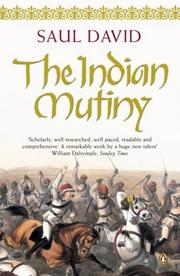
A more recent popular military history, with a sharper account of the causes in the sepoy army itself — pay, promotion, caste and the greased-cartridge affair. Read after Hibbert for the updated military argument.
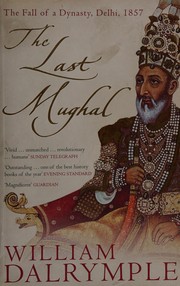
Delhi during the uprising, reconstructed from thousands of Urdu and Persian documents that had never been used, centred on the elderly poet-emperor Bahadur Shah Zafar. The book that most changed how this event is written about in English.
The rebellion outside the army
IntermediateExplain why a mutiny became a general rising in some regions and not others — land settlements, dispossessed gentry, annexed kingdoms, peasant grievance.
▸ Study plan for this stage
Pace: Seven to eight weeks. All three are shorter than anything in the previous stage — Mukherjee 219 pages, Stokes 261, Llewellyn-Jones 237 — and all three are slower per page, because they are regional and analytical rather than narrative. Mukherjee first, over two to three weeks, as the strongest singl
- The central question of this stage: why a mutiny became a general rising in some regions and remained a military affair in others
- Awadh as the place where the revolt came closest to a popular war — annexed only a year earlier, with a dispossessed court, disbanded soldiers, aggrieved taluqdars and a peasantry with its own grievances, all acting together
- The taluqdars: landholders whose position had been undercut by British revenue settlement, and Mukherjee's case that their participation is what turned mutiny into war in that province
- Stokes's method and its discipline — he examines rural participation district by district and refuses to generalise, which produces the most rigorous account available and no single thesis at all
- Revenue settlement, indebtedness and land transfer as the specific rural mechanisms, varying enough between districts that any single-cause account fails on the evidence
- That Stokes died before finishing the book and it was edited into shape posthumously, which is worth knowing because its unresolved quality is partly circumstantial and partly methodological
- Llewellyn-Jones on Britons and Anglo-Indians in captivity or hiding, and on the Indian households that sheltered them — a set of relationships that fit neither side's account of the event
- The complication that follows: a two-sided picture survives the narrative books and does not survive this one
- What was different about Awadh? List the specific conditions Mukherjee identifies and check how many were present in districts that stayed quiet.
- Stokes refuses to generalise. Is that a strength or an evasion? Make the case both ways, then say which you believe and why.
- What is the relationship between land revenue policy and rebellion in Stokes's account? He offers no single answer — can you state the range of answers he finds?
- Llewellyn-Jones describes Indians sheltering Britons at real risk. Where does that fit in the accounts you read in the previous stage, and why is it mostly absent from them?
- After these three, does mutiny describe what happened in Awadh? Does rebellion describe what happened in districts where only the garrison rose?
- Is it possible that the correct answer to what 1857 was differs by district? What would follow for the naming argument if so?
- Build a two-column table as you read Stokes: districts that rose, districts that did not, with one line on the local land settlement in each. The pattern that emerges is weaker than you expect and that is the finding.
- Retrieve the list of dispossessed ruling houses you made in the first stage. Mark which appear in these books as participants. The correlation is the clearest single argument for reading the conquest before the rising.
- Write 400 words on Mukherjee's thesis, then 400 on how Stokes's evidence constrains it. Neither cancels the other and holding both is the actual state of the scholarship.
- From Llewellyn-Jones, pick one household that sheltered a fugitive and write a paragraph on what their choice implies about how the conflict was experienced locally.
- Write a one-page answer to the question you set yourself at the end of the previous stage — why here and not there. It will be a worse answer than you hoped, which is correct.
Next up: Knowing who rebelled and where is what makes the last stage bearable rather than merely appalling, because the violence and the reprisals were distributed by exactly the geography you have just mapped.
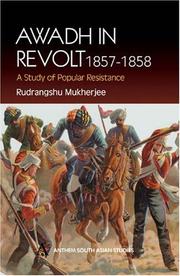
A study of the annexed kingdom of Awadh, where the revolt was most nearly a popular war and where taluqdars, peasants and disbanded soldiers acted together. The strongest case that 1857 was more than a military mutiny.
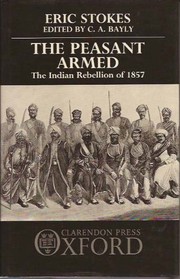
Unfinished at Stokes's death and edited into shape, this examines rural participation district by district and refuses to generalise. The most rigorous treatment of who actually rebelled and why, and the corrective to any single-cause account.
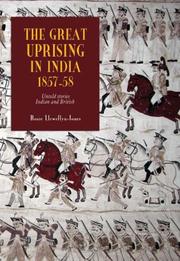
Focuses on the Britons and Anglo-Indians who lived through it in captivity or hiding, and on the Indian households that sheltered them. Placed last here because it complicates the two-sided picture the other books can leave.
Violence, memory and the name
IntermediateConfront the atrocities on both sides and the reprisals that followed, and understand how 1857 became a founding event for Indian nationalism and a trauma story for the British.
▸ Study plan for this stage
Pace: Twelve to fourteen weeks, and pace this stage carefully. Our Bones Are Scattered is over 700 pages and reconstructs the Cawnpore massacres and the British reprisals in unflinching detail — it is the hardest reading on this path and a genuine content warning applies. Four to five weeks, and do not re
- Cawnpore as the event that determined everything after it: the killings of British captives, and the British reprisals that followed, which Ward reconstructs without flinching in either direction
- The reprisals themselves — summary executions, the destruction of villages, executions by cannon — as policy and as spectacle, and their scale relative to the original killings
- Wagner's argument in The Great Fear: that rumour and panic, including the circulating chapatis, produced a British conviction of vast conspiracy, and that the British then acted on the frame rather than on the facts
- The interpretive frame as a historical cause in its own right — what people believed was happening shaped what they did more than what was happening did
- The Skull of Alum Bheg, built around a sepoy's skull found in an English pub, tracing one execution outward into an argument about colonial violence and the trophies it produced
- That Wagner's short book is the clearest statement of the current scholarly view of the reprisals, and that it reaches that view through a single object rather than a survey
- Savarkar's 1909 book, which named 1857 a national war of independence, was written by a Hindu nationalist revolutionary and was banned by the British — a political intervention rather than a work of history, and the origin of the naming argument
- The naming question itself — mutiny, rebellion, uprising, revolt, first war of independence — as a live dispute in which the choice of word carries a claim about what the event was, and which this path exists to let you decide rather than to decide for you
- Ward covers both the killings and the reprisals at length. Having read him, can you state what happened at Cawnpore without using a word that pre-judges it?
- Wagner argues that British belief in a conspiracy was itself a cause of what the British did. What is the evidence, and what would count against the claim?
- What are the chapatis, what did the British think they were, and what does the episode demonstrate about how rumour travels in both directions?
- The Skull of Alum Bheg uses one object to argue about a system. Is that a legitimate historical method? Where is it strongest and where does it strain?
- Savarkar is writing polemic in 1909, not history. What is he claiming, what is he using as evidence, and which parts of his case do the modern scholarly books support?
- What would you call the event, and why? Write the answer with the argument attached, and note which of these thirteen books most moved you toward it.
- Read Ward in short sessions with breaks. This is a practical instruction, not a delicate one — 700 pages of atrocity read continuously produces numbness, which is the opposite of what the book is for.
- Write two accounts of Cawnpore, 300 words each: one that a British memoirist of 1858 would recognise, one that a Kanpur nationalist of 1909 would recognise. Then write a third in your own voice. The exercise is the whole stage in miniature.
- List the words used for the event across all thirteen books on this path — mutiny, rebellion, uprising, revolt, war of independence — with the author and date beside each. The chronology of the vocabulary is an argument in itself.
- Read Savarkar with a pencil, marking claims as supported, unsupported or unfalsifiable. Do this to a political text you find sympathetic as well, at some point; the technique matters more than the target.
- Return to the causes you first predicted at the end of the first stage and revised at the end of the second. Write the final version. Compare all three on one page.
- Write a 1,000-word answer to the question this path was built around: what was 1857, and what should it be called? Cite specific books. It is a genuinely contested question and the point is that your answer is now yours.
Next up: This is the end of the path. The natural next step is forward rather than deeper — the constitutional aftermath, when the Crown replaced the Company and built the Raj on the lessons it drew from these events, most of which were the wrong ones.
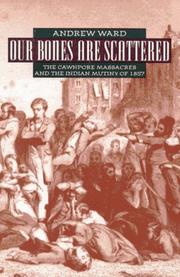
A very long, very detailed reconstruction of the Cawnpore massacres and the British revenge, refusing to flinch in either direction. The hardest reading on the path and the most complete account of the episode that shaped everything afterwards.

On rumour, panic and the circulating chapatis, and how British fear of conspiracy produced the interpretive frame the British then acted on. An unusually intelligent book about what people believed was happening.

Built around a sepoy's skull found in an English pub, this traces one execution into a wider argument about colonial violence and the trophies it produced. Short, disturbing and the clearest statement of the current scholarly view of the reprisals.

The 1909 book that named 1857 a national war of independence, written by a Hindu nationalist revolutionary and banned by the British. It is a political intervention rather than a work of history, and it is here because the argument over what to call the event starts with this text.
Discussion
Keep reading
Paths that share books, cover the same subject, or open a related topic.