J.G. Farrell's Empire Trilogy Reading Order: Where to Start
J.G. Farrell's Empire Trilogy is not a trilogy in the ordinary sense. Troubles, The Siege of Krishnapur and The Singapore Grip share no characters, no continuing plot and no narrator; what they share is a single argument, made three times in three places, about the British Empire discovering that it has already ended and continuing to behave as though it has not. Because nothing carries over, you can technically start anywhere — and the reason to read them in publication order anyway is that the argument sharpens book by book. Troubles is comic and elegiac, Krishnapur is a formal set piece and the funniest, and The Singapore Grip is the longest, angriest and most explicitly economic. Read them 1970, 1973, 1978, then the unfinished fourth, and then the history that turns each novel's background into fact.
The trilogy, in publication order
IntermediateRead the three novels in the order that builds the argument, and see how one idea is tested in three settings
▸ Study plan for this stage
Pace: Ten to twelve weeks for 1,362 pages — Troubles at 446, The Siege of Krishnapur at 344, The Singapore Grip at 572. Farrell writes long, well-made comic sentences that read easily, so 40 to 50 pages an evening is comfortable, but the books are not urgent and rushing them flattens the joke, which depen
- This is not a trilogy in the ordinary sense. Troubles, The Siege of Krishnapur and The Singapore Grip share no characters, no continuing plot and no narrator — only one argument made three times in three places.
- The argument: the British Empire discovering it has already ended, and continuing to behave as though it has not. Every one of the three finds a different setting in which to stage that.
- Troubles is the gentlest version. A demobbed major arrives at a vast decaying hotel in Ireland in 1919 to marry a woman he barely remembers proposing to, while the War of Independence happens off the page.
- The Majestic Hotel is the method in one image: an enormous structure visibly rotting while its residents discuss the weather. Farrell lets the building do the work the plot would ordinarily do.
- The Siege of Krishnapur, which won the Booker, is the tightest of the three: a garrison besieged during the 1857 rebellion, eventually firing the busts of European poets out of its cannon as the ammunition runs out.
- That image — Shakespeare's head as grapeshot — is the trilogy's joke made unbearably concrete, and it is why Krishnapur is the best single entry point if you only ever read one.
- The Singapore Grip names the money. A rubber-trading dynasty carries on with dinner parties as the Japanese come down the peninsula in 1941, and the novel is explicit about the commercial arrangements the other two leave as comedy.
- The order is publication order and it is also an escalation: comedy in Ireland, farce under siege, and then the accounts.
- What does keeping the Irish War of Independence off the page do for Troubles? What would be lost by dramatising it directly?
- The Majestic is a building and it functions as an argument. Trace what happens to it and say what each stage of the decay corresponds to.
- In Krishnapur, what does the Collector believe about civilisation at the start, and what does he believe at the end? Where exactly does it change?
- The busts fired from the cannon are the trilogy's most famous image. What is the joke, and who is it on?
- The Singapore Grip is the least liked of the three and the most explicit about profit. Are those two facts related?
- Three settings, eighty years apart. What does the argument gain from being made three times rather than once?
- Keep a list of the newspaper snippets and reported events in Troubles. Farrell builds a complete parallel history out of scraps and seeing it assembled is the point of the technique.
- In Krishnapur, note which objects of Victorian civilisation are destroyed or repurposed and in what order. It is a deliberate sequence, not a series of gags.
- Read the Collector's Great Exhibition material in Krishnapur twice — once as comedy, once as a statement of belief. Both readings are correct and that doubleness is Farrell's whole register.
- In The Singapore Grip, follow the rubber. The commercial exposition readers skip is where the book's argument actually lives.
- After all three, write one sentence stating the trilogy's argument. Then find the page in each novel that states it most directly.
Next up: Three novels made the argument and a fourth was under way when Farrell died; the fragment shows where the sequence was going.
Start here. A demobbed major arrives at a vast, decaying hotel in Ireland in 1919 to marry a woman he barely remembers proposing to, while the War of Independence happens somewhere off the page. The hotel's slow collapse is the whole method of the trilogy stated once, gently — begin with the gentlest version.
The Booker winner, and the tightest of the three: a garrison besieged during the 1857 rebellion, firing the busts of European poets out of its cannon as the ammunition runs out. Read it second — it is the same joke as Troubles made unbearably concrete, and it is the best single entry if you only ever read one.
The longest and the least loved, and the one that names the money: a rubber-trading dynasty carrying on with dinner parties as the Japanese come down the peninsula in 1941. Read it last, because it is the book that makes explicit what the other two leave as comedy.
The unfinished fourth
IntermediateRead the novel Farrell was writing when he died, and see where the sequence was going
▸ Study plan for this stage
Pace: About a week for 254 pages, and read it as a fragment rather than a novel. The Hill Station was left incomplete when Farrell drowned in 1979 and is published with an editorial afterword by John Spurling, whose credit appears alongside Farrell's on the record. The prose reads at the same easy 40 page
- The Hill Station follows a Victorian doctor travelling up to Simla and arriving into an Anglican church controversy. It breaks off unfinished.
- It is the only evidence of what a fourth Empire book would have been, and the editorial apparatus published with it is as informative as the narrative.
- The subject is a shift: religion and ecclesiastical politics rather than siege, hotel or trade. Empire is present as the setting that makes the quarrel possible rather than as the direct target.
- The hill station itself is a Farrell setting of the familiar kind — a self-contained European enclave maintained at altitude, at absurd expense, in a country it does not belong to.
- Reading an incomplete novel is a different activity from reading a finished one. You are watching construction rather than receiving a design, and the honest pleasure is in the seams.
- Nothing here resolves. It should not be recommended to anyone who has not read the trilogy, and it is not a fourth volume in any meaningful sense.
- What is the controversy Dr McNab travels into, and how does Farrell make a church dispute an imperial subject?
- Where does the fragment break off, and what does the editorial afterword say about where it was heading?
- What is recognisably Farrell here — the enclave, the comedy, the decay — and what is new?
- Does the shift toward religion suggest a change in the argument, or the same argument in another institution?
- Is it worth reading? Answer for a reader who has read all three, and for one who has read only Krishnapur.
- Read Spurling's afterword before the narrative rather than after. It changes what you are looking for, which is the correct approach to an unfinished text.
- Mark passages that feel unrevised. Comparing them with a page of Krishnapur shows how much of Farrell's effect came from the final pass.
- List the ways the hill station resembles the Majestic Hotel and the Krishnapur residency. The three enclosures are the same device.
- Write two paragraphs on how you think the novel would have ended, then check them against the afterword. It is a useful test of how well you have learned Farrell's method.
Next up: Having seen where the sequence was going, the next stage goes backwards to the writer before he found the subject at all.

Left incomplete when Farrell drowned in 1979 and published with an editorial afterword — a Victorian doctor travelling to Simla into a church controversy. Read it fourth, as a fragment rather than a novel; it is the only evidence of what a fourth Empire book would have been.
Farrell before the Empire books
IntermediateRead the two early novels and see the writer he was before he found his subject
▸ Study plan for this stage
Pace: Three weeks for 430 pages — The Lung at 207 and A Girl in the Head at 223 — which makes this the shortest stage on the path. Neither is a difficult book, but A Girl in the Head is consciously experimental and reads slower than its length suggests, so allow ten days for each rather than treating them
- The Lung, from 1965, is about a man in an iron lung, and it comes directly out of the polio Farrell contracted at Oxford, which disabled him and shaped the rest of his life.
- The fascination with confinement and slow physical decline starts here. The Majestic, the residency and the besieged colony are all versions of a room you cannot leave.
- A Girl in the Head, a year later, is a comic novel about a displaced Polish count in a run-down English seaside town, and it is closer to the literary fashion of the mid-1960s than to anything Farrell wrote afterwards.
- It is chiefly useful as a measurement. Troubles came only five years later and is a completely different order of achievement, which makes the break visible.
- Both early novels have the comedy without the subject. What Farrell found between 1966 and 1970 was not a new style but something worth aiming the style at.
- The seaside town in A Girl in the Head is already a decaying enclave populated by people who have not noticed. The device was in place before the empire was.
- How does The Lung handle immobility as a narrative problem? What can a protagonist who cannot move still do?
- What in The Lung anticipates the trilogy — the confinement, the comedy, the physical detail, or the tone?
- A Girl in the Head is experimental in a period-specific way. What is it doing formally, and does it work?
- Both early novels are comic about decline. What does adding the empire give that subject?
- What is the single biggest difference between A Girl in the Head and Troubles, published five years apart?
- Read the opening chapter of The Lung and the opening chapter of Troubles in one sitting. The interest in a body or a building failing is identical; the scale is not.
- List the physical details of illness in The Lung, then find their equivalents in the cholera passages of Krishnapur. Farrell is unusually precise about bodies and it starts here.
- Take a page of A Girl in the Head and mark the experimental devices. Then check how many survive into Troubles. The answer is close to none, and that is informative.
- Write one sentence on what Farrell gained when he found his subject. It is the argument this stage exists to let you make.
Next up: Farrell keeps his history off the page on purpose; the next stage puts it back on, which is the only way to see what he chose to omit.
His 1965 novel about a man in an iron lung, drawn directly from the polio that Farrell contracted at Oxford and that shaped the rest of his life. Read it first of the two — it is the book where the fascination with confinement and slow physical decline starts.

A comic novel about a displaced Polish count in a run-down English seaside town, published a year later. Consciously experimental, closer to the 1960s literary fashion than to anything he wrote afterwards, and useful mainly as the measure of how far Troubles was a break.
The history behind each novel
IntermediateRead the real events each book keeps just off the page, so the comedy stops being weightless
▸ Study plan for this stage
Pace: Five to six months for 2,194 pages, by far the longest stage here, and it is a research stage rather than a reading stage — do not attempt it end to end. Michael Hopkinson's The Irish War of Independence at 274 pages is a scholarly account written for historians and is the densest thing on this path
- Troubles reports the Irish War of Independence only through newspaper snippets and distant gunfire. Hopkinson supplies the conflict itself, and the gap between the two is the measure of Farrell's technique.
- Hopkinson is a scholarly account of 1919 to 1921, concerned with organisation, intelligence and the conduct of both sides, and it does not narrate for entertainment. Expect to work.
- The Last Mughal tells 1857 from Delhi and from Indian sources — the exact perspective The Siege of Krishnapur denies itself by staying inside the residency. It is the most important corrective on this path.
- That omission in Krishnapur is deliberate and it is also a real limitation. Farrell satirises the besieged British from inside their own frame, and no Indian character gets an interior life. Read Dalrymple and decide what you think of that.
- Singapore Burning covers the fall of Singapore in 1941 and 1942, the largest capitulation in British military history, and the event The Singapore Grip's characters spend hundreds of pages declining to believe in.
- James's single-volume history is the connective tissue: it is what lets three novels set eighty years and half a world apart read as one subject.
- The general rule for this stage: read the novel first, then the history. Reversing it turns Farrell's comic omissions into gaps you notice rather than jokes you get.
- Note that the Singapore Burning record carries a malformed author field with an editorial marker attached to the name.
- How much of the Irish War of Independence is actually present in Troubles? Make a list from the novel, then check it against Hopkinson.
- What does Dalrymple's use of Indian sources establish that a residency-eye account cannot?
- Krishnapur has no interior Indian perspective. Is that a satirical strategy, a failure, or both?
- What actually caused the fall of Singapore, according to Smith, and how much of it do Farrell's characters half-know?
- Using James, state what the three novels' three moments have in common as imperial events.
- Where does a historian's account make one of the novels funnier, and where does it make one of them harder to enjoy?
- For each novel, list what Farrell leaves off the page. Then find that material in the matching history. The two lists side by side are the most useful thing this stage produces.
- Read Dalrymple's account of the storming of Delhi and then reread Krishnapur's final chapters. Do it in that order; the reverse spoils the novel's ending.
- Use James's index for the three dates — 1857, 1919, 1942 — rather than reading all 704 pages. At this length that is the correct technique.
- Take one scene of Farrell's comedy and one page of the corresponding history and read them consecutively. Deciding whether the comedy survives the juxtaposition is the honest question this stage asks.
- Note every point where a historian says the evidence is contested, and resist settling it. Both Hopkinson and Dalrymple are careful about this and it is worth matching their care.
Next up: With the history restored, the final stage puts the trilogy among the imperial novels it was written against.

The standard scholarly account of the 1919-21 conflict that Troubles reports only through newspaper snippets and distant gunfire. Read it after Troubles to see exactly how much Farrell chose to keep out of the frame.
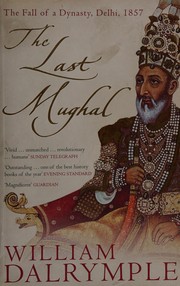
The 1857 rebellion from Delhi and from the Indian sources, which is precisely the perspective The Siege of Krishnapur denies itself by staying inside the residency. The most important corrective on this path.
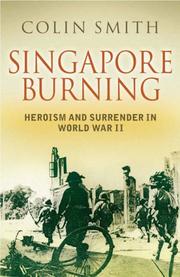
A narrative history of the fall of Singapore, the largest capitulation in British military history and the event The Singapore Grip's characters spend four hundred pages failing to believe in. Read it alongside or straight after the novel.
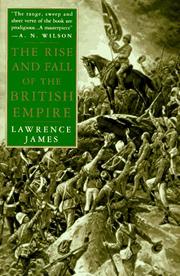
A single-volume history of the whole thing, useful here as the frame that connects three novels set eighty years and half a world apart. Read it last of this stage, once you know which three moments you are looking for.
The imperial novels Farrell is answering
IntermediateRead the fiction of empire that the trilogy is written against, in chronological order
▸ Study plan for this stage
Pace: Ten to twelve weeks for 1,210 pages, and the four are extremely uneven. Heart of Darkness is 136 pages, the shortest thing on this whole path, and it is also the densest — a week, read twice if possible, at 20 pages a sitting. A Passage to India at 322 and Burmese Days at 288 are conventional novels
- Heart of Darkness is the origin point for the modern novel of imperial self-disgust, and Farrell's method is Conrad's revulsion converted into farce. Same recognition, opposite register.
- A Passage to India is the great liberal novel of the Raj and asks whether English and Indian can be friends. Farrell's question is different and blunter: what did the English think they were doing there at all.
- Krishnapur is in direct dialogue with Forster. Both are about an English enclave in India and a catastrophe of misunderstanding; one is anguished and one is funny, and the difference is a full argument.
- Burmese Days came out of Orwell's five years in the Imperial Police and supplies from experience the sociology of the colonial club that Farrell reconstructed from research.
- The club in Orwell and the residency in Farrell are the same institution. Reading them together shows how accurate Farrell's comic exaggeration actually was.
- The Jewel in the Crown opens Paul Scott's Raj Quartet, published in 1966, and is the immediate predecessor to Farrell's project: the last years of British India, at enormous length and entirely in earnest.
- Scott is the version Farrell decided to answer with comedy. Reading it last makes the choice legible as a choice rather than as a temperament.
- The through-line: four novels and a trilogy all agree that the empire was indefensible, and they differ completely on what tone that recognition demands.
- What does Marlow actually find, and why does Conrad keep the worst of it off the page?
- Forster asks whether friendship across the imperial divide is possible and answers with the last line of the novel. What is the answer, and does the book believe it is permanent?
- Compare Orwell's club with Farrell's residency. What does firsthand experience give Orwell that research could not give Farrell, and the reverse?
- How is The Jewel in the Crown assembled, and what does the documentary structure achieve that straight narration would not?
- Farrell chose comedy where Scott chose earnestness about very similar material. Which serves the subject better, and why?
- Rank the four by how much interiority each gives to a colonised character. Where does Krishnapur fall on that ranking?
- Read Heart of Darkness twice in one week. At 136 pages that costs little and the second reading is where the book actually happens.
- Put the trial in A Passage to India beside the siege in Krishnapur. Both are the moment an English community closes ranks, and the two treatments could not be less alike.
- Take Orwell's description of the club and mark every detail that also appears in Farrell. The overlap is substantial and it is evidence about how much Farrell invented.
- Read the first fifty pages of The Jewel in the Crown and describe its structure in three sentences. If you can, you have understood what Farrell was declining to do.
- Finally, write a paragraph placing the Empire Trilogy among these four. That paragraph is the whole purpose of this path and it should be arguable rather than settled.
Next up: That closes the path: the argument read three times, the fragment that would have been a fourth, the writer before it, the history under it and the fiction it answers.

The origin point for the modern novel of imperial self-disgust, and the shortest thing on this path. Read it first here: Farrell's method is Conrad's revulsion converted into farce.

The great liberal novel of the Raj, and the book Krishnapur is in dialogue with — Forster asks whether English and Indian can be friends, Farrell asks what the English thought they were doing there at all.
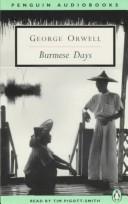
Orwell's first novel, written out of five years in the Imperial Police, and the angriest first-hand portrait of the colonial club. Read it third: it supplies from experience the sociology Farrell reconstructs from research.
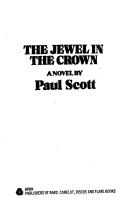
The opening of the Raj Quartet, published in 1966 and the immediate predecessor to Farrell's project — the last years of British India told at enormous length and in earnest. Read it last, as the version Farrell decided to answer with comedy instead.
Discussion
Keep reading
Paths that share books, cover the same subject, or open a related topic.