The Boxer Rebellion: books to read, in order
In 1900 a north Chinese movement of spirit-possession boxing societies attacked Christian converts and foreigners, the Qing court declared war on eight powers at once, and the resulting invasion, sack of Beijing and indemnity shaped Chinese politics for a generation. This path gives you the events first, then works backwards into causes that are mostly agricultural and religious rather than diplomatic, then into a court whose decision-making is still argued about, and ends with the historiography — because the Boxers are one of the standard cases for how the same event becomes three incompatible histories.
What happened
BeginnerKnow the sequence from the Shandong incidents through the siege of the legations to the relief expedition and the Boxer Protocol, and who the eight powers were.
▸ Study plan for this stage
Pace: Four to five weeks. Preston is a long narrative but a fast one — three weeks at 30 pages a day. Silbey is shorter and more analytical; two weeks, read attentively rather than quickly. Keep the order: the story first, the correction second.
- The sequence itself: attacks on converts in Shandong and Zhili, the movement's spread to Beijing and Tianjin, the court's declaration of war, the fifty-five-day siege of the legation quarter, the relief expedition, the sack of the capital and the Boxer Protocol
- Who the eight powers actually were, and that they were not a coalition with shared aims but a scratch force of rivals cooperating briefly
- The two sieges rather than one — the legations and the Northern Cathedral, the latter far worse and far less written about, which is itself a clue about the sources
- The Seymour expedition's failure before the successful relief, and why the first attempt collapsed
- The indemnity imposed by the Protocol and its scale, which is the mechanism by which 1900 shapes the next Chinese generation
- Preston's source base — foreign diaries and letters, overwhelmingly Western — and the specific tilt that gives her account of who suffered and who was heroic
- Silbey's contribution: the intervention read as a multinational military campaign with logistics, rivalries and command problems, which explains the force's conduct better than any account of motives
- Lay out the chronology from the first Shandong incidents to the signing of the Protocol. Where in that sequence does the Qing court change position, and how many times?
- Preston is strongest on the siege. Having read Silbey, what does the siege-centred account leave out about the war as a whole?
- Why did the Seymour expedition fail where the later relief succeeded? Answer in Silbey's terms — force composition, supply, railway — rather than in terms of resolve.
- The eight powers were rivals. Where does that rivalry visibly affect the campaign, and where does it affect the settlement?
- Preston draws on Western diaries. Name three specific things you would expect that source base to distort, and check each against Silbey.
- Build a one-page timeline from Preston, then annotate it with Silbey's corrections in a different colour. You will use it for the rest of the path.
- List the eight powers and write one line each on what that country wanted from the intervention. Silbey supplies most of this; where he does not, note the gap.
- Count the pages Preston gives the legation siege against the pages she gives the Northern Cathedral and the countryside. Write 150 words on what the ratio tells you.
- Write a 300-word summary of the events using only proper nouns and dates you can source, no adjectives. It is harder than it sounds and it is the baseline the rest of the path will complicate.
Next up: With the sequence fixed and the Western tilt of the standard narrative identified, you can work backwards into the causes, which lie almost entirely outside the legation quarter.
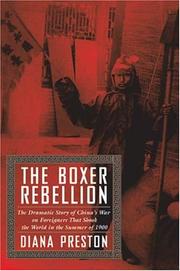
The most readable narrative account, strongest on the fifty-five-day siege and drawing heavily on foreign diaries and letters. Start here for the story, but note that its sources are overwhelmingly Western and it reads accordingly.

A military historian's account of the intervention as a multinational campaign, and much better than Preston on what the eight-nation force actually was and why it behaved as it did. Read second as the corrective on scale and motive.
Where it came from
IntermediateExplain the uprising from the north China plain outward — drought, missionary privilege, village religion and martial-arts networks — rather than from the legations inward.
▸ Study plan for this stage
Pace: Nine to ten weeks. Bickers's The Scramble for China is long and covers a century; give it three to four weeks. Esherick is a dense monograph and the hardest reading on this path — four weeks at fifteen to twenty pages a day, with notes. Harrison is shorter and beautifully written and takes two.
- The treaty-port system as Bickers describes it: concessions, extraterritoriality, gunboats and a foreign presence embedded in Chinese life for decades before 1900
- That the Boxers were reacting to something specific and long-running rather than to foreignness in the abstract — the point of reading Bickers before Esherick
- Esherick's reconstruction from Chinese local sources: boxing societies, sectarian religion and spirit possession as existing rural practices, not inventions of 1899
- Drought and agricultural crisis on the north China plain as the immediate trigger, which reframes the movement as a rural emergency rather than a xenophobic outburst
- The distinction between the Big Sword Society, the Spirit Boxers and other groups Esherick separates, which the Western narratives collapse into one
- Missionary privilege as a legal fact: converts acquired protection and standing in local disputes, which made Christianity a factional question in villages
- Harrison's Shanxi village across three centuries, showing Chinese Catholicism as an established local tradition rather than a recent foreign import
- That most of the dead in 1900 were Chinese Christians, not foreigners — the single most important corrective in this stage
- From Bickers, what had been done to China in the sixty years before 1900? Give five concrete items, not a characterisation.
- Esherick separates several movements the earlier books treat as one. What distinguishes them, and does the distinction change the story?
- How does drought translate into an anti-Christian movement? Reconstruct Esherick's causal chain step by step and identify the weakest link.
- Harrison's village had been Catholic for generations. What does that do to the framing of converts as agents of foreign influence?
- Most of those killed were Chinese Christians. Why is that fact so faint in the narratives you read in the first stage?
- Read Esherick's chapters on Shandong society before his chapters on the movement itself, then reread the first fifty pages of Preston. The reframing is immediate and is the point of the stage.
- Draw Esherick's causal model as a diagram — ecology, religion, martial arts networks, missionary privilege, state weakness — and mark which arrows he supports with local evidence and which he infers.
- From Harrison, write 300 words on what Catholicism meant to the villagers she describes, using their practices rather than doctrine.
- Revisit your timeline from stage one and add a causes column drawn only from Esherick. Note every event you can now explain that Preston only reported.
Next up: Causes explained from the countryside leave one question open — why a government joined a village movement — which is where the argument about the court begins.

The long nineteenth-century background: treaty ports, concessions, gunboats and the foreign presence that the Boxers were reacting to. Read it first in this stage to establish what had been done to China before 1900.

The definitive scholarly study, reconstructing from Chinese local sources how boxing societies, sectarian religion and rural crisis combined in Shandong. This is the book that made the Boxers explicable as a social movement rather than a xenophobic outburst.
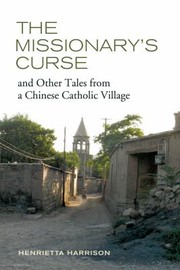
Three hundred years of one Catholic village in Shanxi, including its experience of 1900. The best possible answer to the question of what Chinese Christianity actually was to the people practising it — and why converts, not foreigners, were most of the dead.
The court
IntermediateWeigh the competing readings of Cixi and the Qing leadership, and understand how a government came to declare war on the world's major powers simultaneously.
▸ Study plan for this stage
Pace: Eight to nine weeks. Seagrave and Chang are both long popular biographies and read quickly; three weeks each is comfortable. Xiang is the scholarly volume and the slowest — three weeks at a reduced pace, with the first two books' claims fresh enough to check against it. Read them in the given order.
- The Backhouse problem: Edmund Backhouse's fabricated documents and memoirs supplied much of the standard Western image of Cixi, and Seagrave's demonstration of the forgeries is the durable part of his book
- Seagrave's overcorrection, which is where specialists part company with him — establishing that a source was fraudulent does not establish the opposite of what it claimed
- Chang's much stronger case, presenting Cixi as a deliberate moderniser, and the sharp specialist criticism that she reads ambiguous evidence generously
- That the rehabilitation debate is genuinely unsettled: competent historians disagree, and the stage is designed to let you weigh the versions rather than be handed one
- Xiang's approach — the court's decisions treated as strategy under extreme constraint, reconstructed from diplomatic and political records rather than from character
- The court's actual position in mid-1900: factional, informed by conflicting reports, and choosing among bad options under a foreign ultimatum
- The declaration of war on eight powers as a decision requiring explanation, and the range of explanations on offer — miscalculation, factional capture, forged intelligence, deliberate gamble
- How to read a revisionist biography: separate the evidentiary claim from the interpretive one, since a book can be right about the first and wrong about the second
- What exactly did Backhouse forge, and which specific beliefs about Cixi rest on it? Separate those from beliefs that rest on other evidence.
- Chang argues Cixi was a moderniser. What is her strongest piece of evidence, and what would the standard reading say about that same evidence?
- Seagrave and Chang are both correcting a caricature. Do they correct it in the same direction, and where do they part?
- On Xiang's account, what was the court trying to achieve by declaring war? Is that reading compatible with Esherick's picture of the movement?
- Having read all three, what do you think can actually be established about the court's decision-making, and what remains genuinely contested? Write the second list honestly rather than shortening it.
- Make a three-column table of claims about Cixi — Seagrave, Chang, Xiang — for five specific decisions. The disagreements should be visible at a glance and the exercise is worth more than any of the books alone.
- Take one document Backhouse forged and trace how many later accounts repeat something derived from it. This is the clearest available lesson in how a source contaminates a field.
- Write 400 words setting out the strongest case for and against the moderniser reading of Cixi, giving each its best form and adjudicating neither.
- Read Xiang's account of June 1900 alongside your timeline from stage one and mark every point where the court had a real choice.
Next up: Three incompatible accounts of one court is exactly the problem the final stage takes as its explicit subject.
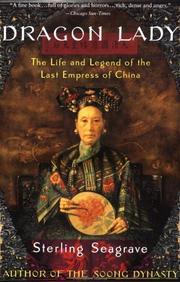
A popular biography arguing that the standard image of Cixi was largely fabricated by the journalist Edmund Backhouse and repeated ever since. Convincing on Backhouse's forgeries, less so where it overcorrects; read it as an argument, not a settled account.
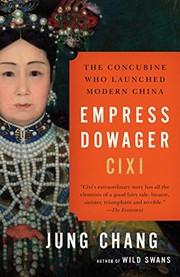
Goes considerably further, presenting Cixi as a modernising reformer. It has been sharply criticised by specialists for reading the evidence generously, and it is here because you should see the strongest version of the rehabilitation case and judge it against Seagrave and Esherick.

A diplomatic and political history that takes the court's calculations seriously as strategy under extreme pressure. The most scholarly of the three and the one to read last, once you can see what the popular biographies are arguing against.
Memory and method
IntermediateUnderstand how the Boxers have been narrated as event, as lived experience and as myth, and what that says about historical writing generally.
▸ Study plan for this stage
Pace: Seven to eight weeks. Cohen is the centrepiece and should be read slowly — three weeks, one of the three keys per week, since the whole argument depends on feeling the difference between them. The Bickers essay collection can be read selectively across two weeks. Fleming is short, elegant and quick;
- Cohen's three keys: the event as reconstructed by historians, experience as lived by people who did not know the outcome, and myth as the Boxers were later deployed
- Why the second key is the hardest to write — participants acted under drought, rumour and terror without the shape hindsight supplies, and narrative history smuggles that shape back in
- The mythologised Boxers as usable symbol: claimed by Chinese nationalists, by the Cultural Revolution, and by foreign writers as an emblem of xenophobia — different myths for different purposes
- That Cohen's method generalises: this is a book about how any event becomes three incompatible histories, which is why it is read far outside Chinese history
- The essay collection's applied version — the uprising's international dimensions and its afterlives across several national memories, including the looting and its museum consequences
- Fleming's 1959 legation narrative as a period document: elegantly written, thoroughly assured about China, and now most useful as evidence of how the story used to be told
- Reading a superseded book deliberately: the point is not to catch its errors but to see the assumptions that made those errors invisible to its author
- State Cohen's three keys in your own words. Which of them does Preston's narrative from stage one belong to, and which does Esherick's?
- Why can experience not simply be recovered from the sources? Give Cohen's reason and then test it on the siege diaries Preston uses.
- Pick two of the myths Cohen traces and say what each needed the Boxers to have been. What did each have to leave out?
- Reading Fleming last, list five assumptions he makes that a historian would now argue with. Then note which of them you would have missed before Esherick.
- Having finished the path, which of the four stages changed your understanding most, and does that tell you something about how you read history generally?
- Read each of Cohen's three keys a week apart and write a one-paragraph summary of the Boxers in each register before moving on. Doing all three in a rush destroys the exercise.
- Take one episode — the siege, the sack of Beijing, the killing of converts in a single county — and write it three times, once in each key, at 200 words apart. This is the single most useful thing on the path.
- From the essay collection, pick two national afterlives and compare what each country's memory of 1900 was used for at home.
- Reread the opening ten pages of Fleming and annotate every phrase that would not survive an editor today. Then write 200 words on what the book still does well, because it does.
Next up: This is the end of the path. The natural next step is the late Qing itself — the Sino-Japanese War, the Hundred Days' Reform and the 1911 revolution — where the indemnity and the humiliation of 1900 do their real work.
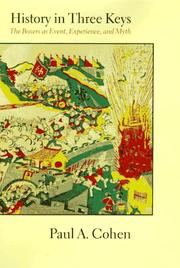
Tells the Boxers three deliberately incompatible ways — as reconstructed event, as the experience of participants who did not know how it would end, and as symbol used by everyone from Chinese nationalists to the Cultural Revolution. One of the most influential works of historical method written about any subject.
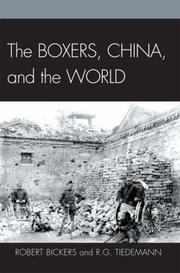
An essay collection covering the uprising's international dimensions and its afterlives in several countries. Read after Cohen: it is the applied version of his argument, across more national memories.
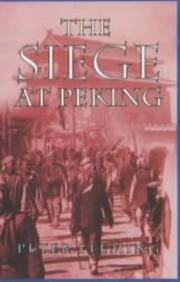
The classic 1959 British narrative of the legation siege, elegantly written and thoroughly of its period in its assumptions about China. Included deliberately as the last book: after Esherick and Cohen you can read it as evidence of how the story used to be told.
Discussion
Keep reading
Paths that share books, cover the same subject, or open a related topic.