The history of India: the best books, in reading order
This curriculum takes a beginner from the earliest stirrings of the Indus Valley Civilization all the way through the turbulent birth of modern India and Pakistan, building knowledge in four carefully sequenced stages. Each stage deepens chronological coverage, analytical complexity, and historiographical nuance, so that by the end the reader can engage confidently with specialist debates about empire, identity, and nationhood on the subcontinent.
Foundations: A Bird's-Eye View
BeginnerGain a confident, chronological overview of Indian history from ancient times to independence, establishing the key dynasties, turning points, and vocabulary needed for deeper reading.
▸ Study plan for this stage
Pace: 8–10 weeks, ~40–50 pages/day (Basham first: 4–5 weeks; Thapar second: 4–5 weeks)
- The Vedic period and the origins of caste, ritual, and Sanskrit literature as foundational to Indian civilization
- The rise and fall of major dynasties (Maurya, Gupta, and their successors) and their political, economic, and cultural achievements
- The spread and coexistence of Buddhism, Jainism, and Hinduism as competing and complementary worldviews
- The role of trade networks (overland and maritime) in connecting India to the Mediterranean, Central Asia, and Southeast Asia
- The concept of 'Indian' identity as a cultural and geographical continuity despite political fragmentation
- Key turning points: the Vedic age, the rise of cities and republics, the Mauryan empire, the classical Gupta age, and the arrival of Islam
- The distinction between political history (dynasties, wars, rulers) and cultural history (art, philosophy, daily life, religion)
- How geography, monsoons, and river systems shaped settlement, agriculture, and the development of Indian civilization
- What were the main characteristics of Vedic society, and how did the caste system emerge during this period?
- Compare the political organization and achievements of the Mauryan and Gupta empires. Why is the Gupta period often called the 'classical age'?
- How did Buddhism and Jainism challenge Vedic Hinduism, and what role did royal patronage play in their spread?
- What evidence exists for India's trade connections with the Mediterranean world and Southeast Asia in ancient times?
- How did regional kingdoms and dynasties maintain cultural continuity even when political unity fragmented?
- What major transitions occurred between the Vedic period and the arrival of Islam, and which were most transformative?
- Create a visual timeline (poster or digital) spanning 1500 BCE to 1200 CE, marking major dynasties, religious movements, and trade routes mentioned in both books
- Write a 2–3 page comparative essay: 'What made the Mauryan and Gupta empires distinct?' using specific examples from Basham and Thapar
- Map the major trade routes described in Basham (Silk Road, maritime routes) and identify 3–4 goods and cultural exchanges that flowed along them
- Create character sketches of 4–5 key historical figures (e.g., Ashoka, Chandragupta, Samudragupta) based on Thapar's accounts, noting their major decisions and legacies
- Compile a glossary of 20–25 terms (e.g., varna, chakravartin, stupa, bhakti) with definitions and examples from the texts
- Read and annotate one primary source excerpt (e.g., Ashoka's edicts, or a passage from the Arthashastra) and explain how it illuminates the political or social context Basham and Thapar describe
Next up: This stage equips you with a solid chronological scaffold and familiarity with India's major periods and dynasties, allowing the next stage to zoom into specific themes—such as religious philosophy, artistic traditions, or regional histories—with confidence and historical grounding.

The classic single-volume introduction to ancient and medieval Indian civilization — culture, religion, politics, and society — giving beginners the essential conceptual vocabulary before tackling any specialist work.

A concise, authoritative narrative from the Indus Valley to the Mughal era by India's foremost historian; its clear prose and thematic structure make it the ideal second read to consolidate the chronological spine.
Ancient & Medieval India: Empires and Ideas
BeginnerUnderstand the great pre-Mughal empires — Maurya, Gupta, and the southern kingdoms — and the religious and philosophical currents (Hinduism, Buddhism, Jainism) that shaped Indian civilization.
▸ Study plan for this stage
Pace: 6–8 weeks, ~25–30 pages/day. Start with "Ashoka" (4–5 weeks, ~350 pages), then move to "The Argumentative Indian" (2–3 weeks, ~400 pages). Allocate 1 week for review and synthesis.
- The Mauryan Empire under Ashoka: rise to power, military conquest, and the transformation to Buddhism and non-violence (dhamma)
- Ashoka's edicts and inscriptions as primary sources revealing state ideology, administrative reach, and religious policy across ancient India
- The role of Buddhism, Hinduism, and Jainism in shaping Ashoka's reign and broader Indian civilization
- Amartya Sen's thesis on Indian intellectual pluralism: the tradition of debate, dissent, and multiple viewpoints as foundational to Indian thought
- The continuity of argumentative reasoning from ancient India through medieval and modern periods
- How Ashoka's embrace of tolerance and dialogue reflects the deeper Indian philosophical commitment to engaging opposing ideas
- The relationship between empire, religion, and statecraft in pre-Mughal India
- Primary source literacy: interpreting inscriptions, edicts, and historical evidence to reconstruct ancient Indian history
- Who was Ashoka, and what were the major turning points in his life and reign?
- What does the Kalinga War reveal about Ashoka's transformation, and how did this shape his later policies?
- What were the main ideas contained in Ashoka's edicts, and what do they tell us about the Mauryan state and its values?
- According to Amartya Sen, what is the 'argumentative tradition' in Indian civilization, and how does it differ from Western stereotypes of India?
- How did Ashoka's approach to religious pluralism and dialogue reflect broader patterns in Indian intellectual history?
- What evidence from 'Ashoka' and 'The Argumentative Indian' supports the idea that debate and dissent were central to ancient and medieval Indian thought?
- Create a timeline of Ashoka's life and reign (from conquest to conversion to dhamma), marking key military campaigns, the Kalinga War, and major policy shifts.
- Read and annotate 3–4 of Ashoka's actual edicts (excerpted in Allen's book or supplementary sources); identify recurring themes (dhamma, tolerance, animal welfare, administrative reach).
- Write a 500-word essay: 'How did the Kalinga War change Ashoka's philosophy of rule?' Use specific evidence from the text.
- Create a comparative chart: map out the core beliefs and practices of Buddhism, Hinduism, and Jainism as they appear in both books; note how Ashoka engaged with each.
- Debate exercise: choose a philosophical disagreement discussed in Sen's 'Argumentative Indian' (e.g., on caste, knowledge, or tolerance) and argue both sides using examples from ancient Indian thinkers.
- Research and present: find one modern Indian policy or institution (e.g., constitutional secularism, university debate traditions) and trace its intellectual roots back to ideas in Ashoka's reign or Sen's argumentative tradition.
Next up: This stage establishes the intellectual and political foundations of Indian civilization—the empires, religions, and argumentative traditions—that will provide essential context for understanding the Mughal period, colonial encounter, and modern India in subsequent stages.
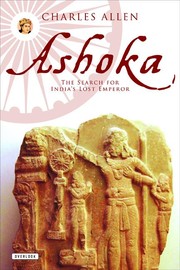
A gripping narrative biography of the Mauryan emperor whose edicts and Buddhist ethics defined Indian statecraft; reading it here anchors the abstract Maurya period in a vivid human story.
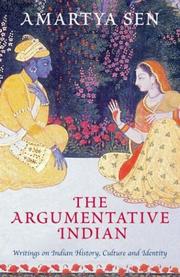
Sen's celebrated essays reveal the deep traditions of debate, pluralism, and heterodoxy running through Indian intellectual history, providing essential cultural context that pure political histories omit.
The Mughal Era & the Coming of the British
IntermediateUnderstand the rise and decline of the Mughal Empire, the arrival and consolidation of British power, and the social and economic transformations of the colonial period.
▸ Study plan for this stage
Pace: 8–10 weeks, ~40–50 pages/day. Start with Richards (3–4 weeks), then Tharoor (2–3 weeks), then Dalrymple (2–3 weeks). Allow 1 week for review and synthesis.
- The Mughal Empire's administrative structure, military organization, and cultural achievements under rulers like Akbar and Aurangzeb
- The mechanisms of Mughal decline: religious orthodoxy, succession conflicts, regional fragmentation, and economic strain
- British East India Company's gradual territorial and political expansion from trading posts to territorial control
- The extraction economy: how British colonial rule systematized resource extraction, deindustrialization, and agricultural exploitation
- The 1857 Rebellion and its suppression as a turning point in British consolidation of power
- Social and economic transformations: the destruction of traditional industries, land revenue systems, and the emergence of a colonial administrative class
- The final collapse of Mughal authority: the role of the 1857 Rebellion in ending the Delhi sultanate and the Mughal dynasty
- Colonial legacies: institutional, economic, and social structures that persisted beyond independence
- What were the key administrative and military innovations that allowed the Mughal Empire to expand and maintain control across diverse regions?
- How did religious policy—particularly under Akbar versus Aurangzeb—shape the stability or instability of the Mughal state?
- What were the primary causes of Mughal decline, and how did regional powers exploit this fragmentation?
- How did the British East India Company transition from a commercial enterprise to a territorial and political power, and what strategies did it employ?
- What were the major mechanisms through which British colonial rule extracted wealth from India, and how did this differ from earlier forms of taxation?
- Why was the 1857 Rebellion significant in both Indian resistance and British consolidation of power?
- How did the execution of Bahadur Shah II and the suppression of the 1857 Rebellion mark the definitive end of Mughal authority?
- What were the long-term social and economic consequences of colonialism for Indian society, industry, and agriculture?
- Create a timeline of Mughal rulers (Akbar through Aurangzeb) with key policies and their effects on empire stability; annotate with turning points in decline
- Map the territorial expansion of the British East India Company from 1757–1857, marking major battles, treaties, and annexations; compare with remaining Mughal and regional territories
- Write a comparative analysis (2–3 pages) of Mughal administrative systems versus British colonial governance structures using specific examples from Richards and Tharoor
- Analyze primary source excerpts (if available in the books) showing British justifications for colonialism versus Indian perspectives on extraction and exploitation
- Create a chart tracking India's share of global GDP and industrial output before, during, and after British rule, using economic data cited in Tharoor
- Write a biographical sketch of Bahadur Shah II using Dalrymple's account, focusing on how his life reflects the collision between Mughal decline and British consolidation
- Debate exercise: argue both the 'Mughal decline made British conquest inevitable' and 'British conquest was a deliberate, systematic process' positions using evidence from all three books
- Identify and explain 3–4 colonial institutions or policies (legal, administrative, economic) that persisted after independence, tracing their origins in the texts
Next up: This stage establishes the historical foundations and structural legacies of colonialism that shaped modern India, preparing you to examine how Indians resisted, adapted to, and ultimately overthrew colonial rule in the independence movement.
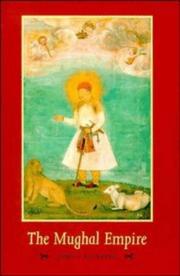
The definitive scholarly survey of the Mughal state — its administration, economy, and culture — giving the reader a firm grounding before encountering the colonial disruption that followed.
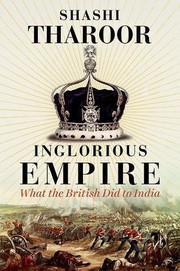
A pointed, evidence-rich account of what British rule actually did to India economically and socially; placed here to sharpen critical thinking about colonialism after the Mughal foundation is secure.
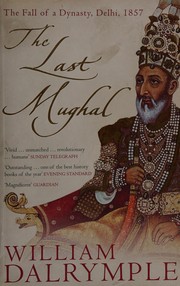
Dalrymple's richly sourced narrative of the 1857 uprising and the fall of the last Mughal emperor bridges the Mughal and British eras in a single dramatic story, cementing both periods simultaneously.
Independence, Partition & the Making of Modern India
ExpertGrapple with the independence movement, the trauma of Partition, the founding of the Indian republic, and the contested forces — caste, religion, democracy, and development — that shape India today.
▸ Study plan for this stage
Pace: 12–14 weeks, ~40–50 pages/day. Book 1 (Gandhi): 4–5 weeks (~600 pages); Book 2 (The Great Partition): 3–4 weeks (~400 pages); Book 3 (India after Gandhi): 5–6 weeks (~1000+ pages). Allow 1 week for synthesis and review.
- Gandhi's evolution from imperial loyalist to anti-colonial leader: his experiments with satyagraha, civil disobedience, and mass mobilization across the Quit India Movement
- The political and social fractures that made Partition inevitable: communal tensions, elite negotiations, and the human cost of dividing a subcontinent
- The trauma and displacement of Partition: the violence, refugee flows, and psychological rupture that shaped India and Pakistan's founding identities
- Nehru's vision of a secular, democratic, socialist-leaning Indian republic and the institutional choices made in the Constitution
- The tension between Gandhian ideals (decentralization, village self-sufficiency, communal harmony) and Nehruvian modernization (industrialization, centralized planning, scientific rationalism)
- Caste, religion, and democracy as competing forces: how caste hierarchies persisted despite constitutional abolition, how religious identity became politicized, and how democratic institutions navigated these tensions
- The role of regional, linguistic, and linguistic nationalism in reshaping India's federal structure and challenging the nation-state model
- Development as contested terrain: debates over land reform, agricultural modernization, poverty reduction, and the unequal benefits of growth across regions and social groups
- How did Gandhi's political philosophy and methods evolve between 1914 and 1948, and what made satyagraha effective as a tool against British rule?
- What were the primary causes of communal violence during Partition, and how did the decisions of political elites (British, Indian, and Pakistani) contribute to the scale of displacement and death?
- Why did Partition occur despite Gandhi's and many Congress leaders' opposition to it, and what were its immediate human and political consequences?
- How did Nehru's vision for independent India differ from Gandhi's, and how did these tensions play out in early post-independence policy and institution-building?
- What mechanisms did the Indian Constitution establish to manage caste, religious diversity, and democratic representation, and why did these prove insufficient or contested?
- How did regional, linguistic, and caste-based movements challenge the nation-state model in the decades after independence, and what does this reveal about the fragility of Indian unity?
- Timeline exercise: Create a detailed chronology of Gandhi's major campaigns (1914–1948) alongside key political events (Khilafat Movement, Non-Cooperation Movement, Salt March, Quit India). Annotate turning points where his strategy shifted and why.
- Primary source analysis: Read 3–4 excerpts from Gandhi's writings or speeches (provided in Guha's book or supplementary sources) and analyze how his rhetoric changed across different phases of the independence struggle.
- Partition mapping: Using Khan's account, map the major sites of communal violence, refugee routes, and population exchanges. Write a 2–3 page narrative of one family's or community's experience of displacement, grounding it in Khan's specific examples.
- Constitutional debate simulation: After reading about the founding of the Indian republic in Guha's third book, stage a mock debate between a Nehruvian modernizer and a Gandhian decentralist on one policy issue (e.g., land reform, language policy, or industrial development). Research both positions using the text.
- Caste, religion, and democracy case study: Select one post-independence crisis or movement discussed in 'India after Gandhi' (e.g., the Dravidian movement, communal riots, or the rise of Hindu nationalism) and write a 4–5 page analysis of how it exposed tensions between constitutional ideals and lived reality.
- Comparative reading: After finishing all three books, write a 5–6 page essay comparing how Gandhi, Khan, and Guha each interpret the relationship between Partition and the making of modern India. What does each author emphasize, and what do their differences reveal?
Next up: This stage establishes the foundational crises, ideological conflicts, and institutional choices that define modern India; the next stage should deepen engagement with how these tensions have unfolded across specific domains—whether regional politics, economic policy, religious nationalism, or social movements—in contemporary India.
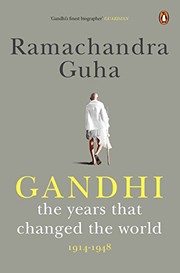
The magisterial second volume of Guha's Gandhi biography covers 1914–1948 and is the most thorough account of the independence struggle; it should be read first in this stage to establish the political narrative.
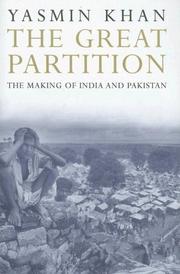
A ground-level, human-centred history of Partition's violence and mass displacement; it corrects the top-down political narrative of the previous book and makes the tragedy viscerally real.
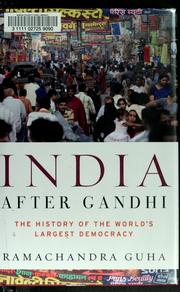
The definitive history of the Indian republic from 1947 to the early 2000s — democracy, wars, economic reform, and social change — providing the essential capstone that ties every earlier stage together.
Discussion
Keep reading
Paths that share books, cover the same subject, or open a related topic.