Best Books on the East India Company, in Reading Order
A joint-stock company chartered in 1600 to buy pepper ended up ruling a subcontinent, and the interesting question is how a business became a state. This path starts with the two great narrative histories, then reframes the Company as a corporation, then goes inside the actual business of ships, cargoes and shareholders, and ends with the scholarship on sovereignty, conquest and the empire that absorbed it.
The story, end to end
BeginnerGet the full arc — Surat and the spice trade, Plassey, the Bengal famine, Regulating Acts, 1857 — as a continuous narrative before meeting any argument about it.
▸ Study plan for this stage
Pace: 8-9 weeks. The Anarchy is 576 pages and reads like a narrative history should — four weeks at 25 pages a day. The Honourable Company is 488 pages and covers a longer span more thinly, so it goes faster; three to four weeks. Read Dalrymple first for momentum and Keay second for the commercial century
- The founding fact worth holding onto: a charter granted in 1600 to a joint-stock company of London merchants, with a monopoly on English trade east of the Cape, and no territorial ambition whatsoever in the document
- Plassey in 1757 as the conventional hinge — a battle decided substantially by the defection of Mir Jafar rather than by fighting, after which the Company controlled the revenue of Bengal. Note how much of the outcome was purchased rather than won
- The diwani of 1765: the Company acquires the right to collect Bengal's land revenue from the Mughal emperor, which converts a trading firm into a tax-collecting government while leaving the fiction of Mughal sovereignty in place
- The Bengal famine of 1770 and the argument about the Company's role in it — revenue demands maintained through a failed harvest — which is the moment the trading-company frame stops being adequate
- The Company's collapse and bailout in 1772-73, and the Regulating Act that followed: a private firm too large to fail, rescued by Parliament in exchange for state supervision. Robins in stage 2 builds his whole book on this episode
- Dalrymple's use of Persian and Marathi sources, which is what distinguishes his account — the Company's rise as experienced and recorded by the Indian states it displaced, especially the Marathas, Tipu Sultan's Mysore, and the Mughal court
- Keay's earlier material that Dalrymple compresses: Surat, the factory system, the competition with the Dutch over spices, the shift from pepper to Indian textiles, and the Company's trade beyond India in China tea
- The tea and opium triangle Keay traces, which is the profit engine of the Company's last century and the reason the story ends in China as well as India
- How much of the outcome at Plassey was military? Give the specific account and say what it implies about how the conquest proceeded generally
- Explain what the diwani was and why acquiring it changed the Company's nature. What did it now have to do that a trading firm does not?
- The Company was bailed out in 1772. What was the argument for doing so, and what did Parliament get in exchange?
- Keay covers 150 years before Dalrymple's story begins. What was the Company actually doing in that time, and what does it tell you about the conquest that followed?
- Dalrymple uses Indian sources. Name two things the Indian record shows that an English-only account would miss
- Build a timeline from 1600 to 1858 marking every charter renewal, every parliamentary act affecting the Company, and every major territorial acquisition. Every book on this path adds to this document, so leave room
- Draw a map of the Company's holdings at 1700, 1765, 1805 and 1857. The four maps side by side are the argument of the whole path
- Write 300 words on what the Company sold to England and what it bought in Asia, at 1650 and again at 1800. The change between those two answers is the commercial story underneath the political one
- List the Indian states and rulers Dalrymple treats as significant actors — Mysore, the Marathas, Awadh, the Mughal court — and note what each wanted. Popular accounts often reduce these to obstacles, and having the list makes that reduction visible
Next up: You have the narrative arc in its imperial-history form; the next stage asks what the same events look like when the Company is treated as a business rather than as a proto-empire.

The best-written account of the Company's transformation from trader to conqueror between Plassey and 1803, built on Persian and Marathi sources as well as English ones. Start here for momentum and for the Indian side of the story.
Covers the two centuries Dalrymple skips lightly — the early voyages, the factories, the Asian trade beyond India. Read it second to fill in the commercial prehistory of the conquest you have just watched.
The Company as a corporation
IntermediateShift vantage point from imperial history to business history, and see what the Company teaches about limited liability, lobbying and corporate power.
▸ Study plan for this stage
Pace: 5 weeks. The Corporation That Changed the World is 240 pages and pointed — two weeks. Roy's book is comparable in length and considerably more technical; two to three weeks. Read them in that order and treat the second as a direct reply to the first, because that is how it functions here.
- Robins's framing: the Company as the first great multinational corporation and the original case study in the sequence of corporate abuse, systemic risk, public bailout and regulatory response — a sequence he argues has recurred ever since
- The specific corporate features Robins highlights — the joint-stock form, transferable shares, limited liability in practice, and the separation of ownership in London from operations in Asia, which is the structural source of most of the Company's control problems
- The lobbying apparatus: Company directors and shareholders in Parliament, the management of charter renewals, and the political economy that made the 1773 rescue possible
- Roy's corrective, which is an economic historian's rather than a moralist's: the Company's structure is interesting because it survived where the Dutch VOC and the French Compagnie failed, and the reasons for that survival are institutional rather than ethical
- Roy's specific arguments about why the Company persisted — its relationship to English capital markets, the flexibility of its governance, and its ability to absorb political supervision rather than resist it
- Roy's caution about the counterfactual: attributing Indian economic outcomes to Company policy requires knowing what the alternative would have been, and he is careful about the limits of that inference
- Where the two books genuinely conflict — Robins reads the Company's behaviour as corporate pathology with modern parallels, Roy reads much of it as ordinary early-modern commerce operating under extraordinary constraints. Both are drawing on real evidence
- The general methodological lesson: a morality tale and an institutional analysis of the same firm can both be accurate and answer different questions
- State Robins's parallel between the Company and modern corporate crises precisely. Which parts of the analogy hold, and where does an early-modern chartered monopoly differ from a modern firm?
- Roy asks why the English Company outlasted the Dutch and French. Summarise his answer, and say what evidence would test it
- Robins treats the 1770s bailout as the founding case of too-big-to-fail. Does Roy's account of Company finance support or undercut that reading?
- Where do the two authors disagree about facts, and where about which questions matter? Keep the two apart
- The Company separated London ownership from Asian operations. Name three consequences of that separation that you saw in stage 1's narrative
- Write a two-column comparison of Robins and Roy on four topics: the Company's profitability, its governance, its effect on India, and its modern relevance. Cite a page for each cell
- Take the 1772-73 crisis and write it twice, in 300 words each — once as Robins would and once as Roy would. The exercise is to make both defensible
- Sketch the Company's governance structure: the Court of Proprietors, the Court of Directors, the Presidencies, and after 1784 the Board of Control. Mark on the diagram where information travelled slowly, which is where every control failure originated
- Look up one modern corporate bailout and write 250 words testing Robins's parallel against it. Note precisely where the analogy strains
Next up: Both books argue about the Company's structure; the next stage goes to the evidence base underneath both of them — what was actually shipped, financed and earned.
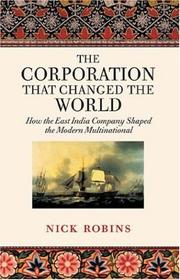
Reads the Company as the first great multinational and the original case study in corporate abuse, bailout and regulation. It is the argument that makes the whole subject feel contemporary.
An economic historian's corrective to Robins: less morality tale, more attention to why the Company's peculiar structure survived where Dutch and French rivals failed. Reading the two together is the point.
Inside the business
IntermediateUnderstand the machinery — how cargoes were financed, how the London directors related to men in Asia, and where the profit actually came from.
▸ Study plan for this stage
Pace: 12-14 weeks. The Trading World of Asia and the English East India Company is 650 pages of quantitative economic history and is the hardest reading on the path — five to six weeks, and read the tables rather than skipping them. The Business of Empire (320 pages) is three weeks. Between Monopoly and F
- Chaudhuri's achievement and why everything else rests on it: a systematic reconstruction from the Company's own records of what was shipped, in what quantities, at what prices, over more than a century. Every claim about Company profitability in the other books traces back here
- The commodity shift the data shows — pepper and spices giving way to Indian cotton textiles, then tea from China becoming dominant — and how each shift changed what the Company needed in Asia
- The bullion problem: Europe had little Asia wanted, so the trade ran on silver exports until territorial revenue and then opium supplied an alternative. This single constraint explains an enormous amount of Company behaviour
- How a voyage was financed and how long capital was tied up — the round trip measured in years, not months, which is why the joint-stock form was necessary and why the Company's relationship to London credit markets mattered so much
- Bowen's metropolitan view: the shareholders, the Court of Directors, the patronage system by which appointments in Asia were distributed, and the Company's management as a quasi-department of the British state after 1784
- The patronage economy as a real financial instrument — a writership in Bengal was an asset with a market value, which explains a great deal about who went out and what they expected to extract
- Erikson's central finding, which resolves a puzzle the other books describe without explaining: the Company tolerated and effectively depended on its employees' private trade, and this decentralised network is why it out-competed the more tightly controlled VOC
- Erikson's method — network analysis over shipping records — which is a different kind of evidence from Chaudhuri's aggregates and reaches a conclusion neither the imperial nor the corporate histories arrive at
- What did the Company export from Britain, and why was the answer a problem for two centuries? Trace how the problem was eventually solved
- Using Chaudhuri's figures, describe the change in the Company's cargo mix between 1660 and 1760. What drove each shift?
- Bowen shows patronage as a system. Who benefited, how was it priced, and what incentives did it create for men arriving in Bengal?
- Erikson argues private trade was a strength rather than a leak. What is the evidence, and what is the strongest objection?
- Take one claim from Robins or Roy in stage 2 and check it against Chaudhuri's data. Does the evidence base support it as stated?
- Take three of Chaudhuri's tables and convert each into a chart you draw yourself. Doing the plotting is what makes the numbers legible; reading a table of figures rarely does
- Reconstruct the financing and timeline of a single voyage: capital raised, outfitting, outbound cargo, time in Asia, return cargo, sale, dividend. Put it on one page with a time axis
- Draw Erikson's network idea by hand for a handful of ports: the official Company route and the private-trade routes between Asian ports. The picture is the argument
- Add a commercial track to the timeline you started in stage 1, marking the pepper, textile, tea and opium eras. Then compare it against the territorial track. Where they move together is worth a paragraph
- Write 400 words answering the question this stage is for: where did the Company's profit actually come from in 1680, in 1760 and in 1820? The three answers are entirely different
Next up: With the business machinery understood, you can engage the current scholarly arguments about what kind of thing the Company was and how deliberate the conquest actually was.

The foundational quantitative study of what the Company actually shipped and earned across the seventeenth and eighteenth centuries. Dense, but it is the evidence base under every book on this list.
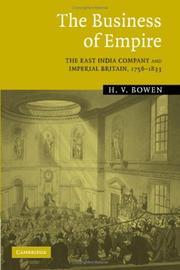
Bowen looks at the Company from London — shareholders, directors, patronage, and the political management of a firm that had become a branch of the state. The metropolitan half of Chaudhuri's picture.

A sociologist's account of why the Company thrived by tolerating its employees' private trade. It explains the internal contradiction the earlier books describe but do not fully account for.
Sovereignty, conquest, and the road to the Raj
IntermediateEngage the current scholarly arguments: was the Company always a state, was the conquest planned or improvised, and what did it leave behind in 1858.
▸ Study plan for this stage
Pace: 16-18 weeks. The Company-State (308 pages) is three weeks and should be read first, as the direct challenge to the narrative you began with. India Conquered (564 pages) is four to five weeks. Edge of Empire (416 pages) is three to four weeks. Empire of Cotton (622 pages) is five weeks and belongs la
- Stern's central claim, which upends the story you started with: the Company exercised sovereign functions — law courts, coinage, fortification, war and diplomacy, government of subjects — from the seventeenth century, long before Plassey. It was a company-state from early on, not a trader that becam
- Stern's evidence: the charters themselves, and the Company's settlements at Bombay, Madras and St Helena, where it governed populations decades before it held Bengal. The trader-turned-ruler narrative, on his account, is a story the Company and its critics both found convenient
- Wilson's counter to any account that makes the conquest look designed: the British in India were improvising, anxious, badly informed and far less in control than either imperial celebration or nationalist condemnation assumes
- Wilson's argument about anxiety as an engine — that fragile authority produces aggressive assertions of it, so British insecurity generates escalation rather than restraint. This is a causal claim about a psychological state, and worth examining as such
- Jasanoff's contribution — collectors, adventurers and border-crossers in India and Egypt — which supplies the human texture the institutional arguments lack, and complicates the categories by showing how many people had mixed loyalties
- Beckert's global frame: cotton as a commodity system linking Indian weavers, American slavery, Lancashire mills and world markets, with war capitalism as his term for the coercive phase that made it possible
- What Beckert does to the Company: it becomes one node in a system rather than the protagonist, and Indian deindustrialisation becomes a consequence of a global reorganisation rather than only of Company policy
- The endpoint the path has been heading toward: 1857-58, the Company's dissolution and the transfer to Crown rule, which is where the corporate story ends and the imperial one continues
- State Stern's thesis and identify precisely which part of Dalrymple's narrative it challenges. Is it a disagreement about facts or about how to categorise them?
- If the Company was always a state, what still needs explaining about 1757? Reframe the question in Stern's terms
- Wilson argues the British were improvising. What is his best evidence, and what would an account of a designed conquest point to instead?
- Can Stern and Wilson both be right? Work it out explicitly rather than assuming — the reconciliation is available but not trivial
- Beckert makes the Company one node in a cotton system. What does that reframing explain that a Company-centred history cannot, and what does it lose?
- Take the timeline you have built across all four stages and add a fourth track: what each of these four historians treats as the decisive moment. Four different answers on one sheet is the deliverable of the path
- Write 400 words on the events of 1757-65 as Dalrymple tells them, then rewrite the same events in 400 words as Stern would. The difference is entirely in framing rather than in facts, which is the lesson
- Pick one of Jasanoff's figures and write 300 words on how they fit or fail to fit the categories Stern and Wilson use. The misfits are the point of her book
- Trace one bale of cotton through Beckert's system from an Indian weaver or an American plantation to a Lancashire mill and back to an Indian market. Mark every point at which coercion rather than exchange moved it
- Write 500 words answering the question the path opened with — how a company became a state — and mark every sentence that depends on one historian's framing rather than on evidence several of them share. If your answer still treats 1757 as the moment, say why you are keeping it after Stern
Next up: This is the end of the path: you can read the Company as narrative, as corporation, as commercial machinery and as one node in a global system, and say which of those frames any given account is using.

Stern's central claim is that the Company exercised sovereignty from the seventeenth century, long before Plassey — which upends the trader-turned-ruler story you started with. Read it only after Dalrymple and Keay so you feel the challenge.

Argues the British in India were improvising, anxious and far less in control than either imperial or nationalist histories suggest. A useful counterweight to any account that makes the conquest look designed.
Follows collectors and adventurers to show what empire felt like to the people inside it, in India and Egypt alike. It puts human texture on the institutional arguments of Stern and Wilson.
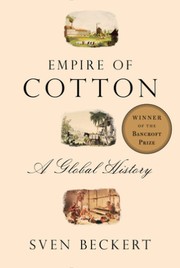
Zooms out to the global commodity system the Company was one node in, connecting Indian weavers to Lancashire mills and American slavery. The right last book: it makes the Company a chapter in a much larger story.
Discussion
Keep reading
Paths that share books, cover the same subject, or open a related topic.