C.J. Cherryh books in order: where to start with the Alliance-Union universe
Cherryh has published something like eighty novels and the bibliography is genuinely hard to enter, because most of them belong to one enormous future history — the Alliance-Union universe — that she wrote out of chronological order across forty years, and because her method makes the first fifty pages of any of them deliberately disorienting. She writes in tight third person with no exposition: you are dropped inside a character who already knows how their world works and does not explain it, and the world assembles itself around you. That is the point, and readers who bounce off her almost always bounce off in those first fifty pages. There are three viable doors — the Company Wars novels, the Chanur books, and the Foreigner series — and this path opens them in ascending order of commitment.
The Front Door: Company Wars
IntermediateEnter the Alliance-Union universe at its central conflict, and get used to Cherryh's deep-immersion method on the book that won her the Hugo.
▸ Study plan for this stage
Pace: 3–4 weeks. Downbelow Station is 432 pages and the first fifty are deliberately disorienting — budget a slow first week and do not judge the book before page 100. Merchanter's Luck is 392 pages but reads far faster: two characters, one ship, a much warmer register, and a week is enough. Read them in
- Cherryh's deep-immersion method: tight third person, no exposition, a viewpoint character who already knows how the world works and never explains it
- The three-way structure of the Company Wars — Earth Company, the breakaway Union, and the merchanter ships caught between them
- Pell Station and Downbelow as a place that belongs to nobody's plan, which is why it becomes the centre
- Signy Mallory and the Norway as a fleet with no home port — the central problem the whole novel turns on
- Multiple irreconcilable viewpoints as a structural device rather than a stylistic flourish: nobody in Downbelow Station has the whole picture, including the reader
- Merchanter culture: the family ship, the trade route, and the neutrality that is not really neutrality
- Why Merchanter's Luck works as the decompression book after Downbelow Station
- Which faction does Downbelow Station want you to side with, and how does it withhold that judgement?
- What does Signy Mallory actually want, and at what point in the book can you first answer that?
- What is a merchanter ship economically and socially, and how does Merchanter's Luck make that legible when Downbelow Station only implies it?
- How does Cherryh convey the rules of the Alliance-Union universe without a single paragraph of explanation?
- After both books, what does the word Union mean to you, and how much of that came from anyone in Union saying it?
- Read the first fifty pages of Downbelow Station, then keep a running list of every term you do not understand — hisa, stationer, longhauler, the Fleet. Do not look anything up. At page 200, go back and fill the list in from what the book has taught you. That list is the method working.
- Chart the point-of-view changes in Downbelow Station for the first 150 pages: who, where, and what each one knows that the others do not. The map of who is ignorant of what is the plot.
- Reread the opening chapter of Downbelow Station after finishing it. Note how much of the ending is already stated there and was unreadable the first time.
- After Merchanter's Luck, write a paragraph describing the same events from a stationer's perspective rather than a spacer's. Cherryh spends four books on that gap; noticing it now sets up the next stage.
Next up: You have the war and the merchanter economy from the outside; the next stage moves inside the family ships that carry it, in the standalone novels that are the most humane part of Cherryh's work.

The correct starting point and the standard answer to where do I begin: a space station caught between Earth Company, the breakaway Union and a fleet with nowhere to dock, told from six irreconcilable points of view. Give it a hundred pages before judging it — the first fifty are supposed to be confusing.

Much shorter and much warmer, following two traders and one nearly derelict ship. Read it second: it is set just after Downbelow Station and it teaches you the merchanter culture that half the universe runs on.
The Merchanter Novels
IntermediateRead the standalone ship novels, which are the most humane part of her work, and understand the family-ship structure that Alliance society is built from.
▸ Study plan for this stage
Pace: 3 weeks. Rimrunners is 288 pages, tight and claustrophobic, and is the shorter and harder-edged of the two — a week. Finity's End is 518 pages and slower, an anthropology of ship life told through one displaced boy, and needs closer to two. Read Rimrunners first: it shows you what falling out of the
- The family ship as a kinship structure: crew are relatives, the ship is the household, and rank is generational
- What it costs to be shipless — Bet Yeager's position in Rimrunners is the negative image of the merchanter family
- Station-born versus ship-born, and why the two cannot easily be converted into each other
- Trade route economics as the actual engine of Alliance politics
- The aftermath of the Company Wars as lived by the losing side rather than narrated by the winners
- Cherryh's standalone novels as complete stories that nonetheless deepen the shared frame
- How the same universe reads at three scales — fleet, ship, single person
- What does Bet Yeager want at the start of Rimrunners, and how far does the book let her get?
- How is a merchanter family actually organised — who decides, who inherits, who is expendable?
- Why can Fletcher not simply become a spacer in Finity's End, and what does the difficulty reveal about the culture?
- What does Rimrunners show about the war's losers that Downbelow Station could not, given who narrates it?
- In what sense does Finity's End close the Company Wars sequence rather than merely follow it?
- Track a single motif through Rimrunners: the ship as a body, or the recurring problem of a place to sleep. Note every appearance and what has changed about it by the end.
- Build a family tree and duty roster for the Finity's End crew from what the text supplies. The gaps you cannot fill are the ones Fletcher also cannot fill, which is the design.
- Set the opening chapter of Rimrunners beside the opening chapter of Merchanter's Luck. Both start with a person on a ship with no security. Write 200 words on why one reads as warm and the other as menacing when the technique is identical.
- List every rule of merchanter etiquette Finity's End states outright and every one it only enforces. The second list is longer, and it is how the book teaches.
Next up: Having seen the Alliance side of the war at station, ship and personal scale, the next stage crosses to Union and to the book Cherryh built the whole political structure to hold.
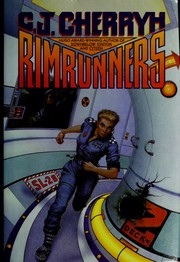
A stranded soldier from the losing side takes any berth she can get. The most claustrophobic and probably the best-written of the standalones, and a complete story in one volume.

A station-raised boy is reclaimed by the merchanter family he was born to and has to learn to be a spacer. Read it after Rimrunners; it is the most direct anthropology of ship life she wrote, and it closes the Company Wars sequence.
Cyteen and the Union
BeginnerRead her most ambitious book and its sequel, and understand the Union's use of cloning and psychological conditioning as a political system rather than a gimmick.
▸ Study plan for this stage
Pace: 7–9 weeks, the longest and most demanding stage on this path. Cyteen is 680 pages of laboratory and legislative politics and should not be rushed — three to four weeks at 30 pages a day. Regenesis is 589 pages and picks up almost immediately from the end of Cyteen; it was published twenty-one years
- Azi and the tape-based conditioning system: a legal category of person, and the labour foundation Union runs on
- The Reseune psychogenesis project — replicating a person by cloning the body and reconstructing the childhood environment
- Ariane Emory the elder and Ariane Emory the younger as a deliberate structural doubling, and what the book asks about whether they are the same person
- Union politics as an argument about population and time, not ideology — why a society that can manufacture citizens plans differently
- Cyteen as the other side of the war you read from Alliance's side in Downbelow Station
- Regenesis as continuation rather than sequel: the political consequences of Cyteen's ending, worked out at similar length
- Serpent's Reach as a demonstration that the Alliance-Union frame will carry a story with an entirely alien social structure inside it
- What is an azi, legally and practically, and how does the book keep you from settling into a single moral position about the category?
- Is the younger Ari the same person as the elder? What does the novel treat as evidence either way?
- Who killed Ariane Emory, and how long does the book make you wait to be sure — and why that long?
- What does Union want that Alliance cannot understand, and does Cyteen make it comprehensible?
- What does Regenesis add that Cyteen left genuinely unfinished, as opposed to merely open?
- How does the hive-mind majat social order in Serpent's Reach comment on Union's engineered one?
- Keep a log of every scene in Cyteen where a tape or conditioning session is described, with what it is meant to produce and what it actually produces. That log is the argument of the novel.
- Reread the first Ari Emory chapter after finishing Cyteen and mark which lines you now read as manipulation that read as ordinary the first time.
- Put Downbelow Station and Cyteen side by side on one event — the war and its settlement — and write out what each side believes about the other's motives. Neither book corrects the other; that is the point.
- Read Serpent's Reach and list the mechanisms by which its aristocracy is quarantined. Then compare it to azi status in Cyteen: both are engineered hierarchies, and the differences are deliberate.
- Before starting Regenesis, write two paragraphs predicting what has to happen next politically. Check them at the end — Cherryh is a very disciplined plotter and this is a fair test of whether Cyteen taught you its system.
Next up: Both doors so far have been human ones; the next stage takes the same method and points it at a viewpoint that is not human at all, in the sequence where the human is the incomprehensible alien.

Her masterpiece and the hardest book here: the murder of a scientist-politician, and the attempt to reproduce her by cloning the body and reconstructing the childhood. Nearly seven hundred pages of laboratory politics and it is riveting. Do not start with it — read Downbelow Station first, because it is the other side of the same war.

The direct sequel, published twenty-one years later and picking up almost immediately. It only works as a continuation; read it straight after Cyteen or not at all.
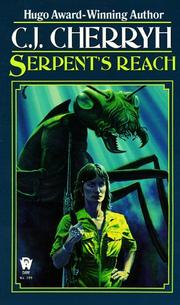
A standalone set elsewhere in the same universe, with a hive-mind alien species and a quarantined human aristocracy. Read it as the demonstration that the Alliance-Union frame will hold almost any story she wants to put in it.
The Side Door: Chanur
IntermediateRead the alien-trader sequence, where the human is the incomprehensible alien, and see Cherryh's method applied to a genuinely non-human viewpoint.
▸ Study plan for this stage
Pace: 4–5 weeks. The Pride of Chanur is 219 pages and self-contained — read it first, in a few sittings; it is the most immediately enjoyable book on this path and a legitimate alternative entry point to Cherryh altogether. Then Chanur's Venture (320pp), The Kif Strike Back (303pp) and Chanur's Homecoming
- The hani as a fully realised non-human viewpoint — physiology, gender roles and status all doing narrative work rather than decoration
- The Compact: seven species with incompatible cognition, held together by trade and by treaties nobody fully understands
- The kif and the concept of sfik — a status economy that governs behaviour and cannot be translated into human motive
- The human as the unreadable alien, which is the inversion the whole sequence is built on
- Docking, cargo and station politics as the medium through which interspecies conflict is actually conducted
- How a trilogy written as one continuous novel is paced differently from three books — no recaps, no resets, no resolutions until the end
- Cherryh's method applied to a mind that is not human: the same refusal to explain, with far more to not explain
- What do the hani understand about the human that the reader does not, and what does the reader understand that they do not?
- How does sfik govern kif behaviour, and at what point in the sequence could you predict a kif's next move?
- How is hani society organised around gender, and what is Pyanfar's position within it actually costing her?
- Where exactly does The Pride of Chanur stop being a self-contained novel and start being the opening of a longer one?
- What does putting the human offstage as an object of speculation let Cherryh do that a human viewpoint could not?
- Read The Pride of Chanur and write out everything the hani conclude about Tully. Then write what you know he is. The gap between the two lists is the book's whole comic and moral engine.
- Keep a glossary of Compact terms as you read — sfik, mahendo'sat, stsho, the han — defined only from context. Do not consult any outside source; the sequence teaches every one of them.
- Chart the alliances across the three continuous volumes: who is nominally allied with whom at the start of Venture, at the end of The Kif Strike Back, and at the close of Homecoming. Almost nothing survives unchanged.
- Compare the first ten pages of The Pride of Chanur with the first ten of Downbelow Station. Both drop you into an unexplained situation; write 200 words on why the alien viewpoint is the easier read, which is not the result most readers expect.
Next up: Chanur runs the alien-contact problem at trading speed across four books; the last stage slows the same problem to a crawl and spends twenty-plus novels on it.
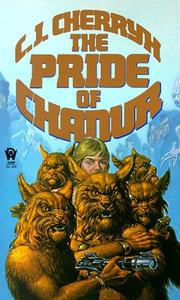
A leonine hani trading captain finds an unidentifiable creature hiding in her hold — a human, though nobody in the book knows what that is. The most enjoyable entry point to Cherryh and a genuine alternative to Downbelow Station if the Company Wars politics do not appeal.
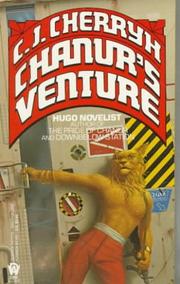
The start of the continuous trilogy that follows. Be warned that this and the next two are a single novel published in three parts and the first two end mid-crisis — get all three before starting.

The middle volume, and the densest stretch of interspecies politics she wrote. Read it immediately after Venture; it is unreadable as a standalone.

The conclusion of the trilogy, and where the seven-species Compact politics finally resolves. Our record carries a nonsense publication year; it is the 1986 novel.
The Long Door: Foreigner
BeginnerStart the twenty-plus-book Foreigner sequence at its first arc, and decide from a complete three-book story whether to commit to the rest.
▸ Study plan for this stage
Pace: 4–5 weeks. Foreigner is 378 pages but opens with a roughly two-hundred-page prologue covering the lost colony ship and the landing, told at a distance from the main story — it is not optional and it explains everything that follows, but it does mean the novel proper starts late; give the book two we
- The paidhi as an institution: one licensed translator as the sole permitted point of contact between two species, and the treaty logic that produced that arrangement
- Man'chi — the atevi association instinct, which is not friendship, not loyalty and not love, and which the atevi have no word to translate into
- The numerical basis of atevi aesthetics and politics, and why felicitous and infelicitous numbers are a governing constraint rather than a superstition
- Bren Cameron as a viewpoint whose professional competence is the reader's only instrument — and whose errors are therefore the plot
- Technology transfer as the central political problem: what the humans are permitted to give and at what pace
- Why the prologue's colony-ship history is load-bearing for the diplomacy in all three books
- Cherryh at her slowest and most patient — long stretches of conversation and protocol in which the stakes are entirely real
- What is man'chi, and how does the trilogy stop you from quietly translating it as loyalty?
- Why is there exactly one paidhi, and what does the treaty that established the office reveal about the war that preceded it?
- What does Bren get wrong in Foreigner, and how long does it take him — and you — to notice?
- By the end of Inheritor, what has changed in the balance between the human colony and the atevi, and who conceded what?
- Is Inheritor a satisfying stopping point? What is left genuinely open, and what only appears to be?
- Read the prologue of Foreigner in one sitting and write a half-page summary before starting the main story. When the diplomacy in Invader turns on a detail from it, you will have the note.
- Keep a running list of every occasion Bren translates an atevi statement into English for himself, and mark whether the book later shows the translation to have been wrong. That list is the series' method in miniature.
- Track the number motif across all three books: where numerical felicity determines a decision, and where a character uses it as cover for something else.
- At the end of Inheritor, write down what you think man'chi is in one sentence. Compare it with what you would have written after Foreigner. If it has changed, the trilogy did its work — and that is the honest basis for deciding whether to commit to the rest.
- Set Bren Cameron beside Pyanfar Chanur and Tully: three books about incomprehension across species, one from the human side, one from the alien side, one with the human as the object. Write 300 words on what each arrangement makes possible.
Next up: You have entered the Alliance-Union sequence, read its central novel, taken the alien-viewpoint side door and started the long series — which is every door into Cherryh there is.
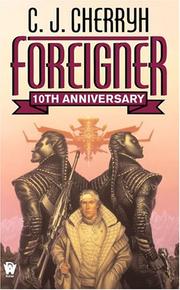
The first volume, and the one to start the series at despite the two-hundred-page prologue that precedes the main story — a human translator is the sole permitted point of contact between a marooned human colony and the atevi, who have no word for friendship. The prologue is not optional; it explains everything that follows.

The second book, where the diplomacy becomes the whole subject and the atevi psychology stops being a puzzle and starts being a working political system. Read straight on.

The end of the first trilogy and a genuine resting point — the series continues in three-book arcs from here, so this is the natural place to decide whether you want another seventeen novels. Cherryh's slowest and most patient work, and for many readers her best.
Discussion
Keep reading
Paths that share books, cover the same subject, or open a related topic.