Teixcalaan Reading Order and Guide
Teixcalaan is a duology, not a saga: two novels by Arkady Martine about a small station's ambassador to a vast literary empire that is in the process of politely swallowing her. There is no reading-order controversy — read A Memory Called Empire and then A Desolation Called Peace — so the useful question is what to read around them. This path gives you the two books in order, then Martine's other fiction, then the four novels the duology is openly in conversation with, so you can see where its ideas about language, annexation and the seduction of an imperial culture come from.
The Duology, in Order
IntermediateRead the two Teixcalaan novels in sequence and understand why the second one changes what the first was about.
▸ Study plan for this stage
Pace: 5 to 6 weeks for 960 pages. Give A Memory Called Empire three weeks and expect the first hundred pages to be slow going while the vocabulary loads; after that it accelerates into a political thriller and you will read the back half fast. A Desolation Called Peace over two to three weeks. Read them c
- The order is not in dispute: A Memory Called Empire then A Desolation Called Peace. There is nothing to argue about and no chronological alternative
- Teixcalaanli names are a number plus a noun — Three Seagrass, Nineteen Adze, Six Direction, Twelve Azalea. New readers find this the biggest early obstacle because the names do not sound like names and are hard to hold apart. Keep a list for the first fifty pages and the problem disappears
- The imago-machine is the central device: an implant carrying the recorded memory and personality of your predecessor in the job. Mahit Dzmare arrives on Teixcalaan with a fifteen-year-out-of-date copy of her predecessor Yskandr, and the gap between what he knew and what is true is the engine of the
- Teixcalaan is a culture where competence means poetry. Citizens quote, allude, and score points by literary reference; the chapter epigraphs are fragments of that culture's writing and are not decoration
- The real subject is the seduction of an empire you are not from. Mahit loves Teixcalaanli literature and Teixcalaan is quietly annexing her station. The book never resolves that into a simple anticolonial position
- Arkady Martine is a pen name for a working Byzantine historian, and the empire is built out of Byzantine court politics with Mesoamerican naming and imagery rather than the usual Roman default
- A Desolation Called Peace changes genre. Book one is a locked-city succession thriller; book two is a first-contact problem about an alien species whose language may not be parseable at all, told across four or five viewpoints instead of one
- The books won the Hugo for Best Novel in consecutive years, which is worth knowing mainly because it tells you the second book is not a falling-off
- What does the imago-machine assume about identity, and where in book one does that assumption visibly break?
- Mahit is both the target of Teixcalaanli annexation and a devoted reader of its poetry. How does the novel keep both of those true at once without resolving the tension?
- What are the chapter epigraphs doing? Pick three and say what each tells you that the scene does not
- In A Desolation Called Peace the enemy's communication may not be language in any sense we would recognise. What does the novel decide counts as a successful translation?
- Book two adds Eight Antidote and Nine Hibiscus as viewpoints. What does splitting the narration cost, and what does it buy?
- By the end, is Teixcalaan portrayed as something that can be reformed, survived, or only joined?
- For the first two chapters, write each Teixcalaanli name on a list with one word about who they are. You will stop needing it around page sixty
- Read the epigraphs on their own as a continuous text after finishing book one. They form a rough second history of the empire
- Note every point where Mahit misreads a Teixcalaanli social cue, and every point where Three Seagrass misreads a station one. The novel's argument lives in that ledger
- After book two, write a paragraph on what changed about the meaning of book one's ending. Something specific does
- Look up one page on Byzantine succession politics and mark the two things Martine has clearly lifted
Next up: With the duology closed, the shortest way to see what Martine is preoccupied with rather than what the plot required is her fiction outside Teixcalaan.

Mahit Dzmare arrives at the imperial capital as ambassador with a fifteen-year-out-of-date copy of her predecessor's mind in her skull, and he is already dead. Start here — it is a locked-room political thriller that teaches you the poetry, the naming conventions and the etiquette you will need for book two.

First contact with an enemy whose language may not be a language, told from the outside of the empire looking in. Read second, immediately: it takes the first book's argument about who counts as a person and makes it literal.
Everything Else Arkady Martine Has Written
IntermediateFollow the same preoccupations — architecture, memory and consent — into Martine's non-Teixcalaan fiction.
▸ Study plan for this stage
Pace: One week. Rose/House is 128 pages and can be read in two sittings, but it is denser per page than either novel — leave a day between them and reread the opening chapter after you finish.
- Rose/House is a novella, not a novel, and it is a locked-room murder mystery in which the room is a sentient house built by a dead architect
- The house is legally a person and controls its own access, which makes it both the crime scene and a witness that can decline to speak. The genre furniture of detection stops working under those conditions
- The preoccupations carry straight over from Teixcalaan: consent, memory stored outside a body, architecture as an argument, and an intelligence that is not a person in the way the law needs it to be
- It is deliberately colder and less companionable than the novels. There is no Three Seagrass here and no one to like, and that is the design
- Reading it after the duology shows you which parts of Teixcalaan were Martine and which were the space-opera form she was working in
- Short form suits her. The compression removes the political exposition and leaves the ideas standing bare
- If the house is legally a person, what happens to the detective story's assumption that evidence can be gathered from a passive scene?
- What does Rose/House share with the imago-machine, at the level of the idea rather than the technology?
- The novella withholds far more than the novels. Where does the withholding create genuine unease and where is it just difficulty?
- Would this story work at novel length, and what would have to be added?
- Which is the better vehicle for Martine's ideas so far, the duology or the novella, and on what grounds?
- Reread the first chapter after finishing. This is a book that hides its rules in plain sight in the opening pages
- List every capability the house has and every restriction on it. The plot is entirely determined by that list
- Write two sentences connecting Rose/House to the imago-machine. If you cannot, reread the sections where the house describes its own memory
Next up: You can now recognise Martine's own fingerprints, which is the prerequisite for reading the four books she is arguing with and seeing what she kept, inverted or genuinely invented.

A short, cold locked-room mystery set inside a haunted AI house in the Mojave. Different genre, identical obsession: a mind that keeps a dead person and will not give them back.
Where Teixcalaan Comes From
IntermediateRead the four novels the duology is arguing with, so you can see what Martine kept, what she inverted, and what she is doing that is genuinely new.
▸ Study plan for this stage
Pace: 10 to 12 weeks for about 1,570 pages. These are four separate major novels rather than a supplementary reading list. The Left Hand of Darkness over two weeks, Foreigner over two to three, Ancillary Justice over three, The Goblin Emperor over two. Take them in the order listed; each one prepares an a
- The Left Hand of Darkness is the origin of the whole mode: an envoy alone on a world whose culture he cannot read, sent by an interstellar body that wants that world to join it. Every subsequent ambassador-novel including Mahit's is downstream of Genly Ai
- Le Guin's Gethenians have no fixed sex, and the novel uses he for everyone — a choice Le Guin herself later criticised in print. Reading it before Ancillary Justice, which makes the opposite choice, turns the pronoun question into a live argument rather than a gimmick
- Foreigner is C. J. Cherryh's version of the same premise taken to its limit: one human translator, Bren Cameron, is the sole permitted point of contact with the atevi, a species whose emotional structure has no analogue for friendship. It is the most procedurally detailed diplomacy novel in the genr
- The atevi concept of man'chi rather than affection is the direct ancestor of Teixcalaan's insistence that outsiders can never quite parse its social grammar
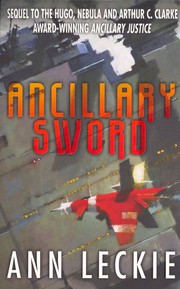
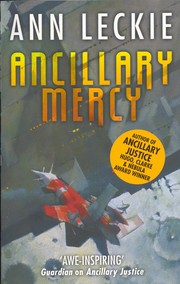
- Ancillary Justice supplies the other half of Teixcalaan's inheritance: an empire annexing worlds as a matter of civilisational routine, narrated by an intelligence distributed across bodies, in a language with no gender. Read it and A Memory Called Empire feels less like influence and more like a re
- The Goblin Emperor is the warm one — an unprepared outsider dropped into a lethal court with no allies and no training in its etiquette. Mahit's predicament is the same predicament with the sympathy dialled down
- What Martine adds to all four is the reading. None of these earlier books make literary allusion the actual instrument of political power, and that is her genuine contribution
- Genly Ai and Mahit are both envoys who fall for the culture they are supposed to negotiate with. What does each novel think that affection costs?
- Le Guin uses he for everyone and Leckie uses she. What is each choice doing, and which one made you notice gender more?
- Foreigner spends enormous effort on protocol and translation. Where does Teixcalaan use the same technique, and where does it move faster?
- The Goblin Emperor and A Memory Called Empire both open with an unprepared outsider at court. Compare the first fifty pages of each — what does Martine assume you already know?
- Ancillary Justice's empire and Teixcalaan's empire annex worlds differently. Name the difference precisely
- After all four, what is genuinely new in Teixcalaan rather than inherited?
- Read the first chapter of Foreigner, then skip to the Bren Cameron sections if the prologue stalls you. Come back to it afterward — it makes sense in retrospect
- Keep a two-column list while reading: things Teixcalaan borrowed, things it inverted. Aim for at least six entries per column
- Write one paragraph comparing the pronoun handling in The Left Hand of Darkness and Ancillary Justice, then reread the Teixcalaan passages about how the empire names people
- Take one court scene from The Goblin Emperor and one from A Memory Called Empire and mark where each explains an unfamiliar custom to you and where each refuses
- Rank the four by how much they changed your reading of Teixcalaan, and write a sentence defending the top one
Next up: That is the duology plus its whole lineage, and the obvious continuation is deeper into Cherryh's Foreigner sequence or Leckie's Radch trilogy, both of which have their own reading orders.
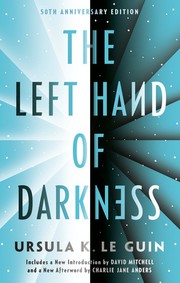
The founding text of the envoy-alone-in-an-alien-court novel, and the source of Teixcalaan's central device: the outsider whose real problem is that she is starting to like it here. Read it first of the four.
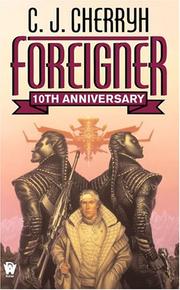
One human translator embedded in an alien polity where a mistranslated preposition can start a war. The closest structural ancestor to Mahit's job, and the book that most rewards reading straight after the duology.
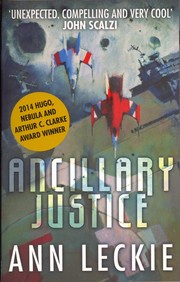
A ship's fragmented mind in a single body, in an empire annexing worlds in the name of civilisation. The most obvious sibling: distributed identity, imperial etiquette, and a language whose pronouns are the plot.

An unwanted half-outsider dropped into a court whose protocol is a weapon. Fantasy rather than SF, and the warmest book on this path — read it last as the antidote to Teixcalaan's coldness about what empires do.
Discussion
Keep reading
Paths that share books, cover the same subject, or open a related topic.