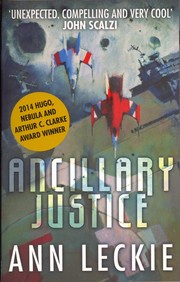
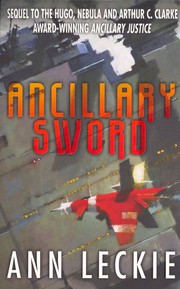
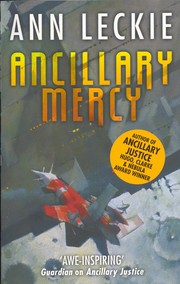
Start with Ancillary Justice, then Ancillary Sword, then Ancillary Mercy. There is no alternative order and no chronological rearrangement to consider. The reason people search for where to start is really a different question — why the opening is so hard — so deal with that first.
Imperial Radch Reading Order and Guide
July 27, 2026 · 4 min read
The pronouns, explained
This is what new readers stumble on. Radchaai has no grammatical gender. Breq narrates in Radchaai and therefore calls every character she, regardless of their body, and when she speaks other languages she visibly struggles to gender people correctly and gets it wrong. So she tells you nothing about anatomy, and for most characters the book never says. Do not try to work out who is really male. There is no answer being withheld; there is simply no information, and noticing how uncomfortable that makes you is the intended experience.
It takes about fifty pages to stop noticing. Almost every reader reports the same curve — irritation, then adjustment, then forgetting it was ever an issue. Commit to fifty pages before judging it, because nearly everyone who abandons the book does so before that point.
The second device is the narrator. Breq is a surviving fragment of the artificial intelligence of a troop carrier. Ancillaries are the bodies of conquered people, stored and then fitted with ship AI, so a ship can occupy dozens of bodies simultaneously. Ancillary Justice alternates two timelines about nineteen years apart: Breq alone in a single body, and the ship perceiving through many bodies at once. The multi-body chapters are the hard ones, because a single paragraph can be in four places, and they are also the best writing in the trilogy.
The trilogy, in order
Budget extra time for the first eighty pages of Ancillary Justice — two timelines, an unfamiliar pronoun convention and a narrator who is not one person. After that it accelerates.
Then know that the trilogy narrows rather than widens, and readers expecting escalation are routinely disappointed. Book one spans a thousand years and several worlds. Ancillary Sword and Ancillary Mercy take place almost entirely on one station and one planet, and are about tea, labour, station governance and a plantation economy. That narrowing is deliberate: Leckie's argument is that empire is not a battle but an administrative arrangement, and the small scale is where annexation is actually visible. Radchaai propriety — gloves, tea sets, correct forms of address, who serves whom — is the main instrument for showing class. Pay attention to the tea.
The empire's ruler occupies thousands of bodies and has split against herself, so the trilogy's central conflict is a civil war inside one person, which is the same idea as Breq at a different scale. Read all three within a couple of months so the political cast stays fresh, and keep a list of the Radchaai houses and who is client to whom.
The two standalones
Provenance is set in the same universe but outside the Radch, in a small polity where family status depends on owning authenticated historical objects. It is a comedy of manners with a heist in it and it is much lighter than the trilogy. Its protagonist is out of her depth in a way Breq never is, which is the point — after a narrator who was once a warship, a young woman with an expensive and badly thought-out plan is a deliberate change of register. It also uses a three-gender system with its own pronoun set, which after a trilogy in which everyone is she reads as a second experiment rather than a repetition.
Translation State is the strangest of the five and returns to the incomprehensibly powerful aliens whose treaty holds the whole setting together. It follows three characters, one of whom may or may not be a Presger Translator — entities built to be intermediaries between humans and something that does not think in categories humans have. It engages directly with the question of what counts as a person under the treaty, which is the trilogy's question about ancillaries asked from the alien side.
Neither requires the trilogy, but both are far richer with it, and Translation State is best read last.
The rest of Ann Leckie
The Raven Tower is fantasy rather than science fiction, and it is narrated in the second person by a god who is a rock. That sounds like a gimmick and it is not: a god's speech makes things true, but a god who says something it cannot make true dies, so every divine utterance is an expenditure of power and gods speak with extreme care. That constraint turns theology into a resource-management problem. It is the most formally demanding book she has written.
Lake of Souls is the story collection; take two or three stories a sitting rather than reading it through.
If you want more of this
The Left Hand of Darkness is the ancestor of the whole mode and makes the opposite pronoun choice. Downbelow station is the great space-station-politics novel. A Memory Called Empire is the closest modern companion — an ambassador inside an empire that is annexing her home, written as something close to a reply.
Browse more science fiction reading paths on Discover.
Follow the full ordered path here: Imperial Radch Reading Order and Guide.
FAQ
- Why does everyone in Ancillary Justice get called she?
- Because the narrator is thinking in Radchaai, a language with no grammatical gender, so she defaults to one pronoun for everyone regardless of body. The book is not withholding an answer — for most characters no information about anatomy exists at all. Almost every reader stops noticing around page fifty.
- Do the books get more action-packed?
- No, the opposite. Book one spans a thousand years and several worlds; books two and three stay almost entirely on one station and one planet and concern governance, labour and etiquette. That narrowing is deliberate, and readers expecting escalation are the ones who come away disappointed.
Get the books
- 1Ancillary JusticeAmazon ↗Ann Leckie
- 2Ancillary SwordAmazon ↗Ann Leckie
- 3Ancillary MercyAmazon ↗Ann Leckie
- 4ProvenanceAmazon ↗Ann Leckie
- 5Translation StateAmazon ↗Ann Leckie
- 6The Raven TowerAmazon ↗Ann Leckie
As an Amazon Associate we earn from qualifying purchases. Some book links are affiliate links; you pay the same price and we may earn a small commission.
Follow the full reading path
Imperial Radch Reading Order and Guide
Intermediate10books82 hrs4 stages
@craftsherpa♥ 0
Ready to learn something deeply?
Build a reading path — free