The Hunger Games Reading Order and Guide
Suzanne Collins has now written five Panem novels: the original trilogy and two prequels set decades earlier. The chronological order and the publication order disagree, and the recommendation here is firm — read the trilogy first. Both prequels are constructed as ironic commentary on things you already know, and reading them first turns their best reveals into ordinary exposition. Take Katniss's three books in order, then the prequels in publication order, then Collins's earlier series, then the books Panem is descended from and the wave that followed it.
The Trilogy, in Order — Start Here
BeginnerRead Katniss's three books in sequence and get the whole argument: spectacle, complicity, and a war that does not end cleanly.
▸ Study plan for this stage
Pace: 3 weeks for the three novels, roughly 1,250 pages if you read them as separate volumes. The Hunger Games in under a week — the chapters are short and end on hooks and most people cannot stop. Catching Fire in a week. Mockingjay in a week, and give yourself a couple of days afterward; it is a much ha
- Be plain about what this is before recommending it to anyone. These are young adult novels in which twenty-four children between twelve and eighteen are put into an arena and made to kill each other on live television as a state punishment. The deaths are on the page, some of them are children the n
- The order is Katniss's three books in publication sequence and there is no alternative worth considering. The chronological reading order that puts the prequels first is a real option and it is the wrong one — see the next stage
- A note about the middle entry in our catalogue: the second slot here has resolved to a boxed edition containing all three novels rather than to Catching Fire on its own. If you already own the first book, what you want is Catching Fire as a single volume; if you are starting fresh, the omnibus gets
- Katniss narrates in the first person, present tense, throughout. That choice is the reason the arena sequences work — you get her assessments in real time, including the ones that are wrong
- Collins is writing about spectacle and complicity, not about a love triangle. The Capitol audience watching the Games is the book's model of its own reader, and the trilogy keeps making that comparison sharper
- Catching Fire is the best-constructed of the three: it turns the first book's victory into a trap and it introduces the political machinery without ever leaving Katniss's limited viewpoint
- Mockingjay is the bleakest and the most divisive. It is about the aftermath — mass civilian casualties, propaganda produced by the good side, an atrocity involving children, and a protagonist with untreated post-traumatic stress. Readers who wanted a triumphant war novel dislike it intensely, and th
- Katniss is not a strategist and is frequently manipulated. The trilogy is careful about how little agency she actually has, which is easy to miss because she narrates confidently
- The Capitol audience watches children die for entertainment. What is the trilogy saying about its own reader, and where is it most direct about it?
- Katniss makes decisions in the arena that she narrates as calculation. Which ones are actually calculation and which are luck?
- Catching Fire converts a victory into a trap. When did you realise, and what had Collins already shown you?
- In Mockingjay the rebellion uses the same tools as the Capitol. Where does the novel draw a line between them, if it does?
- The ending refuses triumph. What does it substitute, and is that an honest response to what the books have described?
- How much does Katniss actually choose across three books? Make a list and be strict
- Read the three in order without watching the films in between. The films smooth Katniss's unreliability out
- Mark every point where Katniss says what she is feeling and every point where her behaviour says otherwise
- Track who controls the cameras in each book. The answer changes and it is the trilogy's real plot
- After Mockingjay, write down what happened to each surviving character. The list is bleaker than the mood of the final pages suggests
- If you are recommending these to a young reader, read the arena chapters of book one yourself first and decide
Next up: Katniss's whole story is now behind you, which is the only condition under which the prequels work — both are constructed as commentary on things you already know.
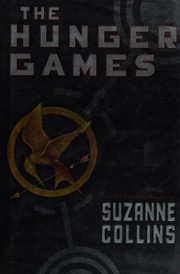
The reaping, the arena, and a first-person present-tense voice that gives you no distance at all. Start here regardless of what any chronological reading order tells you — everything else in Panem is written in reference to this book.

The victory tour, the Quarter Quell and the moment the series stops being about survival and becomes about propaganda. The best-plotted of the three.

The war, told by a traumatised teenager who is mostly being used as a symbol by both sides. The most-argued-about volume, and the one that makes the trilogy's anti-war intent explicit rather than implied.
The Prequels, Read Second
BeginnerGo back sixty-four and forty years and read the two prequels in publication order, both of which depend on you already knowing how Panem ends.
▸ Study plan for this stage
Pace: 3 weeks. The Ballad of Songbirds and Snakes is 528 pages and slower than the trilogy — allow two weeks. Sunrise on the Reaping is a faster read and closer in pace to the original books; allow one to two weeks. Read them in publication order.
- The recommendation here is firm: read the trilogy first. Both prequels are built as ironic commentary on outcomes you already know, and reading them in chronological order converts their best effects into ordinary exposition
- The Ballad of Songbirds and Snakes is set sixty-four years before the trilogy and is narrated in close third person from the point of view of an eighteen-year-old Coriolanus Snow — the man who will become the trilogy's president and its principal villain
- It is not a redemption story and it is not an origin story in the sympathetic sense. Collins lets you inside a mind that rationalises each step, and the horror is how reasonable each step sounds from inside
- This is the tenth Hunger Games, when the Games are still a crude and unpopular punishment rather than a polished entertainment. Watching the spectacle get invented — mentors, sponsors, betting, a host — is the novel's best material
- It is a slower and more essayistic book than the trilogy, with substantial argument about human nature, contract theory and control. Readers who came for arena action often find the middle third heavy going
- Sunrise on the Reaping goes back to the fiftieth Games, the Second Quarter Quell, and gives it to Haymitch Abernathy — the drunken mentor of the original trilogy, seen here at sixteen
- You already know he wins, so the suspense is entirely about cost. Everything you learned about Haymitch in the trilogy is the setup, and this book is the payoff, which is the clearest possible argument for reading in publication order
- Both prequels sharpen the trilogy's theme rather than expanding its plot: they are about how a population is persuaded to accept the Games, and about propaganda's editing of a public record
- Snow narrates his own rationalisations. At which specific moment does he become the man from the trilogy?
- The tenth Games are crude and unpopular. What does watching the spectacle get designed tell you about the trilogy's Capitol?
- Songbirds and Snakes argues about human nature at length. Does the argument earn its space, or is it the author speaking?
- You know Haymitch survives. How does Sunrise on the Reaping generate tension anyway, and what is at stake instead of survival?
- What does each prequel retroactively change about a scene in the trilogy? Name one for each
- Would either prequel work as a first Panem book? Test it against your own experience
- Before Songbirds and Snakes, reread the scenes in the trilogy where Snow speaks to Katniss directly. They read differently afterward
- Track every point where Snow tells himself he had no choice and note what the alternative was
- Before Sunrise on the Reaping, reread Haymitch's introduction in book one
- After both, write a paragraph on how the Games changed between the tenth, the fiftieth and the seventy-fourth. The trajectory is Collins's actual subject
Next up: You now have all five Panem books, and the obvious next question is where the preoccupation with children and war came from, which is answered by the series Collins wrote first.
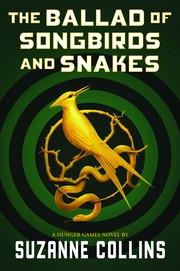
The tenth Hunger Games from the point of view of an eighteen-year-old Coriolanus Snow. Its whole effect is dramatic irony — you know who he becomes and he does not — which is exactly why it must not be read first.

The fiftieth Games and Haymitch Abernathy's Quarter Quell, the one Katniss watches on tape in Catching Fire. Read it after the trilogy and after Ballad; it is the most direct commentary Collins has written on how a state edits its own history.
The Rest of Suzanne Collins
BeginnerRead the series she wrote before Panem, which is where the war-and-children preoccupation actually starts.
▸ Study plan for this stage
Pace: One week for 311 pages, and less if you are reading only the first volume. Gregor the Overlander is middle-grade, has short chapters and reads very fast. It is the opening book of a five-volume series called the Underland Chronicles, so treat this as a sample rather than a complete story.
- Gregor the Overlander came out in 2003, five years before The Hunger Games, and is the series Collins wrote first. It is aimed at a younger audience — roughly nine to twelve — and the prose is correspondingly simpler
- The premise is a boy who falls through a grate in a New York laundry room into an underground world of giant bats, rats, cockroaches and a human city, and is immediately told he is the subject of a prophecy
- What makes it relevant is that Collins's preoccupations are already complete here: a child conscripted into someone else's war, a prophecy used as a recruiting tool, a protagonist responsible for a younger sibling, and warfare with real casualties
- The Underland Chronicles get progressively darker and the later volumes deal with genocide, biological warfare and the deaths of major characters. This is not a light middle-grade series and Collins has said the war material was intentional
- Collins's father was a career Air Force officer who served in Vietnam and who taught her about war deliberately from a young age. She has cited this repeatedly as the origin of her subject, and it is visible in both series
- Reading Gregor after Panem shows that Katniss was not an accident of the young adult dystopia boom. Collins had been writing the same book, for a younger audience, half a decade earlier
- The prophecy device is used very differently here than in most children's fantasy — as a piece of political manipulation rather than as destiny, which is exactly what the Capitol does with narrative in the trilogy
- What does Gregor share with Katniss structurally, beyond both being children in a war?
- The prophecy is treated as a tool used on Gregor rather than as truth. Where does the book make that explicit?
- How does Collins handle death for a nine-year-old audience compared with a fourteen-year-old one?
- Gregor is responsible for his toddler sister throughout. How does that responsibility function, and how does it compare with Katniss and Prim?
- Having read both series, what is Collins consistently writing about?
- Read the first fifty pages watching for how quickly Gregor is conscripted. It is faster than you expect
- List the parallels with the Hunger Games trilogy as you find them. There are more than five
- Decide after book one whether to continue the Underland Chronicles. The later volumes are considerably darker and better
- Write two sentences on what changes when the same writer moves the same subject from a nine-year-old reader to a fourteen-year-old one
Next up: With Collins's own development mapped, the last stage places the trilogy in its lineage — what it was accused of copying, what it grew out of, and what it set off.

A boy falls through a New York laundry room grate into an underground war with giant rats and a prophecy about him. Written for younger readers and far darker than that summary implies — the clearest evidence that Panem was not a one-off.
Ancestors and Descendants
IntermediatePlace the trilogy in its lineage — the novel it was constantly compared to, the dystopia that preceded it in classrooms, and the wave it launched.
▸ Study plan for this stage
Pace: 6 to 7 weeks for about 1,760 pages. Battle royale over two to three weeks — it is 624 pages and much heavier going than anything else here. The Giver in two or three sittings at 200 pages. Divergent over a week to ten days, Scythe over a week and a half. Take them in this order.
- Battle royale is the novel The Hunger Games was constantly accused of copying: a Japanese class of ninth-graders is taken to an island and forced to kill each other under a state programme. Collins has said she had not read it or heard of it before finishing her manuscript, and the two books are gen
- It is emphatically not young adult. It is far more graphic, the violence is extended and clinical, and it rotates through forty-two viewpoints so you watch children you have just met die in detail. Do not hand this to a twelve-year-old on the strength of the comparison
- The structural difference is the point of reading it: Collins narrates from inside one consciousness and Takami narrates from everywhere, so one book is about complicity and the other is about a system processing people
- The Giver is the classroom dystopia that preceded The Hunger Games by fifteen years and shaped what American schools expect of the form: a controlled community, a child given knowledge nobody else has, and an ending that is deliberately ambiguous
- It is short, quiet and does its violence almost entirely by implication — one scene in particular is more disturbing than anything in the arena precisely because of how flatly it is reported
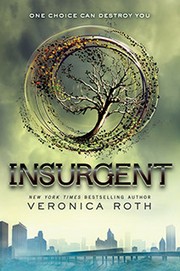
- Divergent is the most direct commercial descendant: published in the wake of the trilogy, faction-based, first person, with an arena substitute in the initiation trials. It is the clearest illustration of what the imitators took, which was the structure rather than the argument
- Scythe is the best of the post-Hunger Games wave. Its premise — a world that has conquered death and therefore licenses professional killers to keep the population down — takes the moral question seriously in a way the trilogy would recognise
- Reading these four in order gives you a real answer to whether the trilogy is derivative, and the honest answer is that the premise is common and the treatment is not
- Battle royale and The Hunger Games share a premise. Name three things the treatments do completely differently
- Takami uses dozens of viewpoints and Collins uses one. What does each choice make possible?
- The Giver does its violence by implication. Is implication more effective than depiction here, and why?
- Divergent copies the structure. What did it not copy, and does the structure work without it?
- Scythe takes the moral premise seriously. Which of these five books asks the hardest question?
- Having read all of them, is The Hunger Games derivative? Answer with evidence rather than loyalty
- Read the opening chapter of Battle royale and The Hunger Games back to back. The difference in method is obvious in twenty pages
- Note the one scene in The Giver that is worse than anything in the arena, and work out why
- Make a list of what Divergent borrowed. Then mark which items are structure and which are argument
- Write a paragraph defending or rejecting the accusation of copying, using specific passages
- Rank all five and say what each is actually about in one sentence
Next up: That is the trilogy, its prequels, its author's earlier work and its whole family tree, and the natural next steps are adult dystopian fiction or Collins's Underland Chronicles in full.
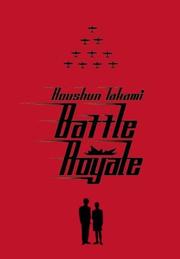
The 1999 Japanese novel about a school class forced to kill each other on an island, and the comparison Collins spent years denying. Far more violent and far less interested in media; read it to see how differently the same premise can be aimed.
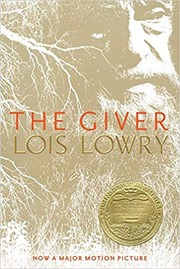
The dystopia most Hunger Games readers met first, and the template for the whole genre's structure: a controlled society, a chosen adolescent, a revelation. Short and still the sharpest of them.
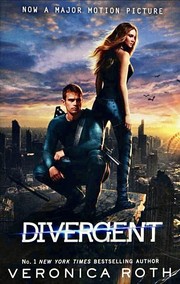
The most commercially successful of the books that followed Katniss, and worth reading as a study in what the imitators kept — the arena test, the faction system, the love triangle — and what they dropped.
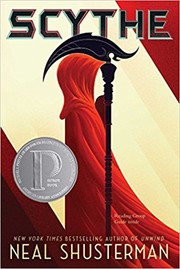
The best of the later YA dystopias: a world without death where licensed killers manage the population. Read it last — it is the one that argues with the genre rather than repeating it.
Discussion
Keep reading
Paths that share books, cover the same subject, or open a related topic.