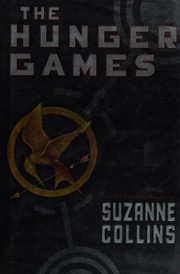
Start with The Hunger Games, the 2008 first novel, and read Katniss's three books in publication order. Then read the two prequels. Chronological order — starting with the prequel set sixty-four years earlier — is a real option that plenty of people recommend, and it is the wrong one, for a reason worth spelling out below.
Be plain about what this is before recommending it to anyone. These are young adult novels in which twenty-four children between twelve and eighteen are put into an arena and made to kill each other on live television as a state punishment. The deaths are on the page, some of them are children the narrator likes, and the youngest tributes are twelve. The reading level is accessible from about eleven or twelve; the content is not gentle and the books do not want it to be. If you are recommending them to a young reader, read the arena chapters of book one yourself first and decide.
The trilogy
The Hunger Games is the fastest read of the five — short chapters that end on hooks, and most people cannot stop. Katniss narrates in first person, present tense, throughout, which is why the arena sequences work: you get her assessments in real time, including the ones that are wrong.
Catching Fire comes next, and it is the best-constructed of the three. It turns the first book's victory into a trap and introduces the political machinery without ever leaving Katniss's limited viewpoint. One catalogue note: the second slot in our path resolved to The Hunger Games Trilogy (Hunger Games / Catching Fire / Mockingjay), a boxed edition of all three novels, rather than to Catching Fire on its own. If you already own book one, buy Catching Fire as a single volume; if you are starting fresh, the boxed set gets you the whole trilogy at once.
Mockingjay is the bleakest and most divisive. It is about the aftermath — mass civilian casualties, propaganda produced by the good side, an atrocity involving children, and a protagonist with untreated post-traumatic stress. Readers who wanted a triumphant war novel dislike it intensely, and the refusal is the point. Give yourself a couple of days afterwards.
Collins is writing about spectacle and complicity, not about a love triangle. The Capitol audience watching the Games is the book's model of its own reader, and the trilogy keeps making that comparison sharper. Katniss is also not a strategist and is frequently manipulated; the books are careful about how little agency she actually has, which is easy to miss because she narrates confidently.
The prequels, second
The recommendation here is firm. Both prequels are built as ironic commentary on outcomes you already know, and reading them chronologically converts their best effects into ordinary exposition.
The Ballad of Songbirds and Snakes is set sixty-four years before the trilogy and is narrated in close third person from the point of view of an eighteen-year-old Coriolanus Snow — the man who becomes the trilogy's president and its principal villain. It is not a redemption story. Collins lets you inside a mind that rationalises each step, and the horror is how reasonable each step sounds from inside. This is the tenth Hunger Games, when the Games are still a crude and unpopular punishment rather than a polished entertainment, and watching the spectacle get invented is the novel's best material. It is slower and more essayistic than the trilogy, with substantial argument about human nature and control, and readers who came for arena action often find the middle third heavy going.
Sunrise on the Reaping goes back to the fiftieth Games and gives them to Haymitch Abernathy, the drunken mentor of the original trilogy, seen here at sixteen. You already know he wins, so the suspense is entirely about cost. Everything you learned about Haymitch in the trilogy is the setup and this book is the payoff, which is the clearest possible argument for reading in publication order.
The rest of Suzanne Collins
Gregor the Overlander came out in 2003, five years before The Hunger Games, and is the series Collins wrote first. It is middle-grade, aimed at roughly nine to twelve, and reads very fast. It is also the opening book of a five-volume series, so treat it as a sample rather than a complete story. Collins's preoccupations are already fully formed: a child conscripted into someone else's war, a prophecy used as a recruiting tool, and warfare with real casualties.
If you want more of this
Battle royale is the obvious comparison and is considerably more violent and written for adults. The Giver is the quieter, older ancestor of the whole young-adult dystopia shelf. Divergent and Scythe are the two best-known descendants — the first faster and thinner, the second stranger and more interested in its premise.
Browse more reading paths on Discover.
Follow the full ordered path here: The Hunger Games Reading Order and Guide.