The Divergent Trilogy Reading Order: Where to Start
Veronica Roth's Divergent is three novels and one companion collection, and the only genuine ordering question is where the companion goes. Four contains four prequel stories told from Tobias's point of view, which sounds like a place to start and is not — the stories are written for readers who already know who he turns out to be. This path reads the trilogy straight through, places Four and the world guide correctly, then opens out into the dystopian young-adult shelf Divergent belongs to.
The Trilogy, in Order
BeginnerRead the three main novels in publication order, which is also strict chronology. ORDER CHOSEN: publication order — this is one continuous story narrated by Tris, and the second and third books open where the previous one closed.
▸ Study plan for this stage
Pace: Three to four weeks for 1,528 pages — Divergent 487, Insurgent 525, Allegiant 516 — so the three are near enough the same length that the pace holds steady across them, roughly a book a week at 70 pages an evening. Read them consecutively: each opens where the last one closed, and Insurgent ends on
- The five factions and the aptitude test as a sorting mechanism, and what Divergence means against it
- Initiation as the first book's structure — a competitive process with a ranking and a cut, which supplies the plot without needing an external threat
- Fear simulations and serums as the trilogy's recurring technology, and the political uses each is put to
- The faction system's collapse in Insurgent, where the series stops being about belonging and starts being about power
- The dual narration introduced in Allegiant and the specific problem it was introduced to solve
- A sorting society as a premise: what it flatters in a reader and what the trilogy eventually says about it
- State what each faction values and what it therefore cannot do. Which faction does the book treat least fairly?
- The aptitude test is meant to be decisive and is not. What does the trilogy think determines who a person becomes?
- Insurgent ends on a reveal that reframes the whole setting. Was it prepared for, and where can you find the preparation?
- Tris and Tobias narrate Allegiant in alternating chapters. Can you tell them apart without the headings? What does the answer say about the device?
- The ending divided readers sharply. State the case for it and the case against, using the text rather than the reaction.
- Write down which faction you would choose after the first fifty pages, then revisit the choice at the end of Allegiant; the shift is the argument the trilogy is making.
- Track every serum introduced across the three books with what it does and who controls it; by Allegiant the list is effectively the political map.
- Take two alternating chapters from Allegiant, cover the headings, and try to identify the narrator from the prose alone.
- List what Tris learns about her mother across the trilogy and mark which revelations change the meaning of earlier scenes.
Next up: With the trilogy closed, the next stage places the two supplementary volumes where they actually work, which is not where their chronology would put them.
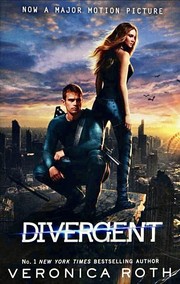
Beatrice Prior chooses a faction at sixteen and starts Dauntless initiation. The starting point and the book the whole trilogy's premise is explained in — the five factions, the aptitude test and what being Divergent means are all established here.
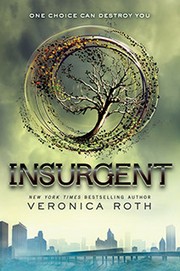
Second, picking up immediately after the first book's ending, with the faction system collapsing. The middle book and the one that does the political work; it ends on the reveal that the third book is built on.
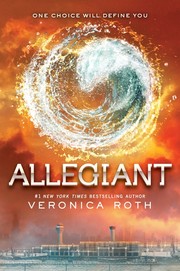
Third and final, and the one that splits the narration between Tris and Tobias for the first time. It is the most argued-about ending in young-adult dystopia — read it as the intended conclusion rather than skipping to summaries of it.
Four and the Companion, in Their Right Places
BeginnerAdd the two supplementary volumes at the points where they actually work, which is not where their chronology would suggest.
▸ Study plan for this stage
Pace: About a week. Four is 261 pages of four short stories and reads in two or three sittings; we hold no page count for our record of the world companion, which is a short faction-by-faction reference volume rather than a narrative and can be skimmed in an hour. The placement is the point of this stage.
- Prequel material whose effect depends on foreknowledge, and why chronological placement is the wrong instinct for it
- Tobias's initiation told from inside, against Tris's outside view of the same institution in Divergent
- The fourth story overlapping Divergent's opening, which is a retelling rather than a prequel
- A world companion as reference rather than narrative — what it is useful for and what it cannot supply
- The serums and the aptitude test set out systematically, against how the novels dole them out
- Supplementary volumes as commercial artefacts, and reading them with that visible
- Three of the stories precede Divergent. Name specifically what each would have spoiled if read first.
- Tobias's initiation and Tris's are the same process a few years apart. What does his account reveal about the institution that hers could not?
- The overlapping story retells scenes you know. Does it add motive, or only detail?
- The companion sets out the factions systematically. Does the system hold together when stated plainly?
- Do these two volumes change your reading of the trilogy, or only extend it?
- Read the overlapping story immediately after rereading the corresponding chapter of Divergent; the pairing is where the collection earns its place.
- Check the companion's account of the aptitude test against how the test actually behaves in the novel, and note any inconsistency.
- List what you had inferred about Tobias's father from the trilogy and compare it with what the stories state outright.
- Write a paragraph on where you would tell a friend to read Four, and defend it against the chronological answer.
Next up: The next stage leaves the faction system entirely for the novel Roth wrote once the trilogy was finished, which is the fairest test of her work without a proven formula.
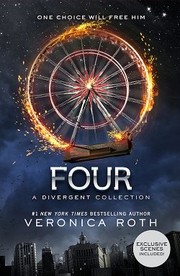
Four stories from Tobias's point of view, three of them set before Divergent begins and the fourth overlapping its opening. Chronologically these come first; read them after Divergent anyway, because their whole effect depends on already knowing who Four is and what he is hiding. Our catalogue record displays the short title, Four.
A short faction-by-faction companion, originally free, covering the aptitude test, the serums and the city. Read it here as reference rather than as a story; our record carries the full published title, The World of Veronica Roth's Divergent Series.
Roth After Divergent
IntermediateSee what Roth wrote once the trilogy was finished, and judge the series against a book with no faction system to lean on.
▸ Study plan for this stage
Pace: Ten days to two weeks for 512 pages. Carve the Mark is a science-fantasy with considerably denser worldbuilding than Divergent — several planets, a currentgift system, invented cultures and names — so it is slower going than a 512-page young-adult novel usually is, and the first hundred pages carry
- The currentgift system as a magic-adjacent premise with a cost attached to every gift
- Worldbuilding across planets and cultures against Divergent's single city, and what the added scope demands of a reader
- Two narrators from opposed peoples, and how the novel manages sympathy between them
- Pain as a power, and the questions that framing raises
- A second-system novel: what an author reaches for when the constraint that made the first book work is removed
- Reading a book with a public controversy attached to it without letting either the defence or the attack do the reading for you
- What does each currentgift cost its holder? Is the cost consistent, or does the plot bend it?
- Roth had a proven formula and did not repeat it. What did she keep from Divergent anyway?
- The two narrators come from peoples in conflict. Where does the novel place its sympathy, and how do you know?
- The criticism of the book centres on how it codes its peoples and its treatment of pain. Having read it, can you locate the passages the argument is about?
- Is this a better novel than Divergent? Separate the question of ambition from the question of execution.
- Write out the rules of the currentgift as they are established and check the climax against them.
- Compare the first chapter of Divergent and the first chapter of Carve the Mark on how much the reader is asked to hold at once.
- Locate the passages the published criticism refers to and read them closely before reading any commentary on them.
- List what the faction system did for Divergent structurally and check whether anything in Carve the Mark performs the same job.
Next up: The final stage places the trilogy in its shelf — the book that invented the sorting premise, the one that made the market, and the contemporaries that followed Divergent to it.
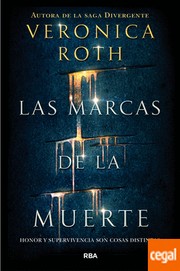
A science-fantasy set on a planet where everyone develops a currentgift, published in 2016 and considerably more ambitious in worldbuilding than Divergent. Read after the trilogy: it is the fairest test of what Roth does when she is not writing to a proven formula.
The Dystopian Shelf Divergent Sits In
IntermediateRead the ancestors and the contemporaries, ordered from the book that invented the shape to the ones that followed Divergent to market.
▸ Study plan for this stage
Pace: Five to six weeks for 1,609 pages across five books, none of them long: The Giver is 200 pages and the shortest on the path, The Hunger Games 399, Matched 369, Legend 313 and The Selection 328. They are ordered from ancestor to imitator rather than by size, and you do not have to read all five — the
- Assignment by a benevolent authority as the founding premise, established in The Giver decades before the current wave
- The Hunger Games as the book that created the market Divergent was published into, and the specific things Roth borrowed
- Two first-person teenage narrators compared: what Katniss notices that Tris does not, and the reverse
- Matched as the closest structural sibling — an assignment system plus a romance that breaks it
- Legend running dual narration from its first book, which is the experiment Allegiant attempts only at the end
- The Selection at the outer edge, where the politics thin out and the romance takes over
- Distinguishing a genre's inherited furniture from a specific book's invention
- The Giver is 200 pages and does what these trilogies take 1,500 to do. What does the compression cost, and what does it gain?
- List what Divergent shares with The Hunger Games. Which of those elements did Collins invent and which were already there in Lowry?
- Compare Katniss and Tris as narrators on one specific scene type — a moment of violence, say. What does each see?
- Matched and Divergent both pair an assignment system with a forbidden romance. Which handles the system more seriously?
- Legend alternates two narrators from book one. Does doing it from the start work better than Allegiant's late switch?
- Read The Giver in one sitting, then write down the three elements of it that appear in Divergent; the list is short and it is the point of the stage.
- Take the opening two pages of The Hunger Games and of Divergent and compare what each narrator tells you about herself before anything happens.
- In Legend, cover the chapter headings and test whether the two voices are distinguishable — the same test you ran on Allegiant.
- Rank all five by how seriously each takes its own social system, and write one sentence per book explaining the position you gave it.
Next up: This is the end of the path: the trilogy, its supplements placed where they work, Roth without a formula, and the shelf around her — from here, follow whichever of the five you rated highest into its own series.
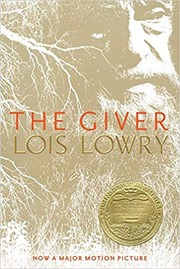
The 1993 novel where a child is assigned a role by a community that has removed choice, pain and colour. Start here: the faction system's whole premise — a society that sorts you for your own good — comes through this book.
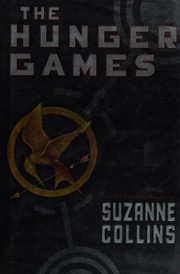
The book Divergent was published in the wake of, and the one that created the market for it. Read second: the comparison of the two first-person teenage narrators is the single most useful thing on this stage.
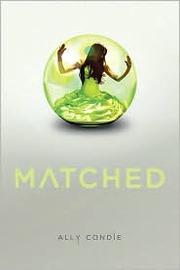
A society that chooses your partner, your work and your death date. The closest structural sibling to Divergent among its contemporaries — an assignment system plus a romance that breaks it.
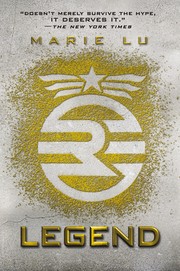
A militarised Republic, a prodigy and a criminal, told in two alternating first-person voices. Here because it does the dual-narrator experiment Allegiant attempts, and does it from book one.
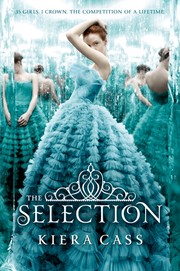
A caste system and a televised competition for a prince. Last because it is the furthest toward romance and away from politics, and it marks the outer edge of the shelf.
Discussion
Keep reading
Paths that share books, cover the same subject, or open a related topic.