The Giver Quartet Reading Order: Where to Start
The Giver quartet is read in publication order — The Giver, Gathering Blue, Messenger, Son — and the reason most readers never finish it is structural rather than chronological. The Giver ends without resolving, Gathering Blue then opens on a different village with different characters and no visible connection, and a large share of readers conclude at that point that it is not really a sequel and stop. It is, and Messenger is the book that proves it by putting the three settings in one world. Son closes the circuit from the point of view of the birthmother of the baby Jonas carried away. Read the four in order, close together, and do not let the second one throw you. The rest of this path is the thing an author page cannot give you: the adult dystopias The Giver is arguing with, and the wave of children's dystopias it made possible.
The quartet, in publication order
BeginnerRead the four novels in order and see how three apparently unconnected stories turn out to occupy one world
▸ Study plan for this stage
Pace: Three to four weeks for 991 pages, and the four are not evenly sized. The Giver is 200 pages, Gathering Blue 219 and Messenger only 175 — each is two or three evenings for a comfortable reader. Son is 397, roughly as long as the first two together, and it is also the densest. The scheduling advice t
- The quartet is read in publication order — The Giver, Gathering Blue, Messenger, Son — and there is no chronological alternative worth arguing about. The reason readers stop is structural, not ordering.
- The Giver's premise: a twelve-year-old is selected as Receiver of Memory and given back everything his community has surrendered — colour, music, weather, love, and pain — by an old man who has been holding it alone.
- Its ending is famously unresolved, and Lowry has consistently declined to close it in the text. The other three books answer it obliquely rather than by explanation, and readers wanting a direct answer will be dissatisfied by all three.
- Gathering Blue is the abandonment point. A disabled orphan is spared in a brutal village because she can embroider, and nothing in the book refers to Jonas or his community. The disconnection is deliberate and it is a genuine cost the quartet pays.
- Messenger is the pivot. Matty, a minor character from Gathering Blue, is living in a third settlement, and this is where three apparently separate societies are revealed to be one world offering three different answers to human pain.
- Read as a set, the three communities form an argument: one abolishes pain and loses everything, one distributes pain brutally and lives on it, one tries to accept everyone and discovers a limit.
- Son was written eight years after Messenger specifically to close the quartet. It returns to Jonas's community and follows Claire, the birthmother of the infant Gabriel, and it is the longest and the darkest of the four.
- Only Son functions as an ending. The other three all stop rather than conclude, which is the single most useful thing to know before starting.
- What has Jonas's community actually given up, and what has it got in exchange? Make the trade explicit rather than assuming it is obviously bad.
- Why does Lowry open Gathering Blue with no reference at all to the first book? What would have been lost by signalling the connection early?
- What exactly is revealed in Messenger, and at what point in the book do you first realise the three settlements are one world?
- Each community has a different relationship to memory and to pain. Lay all three out and say which one Lowry appears to endorse.
- Son returns to the community of the first book from a completely different vantage. What does Claire's perspective show that Jonas's could not?
- Does the quartet resolve The Giver's ending? If you think it does, point to the passage.
- Before starting Gathering Blue, write down what you expect the second book to be about. Being wrong is the intended experience and noticing it is how the structure becomes visible.
- Keep a list of named characters in Gathering Blue, however minor. Messenger depends on one of them and readers who kept no list have to go back.
- Track the colour blue across all four books — it is the title of the second and a deliberate through-line, and following it is the cleanest way to see the quartet as one work.
- After Messenger, draw the three communities as three columns: what each does with pain, with memory, and with people it cannot use. Son then adds a fourth column of its own.
- Write one sentence on what happens at the end of The Giver, then read it again after Son. Most readers change it.
Next up: The quartet is a children's argument built out of adult machinery, and the next stage is where that machinery came from.
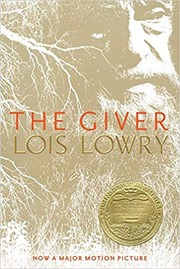
The starting point, and the only one of the four most readers ever meet: a twelve-year-old is selected to hold the memories his community has given up, including colour, music, love and pain. Its famously unresolved ending is the question the other three books answer.
The book people abandon. A disabled orphan in a brutal village is spared because she can embroider, and nothing in it refers to Jonas's community. Read it second anyway — the disconnection is deliberate, and Messenger cannot land if you skip it.
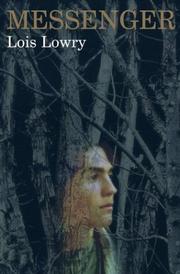
The pivot of the quartet. Matty, a minor character from Gathering Blue, is living in a third settlement, and this is where the three societies are revealed to be one world with three different answers to human pain. Read it immediately after Gathering Blue while that village is still fresh.
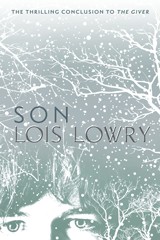
Written eight years later specifically to close the quartet: it returns to Jonas's community and follows Claire, the birthmother of the infant Gabriel. The longest and darkest of the four, and it only works as an ending — read it last.
The adult dystopias The Giver is arguing with
IntermediateRead the books whose machinery Lowry borrows, and see which of their arguments she accepts and which she refuses
▸ Study plan for this stage
Pace: Eight to ten weeks, and set expectations honestly: this stage is not a continuation of the quartet, it is context reading, and it moves at roughly a third of the pace. Three of the four have recorded lengths — Brave New World at 240, Nineteen Eighty-Four at 318, Lord of the Flies at 243, together 80
- We, written in Russian in 1921, invented the form: a glass city, citizens with numbers instead of names, a rationed private hour, and a surgical operation that removes imagination. Every book in this stage is downstream of it.
- Its ending is the one The Giver most resembles — an escape whose success the novel declines to confirm — which is worth knowing before arguing about Lowry's.
- Brave New World is the direct ancestor of The Giver's premise: a society that abolished suffering and paid with art, attachment and the family. Lowry's community is that argument rewritten at a twelve-year-old's scale.
- The clearest borrowing is the family unit. Huxley's first chapter explains reproduction as an industrial process; Lowry's first chapters explain assigned spouses, assigned children and the release of anyone surplus, in the same flat administrative register.
- Nineteen Eighty-Four is the pole Lowry does not follow: control by pain, surveillance and the destruction of language rather than by comfort and the removal of memory. Reading it makes the Committee of Elders more unsettling, not less, because nobody in Lowry's book is cruel.
- Newspeak and Lowry's precision-of-language rules are doing opposite jobs. Orwell shrinks the language to make dissent unthinkable; Lowry's community enforces exactness to make feeling unsayable.
- Lord of the Flies is not a dystopia. It earns its place because it made children a serious subject for this argument, and because Lowry's answer to it is a child leaving under his own power rather than an adult arriving to end the story.
- The through-line to hold: all four ask what a society is willing to trade for stability, and only Lowry writes the trade as something a child can be told about.
- What does the operation at the end of We remove, and why is that the specific thing the state needs gone?
- Huxley's citizens are contented and Orwell's are terrorised. Which is Lowry's community closer to, and where does it depart from both?
- Compare Huxley's conditioning to Lowry's assignment of roles at twelve. What is each society protecting itself from?
- Newspeak versus precision of language: state exactly what each system forbids, and which is the more effective control.
- What does Golding's ending do that Lowry's refuses to do? Is the naval officer a rescue or an indictment?
- Which of these four arguments does The Giver accept wholesale, and which does it explicitly refuse?
- Read the first chapter of Brave New World and the first three chapters of The Giver on the same day. The administrative tone is nearly identical and the borrowing is unmistakable once heard.
- Take Lowry's rules on precision of language and write the Newspeak equivalent of each. Where the translation fails is where the two books actually differ.
- For each of the four adult novels, write one sentence naming the trade the society has made. Then write the same sentence for Jonas's community and for the village in Gathering Blue.
- Time yourself on twenty pages of We and twenty pages of The Giver. The measured difference is the honest reason this stage takes three times as long as the quartet.
- Find the passage in each book where a character first perceives that something is wrong. Comparing the five moments shows how differently each writer thinks awareness begins.
Next up: Having read what Lowry was arguing with, the next stage is what she made possible — the same machinery, aimed downward at eleven-year-olds.
The 1921 Russian novel that invented the form — a glass city, numbered citizens, and a surgical cure for imagination. Read it first of these because Huxley and Orwell are both downstream of it, and because its ending is the one The Giver most resembles.
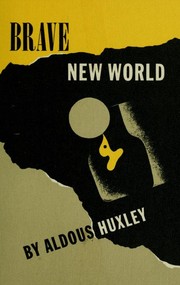
The direct ancestor of The Giver's premise: a society that has abolished suffering and paid for it with everything else, including art and attachment. Lowry's community is Huxley's argument rewritten for a twelve-year-old, and the family unit of Chapter One is the clearest borrowing in the book.
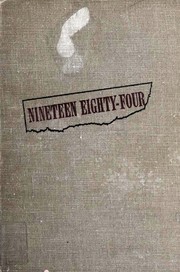
The other pole — control by pain rather than by comfort, and by the destruction of language rather than the destruction of memory. Read it third, as the model The Giver deliberately does not follow, which is what makes the Committee of Elders so unsettling.
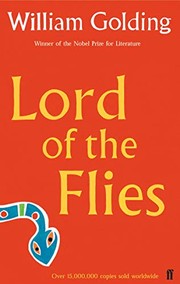
Not a dystopia but the book that made children a serious subject for this kind of argument, and the standard classroom companion to The Giver for exactly that reason. Placed last here because it is the bleakest, and because Lowry's answer to it is Jonas leaving rather than the naval officer arriving.
The children's dystopias The Giver made possible
BeginnerRead the wave that followed, and see what the form became once a Newbery winner had proved it could be sold to eleven-year-olds
▸ Study plan for this stage
Pace: Four to five weeks for 1,109 pages, and the pace here is back near the quartet's — these are books written to be read fast. Among the Hidden is 160 pages and the closest in reading age to Lowry; two evenings. The City of Ember at 270 is the most propulsive book on this path and goes at 70 pages an e
- Among the Hidden is the most direct descendant: a third child hiding in an attic under a two-child law, told at almost exactly Lowry's reading age and length.
- The City of Ember is the purest reproduction of the Lowry structure — a sealed community whose founding instructions have been lost, and two children who work out what the adults will not say.
- The recurring shape across all four is the one Lowry established: a child discovers that the explanation the adults give for how the world works is false, and the discovery is the plot.
- The House of the Scorpion is where the form absorbs real political content — a clone grown as an organ source for a drug lord on a future Mexican border — and it is considerably longer and more demanding than the two before it.
- Feed is the most formally ambitious: a network wired directly into the brain, narrated in a degraded teenage vernacular that is itself the argument rather than decoration.
- That vernacular is why Feed reads slowly. Anderson makes you do the work of decoding language damage, which is the same move Orwell makes with Newspeak, aimed at a teenage reader.
- The commercial fact underneath the stage: The Giver won the Newbery, which proved a dystopia could be sold to eleven-year-olds, and the entire category follows from that.
- What these four have in common with Lowry and not with Huxley is the ending. A child acts, and the book allows the action to matter.
- What is the law in Among the Hidden and what does Haddix gain by making the restriction that simple?
- The City of Ember hides its explanation in an object rather than in a person. How does that change the shape of the discovery compared with The Giver?
- What does The House of the Scorpion do with its political setting that the two shorter books do not attempt?
- How does the language of Feed work, and how long did it take you to read fluently? What is Anderson demonstrating by making you do that?
- Rank these four by how much agency the child actually has at the end. Where does The Giver sit on the same scale?
- Which of the four is furthest from Lowry, and what has it kept in spite of that?
- Read the first page of Feed aloud. The vernacular is much easier heard than seen, and hearing it is the fastest way through the book's opening barrier.
- For each of the four, identify the moment the child learns the adults' account is false, and note the page number as a fraction of the book. The consistency of the placement is the genre's fingerprint.
- Compare the sentence length in Among the Hidden with the sentence length in The House of the Scorpion. Both are shelved for the same readers and they are not remotely the same reading task.
- Write the back-cover blurb for each of the four in one sentence and lay them beside The Giver's. The family resemblance and the four divergences are both immediately visible.
- Pick the one you would hand to a ten-year-old and say why the other three would not do.
Next up: The last stage takes the tradition to its commercial peak and then turns back to Lowry's own account of where any of this came from.

A third child hiding in an attic under a two-child law — the first significant middle-grade dystopia after The Giver and the most direct descendant. Start here of the four: it is the shortest and the closest in reading age to Lowry.
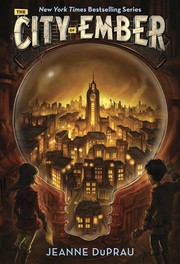
An underground city whose lights are failing and whose founding instructions have been lost. The purest version of the Lowry structure — a sealed community, two children who work out what the adults will not say — and the easiest of these to hand to a reluctant reader.
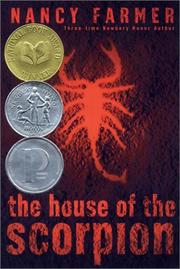
A clone raised as an organ source for a drug lord on the border of a future Mexico. Substantially harder and longer than the two before it, and the book that shows the form absorbing real political content; read it third.

A network wired directly into the brain, narrated in a degraded teenage vernacular that is the whole argument. The most formally ambitious book in this stage and the one that reads least like Lowry — placed last because it is the furthest the tradition travelled.
After the quartet
IntermediatePlace the series in what came next commercially, and hear Lowry's own account of where the material came from
▸ Study plan for this stage
Pace: Two to three weeks for 588 pages, split between two books that read nothing alike. The Hunger Games is 399 pages and the fastest reading on this path — many readers finish it in two sittings — and that speed is exactly the thing to notice about it. Looking Back is 189 pages of short essays paired wi
- The Hunger Games turned this whole lineage into a mass market, and it is the book most readers now arrive at The Giver from rather than the other way round.
- What the form gained is propulsion — first person, present tense, a chapter-ending hook nearly every time — and what it gave up is ambiguity. Collins resolves; Lowry does not.
- Both books put a child in a system that consumes children, and both make the child's awareness the engine. The difference is that Katniss can fight the system and Jonas can only leave it.
- Looking Back is Lowry's memoir in photographs and short essays, each attached to a moment from her life that later turned into a scene in a novel.
- The most useful entries are the ones that show a real detail becoming fiction, which is why the book is much richer after the quartet than before it — before, they are just anecdotes.
- Lowry's own losses sit under the quartet's preoccupation with memory and with the death of children, and the memoir states them plainly without offering them as an explanation of the books.
- Read together, these two close the path from opposite ends: the commercial afterlife of the form, and the private material the form was made out of.
- What does the first-person present tense buy The Hunger Games, and what does it make impossible?
- Both Jonas and Katniss discover their society's central cruelty. Compare what each is able to do about it, and what that difference says about the two books' politics.
- The Hunger Games resolves and The Giver does not. Which choice serves its reader better, and is that the same question as which is the better book?
- Find an entry in Looking Back that you can match to a scene in the quartet. What was changed between the life and the novel?
- Does knowing where the material came from change how the quartet reads? Should it?
- Time your reading of The Hunger Games and compare it with the time Feed took. Both are shelved for the same age and the gap is the clearest measure of what propulsion costs and buys.
- Read three entries of Looking Back, then go back to the corresponding passage in whichever novel it feeds. Doing this three times is worth more than reading the memoir straight through.
- Write the last page of The Giver as Suzanne Collins would write it. The exercise makes the two writers' assumptions about their readers unmistakable.
- Lay out the whole path as one timeline — Zamyatin, Huxley, Orwell, Golding, Lowry, the middle-grade wave, Collins — and mark what each generation assumed its readers could take. That timeline is the argument this path exists to make.
Next up: That closes the path: the quartet read in the order it works, the tradition it came out of, and the tradition it started.
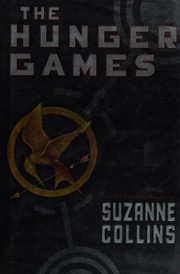
The book that turned this whole lineage into a mass market, and the one most readers arrive at The Giver from rather than the other way round. Read it here to see what the form gained in propulsion and what it gave up in ambiguity.

Lowry's memoir in photographs and short essays, each attached to a moment that later turned into a scene. Read it after the fiction, not before — most entries are spoilers, and it is far richer once you can recognise which novel each one became.
Discussion
Keep reading
Paths that share books, cover the same subject, or open a related topic.