Neal Shusterman books in order: where to start with Arc of a Scythe
Neal Shusterman has written three bodies of work that share almost nothing except an interest in how ordinary institutions justify doing terrible things, and the right entry point depends on which reader you are. Arc of a Scythe is the place to start for most people — it is his best-known series and the most immediately gripping. Unwind is the older, harsher dystopia and the better book if you want the idea taken further than is comfortable. Challenger Deep is not speculative fiction at all and is the one to read first if you are here for the writing rather than the premise. Nothing below requires anything above it except within each series.
Start Here: Arc of a Scythe
BeginnerRead the trilogy that made Shusterman's reputation, in publication order, and understand the world it is built on.
▸ Study plan for this stage
Pace: 5–6 weeks for about 2,060 pages: Scythe (449 pages), Thunderhead (560 pages), The Toll (625 pages) and, optionally, Gleanings (428 pages). Read the trilogy in publication order and have The Toll to hand before you start Thunderhead — its ending is the most abrupt of the three and stops mid-catastrop
- The premise stated in the first chapter — death has been cured, so a licensed profession gleans to control population — and the fact that the book spends its length testing it rather than elaborating it
- The Scythedom as an institution with rules, commandments and internal politics, which is where the actual plot lives
- The old guard and the new order as a factional argument about whether the job should be endurable
- The Thunderhead as a benevolent artificial intelligence that governs everything except the Scythedom, and what that exception is for
- The Thunderhead's promotion to narrator in book two, which changes the series from moral thriller into something stranger
- Shusterman's epigraph device — journal entries and Thunderhead reflections between chapters — as the trilogy's argument track
- The Toll's shift in structure: multiple timelines and a much wider cast than the first two books
- The recurring Shusterman subject visible from book one — how an ordinary institution justifies doing terrible things
- What are the Scythe commandments, and which of them turns out to be the one the plot is actually about?
- Why is the Scythedom placed outside the Thunderhead's authority, and what does the series argue follows from that?
- How does the argument between the old guard and the new order map onto a disagreement about what the job is for?
- What does making the Thunderhead a narrator let Shusterman say that he could not say through Citra and Rowan?
- The Toll changes structure substantially. What does the wider cast and the multiple timeline buy the ending?
- Read the between-chapter journal entries in Scythe as a continuous document, ignoring the story, once you have finished the book. They form a running argument and reading them together shows how carefully the sequence is ordered.
- Track one Scythe commandment across all three books and note every occasion a character bends or breaks it. The trilogy is a legal drama wearing a thriller's clothes.
- Before starting Thunderhead, write down what you expect the Thunderhead itself to be like as a narrator. Its actual voice is the trilogy's best surprise and the comparison is worth having.
- After The Toll, list the institutional failures the trilogy identifies and check which are failures of design and which of the people running it. Shusterman is careful about the difference.
- Read Gleanings only after The Toll, and note which stories are by Shusterman and which are collaborations — the collection deliberately mixes voices in the same world.
Next up: Arc of a Scythe is Shusterman's most polished handling of institutional justification; the next stage is the same idea in its rawest and most uncomfortable form.
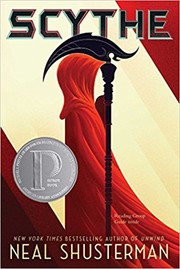
Start here. In a world that has cured death, a small profession is licensed to kill in order to control population, and two teenagers are apprenticed into it. The premise is stated in the first chapter and the book spends the rest of its length testing it.

The benevolent artificial intelligence that runs the world becomes a narrator, which changes the series from a moral thriller into something stranger. The ending is the most abrupt in the trilogy — do not start it without the third book to hand.

The conclusion, and much larger in structure than the first two: multiple timelines and a wider cast. Read it directly after Thunderhead, which ends mid-catastrophe.

A collection of short stories set across the same world, several co-written with other authors. Optional, and strictly after The Toll — it assumes the trilogy's ending and fills in corners rather than continuing the plot.
The Older Dystopia: Unwind
BeginnerRead the earlier and more disturbing sequence, and see the idea Shusterman has spent his career returning to in its rawest form.
▸ Study plan for this stage
Pace: 5–6 weeks for about 1,910 pages: Unwind (352 pages), UnWholly (416 pages), Unsouled (424 pages) and UnDivided (400 pages), then UnBound (320 pages) as optional. Read the four core books in order without pausing — unlike Arc of a Scythe, these do not stand alone at all, and Unsouled in particular is
- The compromise as satire of a political settlement — a solution nobody wanted that everybody could sign
- Unwinding as a legal and medical industry with suppliers, customers, regulators and profits
- The narrow first book against the wide second: three fugitives, then the whole system around them
- Perspective as argument — UnWholly adds the point of view of people who profit, and the series does not caricature them
- How a practice becomes normal, which is the historical material Unsouled supplies and the reason to push through it
- The continuity of Shusterman's central interest: an institution's self-justification, here without any of the gloss Arc of a Scythe gives it
- The series' escalating formal risk, including documentary inserts and advertisements between chapters
- UnBound as a gap-filling collection rather than a continuation, optional in the same way Gleanings is
- What is the Bill of Life, and what does the series argue about how such a compromise gets signed?
- Which chapter is the one people talk about, and what does Shusterman do formally to make it land the way it does?
- What does UnWholly gain by adding the perspectives of people who profit, and what would be lost if it had not?
- What does Unsouled establish about how unwinding was normalised, and why is that historical material worth the slower book?
- How does the ending of UnDivided treat the institution as opposed to the individuals inside it?
- Set against Arc of a Scythe: which series is harder on the institution, and which on the people?
- Read the advertisements and documentary inserts between chapters as a separate sequence after finishing Unwind. Shusterman builds the world's normality in that channel rather than in the narrative.
- Take the famous chapter and work out, sentence by sentence, what technique produces the effect — the tense, the point of view, the length of the paragraphs. It is doing something formally specific and it is worth being able to name it.
- Write down the profit motive of each faction introduced in UnWholly. The system's economics are the second book's actual subject and they are distributed across several viewpoints.
- After UnDivided, compare the Bill of Life against the Scythe commandments as two written charters for institutional killing. Setting the two documents side by side is the clearest statement of what Shusterman has spent a career on.
- Treat UnBound as optional and read it only if you want the gaps filled; note which of its pieces were previously published separately.
Next up: Having read both dystopias, the next stage takes the books outside either series, including the one that is not speculative fiction at all.

A civil war over abortion ends in a compromise allowing parents to have teenagers dismantled for transplant. One chapter in this book is among the most-discussed set pieces in young adult fiction, and it is the reason the series is remembered.
Widens the story from three fugitives to the industry around them, adding perspectives from the people who profit. Read it second — the expansion only works because the first book stayed narrow.
The middle-volume book, and the one that most obviously exists to move pieces into place. Worth pushing through for the historical material about how the practice was normalised.

The conclusion of the main story. Read the four in order without pausing — unlike Arc of a Scythe, these do not stand alone at all.

A collection of stories and novellas filling gaps across the quartet, including material previously published separately. Last, and optional in the same way Gleanings is.
The Standalones
IntermediateRead the books outside both series, including the one that is not genre fiction at all.
▸ Study plan for this stage
Pace: 4 weeks for about 1,120 pages: Challenger Deep (320 pages), Dry (417 pages) and Roxy (384 pages). Challenger Deep is the shortest and slowest — read it over two weeks rather than two days, since half of it is told aboard a ship and half in a hospital and the two halves have to be held together. Dry
- The dual narration of Challenger Deep — realism and the voyage to the Marianas Trench as one story told twice
- Illustration as part of the text rather than decoration, and what it means that the illustrator lived the material
- Writing mental illness from inside rather than about, which is what separates this book from the rest of the shelf
- Dry as a compressed disaster novel: a suburb coming apart over days rather than a dystopia established over decades
- Collaboration with Jarrod Shusterman and what changes in the prose — shorter, tighter, closer to the present
- Roxy's personification conceit, its risk, and the fact that the book knows it is risky
- The through-line across all three: ordinary systems — a health system, a water supply, a prescription — failing in ways nobody individually chose
- Why Challenger Deep is the book to start with for a reader who is here for the writing rather than the premise
- How do the two halves of Challenger Deep map onto each other? Identify three specific correspondences between the ship and the hospital.
- What do Brendan Shusterman's illustrations do that the prose does not, and how does knowing their provenance change the reading?
- What does Dry compress that the series novels take four books to establish, and what does it lose in the compression?
- Is Roxy's conceit earned? Point to where the book acknowledges the risk it is taking.
- What is common to a scythedom, a water shut-off and a prescription, in Shusterman's handling of each?
- Read Challenger Deep once straight through, then reread only the ship chapters in sequence. The voyage is a coherent narrative on its own and the second pass is where the correspondences become visible.
- Mark every illustration in Challenger Deep and note what is happening in the text at that page. The placement is not arbitrary.
- Read Dry over two or three sittings deliberately compressed, matching the novel's own timescale. It is written for that pace and stretching it out flattens it.
- Take one chapter of Roxy narrated by a drug and rewrite its opening in plain third person. What the rewrite loses is the argument for the conceit.
- Compare a paragraph of solo Shusterman with a paragraph of the Jarrod collaborations on sentence length and dialogue density. The difference is measurable and consistent.
Next up: With the dystopias and the standalones read, the last stage goes back to the earlier books where the voice was formed.

The best book he has written and the least like the rest: a teenager's descent into schizophrenia told half in realism and half aboard a ship sailing to the Marianas Trench. Drawn from his son Brendan's experience, and illustrated by him. Read it whether or not you like the dystopias.
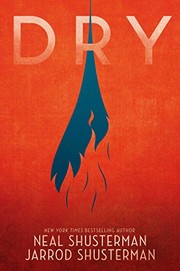
Co-written with his son Jarrod, about a Southern California water shut-off and how fast a suburb comes apart. Much closer to the present than the other novels here, and shorter and tighter than the series books.
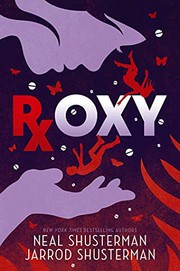
Also with Jarrod Shusterman: prescription drugs personified as party guests competing over which of two siblings they can kill. The conceit is risky and the book knows it — read it last, as the most formally adventurous thing he has done.
Earlier Shusterman
BeginnerSee where the voice came from, in the middle-grade and early young adult books that preceded the dystopias.
▸ Study plan for this stage
Pace: About 2 weeks for 388 pages: The Schwa Was Here (228 pages) and Bruiser (160 pages). Both are short and much lighter in construction than anything else on this path — The Schwa Was Here is a funny Brooklyn novel and reads in two or three evenings. Bruiser is told in four voices, one of them in verse
- Comic voice as the foundation the later darkness is built on — the humour in Arc of a Scythe is the same instrument
- The Schwa Was Here's premise of a boy nobody notices, played for comedy and then not
- Multiple narration in Bruiser, including the shift into verse for one of the four voices
- Transferred harm as the idea Bruiser handles literally and Unwind makes into an industry
- Middle-grade and early young adult craft: shorter chapters, faster hooks, and how much of that survives into the dystopias
- Evidence that the darkness is a choice rather than a default, which is what makes reading these last worthwhile
- Where to go next: the Everlost trilogy, beginning with Everlost, is the other early series worth trying if this stage appeals
- What is the Schwa effect, and where does the novel stop treating it as a joke?
- Why are there four narrators in Bruiser, and what does the verse voice do that prose could not?
- How does the transferred-harm idea in Bruiser reappear in Unwind, and what changes when it is institutionalised?
- What techniques from these early novels are still visible in Arc of a Scythe?
- Having read the whole path, what is Shusterman's recurring subject in one sentence?
- Read the first chapter of The Schwa Was Here and the first chapter of Scythe back to back and note what the two openings share. The hook construction is identical and the tone could not be more different.
- Read Bruiser's four voices separately — one narrator's chapters at a time — then in printed order. The verse voice in particular reads differently in isolation.
- Write down every idea in Bruiser that reappears somewhere later on this path. There are more than you expect, and the list is the clearest evidence for reading an author rather than a series.
- Write the one-sentence statement of Shusterman's subject you would give someone choosing between Arc of a Scythe, Unwind and Challenger Deep, and say which you would hand each kind of reader.
Next up: This closes the path: the natural next step is the Everlost trilogy, which begins with Everlost and is the early series this stage most points toward.
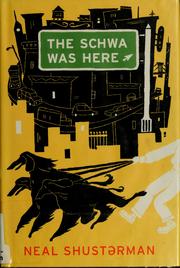
A funny Brooklyn novel about a boy nobody notices, and the book that first won him major awards. Far lighter than anything else here and the best demonstration that the darkness is a choice rather than a default.
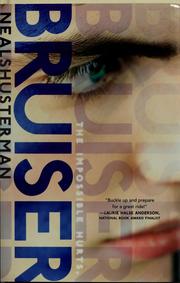
Told in four voices, about a boy who takes on other people's injuries. The clearest bridge between the early novels and the later ones — the same interest in transferred harm that Unwind makes literal. Note that the Everlost trilogy, beginning with Everlost, is the other early series worth trying if this appeals.