The Vietnam War: where to start and what to read next
This curriculum takes a beginner from the essential human story of the Vietnam War through its political and strategic failures, into the boots-on-the-ground combat experience, and finally to the war's contested legacy for both America and Vietnam. Each stage builds the factual foundation, emotional context, and analytical vocabulary needed to absorb the next, turning a complex, decades-long conflict into a coherent and deeply understood whole.
Foundations: The Big Picture
BeginnerGrasp the full arc of the war — its origins, key turning points, major players, and outcome — so every later book has a clear framework to hang on.
▸ Study plan for this stage
Pace: 4–5 weeks, ~40–50 pages/day. Ward's book (~400 pages) over 2 weeks, then Karnow's Vietnam, a History (~700 pages) over 2.5–3 weeks. Build in 3–4 days for review and synthesis at the end.
- The historical roots of French Indochina and how colonial rule created the conditions for Vietnamese resistance
- Ho Chi Minh's rise and the Viet Minh's nationalist struggle against French colonialism (1945–1954)
- The Geneva Accords (1954) and the artificial partition of Vietnam at the 17th parallel
- The U.S. rationale for intervention: Cold War ideology, domino theory, and the fear of communist expansion in Southeast Asia
- Key turning points: the Gulf of Tonkin incident, Operation Rolling Thunder, and the Tet Offensive as a strategic and psychological watershed
- The major combatants and their strategies: North Vietnam and the Viet Cong versus the U.S. and South Vietnam
- The war's human cost: casualty figures, civilian impact, and the social upheaval it caused in both Vietnam and America
- The fall of Saigon (1975) and the war's outcome: what the U.S. achieved and failed to achieve
- How did French colonial rule in Indochina contribute to the rise of Ho Chi Minh and the Viet Minh, and why did the French ultimately fail to suppress them?
- What was the Geneva Accords and how did the partition of Vietnam at the 17th parallel set the stage for American involvement?
- What was the domino theory, and how did it shape American Cold War policy in Southeast Asia?
- What were the circumstances of the Gulf of Tonkin incident, and how did it lead to the escalation of American military involvement?
- Why is the Tet Offensive considered a turning point in the war, and how did it affect American public opinion and military strategy?
- What were the major differences in strategy between North Vietnam/Viet Cong and the U.S./South Vietnam, and why did the North ultimately prevail?
- Create a detailed timeline of major events from 1945 (Viet Minh declaration of independence) through 1975 (fall of Saigon), marking French colonial period, Geneva Accords, U.S. escalation, Tet Offensive, and key negotiations.
- Draw a map of Vietnam showing the 17th parallel division, major cities, the Ho Chi Minh Trail, and key battle sites (Dien Bien Phu, Khe Sanh, etc.). Annotate how geography influenced military strategy.
- Write a 2–3 page comparative analysis of Ho Chi Minh's nationalist vision versus the American Cold War rationale for intervention—what each side believed it was fighting for.
- Track casualty figures and civilian impact throughout the war using data from both books. Create a chart or infographic showing American, South Vietnamese, North Vietnamese, and civilian deaths, and reflect on what these numbers reveal.
- Outline the major turning points (Gulf of Tonkin, Rolling Thunder, Tet Offensive, Paris Peace Talks) and explain why each shifted the trajectory of the war or American public perception.
- Write a 1–2 page reflection: Given what you now know about the war's origins, course, and outcome, what were the fundamental reasons the U.S. failed to achieve its objectives?
Next up: With a solid grasp of the war's arc, major players, and key decisions, you're now ready to dive into specialized studies—whether that's the American home front and anti-war movement, the Vietnamese perspective and experience, military strategy and tactics, or the war's long-term consequences—knowing exactly where each topic fits in the larger narrative.

The companion book to Ken Burns's landmark PBS documentary, it tells the war's story through vivid personal accounts from all sides — American, North Vietnamese, and South Vietnamese — making it the most accessible and emotionally grounding entry point available.
A Pulitzer Prize–winning narrative history that covers the full sweep from French colonialism through the fall of Saigon. Reading it second cements the chronological and political skeleton that deeper books will flesh out.
How America Got In: Politics and Decisions
IntermediateUnderstand the political logic, Cold War ideology, and chain of decisions — from Truman through Nixon — that drew the United States ever deeper into the conflict and prevented an exit.
▸ Study plan for this stage
Pace: 8–10 weeks, ~40–50 pages/day. *The Best and the Brightest* (~700 pages) takes 4–5 weeks; *A Bright Shining Lie* (~800 pages) takes 4–5 weeks. Build in 1–2 weeks for review and synthesis.
- The Cold War ideology of containment and the domino theory as the intellectual framework driving U.S. intervention decisions from Truman onward
- The role of key decision-makers (Kennedy, Johnson, McNamara, Bundy, Rusk) and how their backgrounds, personalities, and competitive ambitions shaped policy choices
- The credibility trap: how fear of appearing weak or losing prestige locked successive administrations into deeper commitment despite mounting evidence of failure
- The gap between public rhetoric and private doubts: how policymakers knew the war was unwinnable but continued escalation anyway
- The strategic logic of gradual escalation (Rolling Thunder, body-count metrics) and why it failed to break North Vietnamese will
- How institutional momentum, bureaucratic consensus, and the difficulty of reversing course perpetuated the conflict
- The role of military advisors and the advisory mission as a slippery slope from observation to combat involvement
- The human cost of abstraction: how statistical thinking and systems analysis obscured the reality of Vietnamese and American suffering
- What was the domino theory, and how did it shape American decision-making from the Truman administration through the Vietnam War?
- Who were the 'best and brightest,' and what made them confident they could manage the war despite warning signs of failure?
- How did the credibility trap work: why did successive administrations feel unable to withdraw even when they doubted victory was possible?
- What was the advisory mission, and how did it become a pathway to full-scale American combat involvement?
- How did the strategy of gradual escalation (Rolling Thunder) reflect the thinking of McNamara and the systems analysts, and why did it fail?
- What was the gap between what U.S. policymakers privately believed about the war's winnability and what they publicly claimed?
- Create a timeline of key decisions from Truman through Nixon, marking when each administration deepened U.S. involvement and noting the stated rationale vs. private doubts (use both books as sources).
- Write character sketches of 4–5 major decision-makers (e.g., McNamara, Bundy, Rusk, Kennedy, Johnson) based on Halberstam's portraits, identifying how their personalities and insecurities influenced their choices.
- Track the evolution of the advisory mission in *A Bright Shining Lie*: identify specific moments when it crossed from advising to combat involvement, and explain what made that transition possible.
- Analyze one major escalation decision (e.g., Operation Rolling Thunder, the Gulf of Tonkin incident, or the decision to send ground troops) using both books: what was the public justification, what were the private doubts, and what actually drove the decision?
- Create a visual map of the credibility trap: show how fear of appearing weak, concern about prestige, and domestic political pressure locked policymakers into continued escalation even as they lost faith in victory.
- Compare Halberstam's institutional/personality-driven analysis with Sheehan's focus on ground-level military reality: how do these two perspectives explain why the war continued despite its futility?
Next up: This stage equips you to understand the political and ideological machinery that sustained the war; the next stage will examine how that machinery collided with Vietnamese resistance, American soldiers' experiences, and the domestic opposition that ultimately forced withdrawal.

Halberstam's masterpiece dissects how brilliant, confident men in the Kennedy and Johnson administrations made catastrophically flawed decisions. It is the essential text on American hubris and the failure of policymaking.
Using the life of soldier-adviser John Paul Vann as its spine, this Pulitzer-winning book shows how institutional dishonesty and strategic self-deception corrupted the American war effort from the ground up — a perfect complement to Halberstam's top-down view.
What the Fighting Was Like: Soldiers' Voices
IntermediateExperience the war at ground level — the terror, camaraderie, moral injury, and chaos of combat — through the eyes of the men who fought it.
▸ Study plan for this stage
Pace: 8–10 weeks, ~40–50 pages/day (with reflection breaks). Read *The Things They Carried* (weeks 1–3), *Matterhorn* (weeks 4–7), and *We Were Soldiers Once...and Young* (weeks 8–10).
- The blurred line between truth and fiction in war narratives: how O'Brien uses metafiction to convey emotional truth beyond factual accuracy
- Moral injury and psychological trauma: the lasting damage of combat decisions, guilt, and witnessing atrocity—especially in Marlantes' introspective protagonist and Moore's accounts of command responsibility
- Camaraderie and interdependence under fire: how soldiers bond through shared suffering and how that bond becomes both salvation and source of grief
- The chaos and sensory overwhelm of combat: the disconnect between training/expectations and the actual experience of firefights, ambushes, and jungle warfare
- Individual agency vs. systemic forces: how personal choices matter within a war machine that often strips soldiers of control
- The long shadow of war: how combat experiences reshape identity, relationships, and moral frameworks long after the fighting ends
- Narrative perspective and reliability: understanding how different genres (linked short stories, novel, military history) shape what we learn about the war
- How does Tim O'Brien use the structure and metafictional elements of *The Things They Carried* to blur the line between truth and fiction, and why does he argue that emotional truth matters more than factual accuracy?
- What is moral injury, and how do the protagonists in *Matterhorn* and *We Were Soldiers Once...and Young* experience it? What specific decisions or events cause lasting psychological damage?
- Compare the portrayal of camaraderie in all three books: How do soldiers rely on each other, and what happens when that bond is broken by death or separation?
- Describe the sensory and psychological experience of combat as depicted across these three works. What aspects of the fighting surprised or horrified the soldiers most?
- How do the three books differ in their narrative approach (linked stories vs. novel vs. military history), and what does each approach reveal about the war that the others might miss?
- What do these books suggest about how soldiers' identities and relationships change after combat? Use specific examples from at least two texts.
- After finishing *The Things They Carried*, write a 2–3 page reflection on one story that blurs fact and fiction (e.g., 'How to Tell a True War Story'). Explain what O'Brien's point is and whether you found the emotional truth more powerful than factual accuracy.
- Create a character comparison chart tracking Cortez (Marlantes' protagonist) across *Matterhorn*: his moral decisions, his guilt, his relationships. Note how his psychology shifts as the novel progresses and identify the turning points.
- Read the opening chapters of *We Were Soldiers Once...and Young* (the Ia Drang battle) alongside a passage from *Matterhorn* depicting a firefight. Write a 1–2 page analysis of how the two texts convey chaos differently—one as military history, one as psychological fiction.
- Interview a veteran (if possible) or listen to a recorded oral history of a Vietnam veteran. Compare their account to moments in these three books. What details match? What's missing or different?
- Write a short scene (2–3 pages) from the perspective of a soldier in one of these books, focusing on a moment of moral ambiguity or camaraderie. Aim to capture the sensory detail and internal conflict that the authors emphasize.
- Create a timeline of a single soldier's journey across all three books (e.g., arrival in Vietnam → first combat → moral crisis → homecoming). Use quotes and scenes to show how combat transforms him.
Next up: Having experienced combat through soldiers' voices, you're now ready to examine the broader historical context, political decisions, and strategic failures that shaped the war—understanding not just what the fighting felt like, but why the war unfolded as it did and what its consequences were.

O'Brien's semi-autobiographical masterpiece is the defining literary account of the American infantryman's experience. Its early placement here builds emotional and moral depth before the harder analytical works.
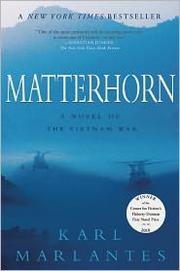
A sweeping, novelistic account of Marine combat in the jungle that captures the physical brutality, racial tension, and leadership failures of the war with unmatched authenticity — best read after O'Brien has opened the emotional register.
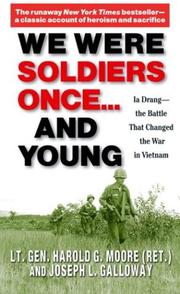
A rigorously researched account of the Battle of Ia Drang (1965), the first major engagement between U.S. and North Vietnamese forces. It grounds the reader in the tactical realities and human cost of conventional combat.
Why It Went Wrong: Strategy, Society, and Collapse
ExpertAnalyze the deeper strategic, institutional, and societal failures — military doctrine, the home front, the press, and the collapse of South Vietnam — that explain why the most powerful nation on earth lost.
▸ Study plan for this stage
Pace: 8–10 weeks, ~40–50 pages/day (McMaster first: 4–5 weeks; FitzGerald second: 4–5 weeks). Allocate extra time for FitzGerald's dense cultural and historical analysis.
- The credibility gap: how military leadership systematically misrepresented progress to civilian leadership and the public, eroding trust in institutions
- Flawed military doctrine: attrition strategy and body counts as measures of success, and why this approach failed against a determined, decentralized enemy
- Civil-military dysfunction: the breakdown of honest communication between the Joint Chiefs of Staff and civilian policymakers (McNamara, Johnson), and institutional failure to challenge flawed assumptions
- Vietnamese society and culture as a strategic factor: how American policymakers fundamentally misunderstood South Vietnamese politics, village life, and the appeal of the Viet Cong
- The role of the American press: how investigative journalism (especially after Tet) exposed the gap between official narratives and battlefield reality, shifting public opinion
- The collapse of South Vietnamese legitimacy: how corruption, weak governance, and forced modernization alienated the rural population and strengthened communist appeal
- Institutional inertia and sunk-cost fallacy: why military and political leaders continued escalating despite mounting evidence of failure
- The home front fracture: how the war divided American society, delegitimized authority, and created a generational rift that undermined political consensus
- How did McMaster characterize the relationship between the Joint Chiefs of Staff and civilian leadership, and what specific instances of dereliction of duty does he identify?
- What was the fundamental flaw in the American attrition strategy, and why did body counts fail as a meaningful measure of progress?
- How does FitzGerald explain the cultural and social roots of Vietnamese communism, and why did American policymakers fail to understand these factors?
- What role did the American press play in exposing the credibility gap, and how did the Tet Offensive change media coverage and public perception?
- How did South Vietnamese corruption and weak governance contribute to the regime's collapse, according to FitzGerald?
- What institutional and psychological factors explain why American leaders continued escalating the war despite evidence of failure?
- Create a timeline of key moments when military leaders misrepresented progress to civilian leadership (from McMaster). For each, note what was claimed versus what was actually happening on the ground.
- Analyze 3–4 specific battles or operations from McMaster's account (e.g., Rolling Thunder, search-and-destroy campaigns) and explain why the attrition strategy failed in each case.
- Read excerpts from FitzGerald on Vietnamese village society and the Viet Cong appeal. Write a 2–3 page memo from the perspective of a 1965 American advisor explaining why the rural population was vulnerable to communist recruitment.
- Compare two newspaper or magazine articles about the Vietnam War—one from before the Tet Offensive and one after. Identify how the framing, language, and conclusions differ, and connect this to the credibility gap.
- Create an organizational chart showing the communication breakdown between the Joint Chiefs, the Secretary of Defense, the President, and field commanders. Annotate with specific instances where honest dissent was suppressed.
- Write a critical analysis: 'Why did American leaders continue escalating despite mounting evidence of failure?' Draw on both McMaster's institutional critique and FitzGerald's cultural analysis.
Next up: This stage equips you to understand not just what happened militarily and politically, but *why* institutions failed and how societies resist foreign intervention—preparing you for the final stage on legacies, lessons, and how Vietnam reshaped American foreign policy and military doctrine.
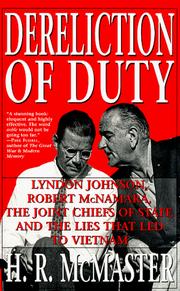
McMaster's rigorous study argues that the Joint Chiefs of Staff failed their constitutional duty by not challenging flawed civilian strategy. It reframes military accountability and is essential for understanding the command-level breakdown.

This Pulitzer-winning analysis examines the war through Vietnamese culture and history, arguing that Americans fundamentally misunderstood the society they were trying to save — a crucial corrective to the U.S.-centric view built up in earlier stages.
Legacy: What the War Left Behind
ExpertReckon with the war's enduring consequences — for American politics, military culture, and veterans at home, and for the Vietnamese people who lived through reunification and its aftermath.
▸ Study plan for this stage
Pace: 8–10 weeks, ~40–50 pages/day (accounting for dense, emotionally demanding prose and time for reflection)
- Trauma and recovery: How physical and psychological wounds shape identity and agency in the aftermath of war
- The unreliable narrator and competing truths: Understanding how perspective, memory, and complicity distort historical narratives
- Displacement and belonging: The experience of Vietnamese refugees and American veterans as outsiders in their own societies
- Moral ambiguity and complicity: Recognizing how ordinary people become entangled in systems of violence and propaganda
- The politics of memory: How nations construct official narratives while suppressing inconvenient truths about war
- Militarism and American identity: The cultural mythology of the soldier and how it shapes national self-image and policy
- Reunification and its costs: The human toll of Vietnam's political transformation on individuals caught between old and new regimes
- How does Ron Kovic's physical paralysis in Born on the Fourth of July function as both a literal consequence of war and a metaphor for America's inability to move forward from Vietnam?
- What is the significance of the unnamed narrator's dual identity as both spy and sympathizer in The Sympathizer, and what does this reveal about the impossibility of remaining neutral during and after the war?
- Compare how Kovic and Nguyen's narrator each grapple with disillusionment: what did they believe before, and how does that loss of faith shape their post-war lives?
- How do both texts challenge the dominant American narrative about the Vietnam War, and what alternative truths do they offer?
- What does each text suggest about the relationship between personal trauma and political awakening? How are individual suffering and collective responsibility connected?
- How do Kovic and Nguyen's narrator each experience displacement—whether physical, psychological, or moral—and what does this reveal about the war's legacy for different populations?
- Timeline exercise: Create a dual timeline tracking Kovic's and the narrator's key moments of disillusionment, trauma, and political awakening. Annotate where their experiences diverge and where they unexpectedly align.
- Unreliable narrator analysis: Select 3–4 pivotal scenes from The Sympathizer where the narrator's account seems questionable or self-serving. Write a 1-page analysis of what the reader cannot trust and why Nguyen constructs the narrative this way.
- Comparative character study: Write character sketches of Kovic and the narrator, focusing on their pre-war idealism, wartime actions, and post-war identities. What did each man lose, and what did each gain?
- Primary source pairing: Find a declassified government document, military memo, or official statement about the Vietnam War from the 1960s–70s. Compare its language and claims to how Kovic or Nguyen's narrator describe the same events. What is omitted or distorted?
- Trauma and testimony: Choose one traumatic scene from each book (e.g., Kovic's wounding, the narrator's interrogation). Write a close reading that examines how the author uses language, imagery, and pacing to convey psychological and physical suffering.
- Dialogue with the texts: Write a fictional dialogue between Kovic and Nguyen's narrator discussing what the war took from them and what they owe to the future. What would they agree on? Where would they clash?
Next up: This stage equips you to recognize how personal testimony and literary narrative can challenge official history, preparing you to evaluate how subsequent generations have reinterpreted the war's meaning and to consider what reconciliation or reckoning might still be possible.
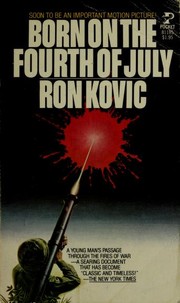
Kovic's raw memoir of becoming paralyzed in combat and then turning against the war captures the veteran experience and the anti-war movement from the inside, anchoring the human cost of the legacy.
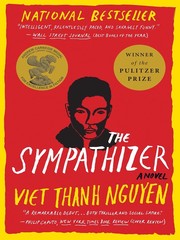
This Pulitzer Prize–winning novel tells the story from the Vietnamese side — a communist spy embedded with South Vietnamese refugees — forcing the reader to see the entire war and its aftermath through eyes the earlier books could not provide. A perfect, disorienting final word.
Discussion
Keep reading
Paths that share books, cover the same subject, or open a related topic.