Best Books on the History of Physics, in Reading Order
This is a path about how physics was actually made — the wrong turns, the instruments, the personal quarrels and the institutions — rather than a physics course with dates attached. It runs roughly chronologically from the electromagnetic field of the 1860s to the Standard Model of the 1970s, and it gets progressively more technical: the first two stages need no mathematics at all, while the later Pais and Pickering volumes assume you have met quantum mechanics and are comfortable seeing equations on the page. That escalation is deliberate and stated at each step, so you can stop where the mathematics outruns you without losing the story.
The field, and the men who built it
IntermediateUnderstand how the concept of a field replaced action at a distance, and how a self-taught bookbinder's experiments became a mathematical theory — the transition on which all of modern physics rests.
▸ Study plan for this stage
Pace: Four to six weeks for 896 pages, and none of it requires any mathematics. Forbes and Mahon's Faraday, Maxwell, and the electromagnetic field is 320 pages of paired biography and reads at 30-40 pages an evening; take it first, since it is the clearest popular account of how Faraday's lines of force b
- Action at a distance versus the field, and what was actually at stake in the choice
- Faraday's lines of force as a physical rather than a bookkeeping device
- Maxwell's mechanical models of the ether, and how the equations survived the models being abandoned
- The role of the Maxwellians in reducing the Treatise to the modern four equations
- Hertz's experiments as the moment the theory acquired an independent test
- Physics as a community activity — Hunt's central demonstration that theories are finished by groups
- The 1932 Copenhagen generation and the institutional style Bohr built around himself
- What exactly did Faraday mean by a line of force, and in what sense was it a claim about reality rather than a diagram?
- Why did Maxwell build mechanical ether models, and why did their failure not damage his equations?
- What did Heaviside contribute that Maxwell had not, and why is the standard vector form of the equations more his than Maxwell's?
- How did Hertz's experiments change the standing of the theory among physicists who had ignored it?
- What does Hunt's account imply about how the history of physics is usually told, and where does the previous book fall into exactly that pattern?
- Read Forbes and Mahon and Hunt on the same episode — the reduction of the Treatise to four equations — and write a paragraph on where the two books disagree about who did what
- Track the phrase 'lines of force' through Forbes and Mahon and note every point at which its meaning shifts between Faraday's usage and Maxwell's
- List the members of the Maxwellian group as Hunt defines them, with each one's specific contribution beside their name, and check that list against how many of them the first book mentions
- Take the 1932 meeting as Segre describes it and list who was present, who was absent, and what each was working on that year
- Write down what you believed about the origin of Maxwell's equations before this stage, and mark which parts Hunt has made you drop
Next up: The field concept and the community that finished it are in place; the next stage follows the generation Segre introduced as they take the same subject apart.

Forbes and Mahon's paired biography is the ideal opening: two utterly different scientific temperaments, and the clearest popular account of how Faraday's lines of force turned into Maxwell's equations. No mathematics assumed.

The scholarly sequel, and a corrective to the great-man version of the previous book: Heaviside, FitzGerald, Lodge and Hertz did most of the work of turning Maxwell's sprawling treatise into the four equations we now recite. Short, and the best demonstration on this path that theories are finished by communities.
The 1932 Bohr institute meeting as a portrait of the generation that made quantum mechanics — Bohr, Dirac, Heisenberg, Pauli, Meitner, Ehrenfest — written by a physicist whose family was part of it. The narrative bridge from classical to quantum, still with no mathematics required.
The quantum revolution as it happened
IntermediateFollow the quantum theory from Planck's reluctant quantum to the Bohr-Einstein debates and the bomb, and understand why the interpretation question was never settled rather than merely postponed.
▸ Study plan for this stage
Pace: Two to three months for 1,558 pages, and the three books differ enormously in weight. Gamow's Thirty years that shook physics is only 224 pages and is a participant's account, complete with his own cartoons — slight, idiosyncratic, and a two-evening read at 40-50 pages a sitting. Read it first preci
- Planck's quantum as a reluctant device, and how long it took to be read as physical
- The old quantum theory, and why it worked well enough to delay the real one
- The two routes to quantum mechanics — matrix and wave — and their reconciliation
- The Bohr-Einstein debates, and the specific thought experiments each round turned on
- The Einstein-Podolsky-Rosen argument and its transformation into Bell's testable question
- The Copenhagen interpretation as an institutional as much as a philosophical settlement
- Fission: its discovery, its misreading, and the speed at which it became a weapons programme
- The emigration of European physics and what that did to the discipline's centre of gravity
- What did Planck himself think he had done, and how long did he resist the physical reading of it?
- Which of the Bohr-Einstein exchanges did Einstein come closest to winning, and on what point did Bohr's reply turn?
- What does the Einstein-Podolsky-Rosen paper actually claim, and how did Bell convert a philosophical objection into an experiment?
- Why was fission not recognised for what it was until Meitner and Frisch interpreted it, and what had the chemistry alone shown?
- How does Gamow's insider account differ in emphasis from Kumar's historical one, and what does each leave out?
- What does Rhodes identify as the point at which the bomb became inevitable, and how well does his argument for that moment hold up?
- Read Gamow's account of one episode you can also find in Kumar and Rhodes, and write down what each of the three narrators is most interested in
- Build a timeline from 1900 to 1945 with the theoretical developments on one line and the experimental results on another, and mark every case where the experiment came first
- Take the Einstein-Podolsky-Rosen argument as Kumar states it and write it out in your own words without using the word 'spooky'
- Follow one physicist through Rhodes — Szilard is a good choice — and note every point at which a personal decision changed the programme's direction
- Compare Gamow's cartoon summaries of the quantum debates with Kumar's prose treatment and note which of Gamow's jokes turn out to be technically precise
Next up: You have three good narratives and no systematic picture; the next stage replaces the story with a survey of the whole discipline, including everything narrative books leave out.
A participant's account, written in 1966 by one of the physicists involved, complete with his own cartoons. Slight and idiosyncratic, and included because reading someone from inside the period first makes the later historians' framings visible as framings.

The best single narrative of the Einstein-Bohr argument and what was actually at stake in it, carried through to Bell's theorem. Kumar takes the interpretation question seriously as physics rather than philosophy, which most popular accounts do not.
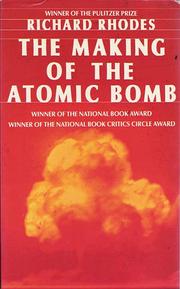
Nine hundred pages that are, among other things, the finest history of the physics of 1900 to 1945 in English — the fission discovery, the emigrations, and the moment the discipline stopped being an academic one. Placed here as the culmination of the quantum generation's story, not as a war book.
The scholarly survey
IntermediateReplace the narrative you now have with a systematic one: the whole discipline across a century, including the parts no popular book covers — condensed matter, geophysics, instrumentation, the institutions and the funding.
▸ Study plan for this stage
Pace: Two to three months for 840 pages, and the register changes sharply here — these are academic histories rather than popular narratives, so the pace drops even though the page count does. Kragh's Quantum Generations is 501 pages and is the pivot of the whole path: the standard scholarly survey of twe
- The institutional history of physics: laboratories, funding, and the shift from European to American dominance
- Big science, and the point at which apparatus began to determine what questions could be asked
- Condensed matter and solid state physics as the largest subfield, and its near-total absence from popular accounts
- The professionalisation of physics and the growth in the number of physicists
- Instrumentation as a driver of discovery rather than a service to it
- Physics and the military, before and after 1945
- The difference between a participant's judgement of significance and a historian's
- Which subfields does Kragh show to have been largest by practitioner numbers, and how does that compare with their share of popular attention?
- What does Kragh identify as the mechanisms by which physics became an American-centred discipline?
- At what point does Kragh date the arrival of big science, and what evidence does he use?
- Where do Segre's judgements about what mattered differ most from Kragh's, and does his being a participant explain the difference?
- What does a history that includes funding and instrumentation show that a history of ideas alone cannot?
- Take the timeline you built in the previous stage and add a third line for institutions, apparatus and funding using Kragh, then note how often the third line moves first
- Count how many pages Kragh devotes to condensed matter versus particle physics and compare with the balance in Kumar and Rhodes
- Pick a discovery Segre was personally involved in, read his account, then read Kragh's, and write down what each includes that the other omits
- List five topics Kragh covers that no book in the first two stages mentioned at all, and decide for each whether the omission was reasonable
- Use Kragh's bibliography to identify one primary source on an episode you care about, and read it before reading his summary of it
Next up: Kragh has given you the whole discipline at a distance; the next stage goes to the opposite extreme and follows individual physicists through their actual papers.

The standard scholarly survey of twentieth-century physics, and the pivot of this path: it covers everything the narrative books leave out, treats physics as a social institution as well as a set of ideas, and is written to be read straight through. The single most useful book here.

A Nobel laureate's history of modern physics, written by someone who knew most of the people in it. Segrè's judgements about what mattered are those of a working experimentalist, which makes a useful contrast with Kragh's historian's distance. Assumes some undergraduate physics.
Scientific biography done properly
IntermediateSee what a scientific biography looks like when the biographer can follow the physics — and learn to read a scientist's work and life as one object rather than two.
▸ Study plan for this stage
Pace: Four to six months for 1,658 pages, and the escalation the path has been warning about arrives here. Pais's Subtle Is the Lord is 552 pages and is the definitive scientific biography of Einstein, written by a physicist who worked alongside him at Princeton: it reconstructs the actual papers, contain
- Scientific biography as a form: the life and the work as one object rather than two
- Einstein's 1905 papers, and Pais's reconstruction of what each actually argued
- Einstein's later work on unified field theory, and Pais's honest assessment of it
- Bohr's correspondence principle and complementarity as working tools rather than slogans
- Bohr's institute as a scientific instrument in its own right
- Feynman's diagrams and the postwar shift toward calculational technique
- The contrast between European and American styles of theoretical physics
- What a biographer needs to be able to do to write about a scientist's work rather than around it
- According to Pais, which of Einstein's 1905 papers did Einstein himself regard as the revolutionary one, and why?
- How does Pais assess the decades Einstein spent on unified field theory, and is his assessment sympathetic or dismissive?
- What is the correspondence principle, and how did Bohr use it as a working heuristic rather than a philosophical position?
- Why does Pais argue that Bohr is so difficult to read, and what does he say was lost in the writing?
- What does Gleick's book get about Feynman that Pais's method would have missed, and what does it miss that Pais would have caught?
- How does the postwar American style Gleick describes differ from the Copenhagen and Gottingen style of the earlier stages?
- Read Pais's reconstruction of the 1905 light quantum paper, then find a translation of the paper itself and check how much of Pais's account is in it
- Take one derivation Pais reproduces in Subtle Is the Lord and work through it line by line; if you cannot, note exactly which prerequisite is missing and whether it is worth acquiring
- Compare Pais on Bohr with Kumar's treatment of the same debates from the second stage and note where the physicist and the journalist disagree about what Bohr meant
- Track one Feynman diagram calculation as Gleick describes it and then find the corresponding technical account, to see what the popular telling compresses
- Write a page on which of the three biographies you would hand to a physicist and which to a general reader, and why the answer is not the same book
Next up: You have seen physics through individual lives at the highest technical level a biography can reach; the last stage follows the discipline into the accelerator era and then asks whether its results were found or made.
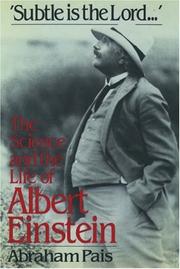
The definitive scientific biography of Einstein, by a physicist who worked alongside him at Princeton. Pais reconstructs the actual papers, so this is the one book that shows you what Einstein did rather than what he was like. Be warned: it contains real derivations and assumes undergraduate physics.

Pais's companion volume on Bohr, and the necessary counterweight — Bohr's influence ran through conversation and institution-building as much as through papers, and Pais is unusually good on why he was so hard to read and so impossible to ignore.

Gleick on Feynman, and the best-written book on this path. Read it after the Pais volumes for the contrast: a journalist's biography that succeeds through prose and structure where Pais succeeds through physics, and a portrait of the postwar American style that replaced the European one.
Particle physics, and the historian's critique
IntermediateFollow physics into the accelerator era and the Standard Model, and then confront the historiographical argument about whether the quarks were discovered or constructed.
▸ Study plan for this stage
Pace: Four to six months for 1,618 pages, and this is the most technically demanding stage on the path. Crease and Mann's The second creation is 484 pages, built out of interviews with almost everyone still living when they wrote, and is the readable entry to the accelerator era at 20-25 pages a day for a
- The particle zoo of the 1950s and 1960s, and the classification problem it posed
- The quark model, from a bookkeeping device to a claim about constituents
- Deep inelastic scattering and the experimental case for partons
- Gauge theory, symmetry breaking, and the assembly of the Standard Model
- The accelerator as an instrument that determines which questions can be asked
- The experimenter-theorist division of labour in a collaboration of hundreds
- Pickering's argument that theoretical and experimental traditions co-select the phenomena they agree on
- The difference between a discovery being underdetermined by evidence and being arbitrary
- Why were quarks initially not taken to be real particles, and what changed that?
- What did deep inelastic scattering actually measure, and how far is the parton interpretation forced by the data?
- How does Pais's paper-by-paper account of a discovery differ from Crease and Mann's interview-based one, and which is more useful for checking a claim?
- State Pickering's thesis as strongly as you can in your own words, without caricature
- What is the strongest objection to Pickering available from the material in the earlier stages, and does it defeat him or only limit him?
- Which episodes does Pickering choose, and would his argument look the same if he had chosen different ones?
- Take one discovery — the J/psi is a good case — and read it in Crease and Mann, then in Pais, then in Pickering, and write down what each account treats as the decisive moment
- Follow a single experiment through Inward bound and list which of its results Pais treats as settled and which he flags as contested
- Reconstruct the quark model's predictive successes as Pais reports them, then read Pickering's account of the same successes and identify precisely where the two disagree about what was shown
- Write the strongest one-page case for Pickering's thesis, then the strongest one-page case against it, using evidence from the earlier stages in both
- Return to Hunt's argument from the very first stage that theories are finished by communities, and write a paragraph on whether Pickering is making the same claim or a much stronger one
Next up: This is the end of the path: from here the natural continuations are the primary papers Pais cites, the wider history and sociology of science that Pickering belongs to, and the histories of the subfields Kragh could only survey.
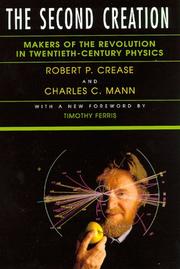
Crease and Mann's history of twentieth-century particle physics, built out of interviews with almost everyone still living when they wrote. The most readable account of how the Standard Model was assembled, and the right entry to this stage.
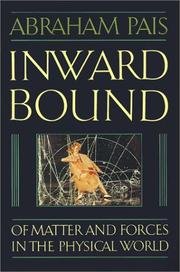
Pais again, and the most technically serious history of matter and forces in the twentieth century: experiment by experiment, paper by paper, with the mathematics kept in. Use it as the reference against which the narrative accounts can be checked.
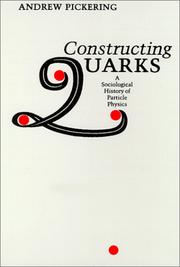
The provocation, and the last book deliberately: Pickering argues that high-energy physics chose its facts as much as it found them. You need the previous four stages to argue with him properly, which is exactly why he belongs at the end rather than the start.
Discussion
Keep reading
Paths that share books, cover the same subject, or open a related topic.