Richard Feynman Reading Order: Which Book to Read First
The Feynman shelf is really three shelves — anecdote collections assembled by other people from taped conversations, edited transcripts of lectures for general audiences, and genuine physics — and the famous red Lectures volumes are the worst possible starting point. This path opens with the storytelling, moves through the lectures written for non-physicists, then reaches the one real physics book a general reader can finish, and only at the end sends you to the Lectures themselves and to the biography that checks the legend against the record.
The Feynman everyone means
BeginnerMeet the public Feynman, and understand from the start that these books are edited anecdote rather than autobiography.
▸ Study plan for this stage
Pace: About ten days. Surely You're Joking is 352 pages of short, self-contained anecdotes, so it goes down at 35-40 pages a sitting without effort. Resist finishing it in two days — the chapters that matter are easy to skim past because they look like the same joke as the ones around them.
- This is not an autobiography. Ralph Leighton taped years of drumming-session conversation with Feynman and assembled the transcripts into chapters, and the book carries his name on the cover as the editor. What you are reading is a spoken performance, edited.
- The persona is a deliberate construction, and Feynman built it himself over decades: the wise guy from Far Rockaway who saw through the phonies. Read it as a self-portrait an artist controlled, not as a record.
- The Los Alamos safecracking chapters are the most quoted and the least informative. The chapter on teaching physics in Brazil is the one with a real argument in it, about students who could recite definitions and could not answer a question about the light coming through the window.
- Underneath the jokes there is a consistent method: refuse the received formulation, restate the problem in your own terms, then work it from the ground up. The trick with the wobbling plate in the Cornell cafeteria is the clearest statement of it.
- Several of the stories have been challenged on details by people who were there, and Feynman's own retellings drift. Treat individual anecdotes as unreliable and the pattern across them as informative.
- The chapters about picking up women in bars and about the nude-drawing sessions read very differently now than they did in 1985. Note your reaction rather than skipping them; the biography in the last stage takes the same material seriously.
- What is the Brazil chapter actually claiming about physics education, and what would count as evidence for or against it?
- The cafeteria plate leads, by Feynman's account, to the work he won the Nobel for. What is the story really saying about where research problems come from?
- Which anecdotes in this book could in principle be checked against a document, and which could only ever rest on his word?
- Where does Leighton's editing hand show — in the chapter breaks, the transitions, the punchline placement?
- What kind of person does the book want you to think Feynman was, and what does it leave out to achieve that?
- Go through the table of contents and mark each chapter V (verifiable in principle — a place, a date, a named colleague) or U (unverifiable — a private conversation, a mental state). Keep the list; you will use it against Gleick in the last stage.
- Write 200 words on the Brazilian teaching chapter as an argument rather than a story: state the claim, the evidence he gives, and the objection you would raise.
- Find every passage where he describes how he solved something, and copy out the sentence in each that names the actual move. Six or seven passages is enough to see the pattern repeat.
- Pick one anecdote you enjoyed and write the same episode in three sentences with the charm removed. Notice how much of the effect was voice.
Next up: You now have his voice and his method as anecdote; the next stage is him doing the thing the stories only describe, in front of an audience, on the record.
The book that made him a household name and the right first read, because everything else is easier once you can hear his voice. Worth knowing as fact rather than complaint: it was assembled by Ralph Leighton from taped bull sessions, not written by Feynman, several stories have been challenged on details, and the chapters about picking up women in bars read very differently now than they did in 1985.
What physics actually is
BeginnerGet Feynman's account of how physical law works and what a scientific explanation is, with no mathematics required.
▸ Study plan for this stage
Pace: Three weeks for two short books. Six Easy Pieces is 146 pages but each chapter is a full lecture — one chapter per sitting, six sittings, and do not read two in a day. The Character of Physical Law is 173 pages in seven lectures; give it a fortnight and reread the last lecture.
- The atomic hypothesis chapter opens Six Easy Pieces with Feynman's claim that if all scientific knowledge were destroyed and one sentence could be passed on, it would be that everything is made of atoms in perpetual motion, attracting at distance and repelling when squeezed. Everything else in both
- Energy is introduced as a number that stays the same, not as a substance. The blocks-in-the-bathroom analogy is doing real work: it establishes that conservation is a bookkeeping fact we have never explained, only verified.
- Gravitation is the worked example of what a physical law is — one equation, derived from planetary tables, that then correctly predicts phenomena nobody had in mind when it was written.
- The quantum-behaviour chapter is the double-slit experiment, and Feynman's point is not that it is strange but that it contains, in his words, the only mystery — the rest of quantum mechanics follows.
- The Character of Physical Law is a general argument built from those examples: laws are mathematical, they are approximate, they are simple in expression and unobvious in consequence, and the same mathematics reappears in unrelated domains.
- The lecture on symmetry and conservation states the deep link between the two without the mathematics that makes it a theorem, which is worth knowing so you recognise it later.
- The final lecture on seeking new laws is the most useful thing in either book: the guess-compute-compare loop, stated plainly, with the insistence that agreement with experiment is the only arbiter and that a beautiful theory is not thereby a true one.
- State the atomic hypothesis from memory. What does 'attracting at a small distance and repelling on being squeezed' explain that a simpler statement would miss?
- Why does Feynman insist we do not know what energy is, having just spent a chapter on it?
- The double-slit chapter runs the same experiment with bullets, water waves, and electrons. What exactly is the result with electrons that the first two rule out?
- Feynman argues physical laws are stated mathematically not by preference but by necessity. What is his argument, and does he ever answer the reader who cannot follow the mathematics?
- In the last lecture he says a new law is a guess. What separates a scientific guess from any other kind, on his account?
- Both books treat gravitation. Read the Six Easy Pieces chapter, then the Character of Physical Law lecture on it, and write down what the second adds — this is the difference between an example and an argument about examples.
- Draw the three experimental setups in the quantum-behaviour chapter yourself, with the expected pattern on the screen under each, before rereading Feynman's version.
- Take the conservation-of-energy chapter and write out the bookkeeping argument as a numbered list. If a step does not survive being numbered, you skimmed it.
- Summarise the seventh lecture of The Character of Physical Law in 200 words, as instructions to somebody starting a research problem.
Next up: You have his account of what a law is and how one is found; QED is Feynman doing it on his own theory, and it is the point at which reading about physics becomes reading physics.

Six chapters lifted from the Feynman Lectures and chosen because they need almost no maths — atoms, energy, gravitation, quantum behaviour. This is the correct way to sample the Lectures, and it exists precisely because reading them straight through defeats most people.
The 1964 Messenger Lectures at Cornell, transcribed. Short, and the single best statement of how he thought about symmetry, conservation and why the same equations keep reappearing. Read it after Six Easy Pieces, which supplies the examples this book generalises from.
Real physics, and the serious Feynman
IntermediateWork through an actual account of quantum electrodynamics, and meet the man who investigated the Challenger disaster.
▸ Study plan for this stage
Pace: Four to five weeks. QED is only 171 pages but it is the one book here you cannot read at reading speed — four lectures, one a week, with a pencil. What Do You Care is 256 pages and splits cleanly: the Arline material in a sitting, the Challenger appendix slowly over several.
- The arrow-and-stopwatch device is the whole method: every way light could get from A to B gets a little arrow whose direction is set by an imaginary stopwatch hand, you add the arrows head to tail, and the length of the result squared is the probability. No equations, and nothing has been dumbed dow
- Partial reflection off glass is the first payoff. The familiar laws of reflection and refraction come out as what survives when the arrows for most paths cancel, which inverts the usual teaching order — the law is the consequence, not the premise.
- The theory reduces to three basic actions: a photon goes from place to place, an electron goes from place to place, and an electron emits or absorbs a photon. Feynman's claim is that all of chemistry and nearly all of everyday physics is those three plus arithmetic.
- The coupling constant near 0.08542 is presented as an unexplained number that all good physicists put on their wall and worry about. He is deliberately showing you where the theory stops.
- In What Do You Care, the account of Arline's illness and death is written in a register nothing in Surely You're Joking prepares you for, and it is the book's answer to the charge that the persona had no interior.
- The Challenger appendix is a piece of scientific reasoning in public: the O-ring rubber and ice water demonstration, the reconstruction of how managers arrived at a failure estimate a thousand times more optimistic than their own engineers', and the closing line about reality taking precedence over
- He had to fight to get the appendix into the commission's report at all, which is part of what the appendix is about.
- Explain, without equations, how adding arrows over all paths produces the ordinary law that the angle of incidence equals the angle of reflection.
- Why does scraping the back off a piece of glass change the reflection at the front? What does Feynman say the answer implies about how light 'knows' where the back surface is?
- What are the three basic actions, and what does Feynman claim can be built from them alone?
- In the Challenger appendix, where do the engineers' and the managers' probability estimates come from, and what does Feynman conclude from the gap?
- The Arline chapters and the Challenger appendix sit in the same book. What does each show about how he handled being wrong or being overruled?
- Work the partial-reflection example in lecture one with pencil and paper: draw the two arrows, add them head to tail, and satisfy yourself where the 4 percent and the 16 percent come from.
- After lecture three, write down the three basic actions on an index card and try to account for a mirror, a lens, and the colour of a soap bubble using only those.
- Summarise the Challenger appendix in 200 words as a piece of reasoning: the question, the evidence, the method, the conclusion.
- Find the passage in QED where Feynman says plainly that nobody understands why the theory works, and set it against the Challenger appendix's closing line. Write a paragraph on what those two sentences have in common.
Next up: You have seen him teach a real theory and reason in public under pressure; next is the harder lecture material and the place where he states his epistemology directly instead of demonstrating it.
Four lectures explaining quantum electrodynamics with arrows and stopwatches instead of equations — the only book on this path that teaches you a real piece of twentieth-century physics rather than describing one. Ask for it by the bare title; the Princeton edition with A. Zee's introduction is the one catalogued.
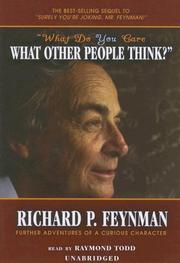
The second Leighton collection, and a much heavier book than its predecessor: it contains the account of his first wife Arline's death and the long Challenger appendix he had to fight to get published. It goes after the physics books because the Challenger material is about scientific reasoning under institutional pressure and lands harder once you know how he reasoned.
Pushing further
IntermediateTake on the harder lecture material and the essays and interviews where he states his position on science, religion and uncertainty directly.
▸ Study plan for this stage
Pace: Four weeks. Six Not-So-Easy Pieces is 153 pages and genuinely harder — there is algebra, and the relativity chapters need rereading; budget three weeks and expect one chapter to take two sittings. The Pleasure of Finding Things Out is 270 pages of short independent pieces and can run alongside as yo
- The symmetry chapters make explicit what The Character of Physical Law only gestured at: for every symmetry of the laws there is a conserved quantity, and the reason energy and momentum are conserved is that physics does not care what time it is or where you stand.
- Special relativity is presented as geometry rather than paradox. Once you accept that space and time mix under a transformation, time dilation stops being a trick and becomes a consequence.
- The chapter on curved space is Feynman's on-ramp to general relativity, and it works by making you a two-dimensional creature who has to discover the curvature of your own world by measuring. It is the clearest short account of the idea in print.
- This volume assumes the vocabulary of Six Easy Pieces without saying so. If a chapter feels impenetrable the diagnosis is usually a missing definition from the earlier book, not a missing aptitude.
- The Caltech cargo-cult science address in The Pleasure of Finding Things Out is the single most important text on this path: it defines scientific integrity as a specific extra effort — leaning over backwards to report everything that might make you wrong — and gives the Millikan oil-drop history as
- The pieces on education, on the value of doubt, and on his father's teaching contain the actual philosophy that Surely You're Joking dramatises as anecdote. The same episodes recur here in a different register.
- Several interviews here state his position on religion and on uncertainty directly, including his preference for questions that cannot be answered over answers that cannot be questioned.
- State the connection between symmetry and conservation in one sentence, and give the two examples Feynman uses.
- What does the two-dimensional bug measuring triangles discover, and how is that the same discovery Einstein made about space?
- In the cargo-cult address, what is the difference between not lying and the extra thing Feynman demands? Give his example.
- Why, on his telling, did the measured charge of the electron creep upward for years after Millikan, and what does that history prove?
- Where does Six Not-So-Easy Pieces actually get harder — is it the mathematics, or is it that the physical picture stops being visualisable?
- Identify the exact page where Six Not-So-Easy Pieces first assumes something from Six Easy Pieces without restating it. Go back, reread that earlier chapter, and return.
- Write the cargo-cult definition of scientific integrity in your own words, in under fifty, then test it against a paper or news story you have read this month.
- Three or four episodes in The Pleasure of Finding Things Out also appear in Surely You're Joking. Find two, set the versions side by side, and note every difference in emphasis.
- Take the curved-space chapter and draw the bug's triangle and circle measurements yourself. If your drawing does not show the discrepancy, you have not understood the chapter.
Next up: You now have his physics at the limit of what a general reader can follow and his epistemology in his own words — which is exactly what you need to use the Lectures as a reference and to read the biography critically.
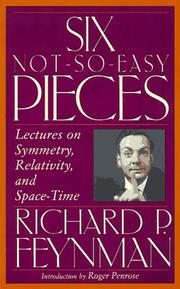
The companion volume, on symmetry, spacetime and relativity, and honest about its difficulty in the title — there is algebra here. Read it only after Six Easy Pieces; it assumes that vocabulary.

A collection of short pieces, interviews and talks, including the Caltech cargo-cult science address. The best single place to find his actual epistemology stated in his own words rather than dramatised through an anecdote.
The Lectures, and the man behind the legend
BeginnerUse the Feynman Lectures as the reference they are, and read the biography that separates the documented Feynman from the self-created one.
▸ Study plan for this stage
Pace: Open-ended for the Lectures and about five weeks for Gleick. The Feynman Lectures are a three-volume undergraduate course and not a book to read through; sample chapters over months. Genius runs to 532 pages and reads like narrative non-fiction — three or four weeks at 25 pages a day.
- The Lectures were written as an actual two-year introductory course at Caltech, delivered to a room that reportedly thinned out of undergraduates and filled up with faculty and graduate students. That is the reason they are last here: their audience was never the general reader.
- The three volumes divide as mechanics, radiation and heat; electromagnetism and matter; and quantum mechanics. Volume III is a genuine quantum-mechanics course and the one place where Feynman teaches the subject his own way from the start.
- Individual chapters are self-contained essays and several are famous on their own — the chapter on algebra in Volume I, and the treatment of the principle of least action in Volume II, which Feynman introduces as the thing that captivated him as a schoolboy.
- Gleick's biography does what five books of self-narration cannot: it works from the physics community's records, letters and interviews, and it is candid about how much of the legend Feynman built and maintained.
- The scientific core of Gleick's book is the path-integral formulation and the diagrams — where they came from, why they spread so fast, and what the Nobel was actually for. Read after QED, it converts a popular exposition into an intellectual history.
- Gleick is direct about the Manhattan Project years, Arline's death, the depressive stretch afterwards, and Feynman's treatment of the women in his life. None of it is scandal-hunting; it is the record set against the performance.
- The useful comparison is not 'was he really like that' but 'what work was the persona doing' — for him, for physics, and for the readers who made those anecdote collections bestsellers.
- The Lectures did not work as the introductory course they were written to be, yet they have never gone out of print. Who are they actually for?
- Take the V/U list you made in the first stage. Which anecdotes does Gleick corroborate, which does he complicate, and which does he decline to repeat?
- How does Gleick's account of the diagrams and the path integral differ from Feynman's own account of the same work in QED?
- What does Gleick show about the Los Alamos years that Surely You're Joking's safecracking chapters leave out entirely?
- After the biography, has your reading of the first book changed — and is that a change in the facts or in the framing?
- Read the algebra chapter in Volume I as a standalone essay, then the least-action chapter in Volume II. That pairing tells you whether the Lectures are a reference you will use.
- Pick one topic you already half-know, find its chapter in the Lectures, and work three of the exercises attached to it. Reading a Lectures chapter without doing this is not using the book as intended.
- Set Gleick's chapter on Challenger beside the appendix in What Do You Care and write 300 words on what the outside account adds to the first-person one.
- Go back to your V/U list and mark each entry C (corroborated), Q (qualified) or S (silent) after Gleick. Write a paragraph on what the S column has in common.
Next up: This is the end of the path: you now have the popular Feynman, the teaching Feynman, one real physical theory, his stated epistemology, the course itself, and the documented record to test all of it against.
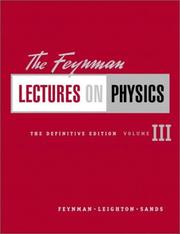
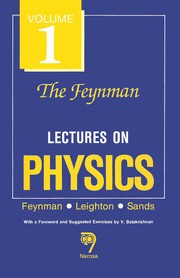
The famous red volumes, and the reason they are last is that they were written for Caltech undergraduates taking a full physics course, not for readers. Treat them as a reference to dip into on topics you already half-know. This is a multi-volume work and the catalogue record covers the set rather than an individual volume.

The serious biography, and the necessary corrective to five books of self-narration: Gleick works from the physics community's records and is candid about the myth-making, the Manhattan Project years and Feynman's treatment of the women in his life. Read it last, when you have the legend fully in mind to test it against.
Discussion
Keep reading
Paths that share books, cover the same subject, or open a related topic.