Best Books on Marie Curie and the Discovery of Radioactivity
Marie Curie is one of the most written-about scientists there is, which means the problem is not finding a book but choosing between a hagiography written by her daughter, several modern biographies covering the same ground, and a large literature about what radium did to everyone who touched it. This path sorts them: two short and unusual books to start, then the biographies in the order that makes each one useful, then the science itself, then the industrial and military aftermath that is arguably the real story. Each entry says what kind of book it is and what background it assumes, because the range here runs from an illustrated art book to a 900-page history of the bomb.
Two Short Ways In
BeginnerGet the shape of the life and the discovery quickly, and decide how deep you want to go.
▸ Study plan for this stage
Pace: About a week and a half, roughly 493 pages between the two. Lauren Redniss's Radioactive is 205 pages and is not a conventional biography at all — it is an illustrated book printed in cyanotype, telling the story in image and fragment, and it reads in an evening. Barbara Goldsmith's Obsessive Genius
- Pitchblende, and the physical work of processing tonnes of ore in an unheated shed to isolate fractions of a gram
- Polonium and radium as two separate discoveries, announced months apart, and why radium mattered more
- Radioactivity as a property of the atom itself — the conceptual break that made the discovery important rather than merely new
- The Curies' decision not to patent the radium isolation process, and what it cost them
- Two Nobel Prizes in two different sciences, and the fact that the first was awarded only after Pierre insisted Marie be included
- Radiation exposure as the cause of her death, and of the death of her daughter Irène, stated as the fact it is
- What did the Curies actually do to pitchblende, step by step, and how much ore produced how much radium?
- What made radioactivity a discovery about atoms rather than about a substance?
- Why were Marie Curie's two Nobel Prizes awarded in different fields, and what was each for?
- What does Redniss's cyanotype format convey that Goldsmith's prose cannot, and what does it lose?
- What killed Marie Curie, and how long had the mechanism been understood by the time it did?
- Write out the isolation process from Goldsmith's account as a numbered procedure, with quantities. Everything later on this path assumes you know how physical the work was.
- Read Redniss's pages on the aftermath of the discovery — the radium fads, the weapons — and list which of them Goldsmith also covers and which she does not.
- Make a one-page timeline of the life from Goldsmith: Warsaw, Paris, the shed, the prizes, the war, the death. You will hang three more books on it.
- Pick one episode Redniss renders as image and find Goldsmith's prose account of the same event; note what the image asserts that the prose hedges.
Next up: With the shape of the life and the discovery in hand, the biographies stop being an introduction and become a question about who was telling the story and why.
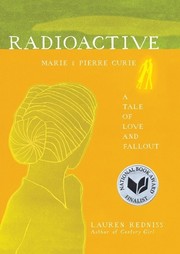
Not a conventional biography at all: an illustrated book, printed in cyanotype, telling the Curies' story in image and fragment. Assumes nothing, reads in an evening, and conveys the strangeness of radium better than any prose account. Start here precisely because it is unlike the rest.
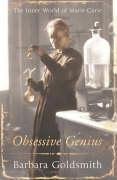
The short modern biography — around 250 pages, briskly written, drawing on the family papers. The efficient version of the whole life, and enough for many readers on its own. Read it second so Redniss's images have something to attach to.
The Life, Told Several Ways
BeginnerRead the primary family account against the modern scholarship, and see how the Curie legend was constructed.
▸ Study plan for this stage
Pace: Six to seven weeks, about 1,328 pages. Eve Curie's Madame Curie is 411 pages, written in 1937 by Curie's younger daughter, and is a primary document rather than a work of history — it is devoted, selective, and openly shaping a reputation. Susan Quinn's Marie Curie is 509 pages and is the standard m
- Hagiography as a source: what a devoted daughter's 1937 account is evidence of, even where it is not evidence of what happened
- The Langevin affair and the 1911 press campaign, which Eve Curie omits and Quinn documents
- Curie's position as a Pole in France and a woman in the Académie des Sciences that refused her
- The wartime radiological cars and the training of women operators — the part of the life most biographies hurry past
- The American fundraising tours and Curie's late-career role as a scientific celebrity raising money for radium
- Irène Joliot-Curie's own Nobel and Eve Curie's journalism, which make the family a three-generation subject
- Historiography as a subject in itself: Ogilvie is writing about how Curie has been written about
- Name three specific things Eve Curie leaves out, and say what her book gains by leaving each out.
- What did the French press actually publish in 1911, and what was the sequence of events between the affair and the second Nobel?
- What does Quinn's archival access give her that Eve Curie could not have had even if she had wanted it?
- What did the radiological units do during the First World War, and roughly at what scale?
- Which of these four books would you hand to someone who had read only Goldsmith, and why?
- Take a single episode — Pierre's death in 1906 — and read Eve Curie's account, Quinn's account and Goldsmith's side by side. Mark every factual difference and every difference in emphasis.
- Go through Eve Curie's book marking passages where she is reporting something she witnessed and passages where she is reconstructing. The ratio is the argument for reading her as a primary source.
- Add the wartime and American years from Emling to the timeline you built in the previous stage; most short accounts leave that decade nearly blank.
- Read Ogilvie's framing of Curie as an outsider on two counts, then test it against a chapter of Quinn — does the archival record support the frame?
Next up: Four accounts of the life leave one thing untouched — what the science actually was — which is what the next stage supplies.
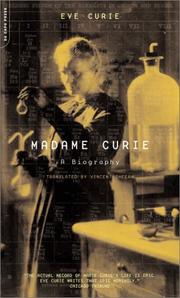
The 1937 biography by Curie's younger daughter, and the source of almost every story that later circulated. Read it as a primary document rather than as history: it is devoted, selective and openly shaping a reputation, and knowing that is more useful than avoiding it.
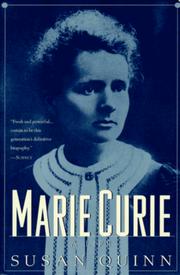
The standard modern biography, the first written with access to the Polish and French archives and the family's private papers. It restores what Eve Curie left out — the affair with Paul Langevin, the press campaign against her, the physical toll — and is the book to read directly after the daughter's.
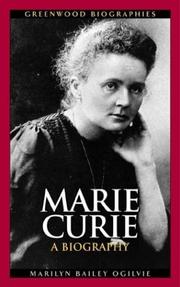
A shorter scholarly life by a historian of women in science, framed around Curie's position as an outsider on two counts. Note that several different books here display under the plain title Marie Curie; this is the Greenwood biography, and it is the one to read if you want the historiographical rather than the narrative treatment.
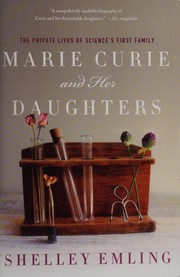
Picks up where most biographies lose interest — the American fundraising tours, the wartime radiology units, Irene's own Nobel and Eve's journalism. Journalistic rather than scholarly, and the best account of the last two decades of the life.
The Science Itself
IntermediateUnderstand what radioactivity is, what the Curies actually did in the shed, and how the discovery fitted into the physics of its moment.
▸ Study plan for this stage
Pace: Three to four weeks. Marie Curie's own Pierre Curie is 181 pages, her short biography of her husband with an autobiographical sketch attached, and it is the closest thing to her account of the work in her own voice — she is a participant writing about her own laboratory, not a historian. Marjorie Ma
- Becquerel's 1896 observation and what the Curies added to it
- Alpha, beta and gamma radiation as three distinct phenomena, and how quickly that was worked out
- Transmutation — the discovery that radioactive decay changes one element into another, which broke the atom's supposed permanence
- Half-life as a concept and why it made radioactivity quantitative
- The laboratory as an institution: who worked in it, who was credited, and how women entered physics through it
- Curie's own account of the work as evidence about method, priority and what she thought she was doing
- What did Becquerel see, and what did the Curies establish that he had not?
- How did the concept of the atom change between 1896 and the 1930s, according to Malley?
- How does Curie describe the work in Pierre Curie, and how does that differ from Eve Curie's description of the same years?
- Who were the women in Curie's laboratory, what did they do, and where did they go afterwards?
- Which of the two Nobel citations makes more sense to you now, and why?
- Read Curie's own autobiographical sketch in Pierre Curie immediately after Eve Curie's chapters on the same period and list every discrepancy of fact or emphasis.
- Build a timeline from Malley of the concept of the atom from 1896 to 1935, marking which step each named physicist contributed.
- Work out from Malley what a half-life is precisely enough to state why radium's and polonium's differ so sharply, and check that against the isolation procedure you wrote out in stage one.
- From Sobel, list the women of the laboratory by name and note for each what she worked on and whether the earlier biographies mentioned her at all.
Next up: Knowing what radioactivity is makes the last stage possible: what happened when the element left the laboratory and reached watch factories, hospitals and weapons.
Curie's own short biography of her husband, with an autobiographical sketch attached — the closest thing to her account of the work in her own voice. Slim, plain and worth reading directly against Eve Curie's version of the same events.

A history of the science rather than the scientists: what people thought radioactivity was between 1896 and the 1930s, how the concept of the atom changed, and how quickly it went from curiosity to industry. Assumes no physics and is the book that makes the Nobel citations make sense.
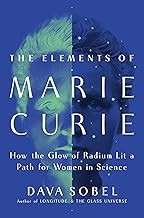
Recent, and takes an angle nobody else does — Curie's laboratory as a training ground, and the more than forty women who worked in it. Read last of the three because it presumes you already know the standard story it is reframing.
What Radium Did Next
IntermediateFollow the element out of the laboratory into watch factories, medicine and weapons, and confront the harm nobody understood in time.
▸ Study plan for this stage
Pace: Five to six weeks, and the longest reading on the path. Kate Moore's The radium girls is 480 pages of popular narrative history about the dial painters who pointed their brushes with their lips; it documents radium necrosis of the jaw, bone tumours, the deaths of named young women and the litigation
- Radium as a consumer product — tonics, paint, cosmetics — before the harm was acknowledged
- The dial painters' case: what the exposure did physiologically and what the litigation established in law about occupational disease
- Medical radium: therapy that worked, therapy that did not, and the difficulty of separating them at the time
- The line from radioactivity to fission to the weapon, and the specific steps at which it was not inevitable
- The distinction between a popular sweep (Nelson) and a documented history (Rhodes and Moore)
- Latency as the reason radiation harm was so slow to be believed — the effect arrives years after the exposure
- What exactly happened to the dial painters, physiologically, and how long between exposure and diagnosis?
- What did the radium girls' litigation establish that had not been established before?
- How did the science get from Becquerel to fission? Name the intermediate results.
- Where is Nelson's book unreliable, and how do you know — what does Rhodes or Moore contradict?
- Having finished the path, what is the honest relationship between the Curies' work and what was done with it?
- Set Moore's account of radium's commercial uses against the chronology you built from Malley, and mark the years in which the harm was known to specialists but still being sold to the public.
- Read Rhodes's opening chapters and mark where the Curies appear; compare his few pages on them with the four biographies you have read.
- Pick three specific claims from Nelson about the Curie years and check each against Quinn. Note which survive.
- Write 500 words answering whether Marie Curie's death and the dial painters' deaths are the same story, citing Moore, Goldsmith and Quinn by name.
- Go back to the timeline you started in stage one and extend it to 1945, so the whole path sits on one sheet.
Next up: This ends the path — from the shed in Paris to Los Alamos, with the biographies, the science and the human cost each read as what they actually are.

The dial painters who licked their brushes to a point, and the litigation that followed. Popular narrative history, deliberately hard to read in places, and the necessary counterweight to any account of radium as a wonder. This is where the human cost of the discovery becomes concrete.
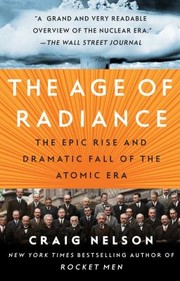
A sweeping popular history of the atomic era from Becquerel to Fukushima, with the Curies as the opening chapter. Uneven and enthusiastic; useful here as the connective tissue between the laboratory and everything that followed.
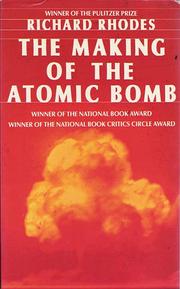
Long, and the definitive account — the endpoint of the story that began with pitchblende in a Paris shed. Save it for last: it assumes a reader who already knows who the Curies were, which after this path you do.
Discussion
Keep reading
Paths that share books, cover the same subject, or open a related topic.