Best Books on Hiroshima and Nagasaki, in Reading Order
The bombings are argued about far more often than they are read about, so this path puts the survivors first and the strategy second. You begin with testimony from inside the two cities, then reconstruct the weapon and the decision that sent it, then work through the historians' still-unsettled argument about whether the bombs ended the war, and close on how the events were reported, remembered and mythologised. Reading the human record before the strategic debate changes how the debate feels, which is the point of the order.
Inside the two cities
BeginnerUnderstand what the bombs did to specific people over hours, days and decades, before encountering any argument about whether they should have been used.
▸ Study plan for this stage
Pace: 5-6 weeks, and pace this stage more slowly than its page count suggests. Hersey's Hiroshima is 120 pages and can be read in one sitting — do read it in one sitting, because it was written as a single magazine issue and the cumulative effect is the design. Hiroshima Diary is 256 pages of dated entrie
- Hersey's six subjects — two doctors, a widow, a German priest, a young clerk, a Methodist minister — and his structural choice to follow ordinary people through the hours and days rather than to describe the weapon. He never editorialises, and the restraint is what made it land
- The near-total absence of the word he does not use: Hersey almost never explains the physics or names the strategy. The reader is given the morning of 6 August as those six people experienced it and nothing else
- Hachiya's value as a source: a physician, himself injured, keeping a dated record while running a hospital — so the diary contains the emergence of radiation sickness being observed by someone competent to observe it and without a name for what he is seeing
- The clinical progression Hachiya documents — apparent recovery, then fever, purpura, hair loss, collapse — recorded as it happened rather than reconstructed afterwards. This is why the diary is not replaceable by any later account
- Southard's subject is Nagasaki, which is almost always a footnote to Hiroshima, and her five survivors are followed across seventy years — through the occupation censorship, the medical aftermath, the social discrimination against hibakusha, and their late-life decision to speak
- Hibakusha as a status and not just a description: the discrimination in marriage and employment, the medical uncertainty, and the long silence that Southard shows being broken decades later
- The deliberate ordering principle of this whole path — testimony before strategy. Reading the human record first changes how the argument in stage 3 feels, and that is the intended effect rather than an accident
- Hersey never argues. What effect does the refusal to editorialise have, and would the piece be stronger or weaker with a paragraph of judgment in it?
- In Hachiya's diary, at what point does he realise he is seeing a new disease? Find the entry, and note what he thought was happening before it
- Southard follows survivors for seventy years. Name three consequences of the bombing that only become visible on that timescale
- Why is Nagasaki usually treated as an appendix to Hiroshima? What does that habit obscure?
- Before you read any strategic argument: write down what you currently believe about the bombings and why. Date it and seal it
- Read Hersey in a single sitting with the phone away. It is 120 pages and it was published as one issue of a magazine that carried nothing else that week; reading it in fragments defeats its structure
- Track one of Hersey's six people through the whole text and write a one-page account of their August. Then find where Hersey chose to leave something out
- Make a timeline of Hachiya's diary marking, for each week, what he understood about radiation sickness at that point. The rate at which understanding arrives is the diary's real content
- Write down, sealed and dated, your current view on whether the bombings were justified. You will open it at the end of stage 3 and again at the end of the path
- Take one of Southard's survivors and write 300 words on what the postwar decades cost them. Keep it: stage 4 explains why almost none of this reached American readers at the time
Next up: With the human record established first, you can meet the weapon and the decision without the abstraction doing what abstraction usually does.
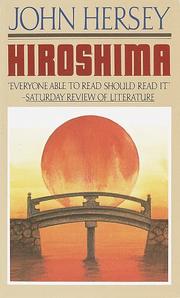
Six survivors followed through the bombing and after, in the magazine article that first made the weapon's human meaning legible to American readers. Short, and the correct place to start.
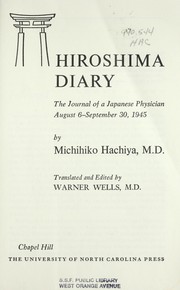
The day-by-day journal of a doctor who was himself injured in the blast and ran a hospital through the aftermath. The nearest thing to a contemporaneous clinical record of radiation sickness.
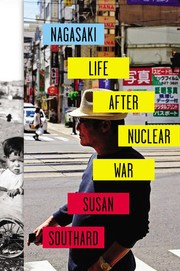
The second city, which is almost always treated as a footnote, followed through five survivors across seventy years. It is the book that makes the point that the story did not end in 1945.
The bomb and the decision
BeginnerKnow how the weapon was built, who chose the targets, and what the decision-makers believed they were choosing between.
▸ Study plan for this stage
Pace: 10-12 weeks. The Making of the Atomic Bomb is 886 pages and worth every one of them — read it over eight to ten weeks at 20 pages a day. It falls into three movements: the physics from Rutherford to fission, the Manhattan Project, and the use of the weapon. Prompt and Utter Destruction is 142 pages
- Rhodes's physics narrative from the discovery of the nucleus through fission in 1938 and the chain reaction, told through the people who did it — Rutherford, Bohr, Meitner, Frisch, Szilard, Fermi. The science is genuinely explained, not gestured at
- The Manhattan Project's scale and structure: Los Alamos, Oak Ridge, Hanford, and the two entirely separate weapon designs — the uranium gun assembly used on Hiroshima and the plutonium implosion device used on Nagasaki. The engineering reason for two designs is also the reason for two bomb types
- Why Trinity tested only the implosion design, and what that means for how confident anyone was about each weapon
- The moral trajectory Rhodes traces among the scientists — the Franck Report, Szilard's petition, and the split between those who wanted a demonstration and those who did not
- The strategic bombing context that Rhodes places the decision in: the firebombing campaign against Japanese cities, and Tokyo in March 1945 in particular, which killed on a comparable scale by other means. Whether that context mitigates or aggravates the decision is exactly what stage 3 argues about
- The target selection process — the committee, the criteria, Kyoto's removal — and what it reveals about what the weapon was understood to be for
- Walker's survey as your map of the argument: he lays out the main interpretive positions and the evidence each rests on without adjudicating, which is precisely what you need before reading two advocates back to back
- The specific questions Walker isolates — what the invasion casualty estimates actually were at the time, what was known about Japanese peace feelers, what role Soviet entry was expected to play — because these are the three points stage 3 turns on
- Explain the difference between the gun-assembly and implosion designs, and why only one needed testing
- What did the Franck Report propose, and what were the arguments against a demonstration? State the case against as strongly as its holders did
- What did decision-makers in July 1945 actually believe about invasion casualties? Walker is careful here — note where the famous large figures come from and when
- Rhodes places the bombings within the firebombing campaign. Does that context change your view of the decision, and in which direction? Both answers are defensible
- After Walker, list the three questions the historians' argument turns on. You will hold Frank and Hasegawa to exactly these
- Build a timeline of 1945 from January to September marking the firebombing campaign, Okinawa, Potsdam, Trinity, the two bombings, the Soviet declaration, and the surrender. Every argument in stage 3 is an argument about the intervals in this timeline
- Draw both bomb designs from Rhodes's descriptions and label why each required the enrichment or production facility it did. Understanding why there were two designs explains why there were two bombs available on that schedule
- Take Walker's summary of each interpretive position and write it out in one paragraph each, as an adherent would. Keep the page — you are about to read the two strongest versions
- Note every place Walker says the evidence is thin or contested. That list is your reading checklist for stage 3
Next up: You have the weapon, the decision as its makers framed it, and a map of the interpretive dispute — which is the equipment needed to read two opposed historians without being captured by whichever you read last.
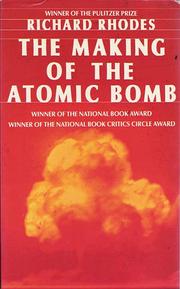
The definitive history of the physics, the Manhattan Project and the people who built it. Long, and the single best-written science history in print.
A short, deliberately even-handed survey of the decision and the evidence for each interpretation. The most useful possible orientation to the argument in the next stage.
The historians' argument
IntermediateWeigh the two strongest scholarly cases — that the bombs forced surrender, and that Soviet entry did — and understand what evidence each depends on.
▸ Study plan for this stage
Pace: 12-14 weeks. Downfall (490 pages) is four to five weeks. Racing the Enemy (407 pages) is four weeks and must be read directly after Frank, with no other book between them — reading them consecutively is the whole method of this stage. Hiroshima, Nagasaki (640 pages) is five to six weeks and comes th
- Frank's core evidentiary base: the decrypted Japanese diplomatic and military traffic (MAGIC and ULTRA), which he reads as showing a Japanese leadership not close to accepting surrender terms and actively reinforcing Kyushu against the expected invasion
- Frank's argument about Operation Downfall itself — the buildup on Kyushu, what the invasion would have encountered, and the projected costs to Japanese civilians and to the wider region if the war continued into 1946
- Hasegawa's core evidentiary base: Japanese and Soviet archives read together, producing a three-way account in which Tokyo's diplomatic hopes rested on Soviet mediation, so the Soviet declaration of war on 8 August removed the last strategy the leadership had
- Hasegawa's chronology argument, which is the sharpest point of the dispute: the Supreme Council's response after Hiroshima versus after the Soviet declaration and Nagasaki, and what the sequencing implies about which shock moved them
- Where the two historians actually disagree — not much about the documents, considerably about which documents are decisive and how to read the intentions of a leadership that was not unified. Both are serious scholars working the same archives
- The genuine methodological problem underneath: inferring what a divided council would have done under a counterfactual, from records produced by participants who later had reasons to shape the account
- Ham's third position, which combines survivor testimony with the strategic argument and comes down firmly against the necessity claim. Read it as a third voice you are now equipped to assess rather than as a tiebreaker
- That this remains a live scholarly disagreement. A study plan is not the place it gets settled, and a reader who finishes this stage certain in both directions has probably read only one of the books carefully
- State Frank's argument in a form Hasegawa would agree is accurate, and Hasegawa's in a form Frank would. If either version sounds weak, you have not understood it
- Both use Japanese records. Identify one document they read differently and articulate each reading
- Take the days from 6 to 15 August and lay out what each historian says was decisive on each date. The disagreement lives almost entirely in this fortnight
- What would it take to settle this? Name a document or a kind of evidence that, if it existed, would resolve it — and say whether it plausibly could exist
- Ham comes down against necessity. Which of his arguments are strategic and which are moral? Keep them apart, because they need different kinds of evidence
- Take the 1945 timeline from stage 2 and add two annotation tracks — Frank's reading above the line, Hasegawa's below — for every date in August. Where they diverge on the same day is the entire scholarly dispute in one page
- Write a 500-word brief for Frank's position and a 500-word brief for Hasegawa's, each using only evidence its author cites. Do not write a third brief declaring a winner
- Return to Walker's list of thin or contested evidence from stage 2 and mark, for each item, whether Frank or Hasegawa strengthened it and by how much
- Open the sealed view you wrote in stage 1. Write 300 words on what changed and what specifically changed it — a document, an argument, or the human record you read first
- Pick the single strongest objection you can make to whichever historian you found more persuasive, and write it out fully. If you cannot construct one, reread them
Next up: Having seen how contested the strategic argument remains among historians with the archives, the last stage asks how the public memory in each country became so much more certain than the scholarship.

The strongest case that Japan was not close to surrendering and that an invasion would have been catastrophically costly, built on decrypted Japanese traffic.
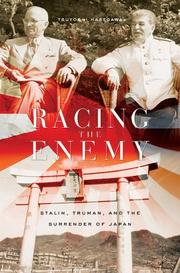
The strongest case for the opposite view, using Japanese and Soviet archives to argue that the Soviet declaration of war mattered more than the bombs. Read directly after Frank.

Ham combines the strategic argument with extensive survivor testimony and comes down hard against the necessity claim. A useful third position now that you can judge one.
Memory, silence and afterlife
IntermediateTrace how the bombings were reported, censored and absorbed into Japanese and American culture, and why the memory diverged so sharply.
▸ Study plan for this stage
Pace: 10-12 weeks. Fallout (288 pages) is two to three weeks and should be read first, because it is the direct backstory to the book you opened the path with. Black Rain (300 pages) is three weeks and asks to be read slowly. Barefoot Gen, Vol. 1 (291 pages) is a manga volume and takes an evening or two.
- What Blume documents about occupation censorship: reporting on the bombings' aftermath, and on radiation effects in particular, was suppressed under the occupation press code, so the human consequences were largely unavailable to American and Japanese readers alike
- How Hersey got in and got the story out, and the editorial decision at The New Yorker to give an entire issue to it. This is the direct backstory to the 120 pages you read in stage 1, and it explains why that piece was a shock rather than a summary
- Ibuse's method in Black Rain: a novel constructed from survivor diaries and interviews, following a family and the marriage prospects of a young woman exposed to the fallout. The book's central subject is discrimination against survivors, not the blast
- Why fiction does something the histories cannot here: Black Rain renders the texture of years of uncertainty — waiting to see whether one is ill — which no chronology conveys
- Nakazawa drew Barefoot Gen as a survivor who was six years old in Hiroshima, and for millions of Japanese readers it was the first account of the bombing they encountered. Its register is a children's serial and its content is not
- The specific thing Barefoot Gen does that the prose books do not: it is unsparing about wartime Japanese society and the treatment of dissenters, so it is not a straightforward national-victimhood narrative
- Lifton and Mitchell's subject: the construction and defence of an American national story about the bomb — the official narrative, the suppression of imagery, and the flashpoints where the story was contested
- The Enola Gay exhibition controversy at the Smithsonian in the mid-1990s as the case study in how a settled public memory reacts to scholarly complication — including the scholarship you read in stage 3
- What exactly was suppressed under the occupation press code, and for how long? What difference did that make to what each public knew?
- Hersey's piece is often credited with changing American understanding. What does Blume show about how much it changed, and how quickly?
- Black Rain's subject is discrimination against survivors. Why did Ibuse need a novel to write about it? What was not sayable otherwise?
- Barefoot Gen is critical of wartime Japanese society as well as of the bombing. How does that complicate the idea of a single Japanese memory of the event?
- Lifton and Mitchell describe an official American narrative. Which parts of it did you hold before this path, and which of the four stages disturbed which parts?
- Reread Hersey's opening pages after finishing Fallout. Knowing what it took to get and what it broke through changes what the restraint reads as
- Take Black Rain and one of Southard's survivors from stage 1 and write 400 words on what the novel conveys that the oral history does not, and vice versa. Be specific rather than saying fiction is more moving
- Read Barefoot Gen and note every element of wartime Japanese society Nakazawa criticises. Then write a paragraph on why a work this critical became the standard national introduction to the event
- Research the 1995 Enola Gay exhibition dispute using Lifton and Mitchell, and write 300 words on what the museum proposed and what the objection was. Then say which of the historians from stage 3 the proposed text resembled
- Open your stage-1 sealed statement one last time and write a final 500 words: what you now believe, what you believe less confidently than you did, and which single book on this path was most responsible for each change. Mark every sentence where you are relying on one author's framing rather than on evidence several of them share
Next up: This is the end of the path: you have read the survivors, the weapon, the unsettled scholarship and the making of two national memories, and can tell which part of any argument about the bombings is being fought over evidence and which over meaning.

How Hersey got into occupied Japan and past the censors, and what the US authorities had been suppressing until he did. The direct backstory to the first book on this path.

A novel built from survivor diaries and interviews, and one of the central works of Japanese postwar literature. Fiction here does something the histories cannot.
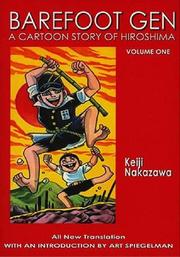
A manga drawn by a Hiroshima survivor who was six at the time, and for millions of Japanese readers the first account of the bombing they ever encountered.
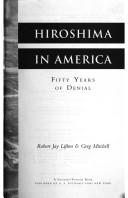
How the United States built a national story about the bomb and defended it for fifty years. The right closing book, because it turns the argument back on the reader.
Discussion
Keep reading
Paths that share books, cover the same subject, or open a related topic.