Best Books on Quantum Foundations and the Interpretations of Quantum Mechanics
Quantum mechanics is the most successful theory in physics and nobody agrees on what it says the world is like. This path builds the disagreement carefully: first the history and the popular framings, then a philosophically precise statement of the measurement problem, then Bell's theorem in the original, and finally the three serious programmes — Everett, Bohm and dynamical collapse — in the books their advocates wrote.
The argument, historically
BeginnerLearn what Bohr and Einstein were actually disagreeing about, why the Copenhagen consensus hardened, and what the measurement problem is in ordinary language.
▸ Study plan for this stage
Pace: About 5 weeks. All three are trade non-fiction with no mathematics: Kumar's Quantum (448 pages), Becker's What Is Real? (370) and Ball's Beyond Weird (384), at roughly 35 pages a day. Read Kumar first for the Bohr and Einstein debate, Becker second for what happened to the question after 1935, Ball
- The 1927 Solvay debate and Einstein's thought experiments against the completeness of the theory
- Complementarity as Bohr actually stated it, as distinct from the later textbook Copenhagen synthesis
- The 1935 EPR argument, which claims incompleteness rather than error
- The measurement problem stated in ordinary language, before any formalism
- The professional and institutional cost of working on foundations, which is Becker's central historical claim
- Shut up and calculate as a career strategy as much as a philosophical position
- Ball's point that much popular quantum weirdness is a misreading rather than a discovery
- What did EPR claim to have proved, and what did Bohr's reply concede, deny, or simply restate?
- Is the Copenhagen interpretation a single position? Reconstruct at least two distinct versions and say who held each.
- Becker argues foundations work was suppressed for sociological reasons; what evidence would support that claim, and what would count against it?
- Which parts of the 1930s debate have since been settled by experiment, and which remain exactly where they were?
- What does Ball think popular accounts get wrong about quantum mechanics, and where would a physicist push back on him?
- Read the EPR paper itself (Physical Review 47, 777, 1935, four pages) and Bohr's reply of the same year, then write a page on which one answers the other and on what point you think each is strongest
- Build a two-column table of what Bohr, Einstein, Heisenberg and Schrodinger each committed to about the status of the wavefunction, and mark every place where the primary sources contradict the textbook caricature
- Write 300 words stating the measurement problem without once using the word collapse
- Pick one physicist Becker describes as professionally damaged by foundations work, and check the claim against an independent biography
Next up: The historical debate is easy to follow and easy to misremember; the next stage replaces the story with a precise statement of what is actually inconsistent.

The clearest narrative history of the Bohr-Einstein debate, from the 1927 Solvay conference through EPR. Read first: every later book presupposes you know who was arguing what.

The history of the foundations question after 1935 — Bohm, Everett, Bell and the professional cost of asking. It explains why the field went quiet for forty years, which Kumar's story stops short of.

The most careful popular account of what quantum mechanics does and does not license you to say, and a useful corrective to the mysticism the subject attracts. Read third, as the palate cleanser before the technical books.
Stating the problem precisely
IntermediateGet the formalism to the point where you can state the measurement problem as a contradiction between unitary evolution and definite outcomes, rather than as a puzzle.
▸ Study plan for this stage
Pace: Three to four months, and these three books are not the same kind of object. Davies and Brown's The Ghost in the Atom is a 157-page transcript of interviews and takes an evening or two. Susskind and Friedman's Quantum Mechanics is a working textbook at first-year undergraduate mathematical level, re
- State vector, superposition, Hermitian observables, eigenvalues and the Born rule as a postulate
- The two dynamical laws of the standard formulation, unitary evolution and collapse on measurement, and their mutual inconsistency
- Entanglement, the reduced density matrix, and the difference between a mixture and a superposition
- The measurement chain and the Wigner's friend regress: where in the chain does an outcome become definite?
- Albert's bare theory and its pathological consequences, which show what removing collapse alone would cost
- The taxonomy of responses: add variables, modify the dynamics, or deny that outcomes are unique
- Why no interpretation is free: each buys consistency by paying somewhere else
- State the measurement problem as an inconsistent trio of assumptions, then say which assumption Bohm, GRW and Everett each reject
- What does entanglement mean operationally, and why can it not be used to send a signal?
- Why is the collapse postulate unsatisfactory as physics rather than merely inelegant?
- In the Ghost in the Atom interviews, what does each physicist take to be the decisive consideration, and does any of them argue that the others are being irrational rather than differently weighted?
- Can you state the strongest version of a position you do not hold, well enough that its advocate would accept your statement?
- Work Susskind and Friedman's exercises on the singlet state until you can compute the correlations for arbitrary measurement axes by hand without consulting the book
- Write Albert's inconsistent assumptions on a single page, then annotate the page with which assumption each of the major programmes drops and what it costs them
- Reconstruct the bare theory argument in your own words and mark the step where you think it goes wrong, if you think it does; if you do not, say what that commits you to
- Take a simple measurement scenario and write out the unitary evolution of system plus apparatus explicitly, showing exactly where the standard account inserts collapse by hand
Next up: With the problem stated precisely you can read Bell, whose theorem constrains every attempted solution without selecting one.

Interviews with Bell, Deutsch, Peierls, Wheeler and others, each defending a different interpretation in their own words. The fastest way to see that the disagreement is real and among experts.
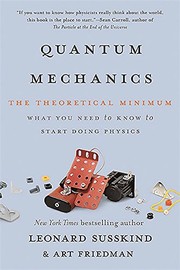
Susskind and Friedman's Theoretical Minimum volume, which teaches state vectors, operators and entanglement with the minimum machinery. Work through it if you have never seen a Hilbert space, because Albert assumes one.
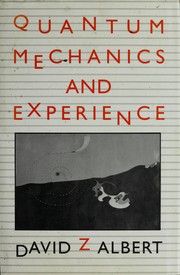
The standard philosophical primer and the pivot of this entire path. Albert states the measurement problem with unusual rigour using almost no mathematics, then surveys the candidate solutions. Do not skip it.
Bell, nonlocality and the technical spine
BeginnerRead Bell in the original, understand exactly what his theorem does and does not rule out, and see how an operational physicist answers the same questions.
▸ Study plan for this stage
Pace: Six to eight months, and the four books demand different things. Bell's Speakable and Unspeakable (212 pages) is a paper collection: read On the Einstein-Podolsky-Rosen Paradox, Bertlmann's Socks, and Against Measurement first, and re-read them. Maudlin's Quantum Non-Locality and Relativity (296 pag
- Local causality as Bell defines it, which is an assumption about the world rather than about hidden variables
- The CHSH inequality, the quantum prediction, and Tsirelson's bound
- What a Bell violation rules out and what it leaves standing: superdeterminism, retrocausality, and the Everettian evasion
- No-signalling, and Maudlin's distinction between signalling and causal dependence
- The operational and information-theoretic reading of the quantum state that Peres develops, and what it declines to say about reality
- GRW spontaneous localisation: two new constants, empirical differences from standard quantum mechanics, and the tails problem
- The mass-density and flash ontologies as attempts to say what a collapse theory is about
- That four serious authors in one stage disagree, and that the disagreement is not about the mathematics
- State Bell's locality condition precisely; what does it assume beyond the existence of hidden variables, and why does that matter for what the theorem shows?
- A Bell violation is compatible with no-signalling; does that reconcile it with relativity? Give Maudlin's answer and Peres's, and identify exactly where they part company.
- Peres treats the quantum state as information about a preparation; what does that view say about the measurement problem, and what does it deliberately refuse to address?
- GRW makes predictions that differ from standard quantum mechanics; state one, and say what experiment could test it and what the current bounds are
- For each of Bell, Maudlin, Peres and Ghirardi, write down the assumption the author treats as least negotiable, and notice that the four assumptions are different
- Derive the CHSH inequality from scratch for a local hidden-variable model, then compute the quantum prediction for the singlet at 0, 22.5, 45 and 67.5 degrees and confirm the two-root-two violation
- Read Bell's Against Measurement and list every place he calls the standard formulation unprofessionally vague, then check a standard textbook against each complaint and judge whether it lands
- Read one loophole-free Bell test (Hensen et al. 2015 or Giustina et al. 2015) and identify precisely which loopholes it closes and which assumption no experiment can close
- Work through Ghirardi's presentation of the GRW rate parameters and show why a single particle localises essentially never while a macroscopic body localises essentially instantly
- Write two one-page summaries of the same Bell experiment, one in Peres's operational language and one in Maudlin's realist language, and note which facts each makes hard to state
Next up: Bell constrains every candidate; the last stage reads the two fully worked realist programmes and the decoherence machinery both of them lean on.
Bell's collected papers, including the theorem itself and his essays on Bohm and on what is wrong with the standard account. The founding document of modern foundations work and the one book here that cannot be substituted.
The definitive analysis of whether Bell correlations conflict with relativity, and of the difference between signalling and causal dependence. Read directly after Bell, while the theorem is fresh.

Open Library displays this record under the truncated title Quantum Theory. It is the rigorous information-theoretic textbook that treats measurement operationally, the strongest technical statement of the anti-realist position, and the counterweight to the realist books that follow.

By the G of the GRW dynamical collapse theory, and the best presentation of the case that the wavefunction must be modified rather than reinterpreted. The third live programme, in its originator's words.
The realist programmes
BeginnerEvaluate the two fully worked realist alternatives — the pilot wave and Everettian branching — and understand the role decoherence plays in both.
▸ Study plan for this stage
Pace: Nine to twelve months, and none of it is light. Holland's The Quantum Theory of Motion (608 pages) is a technical monograph assuming graduate quantum mechanics and Hamilton-Jacobi mechanics. Wallace's The Emergent Multiverse (530 pages) is philosophy of physics at research level and additionally ass
- Pilot-wave theory: the guidance equation, the quantum potential, equivariance and the quantum equilibrium hypothesis
- Contextuality, and why Bohmian trajectories are not a restoration of the classical picture
- Everettian branching as decoherence-induced structure rather than a postulated splitting
- The preferred basis question and environment-induced superselection as the proposed answer
- The probability problem in Everett, and the Deutsch and Wallace decision-theoretic derivation of the Born rule
- Decoherence proper: pointer states, decoherence timescales, and the improper mixture
- What decoherence explains, which is the appearance of classicality, and what it conspicuously does not, which is the selection of an outcome
- That both leading realist programmes are deterministic and both pay a price, and the prices are of different kinds
- How does Bohmian mechanics reproduce the Born rule, and what exactly does the quantum equilibrium hypothesis assume?
- Wallace claims branching is emergent rather than fundamental; what work is emergent doing there, and what would make the claim precise enough to argue about?
- State the probability problem in Everett as sharply as you can, then state the decision-theoretic answer and the strongest objection to it
- Explain precisely why decoherence does not solve the measurement problem, and why many working physicists nevertheless proceed as though it does
- Both Bohm and Everett are deterministic, and both are non-local or non-separable in some sense; is there any experiment that could distinguish them, and if not, on what grounds would you choose, and are those grounds scientific?
- Compute the Bohmian trajectories for the double slit using Holland's machinery, and compare your result to the published Philippidis, Dewdney and Hiley trajectory figures and to what a naive particle picture would predict
- Work Schlosshauer's decoherence-timescale estimates for a dust grain and for a large molecule, then check them against the published fullerene interference results (Arndt et al. 1999)
- Write two essays of about a thousand words each, one defending Everett against a Bohmian and one defending Bohm against an Everettian, without indicating anywhere which you actually believe
- Take one experiment (a delayed-choice, a which-path, or a weak-measurement result) and write the account each of four programmes would give of it, operational, Bohmian, Everettian and GRW, then confirm that all four agree on every observable outcome
- Trace one claim about decoherence from a popular article back to Schlosshauer and record what the popular version dropped
Next up: This is the end of the path, and the honest outcome is not a verdict: you should now be able to state four live positions in their strongest form, say exactly where each one pays its price, and read the current literature on Wigner's-friend experiments, collapse-model bounds and the Born rule in Everett as a participant rather than a spectator.
The comprehensive technical treatment of the de Broglie-Bohm pilot-wave theory, showing that a deterministic hidden-variable account of the full formalism actually exists. Read it before the Everettian case so you have a worked realist alternative in hand.

Catalogued with its full subtitle, this is the strongest philosophical defence of the Everett interpretation, including the decision-theoretic derivation of the Born rule. The most demanding book on the path.

The standard monograph on decoherence, and the right final book because it settles what decoherence does explain — the appearance of classicality — and what it conspicuously does not, which is why the interpretations above still differ.
Discussion
Keep reading
Paths that share books, cover the same subject, or open a related topic.