The History of Pakistan: Best Books to Read in Order
This curriculum takes a beginner from the emotional and human story of Partition all the way through Pakistan's complex political, military, and regional history. Each stage builds on the last — first establishing the foundational narrative, then examining the forces that shaped the state, and finally engaging with the deeper scholarly debates about Pakistan's identity and its place in South Asia.
The Birth of a Nation: Partition & Origins
BeginnerUnderstand why Pakistan came into existence, the trauma of Partition, and the foundational ideas of Muslim nationhood in South Asia.
▸ Study plan for this stage
Pace: 8–10 weeks, ~40–50 pages/day (accounting for dense historical narrative and reflection time)
- The political and religious motivations behind the Two-Nation Theory and Muslim League's push for a separate state
- The human cost of Partition: communal violence, displacement, and the psychological trauma experienced by millions
- Muhammad Ali Jinnah's evolution from secular nationalist to architect of Pakistan and his vision for the nation
- The role of British colonial policy, Hindu-Muslim relations, and Congress-League tensions in making Partition inevitable
- The administrative and logistical chaos of Partition: borders drawn hastily, refugee crises, and state-building under duress
- The ideological foundations of Pakistan as an Islamic nation-state and tensions between secular and religious identity
- The immediate post-Partition challenges: integration of princely states, refugee rehabilitation, and establishing legitimacy
- What were the core arguments of the Two-Nation Theory, and how did Muhammad Ali Jinnah use them to justify Pakistan's creation?
- How did British colonial policies and the structure of the Indian independence movement contribute to the inevitability of Partition?
- What were the immediate human consequences of Partition, and how did 'Freedom at Midnight' and 'The Great Partition' portray the violence and displacement differently?
- How did Jinnah's personal journey and political ideology shape his vision for Pakistan, and what tensions existed between his secular ideals and the religious basis of the nation?
- What were the major administrative and logistical challenges Pakistan faced in its first months, and how did these early decisions affect its trajectory?
- How did the experience of Partition shape Pakistani national identity and collective memory in the years immediately following independence?
- Create a detailed timeline of key events from 1940 (Lahore Resolution) to August 1947, marking political decisions, communal violence, and Jinnah's major speeches—cross-reference details across all three books
- Write a comparative character study of Jinnah as portrayed in 'Freedom at Midnight' vs. 'Jinnah of Pakistan'—note differences in emphasis and interpretation
- Map the Partition borders using historical maps; identify 3–4 regions of major contention (Punjab, Bengal, Kashmir) and research why these areas were particularly volatile using evidence from the books
- Conduct a 'witness testimony' exercise: select 3 personal accounts or anecdotes from 'The Great Partition' and write a 500-word reflection on how individual experiences illustrate larger historical forces
- Create a visual diagram showing the competing interests of the British, Congress, Muslim League, Hindu nationalists, and Jinnah—use specific examples from the books to show how each group's goals conflicted
- Write a 1,000-word essay: 'Was Partition inevitable?' using evidence from all three books to build a nuanced argument about contingency vs. structural forces
Next up: This stage establishes the traumatic origins and ideological foundations of Pakistan, preparing readers to examine how the nation navigated state-building, constitutional crises, and the enduring legacies of Partition in subsequent decades.
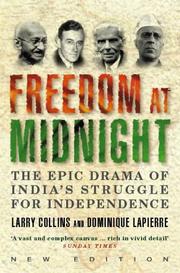
A gripping, narrative-driven account of the end of British India and the birth of Pakistan and India. Its journalistic style makes it the perfect entry point — accessible, dramatic, and full of the key personalities and events every reader needs to know first.
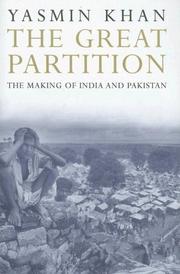
After the drama of Collins, Khan provides a more grounded, human-scale history of what Partition actually meant for ordinary people. It corrects myths and introduces the reader to the chaos and violence that shaped Pakistan's founding trauma.
The definitive English-language biography of Muhammad Ali Jinnah, Pakistan's founder. Reading this here gives the learner a clear understanding of the ideology and personality behind the demand for Pakistan before moving into the state's troubled history.
Politics, Power & Early Instability
BeginnerGrasp how Pakistan's early political institutions failed, why democracy repeatedly collapsed, and how the military became the dominant force in the state.
▸ Study plan for this stage
Pace: 4–5 weeks, ~40–50 pages/day (approximately 200–250 pages total for relevant sections on early politics and military rise)
- Pakistan's founding contradictions: ideological nation-state vs. ethnic and regional diversity, and weak institutional foundations inherited from colonial rule
- The failure of democratic institutions: constitutional instability, weak parliaments, feudal landlord dominance, and inability to resolve the Kashmir dispute
- The military's structural advantages: centralized command, organizational coherence, and strategic importance during the Cold War, making it the only 'modern' institution
- The role of external powers (US, USSR, China) in shaping Pakistan's political trajectory and military interventions
- Successive military coups (1958, 1977, 1999) as symptoms of deeper institutional failure rather than aberrations
- The feudal-military nexus: how landholding elites and military officers reinforced each other's power at the expense of democratic development
- The Kashmir dispute as a perpetual security crisis that justified military dominance and prevented civilian consolidation of power
- Ethnic and regional tensions (Bengalis, Sindhis, Baloch, Pashtuns) as destabilizing forces that weak civilian governments could not manage
- Why did Pakistan's early democratic institutions fail, and what structural weaknesses made them vulnerable to military takeover?
- How did the military become the dominant force in Pakistani politics, and what advantages did it possess over civilian institutions?
- What role did external powers (particularly the United States) play in enabling or encouraging military interventions in Pakistan?
- How did the feudal landowning class maintain political power through democratic and military periods, and what was their relationship with the military?
- Why has the Kashmir dispute been so central to Pakistan's political instability and military dominance?
- What ethnic and regional tensions within Pakistan undermined early attempts at democratic governance, and how did these differ from the founding narrative?
- Create a timeline of Pakistan's major political events (1947–1999) marking each democratic period, constitution, and military coup; annotate each with the immediate trigger and underlying structural cause
- Construct a comparison chart of three civilian governments (e.g., Liaquat Ali Khan, Zulfikar Ali Bhutto, Benazir Bhutto) showing their policy goals, constraints they faced, and reasons for collapse
- Write a 500-word analysis of one military coup (1958, 1977, or 1999) using Lieven's framework: what institutional failures preceded it, what external pressures existed, and what the military promised vs. delivered
- Map Pakistan's ethnic and regional divisions (Punjab, Sindh, Balochistan, KP, former East Pakistan) and trace how each region's grievances destabilized civilian governments
- Debate exercise: argue both sides of whether Pakistan's military dominance was inevitable given its founding contradictions, or whether different civilian leadership could have prevented it
- Create a visual diagram showing the feudal-military nexus: how landowning elites, military officers, and bureaucrats reinforced each other's power, and identify the points where democratic accountability broke down
Next up: This stage establishes why military rule became Pakistan's default mode, setting up the next stage to examine how military governments actually governed, what they achieved or failed to achieve, and the cycles of reform and repression that followed.
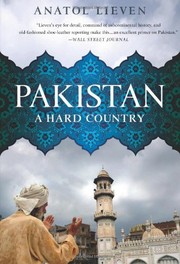
The single best one-volume introduction to how Pakistan actually works — its clans, feudal politics, army, and Islam. Lieven's on-the-ground reporting makes complex structures intuitive; read this before tackling more specialized histories.
The Military & the State
IntermediateUnderstand the Pakistani military's unique role as a state-within-a-state, its repeated interventions, and its relationship with Islamist forces.
▸ Study plan for this stage
Pace: 6–7 weeks, ~40–50 pages/day (approximately 280–350 pages per week). Week 1–3: "Military Inc" (estimated 400–450 pages); Week 4–7: "In the Line of Fire" (estimated 400–450 pages), with 1 week overlap for synthesis and review.
- The Pakistani military as an autonomous institutional actor with economic interests (Siddiqa's 'Military Inc' thesis) that operates independently of civilian control
- The concept of the 'military-industrial complex' in Pakistan: how the military owns and controls businesses, land, and resources to fund itself and enrich officers
- Repeated military interventions in politics (1958, 1977, 1999) and the structural reasons why the military views itself as the guardian of the state
- The relationship between the Pakistani military and Islamist forces: strategic alliance, ideological shifts, and blowback (especially regarding the Taliban and extremism)
- Musharraf's perspective as a military leader: his justifications for the 1999 coup, his vision for 'enlightened moderation,' and his role in the War on Terror
- Civil-military imbalance: how weak civilian institutions and political instability create space for military dominance
- The role of the military in shaping Pakistan's foreign policy, particularly toward India and Afghanistan
- The consequences of military rule: institutional decay, corruption, and the perpetuation of authoritarianism
- What is Ayesha Siddiqa's central argument about the Pakistani military in 'Military Inc,' and how does she define the military as a 'state-within-a-state'?
- How does the Pakistani military fund itself beyond the state budget, and what are the economic and political consequences of this autonomy?
- What were the structural conditions that led to military coups in 1958, 1977, and 1999, and how does Musharraf justify his own intervention in 'In the Line of Fire'?
- How has the Pakistani military's relationship with Islamist and militant groups evolved, and what role did this play in the rise of the Taliban and extremism?
- What is Musharraf's concept of 'enlightened moderation,' and how does it reflect his vision for Pakistan's future?
- How do the two books present contrasting or complementary views on the military's role in Pakistan's political and economic development?
- Create a timeline of military interventions in Pakistan (1958–2008) using both books, noting the stated justifications, actual triggers, and outcomes for each coup.
- Map the military's business holdings and economic interests described in 'Military Inc': create a chart showing which sectors the military controls (real estate, manufacturing, banking, etc.) and estimate the scale of these operations.
- Comparative reading exercise: select 3–4 key events (e.g., the 1999 coup, the War on Terror, civil-military relations) and write side-by-side summaries of how Siddiqa and Musharraf each interpret them.
- Analyze Musharraf's 'enlightened moderation' proposal: write a 2–3 page critique using evidence from both books about whether this vision was compatible with the military's actual behavior and interests.
- Research and document the military's relationship with specific militant groups (Taliban, Al-Qaeda, Lashkar-e-Taiba) using the books as a foundation, then trace how this relationship changed over time.
- Create an organizational chart of the Pakistani military's institutional structure and its economic enterprises, based on Siddiqa's analysis, to visualize the 'state-within-a-state' concept.
Next up: This stage establishes the military as the dominant institutional force in Pakistan's politics and economy; the next stage should examine how this military dominance has shaped specific policy outcomes—such as the nuclear program, the Kashmir conflict, or democratic transitions—and the costs to civilian governance and development.

A landmark, courageous study of the Pakistani military's vast commercial empire and political dominance. Siddiqa's insider analysis explains why civilian governments have never truly controlled the army — essential reading at this stage.

Reading the memoir of Pakistan's most recent military ruler alongside Siddiqa creates a revealing contrast — the general's self-justifying narrative illuminates the military's worldview from the inside, making the structural critique more vivid.
Islam, Extremism & the Afghan Shadow
IntermediateUnderstand how political Islam, the Afghan wars, and the intelligence services transformed Pakistan's society and foreign policy.
▸ Study plan for this stage
Pace: 8–10 weeks, ~40–50 pages/day. Start with "Descent into Chaos" (4–5 weeks, ~450 pages), then move to "Thistle and the Drone" (4–5 weeks, ~400 pages). Allocate 1 week for review and synthesis.
- The rise of political Islam in Pakistan and its institutional entrenchment through military regimes (Zia-ul-Haq's Islamization agenda)
- Pakistan's strategic involvement in the Afghan-Soviet War and the creation of the mujahideen through ISI operations
- How the Afghan conflict created blowback: the Taliban, al-Qaeda, and the destabilization of Pakistan's tribal areas
- The role of the Pakistani intelligence services (ISI) as state within a state and their manipulation of extremist groups
- Tribal codes, honor systems, and Pashtun culture as frameworks for understanding resistance to state authority (Pukhtunwali)
- The intersection of geopolitics, religion, and local power structures that enabled extremism to take root
- Pakistan's foreign policy oscillations between the US, Saudi Arabia, and China, and how these shaped internal radicalization
- The transformation of Pakistani society: urbanization, education gaps, and the appeal of Islamist ideology to marginalized populations
- How did General Zia-ul-Haq's Islamization policies in the 1980s reshape Pakistan's institutions, military, and civil society, and what role did the Afghan war play in accelerating this process?
- What were the unintended consequences of Pakistan's ISI-led support for the Afghan mujahideen, and how did these consequences destabilize Pakistan itself?
- How do tribal codes and Pashtun cultural practices (Pukhtunwali) explain resistance to state authority in Pakistan's borderlands, and why did extremist groups exploit these traditions?
- What is the relationship between Pakistan's foreign policy alliances (US, Saudi Arabia, China) and the internal radicalization of Pakistani society?
- How did the Afghan wars transform the Pakistani military and intelligence services into autonomous actors with their own strategic interests separate from civilian government?
- Why did extremism take root in certain regions and social classes in Pakistan, and what role did education, urbanization, and economic marginalization play?
- Create a timeline mapping key events from 1979–2010: Zia's coup, the Soviet invasion, major ISI operations, Taliban rise, 9/11, and Pakistan's policy shifts. Annotate with consequences for Pakistani society.
- Trace the organizational evolution of one extremist group (Taliban, al-Qaeda, Haqqani Network) across both books: origins, ISI support, transformation, and eventual threat to Pakistan.
- Write a 2–3 page analysis comparing how Rashid and Ahmed explain the same event (e.g., the Taliban's rise, the Kargil conflict, or the 2001 US invasion). What does each author emphasize?
- Map Pakistan's tribal areas and major Pashtun regions. For 3–4 key locations (Swat, Waziristan, Peshawar), document the progression from Afghan war sanctuary to extremist stronghold using evidence from both texts.
- Conduct a 'stakeholder analysis': identify 5–6 major actors (ISI, US, Saudi Arabia, Taliban, tribal leaders, Pakistani civilians) and for each, explain their strategic interests and how these conflicted or aligned.
- Interview or research one historical figure mentioned in both books (e.g., Osama bin Laden, Mullah Omar, General Musharraf, Ahmed Shah Massoud). Write a 1–2 page profile explaining their role in Pakistan's transformation.
Next up: This stage establishes how Pakistan's state institutions, foreign policy, and society were fundamentally reshaped by political Islam and the Afghan wars, providing the structural and ideological foundation necessary to understand contemporary Pakistan's challenges with terrorism, civil-military relations, and regional instability in the next stage.

Pakistan's foremost journalist traces how the Afghan jihad, the Taliban, and the 'War on Terror' reshaped Pakistan from the inside. This is the essential book for understanding the ISI, militant networks, and regional instability.

Ahmed examines how drone warfare and the 'War on Terror' affected Pakistan's tribal periphery and its relationship with the state. It adds a crucial anthropological lens to Rashid's geopolitical account.
Pakistan in South Asia: The Deeper Reckoning
ExpertEngage with Pakistan's contested identity, its rivalry with India, its nuclear ambitions, and the long-run question of what kind of state it is becoming.
▸ Study plan for this stage
Pace: 8–10 weeks, ~40–50 pages/day. "Pakistan" (approx. 400 pages) over 4–5 weeks, then "Magnificent Delusions" (approx. 500 pages) over 4–5 weeks, with 1–2 weeks for integration and synthesis.
- Pakistan's foundational identity crisis: the tension between Islamic ideology and secular governance, and how this shapes state formation and legitimacy
- The India–Pakistan rivalry as a structural force: how security competition, partition trauma, and competing visions of South Asia have driven Pakistan's strategic choices
- Nuclear weapons as an equalizer and destabilizer: Pakistan's nuclear program as both a response to Indian military superiority and a driver of regional instability and internal militarization
- The military–civilian power dynamic: how the Pakistani military has repeatedly seized power and shaped the state's institutions, ideology, and foreign policy
- US–Pakistan relations as a transactional partnership: how Pakistan has leveraged its strategic location and anti-Soviet/anti-terrorism credentials to secure American support while pursuing its own agenda
- The role of Islam in statecraft: how Pakistan's Islamic identity has been weaponized by different regimes and how it intersects with nationalism, military strategy, and international relations
- Pakistan's perpetual state-building project: the unresolved question of what kind of state Pakistan is becoming—Islamic republic, military garrison, or functional democracy
- How does Haqqani explain the contradiction between Pakistan's founding as a homeland for Muslims and its struggle to define itself as a modern nation-state? What role does Islam play in this tension?
- What are the major phases of US–Pakistan relations according to Haqqani, and how have American strategic interests shaped Pakistan's domestic and foreign policy at critical junctures?
- How has the India–Pakistan rivalry influenced Pakistan's military spending, nuclear strategy, and state structure? What does Haqqani suggest about the sustainability of this competition?
- What is Haqqani's argument about the Pakistani military's role in governance? How does he explain the repeated cycles of military intervention and democratic restoration?
- How does Haqqani characterize Pakistan's nuclear weapons program? What does he argue about its strategic rationale, its domestic political uses, and its regional consequences?
- According to Haqqani, what are the key obstacles to Pakistan becoming a stable, democratic, civilian-led state? What does he identify as necessary for long-term state consolidation?
- Timeline exercise: Create a detailed chronology of US–Pakistan relations from 1947 to the present, marking key moments of alignment, divergence, and transactional shifts. Annotate each entry with Haqqani's interpretation of American motives and Pakistani responses.
- Comparative analysis: Draw a two-column chart comparing India's and Pakistan's strategic choices (military spending, nuclear development, alliance formation) across three periods: Cold War, post-1998 nuclear tests, and post-9/11. Identify how Haqqani explains Pakistan's reactive posture.
- Primary source close reading: Select 2–3 speeches or policy statements by Pakistani leaders (e.g., Jinnah, Zia, Musharraf) and analyze how they invoke Islam, security threats, or Indian rivalry. Cross-reference with Haqqani's interpretation of these leaders' ideologies and constraints.
- Institutional mapping: Create an organizational chart of Pakistan's key power centers (military, civilian government, intelligence agencies, religious parties) and trace how their relative influence has shifted across different regimes. Use Haqqani's narrative to explain the drivers of these shifts.
- Case study: Select one critical moment of US–Pakistan tension or cooperation (e.g., the Soviet invasion of Afghanistan, the 1998 nuclear tests, the post-9/11 alliance) and write a 1,500-word analysis using both books, examining the strategic calculations, domestic pressures, and ideological factors at play.
- Debate preparation: Develop two opposing arguments—one defending Pakistan's nuclear program as a rational security response, one critiquing it as destabilizing—using evidence from Haqqani's analysis. Present both sides to identify the underlying assumptions and trade-offs.
Next up: This stage equips you with a sophisticated understanding of Pakistan's internal contradictions, regional rivalries, and great-power entanglements, positioning you to examine how these structural forces have manifested in specific crises, conflicts, and governance failures in more recent and contemporary Pakistan.
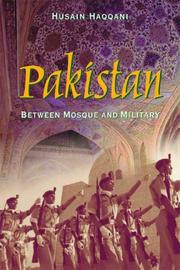
A former Pakistani ambassador delivers the most unflinching insider account of how the military and Islamist forces have co-opted the state. This is the capstone political analysis, best absorbed after all the prior context is in place.

Haqqani's second major work uses declassified documents to expose the contradictions in the US-Pakistan relationship — a fitting final book that ties together the military, Islam, geopolitics, and identity into a single, sobering conclusion.
Discussion
Keep reading
Paths that share books, cover the same subject, or open a related topic.