Ancient India: The Best Books to Learn Its History, in Order
This curriculum takes a beginner from the earliest archaeological traces of South Asian civilization all the way through the classical Gupta age, building knowledge in careful layers. Each stage deepens the previous one — starting with broad narrative history, then moving into primary sources and thematic depth, and finally into specialist scholarship on politics, religion, and culture at their peak.
Foundations: The Big Picture
BeginnerGain a confident, chronological overview of ancient Indian history from prehistory through the Gupta Empire, establishing the key names, periods, and concepts needed for everything that follows.
▸ Study plan for this stage
Pace: 6–8 weeks, ~40–50 pages/day (Basham ~600 pages, Thapar ~480 pages; allow time for review and note-taking)
- Chronological framework: Indus Valley Civilization (c. 2300–1750 BCE), Vedic period (c. 1500–600 BCE), Mauryan Empire (c. 322–185 BCE), and Gupta Empire (c. 320–550 CE) as the major historical phases
- The Vedas and Upanishads as foundational texts that shaped Indian philosophy, social structure (varna system), and religious thought
- The rise of Buddhism and Jainism in the 6th–5th centuries BCE as responses to Vedic orthodoxy, and their role in Indian civilization
- The Mauryan Empire under Ashoka: political consolidation, administrative systems, and the spread of Buddhism across Asia
- The Gupta Empire as the 'classical' age: achievements in mathematics, astronomy, literature, art, and the synthesis of Hindu, Buddhist, and Jain traditions
- The concept of dharma (duty/righteousness) as a unifying principle across political, social, and religious life in ancient India
- Trade networks (land and maritime) connecting ancient India to Central Asia, the Mediterranean, and Southeast Asia
- The continuity and evolution of Indian civilization despite invasions and political fragmentation
- What are the major historical periods of ancient India, and what are the defining characteristics of each (Indus Valley, Vedic, Mauryan, Gupta)?
- How did the Vedas and the caste system shape Indian society, and what religious movements emerged in response to Vedic Brahminism?
- What were Ashoka's major achievements, and how did his conversion to Buddhism influence the Mauryan Empire and Asia beyond?
- What made the Gupta period a 'golden age,' and what were its key contributions to mathematics, astronomy, literature, and the arts?
- How did trade networks connect ancient India to other civilizations, and what role did Buddhism and Jainism play in these exchanges?
- What is the concept of dharma, and how did it function as a unifying principle across politics, society, and religion in ancient India?
- Create a detailed timeline (visual or written) spanning 2300 BCE to 550 CE, marking the major empires, dynasties, key rulers (Ashoka, Chandragupta, Samudragupta), and religious movements; update it as you read each book
- Construct a comparative chart of the Mauryan and Gupta empires covering: territorial extent, major rulers, administrative systems, religious patronage, and cultural achievements
- Read and annotate 3–4 key Vedic passages (provided in Basham's selections) and 1–2 Upanishadic excerpts, noting how they reflect early Indian thought on society, knowledge, and the divine
- Map the major trade routes (Silk Road, maritime routes) and identify 5–6 key cities/regions mentioned in both books; note what goods and ideas flowed through them
- Write a 2–3 page analytical essay: 'Why did Buddhism and Jainism emerge in the 6th–5th centuries BCE, and how did they reshape Indian civilization?' using evidence from both texts
- Create a concept map or glossary of 20–25 essential terms (dharma, karma, varna, stupa, chakravartin, etc.) with definitions and historical context drawn from the books
Next up: This stage establishes the chronological skeleton and major civilizational themes (dharma, trade, religious pluralism, imperial administration) that will allow you to dive deeper into specialized topics—whether political history, philosophy, art, or social structures—in subsequent stages.

The single most celebrated English-language introduction to ancient Indian civilization — covering society, religion, art, and politics in readable depth. Reading this first gives you the full map before zooming in on any region.
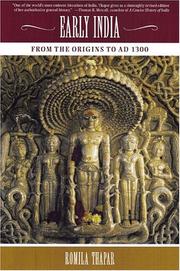
A rigorous yet accessible narrative by India's foremost historian, picking up where Basham leaves off with updated archaeology and historiography. It sharpens the chronological spine established in the first book.
The Indus Valley and the Vedic World
BeginnerUnderstand the Harappan civilization in detail and then trace how the Vedic culture that followed it shaped Indian religion, language, and social structure for millennia.
▸ Study plan for this stage
Pace: 4–5 weeks, ~25–30 pages/day (Wheeler's work is dense and archaeological; allow time for reflection and note-taking)
- The Harappan civilization as a sophisticated urban culture with planned cities (Mohenjo-daro, Harappa) and advanced infrastructure
- Archaeological evidence of Harappan trade networks, craftsmanship, and material culture across the Indus Valley
- The undeciphered Indus script and what it reveals (and fails to reveal) about Harappan society, religion, and governance
- Theories of Harappan decline and the transition from Indus Valley civilization to Vedic culture
- Wheeler's archaeological methodology and how physical evidence shapes our understanding of ancient civilizations
- The relationship between material culture and social organization in reconstructing Harappan daily life and beliefs
- The chronological and cultural gap between the Indus civilization and the Vedic period, and how they may be connected
- What were the major characteristics of Harappan urban planning, and what do they suggest about the civilization's organization and values?
- What does the Indus script tell us about Harappan literacy and communication, and why has it remained undeciphered?
- What evidence does Wheeler present for Harappan trade networks, and with which regions did they interact?
- What are the leading theories for the decline of the Indus Valley civilization, and what archaeological evidence supports them?
- How does Wheeler use material culture (seals, pottery, tools, architecture) to reconstruct aspects of Harappan society and belief?
- What is the relationship between the Harappan civilization and the later Vedic culture, and what does the archaeological record suggest about continuity or discontinuity?
- Create a detailed map of major Harappan sites (Mohenjo-daro, Harappa, Dholavira, etc.) and mark trade routes based on Wheeler's evidence; annotate with key findings at each location
- Compile a visual inventory of Harappan artifacts (seals, weights, pottery, figurines) with sketches or printed images; categorize by function and what each reveals about daily life
- Write a 2–3 page reconstruction of a day in the life of a Harappan merchant or craftsperson, grounding it in specific evidence Wheeler presents
- Create a timeline comparing the Harappan civilization with contemporary civilizations (Egypt, Mesopotamia) to contextualize its sophistication and timeline
- Analyze 3–4 Indus seals in detail: describe their iconography, speculate on their purpose, and note what remains mysterious despite Wheeler's analysis
- Write a critical reflection: What are the limitations of archaeological evidence in understanding Harappan religion, governance, and social hierarchy? What can and cannot Wheeler tell us?
Next up: This stage establishes the material and archaeological foundations of early Indian civilization, providing the historical context and unanswered questions about Harappan society that the subsequent study of Vedic texts and culture will address—allowing you to trace how the Vedic peoples either inherited, adapted, or replaced Harappan traditions.

A classic archaeological account of Harappa and Mohenjo-daro by the excavator who brought them to world attention — concise and authoritative as a starting point for this era.
Empires and Axial-Age Thought
IntermediateExplore the rise of the Maurya Empire, the life and legacy of Ashoka, and the explosion of philosophical and religious thought — Buddhism, Jainism, and the Upanishads — that defined India's Axial Age.
▸ Study plan for this stage
Pace: 8–10 weeks, ~25–30 pages/day (alternating between Allen's narrative biography and Kauṭalya's dense philosophical text)
- Ashoka's transformation from a brutal military conqueror to a dharma-driven ruler committed to non-violence and Buddhist principles
- The Maurya Empire's administrative structure, military power, and territorial expansion under Chandragupta and Ashoka
- The Arthashastra as a pragmatic manual of statecraft: the tension between artha (material gain) and dharma (moral duty)
- The role of edicts and inscriptions as tools of imperial communication and ideological control
- The Axial Age context: how Buddhism, Jainism, and Vedic philosophy coexisted and competed during Ashoka's reign
- Ashoka's dhamma (Pali for dharma) as a unifying ideology distinct from religious doctrine—a moral framework for empire
- The Arthashastra's vision of the ideal king, espionage networks, economic policy, and the science of governance
- Ashoka's legacy: how his conversion shaped the trajectory of Buddhism and Indian political thought
- What were the major turning points in Ashoka's life, and what evidence (from edicts and inscriptions) supports Allen's interpretation of his transformation?
- How do the Arthashastra's principles of statecraft compare to Ashoka's later dhamma policy? Where do they align or conflict?
- What role did the Kalinga War play in Ashoka's ideological shift, and how is this reflected in his edicts?
- How did Ashoka use inscriptions and edicts as instruments of imperial ideology, and what does this reveal about Mauryan administrative sophistication?
- According to the Arthashastra, what are the duties and qualities of an ideal king, and how does Ashoka embody or diverge from this model?
- How did Ashoka's patronage of Buddhism and his dhamma policy affect the religious and philosophical landscape of the Axial Age?
- Create a timeline of Ashoka's reign (using Allen's narrative) marking key military campaigns, edicts, and ideological shifts; annotate with corresponding passages from the Arthashastra on governance
- Analyze 3–4 of Ashoka's major edicts (referenced in Allen) and write a 2–3 page essay on how they reflect his dhamma philosophy and differ from the Arthashastra's pragmatic approach
- Map the Maurya Empire's administrative divisions and espionage networks as described in the Arthashastra; compare this to what Allen reveals about Ashoka's actual governance
- Write a comparative character study: the ideal king according to Kauṭalya vs. Ashoka as portrayed by Allen—identify 5–6 key virtues or failings for each
- Create a visual chart comparing the Arthashastra's advice on economics, military strategy, and ethics with Ashoka's edicts on the same topics
- Read and annotate 2–3 key passages from the Arthashastra (e.g., on the duties of the king, the role of spies, or economic policy) and write a reflection on how Ashoka either followed or rejected this advice
Next up: This stage establishes the philosophical and administrative foundations of classical Indian civilization—Ashoka's synthesis of pragmatic statecraft and moral governance—which will enable deeper exploration of how these principles influenced subsequent dynasties, religious institutions, and the development of Hindu, Buddhist, and Jain thought in later periods.
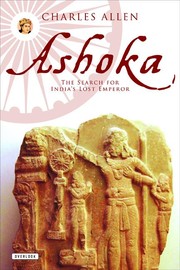
A gripping narrative of how Ashoka and his edicts were rediscovered by modern scholars — ideal for understanding the Mauryan Empire through its most compelling figure before tackling primary sources.
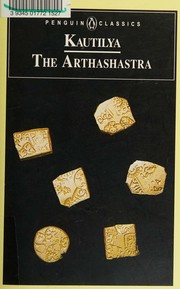
The foundational Mauryan treatise on statecraft, economy, and power — reading it after Ashoka's story gives the political theory behind the empire a vivid human context.
Olivelle's scholarly yet readable translation of the early Upanishads is the standard modern edition — essential for grasping the philosophical revolution that ran alongside political empire-building.
Classical Civilization: The Gupta Golden Age
ExpertAchieve a nuanced understanding of the Gupta Empire's political structure, its patronage of Sanskrit literature and science, and the synthesis of Hindu culture that defined classical Indian civilization.
▸ Study plan for this stage
Pace: 4–5 weeks, ~40–50 pages/day, focusing on Thapar's chapters on the Gupta period (typically chapters 6–8 depending on edition)
- The Gupta administrative system: centralized authority, provincial governance, and the role of the samanta (feudal) system in maintaining imperial control
- Patronage networks: how Gupta rulers (especially Chandragupta II and Samudragupta) used wealth and power to support Sanskrit literature, drama, and scholarship
- The Kalidasa connection: understanding classical Sanskrit literature as both cultural product and political tool reflecting Gupta ideology
- Scientific and mathematical achievements: Thapar's treatment of advances in astronomy, mathematics (including the decimal system), and medicine as markers of Gupta intellectual culture
- Religious synthesis: the Hindu revival and brahminical consolidation under the Guptas, including the relationship between state patronage and religious institutions
- Economic foundations: trade networks, agricultural surplus, and monetary systems that enabled cultural patronage
- Decline and regional fragmentation: how internal weaknesses and external pressures (Huna invasions) led to the empire's dissolution and the transition to regional kingdoms
- How did the Gupta administrative structure differ from earlier empires, and what role did the samanta system play in its political organization?
- What evidence does Thapar present for the relationship between Gupta political power and patronage of Sanskrit literature and the arts?
- How did the Guptas synthesize Hindu religious and cultural elements, and what was the state's role in this process?
- What were the major scientific and mathematical contributions of the Gupta period, and how did they reflect the empire's intellectual priorities?
- What economic factors (trade, agriculture, currency) made the Gupta Golden Age possible, according to Thapar?
- What internal and external factors contributed to the decline of the Gupta Empire, and how did this transition reshape Indian civilization?
- Create a detailed organizational chart of Gupta imperial administration based on Thapar's descriptions, labeling the roles of the samanta, provincial governors, and central court officials
- Compile a annotated list of Gupta-era literary works (especially those by Kalidasa) mentioned in Thapar, noting their themes and what they reveal about Gupta society and ideology
- Map the major trade routes and economic centers of the Gupta Empire using information from Thapar; annotate with evidence of how trade wealth supported cultural patronage
- Write a comparative analysis (2–3 pages) of how Thapar portrays Gupta religious policy versus earlier Mauryan approaches, focusing on brahminical patronage
- Analyze a primary source excerpt (if included in your edition) or Thapar's discussion of a Gupta inscription, identifying what it reveals about state ideology and administrative practice
- Create a timeline of Gupta decline, marking key events (Huna invasions, internal fragmentation, regional kingdom emergence) and explain how each destabilized the empire according to Thapar's analysis
Next up: This stage establishes the intellectual and political foundations of classical Indian civilization, preparing you to examine how regional kingdoms and later dynasties adapted, fragmented, or built upon Gupta cultural and administrative models in subsequent periods.

Thapar's compact Penguin history provides a focused analytical lens on the Gupta period and its place in the longer arc — a perfect bridge from the Mauryas to classical culture.
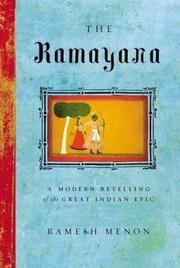
Rajagopalachari's beloved prose retelling of the great epic allows the reader to engage with the literary and moral heart of classical Hindu civilization as a capstone to the entire curriculum.
Discussion
Keep reading
Paths that share books, cover the same subject, or open a related topic.