German history is too often read backwards, with every century treated as a prelude to catastrophe. That framing distorts a long, rich, and contingent story — one in which a fragmented collection of states became a cultural powerhouse, then a unified nation, then the source of two world wars, then a divided and finally reunited country. Reading in chronological order restores the sense that none of it was fated.
The path runs from the deep background of the German lands, through the rise of Prussia and unification, into the catastrophes of the twentieth century, and out to division and reunion.
Origins and the long background
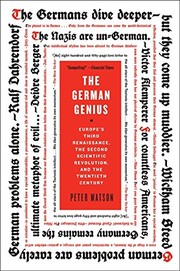
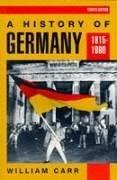
Begin with breadth. The German Genius by Watson surveys the extraordinary intellectual and cultural achievements that "Germany" produced, a useful counterweight to a purely political reading, and A history of Germany, 1815-1990 by Carr is a compact narrative spine for the modern era. For the medieval and early-modern foundation, The Holy Roman Empire by Wilson explains the sprawling, decentralized polity that shaped German political life for a thousand years.
Prussia, Bismarck, and unification
The modern nation grew from Prussia. Iron Kingdom by Clark is the definitive, gripping history of Prussia's rise and destruction, and Bismarck: A Life by Steinberg profiles the statesman who forged a unified Germany. The Sleepwalkers, also by Clark, then traces how Europe stumbled into the First World War — the catastrophe that ended the imperial order.
Catastrophe and division
The interwar collapse and its aftermath dominate the modern story. Weimar Germany by Weitz captures the brilliance and fragility of the first republic, Hitler: 1889-1936 Hubris by Kershaw is the authoritative biography of how the dictatorship arose, and Ordinary Men by Browning shows how ordinary Germans became complicit in genocide. The Third Reich in history and memory by Evans reflects on how the period is remembered. For the postwar era, The File by Garton Ash and The Tunnel by Mitchell bring the divided Germany to life, while The German Question and the Origins of the Cold War explains how the nation's fate became the fault line of a divided Europe.
Read in this order and German history regains its full sweep and its open moments of choice. Follow the full path to move from the Holy Roman Empire to reunification with the whole story in view.
Follow the full reading path →
Ready to learn something deeply?
Build a reading path — free