The Gilded Age: The Best Books to Read, in Order
This curriculum moves from vivid narrative overviews of the Gilded Age into the specific fault lines that defined it — railroad empires, immigrant lives, labor warfare, and the vast machinery of inequality — before culminating in the analytical and revisionist works that explain why this era still shapes America today. Because the learner starts at an intermediate level, the path skips introductory surveys and opens instead with compelling, story-driven histories that build shared vocabulary and cast of characters, then layers on deeper structural and scholarly analysis.
The Big Picture: Power, Money, and the Age
IntermediateEstablish a vivid, narrative command of the Gilded Age's key figures, forces, and contradictions — robber barons, political corruption, and the collision of enormous wealth with grinding poverty.
▸ Study plan for this stage
Pace: 8–10 weeks, ~40–50 pages/day (accounting for dense historical narrative and character-driven passages)
- The dual narrative of the Gilded Age: explosive industrial wealth creation alongside systemic poverty and labor exploitation
- Robber baron archetypes (Carnegie, Rockefeller, Vanderbilt, Gould) and their ruthless business tactics—monopolies, stock manipulation, and vertical integration
- Political corruption as a structural feature: bribery, lobbying, and the capture of government by industrial interests
- The role of speculation and financial engineering in creating both fortunes and crashes, particularly through railroad and stock market manipulation
- The contradiction between public image and private ruthlessness: how tycoons used philanthropy and social positioning to legitimize their power
- The human cost of industrialization: working conditions, child labor, and the emergence of labor movements as a response
- The Gilded Age as a pivotal moment when industrial capitalism replaced agrarian democracy and reshaped American society
- How does Twain's satirical novel establish the moral and social contradictions of the Gilded Age, and what specific characters and schemes illustrate the collision of greed and corruption?
- What were the primary business strategies used by the major tycoons (Rockefeller, Carnegie, Gould, Vanderbilt), and how did they differ in their approaches to monopoly and consolidation?
- How did financial manipulation—particularly in railroads and stock markets—enable individuals like Jay Gould to accumulate vast wealth, and what were the consequences for ordinary investors and the economy?
- What role did political corruption play in enabling robber baron dominance, and how did industrialists use their wealth to influence government policy?
- How did the tycoons justify their wealth and power through philanthropy and social positioning, and was this image-making effective in shaping public perception?
- What were the lived experiences of workers and the poor during the Gilded Age, and how did labor movements emerge in response to industrial exploitation?
- Create a detailed character map of Twain's major characters in *The Gilded Age* (Colonel Sellers, Washington Hawkins, Laura Hawkins, etc.), noting which real historical figures or archetypes they represent and what schemes they pursue.
- Construct a comparative timeline of the major tycoons covered in *The Tycoons*—mark their key business moves, monopolistic tactics, and pivotal moments (e.g., Rockefeller's Standard Oil consolidation, Carnegie's vertical integration, Gould's railroad speculation).
- Analyze 3–4 specific financial schemes from *Dark Genius of Wall Street* (Gould's railroad manipulations, stock watering, etc.); for each, write a one-page explanation of how it worked, who profited, and who lost.
- Write a comparative essay (2–3 pages) on how Twain's satirical portrayal of corruption in *The Gilded Age* aligns with or diverges from the documented historical tactics in *The Tycoons* and *Dark Genius*.
- Research and present one historical labor strike or movement from the Gilded Age (e.g., Homestead Strike, Pullman Strike); connect it to the working conditions and exploitation depicted across all three books.
- Create a visual infographic or chart showing the relationship between political corruption, tycoon wealth, and labor unrest—use specific examples from the three books to illustrate causal connections.
Next up: This stage establishes the narrative texture and human stakes of the Gilded Age—the personalities, schemes, and contradictions that defined an era—preparing you to examine the reform movements, regulatory responses, and ideological battles that emerged to challenge this system in the next stage.
The book that named the era. Reading Twain and Warner's satirical novel first gives you the period's own self-awareness about corruption and speculative mania — essential cultural grounding before the histories.

A brisk, authoritative group portrait of Carnegie, Rockefeller, Gould, and Morgan that explains how industrial capitalism was actually built. Read this second to get the economic mechanics and personalities in one place.
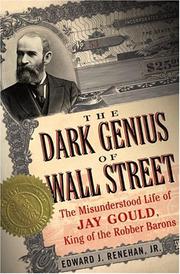
A focused biography of Jay Gould that illuminates the ruthless financial engineering behind the age; pairs with Morris to show the darker, more predatory side of the tycoon class.
Railroads and the Making of Industrial America
IntermediateUnderstand how the transcontinental railroad system created national markets, enabled monopoly capitalism, corrupted government, and transformed the American landscape and labor force.
▸ Study plan for this stage
Pace: 8–10 weeks, ~40–50 pages/day (alternating between Ambrose and White for variety; Ambrose first for narrative foundation, then White for critical analysis)
- The transcontinental railroad as a technological and logistical achievement that unified the nation physically and economically
- Government land grants, subsidies, and corruption: how federal policy enabled railroad monopolies and enriched robber barons
- The creation of national markets and the integration of regional economies through rail networks
- Monopoly capitalism and predatory business practices (rate-fixing, rebates, vertical integration) as exemplified by figures like Harriman and Gould
- The transformation of labor: railroad work conditions, the rise of unions, and the exploitation of immigrant and Chinese workers
- Environmental and social costs: landscape transformation, displacement of Native Americans, and the concentration of wealth
- The relationship between railroad power and political corruption at federal, state, and local levels
- The ideological tension between laissez-faire capitalism and the need for government regulation
- How did government land grants and subsidies accelerate railroad construction, and what were the long-term consequences for competition and monopoly formation?
- Compare the business strategies of different railroad magnates (Harriman, Gould, Stanford, Huntington) as presented in both books—what made some more successful or destructive than others?
- What specific labor practices and working conditions did railroad companies impose on their workers, and how did workers respond through strikes and unionization?
- How did the transcontinental railroad system create integrated national markets, and what role did monopolistic pricing and rate discrimination play in this process?
- What evidence do Ambrose and White present about the corruption of government officials by railroad interests, and how did this undermine democratic governance?
- How did railroad expansion transform the American landscape and displace Native American populations, and what does this reveal about the human costs of industrialization?
- Create a timeline of major transcontinental railroad milestones (completion dates, key figures, government subsidies) using both books; annotate with turning points in monopoly formation
- Map the major railroad routes and land grants using historical maps; overlay regions of Native American displacement and identify patterns of environmental impact
- Write comparative character sketches of 3–4 railroad magnates (e.g., Harriman vs. Gould vs. Stanford), analyzing their business philosophies and ethical compromises based on textual evidence
- Analyze 2–3 specific labor conflicts or strikes mentioned in the books; write a brief case study explaining worker grievances, company responses, and outcomes
- Research and document one example of government corruption involving railroads (e.g., Credit Mobilier scandal or state-level bribery); trace how it was exposed and what reforms (if any) followed
- Create a visual diagram or written explanation of how monopoly pricing and rate discrimination worked in practice; use specific examples from White's analysis
- Debate exercise: prepare arguments for both 'railroad magnates were visionary nation-builders' (Ambrose's emphasis) and 'railroad magnates were predatory monopolists' (White's emphasis), then synthesize a nuanced position
Next up: This stage establishes how industrial capitalism reshaped the nation's economic structure and geography; the next stage will examine how this concentration of wealth and power provoked reform movements, labor organizing, and the ideological battles over regulation that defined the Progressive Era.
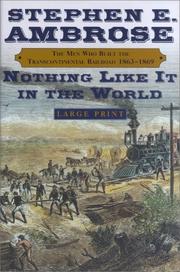
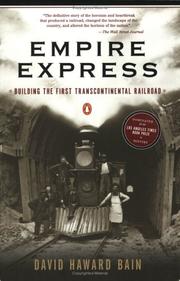
A propulsive narrative of the building of the transcontinental railroad — the corruption, the Chinese and Irish labor, the engineering feats — that makes the human cost viscerally real before moving to structural analysis.

The essential revisionist history of the transcontinental railroads, arguing they were financially reckless and politically corrupt. Read after Ambrose to complicate the heroic narrative with rigorous economic and political critique.
Immigration, Labor, and the Lives of the Many
IntermediateSee the Gilded Age from the bottom up — through the tenements, factory floors, and strike lines where immigrants and workers fought for survival and dignity against industrial capital.
▸ Study plan for this stage
Pace: 8–10 weeks, ~40–50 pages/day. Riis (200 pages): 1 week; Sinclair (330 pages): 2 weeks; Green (300 pages): 2.5 weeks; review and synthesis: 2–3 weeks.
- Visual documentation as evidence: How Riis's photographs and text work together to expose tenement conditions and challenge middle-class indifference to immigrant poverty
- The meatpacking industry as a microcosm of industrial exploitation: Sinclair's detailed exposure of unsafe working conditions, wage theft, and the dehumanization of immigrant laborers
- Immigration and assimilation under capitalism: How newcomers to America faced discrimination, economic desperation, and false promises of opportunity
- Labor organizing and class consciousness: How workers moved from isolated suffering to collective action, as shown in the Haymarket affair and its broader context
- The power of narrative and testimony: How personal stories, investigative journalism, and historical reconstruction reveal systemic injustice invisible to those in power
- The intersection of race, ethnicity, and class: How immigrant workers were stratified and divided by employers to prevent unified resistance
- Corruption and complicity: How politicians, inspectors, and business leaders enabled exploitation through bribery, negligence, and legal structures
- What specific conditions in New York tenements did Riis document, and what was his intended audience and purpose in *How the Other Half Lives*?
- How does Sinclair use the character of Jurgis Rudkus and his family's experiences to illustrate the systemic failures of the meatpacking industry and American capitalism?
- What were the immediate causes and consequences of the Haymarket bombing, and how does Green situate it within the broader history of labor organizing in the 1880s?
- How did immigrant workers become conscious of their exploitation, and what strategies did they use to resist—or fail to resist—their conditions?
- What role did corruption, legal systems, and employer tactics (like wage theft and speed-ups) play in maintaining worker subjugation across Riis, Sinclair, and Green?
- How do Riis, Sinclair, and Green each use different forms of evidence (photography, fiction, historical narrative) to make their arguments about Gilded Age inequality?
- Create a visual map of a New York tenement block based on Riis's descriptions and photographs; annotate it with details about overcrowding, sanitation, and disease to understand spatial dimensions of poverty
- Write a detailed diary entry from the perspective of a meatpacking worker (inspired by Sinclair) describing a single day—include sensory details, wage calculations, and moments of despair or resistance
- Trace Jurgis's trajectory through *The Jungle*: chart his initial hopes, each betrayal or exploitation he experiences, and his evolving consciousness; identify turning points where he might have organized with others
- Research and present on one real labor union or strike from the 1880s–1890s (beyond Haymarket): compare its tactics, demands, and outcomes to the movements Green describes
- Analyze a passage from each book where the author uses vivid, emotional language to describe suffering; discuss how style choices shape the reader's emotional and intellectual response
- Create a comparative timeline placing key events from all three books (tenement conditions, meatpacking exposés, labor organizing, Haymarket) to see how they overlap and reinforce each other
Next up: This stage grounds you in the lived experience of workers and immigrants, establishing the human cost of industrial capitalism—preparing you to examine how Gilded Age elites justified their wealth, resisted reform, and shaped the political and intellectual landscape that would define the Progressive Era response.

Riis's landmark photojournalism and reportage on New York tenement life is a primary source that puts a human face on immigrant poverty; reading it here anchors the subsequent labor history in lived experience.
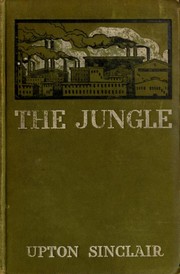
Though fiction, Sinclair's novel is the definitive literary document of immigrant industrial labor — the meatpacking plants, the exploitation, the broken promises of America. It bridges the primary-source feel of Riis with the labor history that follows.
A masterful narrative history of the 1886 Haymarket bombing and trial, tracing the rise of the labor movement, anarchism, and the violent suppression of workers — the perfect capstone to this stage.
Inequality, Reform, and the System's Logic
ExpertAnalyze the structural forces — monopoly, finance, political capture, and ideology — that produced Gilded Age inequality, and understand the reform movements that eventually challenged them.
▸ Study plan for this stage
Pace: 6–7 weeks, ~40–50 pages/day (accounting for dense economic and political argumentation)
- Carnegie's justification of wealth accumulation as moral duty and social benefit ('Gospel of Wealth' ideology)
- Lloyd's critique of monopoly power and its corrosive effects on democracy and fair competition
- The structural mechanisms of Gilded Age inequality: vertical integration, price fixing, political lobbying, and finance capitalism
- The ideological battle between laissez-faire individualism and reform-minded progressivism
- How political capture and regulatory failure enabled monopolistic practices to persist
- The emergence of reform movements and their intellectual foundations in response to systemic inequality
- The relationship between economic concentration and the erosion of republican ideals
- What are the core arguments in Carnegie's 'Gospel of Wealth,' and how does he justify extreme inequality as socially beneficial?
- How does Lloyd systematically dismantle Carnegie's arguments, and what specific monopolistic practices does he expose in 'Wealth Against Commonwealth'?
- According to White's 'The Republic for Which It Stands,' what structural failures in American institutions allowed monopolies to flourish during the Gilded Age?
- How did political capture—the influence of wealthy interests on government—prevent effective regulation of monopolies?
- What were the key reform movements and intellectual currents that emerged to challenge Gilded Age inequality, and what solutions did they propose?
- How do these three texts collectively illustrate the tension between ideology (what people believed about wealth and capitalism) and structural reality (how the system actually functioned)?
- Create a two-column chart: list Carnegie's claims about wealth in one column and Lloyd's counterarguments in the other; annotate which claims are empirical vs. ideological
- Map the monopolistic practices Lloyd describes (e.g., predatory pricing, railroad rebates, market manipulation) and trace how each one undermined fair competition and consumer welfare
- Identify 3–4 specific moments in White's narrative where political institutions failed to regulate corporate power; write a brief analysis of why each failure occurred
- Write a 2–3 page essay: 'How did Gilded Age ideology obscure structural inequality?' Use specific passages from Carnegie and Lloyd to show how framing shaped perception
- Create a timeline of reform movements and legislative responses mentioned across all three texts; note which reforms were proposed but failed, and why
- Debate exercise: Prepare arguments for and against the proposition 'Gilded Age monopolies were the inevitable result of capitalism or the result of regulatory failure.' Ground your case in evidence from all three texts
Next up: This stage equips you to recognize how structural inequality is both enabled by ideology and perpetuated through institutional failure, preparing you to examine the specific reform movements, regulatory innovations, and political struggles that attempted to dismantle these systems in the next stage.

Reading Carnegie's own justification for extreme inequality in his own words is essential for understanding the ideology that legitimized the robber baron order — and the limits of philanthropic reform.
The first great muckraking exposé of Standard Oil and monopoly capitalism, published in 1894. It shows how contemporaries understood and fought back against the system, and sets up the Progressive Era response.
White's magisterial Oxford History of the United States volume synthesizes the entire Gilded Age — politics, economics, race, labor, and reform — into a single analytical framework, making it the ideal capstone for the whole curriculum.
Discussion
Keep reading
Paths that share books, cover the same subject, or open a related topic.