Italy has existed as a country since 1861 and as an idea for two thousand years, and almost every difficulty in reading its history comes from that gap. Start with a book on the Renaissance and you will meet Florentines, Venetians and Milanese who would not have called themselves Italians. Start with a book on unification and you will not understand why unification was so hard. Start with fascism and you will have no idea where it came from.
The order here handles that by making the whole arc available first, then going back for the parts. Each stage assumes the vocabulary of the previous one, so by the end you can read a specialist account of the postwar Republic without needing the footnotes explained.
The whole peninsula, once through
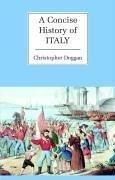
A concise history of Italy is the most efficient single volume on the country, and it is by the historian whose much longer book appears in stage three. Reading him twice is deliberate: the second encounter feels like deepening rather than repetition.
A short history of Italy gives more room to the medieval and early-modern centuries that the first book compresses, which is exactly the ground the next stage covers. Treat it as a second pass, not a duplicate.
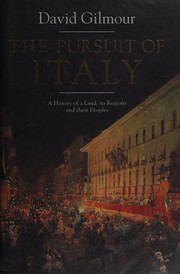
The pursuit of Italy supplies the interpretive frame the rest of the path either supports or contests. Gilmour argues that unification flattened a genuinely plural peninsula and that the national story has been oversold. Meeting that argument early makes you a more sceptical reader of everything in stage three, which is the point of putting it here rather than at the end.
Before Italy: city-states and the Renaissance
The Civilization of the Renaissance in Italy invented the modern idea of the Renaissance and is still the argument later historians are answering. Read it as a nineteenth-century document as much as a history — Burckhardt's individualist Renaissance says as much about his own century as about the fifteenth.
The House of Medici, its rise and fall turns those abstractions into banking, patronage and dynastic politics you can actually follow, across three centuries and one family. It also shows in concrete terms how a city-state's power was built and then lost.
Making a nation
Garibaldi is the sharpest available way into how unification was sold to a population that had not asked for it. Riall treats her subject as a manufactured celebrity rather than a hero, and reading her before the survey histories trains you to spot the myth-making in them.
Modern Italy is the classic political history of the united kingdom and is unsentimental about the liberal state's failures. Mack Smith's judgements set the terms of a debate that Duggan and Gilmour are still arguing with, and later historians have pushed back on how harsh he is.
The Force of Destiny is Duggan's full-length history from 1796, organised around the persistent gap between what Italy was promised and what it got. Having read his concise version first, you can read this for the argument rather than for the chronology.
Fascism, the Republic, and now
Mussolini's Italy is a social history of what fascism felt like to live under rather than another biography of the dictator, and it depends on the liberal-state failures documented in the previous stage.
A history of contemporary Italy is the standard account of 1943 onward — reconstruction, the economic miracle, the years of lead — and the essential bridge from fascism to the present.
Cosa Nostra reframes southern politics by showing the Mafia as a product of the Italian state rather than an alternative to it. It changes how the clientelism in Ginsborg reads.
The dark heart of Italy is a journalist's account of the Berlusconi years, and it lands hardest once the century behind it is in place. It is a polemic written from inside a particular political moment, and it is the right book to finish on because it leaves the history feeling unfinished, which it is.
The staged version with study plans is on the full path; see the history of Italy hub for related reading.
Follow the full ordered path here: How to Learn the History of Italy from Books, in Order.