Organized Crime: The Best Books on the Mafia and Criminal Enterprise, in Order
The literature on organized crime is unusually treacherous, because its best-known books are memoirs and as-told-to accounts by people with obvious reasons to shape the story, and several of them have been shown to be embellished or are disputed on the record. This path is arranged to handle that: it reads the American popular accounts first, flagged for what they are, then the Italian scholarship that corrects them, then the social-science literature that treats a mafia as an industry with a product, and finally the global picture. Every entry says whether it is journalism, memoir or academic work, because on this subject that distinction is the whole game — a mobster's account is evidence about how mobsters talk, not about how the organisation works. The path is nonfiction throughout; the famous novels and films that shaped the mafia's own self-image are discussed in the reading but not listed as sources.
The American Cosa Nostra
BeginnerLearn the structure of the American families and read the canonical popular accounts, while seeing clearly how much of that structure comes from informants with an interest in the telling.
▸ Study plan for this stage
Pace: Five weeks for about 1,680 pages, and the order matters more here than anywhere else on the path. Raab's Five Families is 784 pages of newspaper journalism by a reporter who covered the New York families for decades - long, and the frame everything else in this stage sits inside, so read it first ev
- The structure the popular account describes - families, bosses, capos, soldiers, associates, a commission - and the question of how much of it was ever a description rather than a schema
- Valachi's testimony as the origin of the public vocabulary, including the phrase Cosa Nostra itself, and the specific grounds on which historians dispute his account of a national organisation
- The daily economics of an associate in Wiseguy: earning, tribute upward, hijacking, loansharking, and the fact that the money is made by constant small hustling rather than by grand schemes
- Prohibition as the capitalisation event, and Nelli's argument that American organized crime grew out of American conditions rather than being imported whole from Sicily
- Omerta, initiation and the rituals as presented by insiders, and the difficulty of confirming any of it from outside
- The RICO prosecutions and what changed once membership itself became chargeable - the arc Raab's book is organised around
- The evidentiary hierarchy this stage is built to teach: a mobster's account is good evidence about how mobsters talk, weaker evidence about how the organisation works, and no evidence at all about its origins
- What specifically did Valachi claim about national structure, and what is the case against taking it at face value?
- How does Henry Hill actually make money, week to week? List the activities in order of how much of his time each takes.
- What is Nelli's argument against the imported-conspiracy model, and what evidence does he use that Maas and Pileggi cannot?
- What did RICO change about prosecuting these organisations, and what does Raab say it cost them?
- For each of these four books, name the kind of evidence it rests on and the kind of claim it therefore cannot support.
- Start the table this whole path depends on and keep it to the end: one row per book, with columns for type (journalism, memoir, as-told-to, academic), source base, and what the book is good evidence about. Fill in these four rows before moving to Sicily.
- Take one claim about organisational structure from The Valachi Papers and trace how Raab handles the same claim in Five Families - does he cite Valachi, corroborate him independently, or hedge? Doing this two or three times shows you how much of the standard narrative rests on a single 1963 witness.
- Read Wiseguy purely for money: annotate every earning activity and every payment upward, and build a rough ledger of a single year. The economics are the part of Hill's account least likely to be embellished and most useful, and the ledger is what Gambetta's argument in stage three will land on.
- Read Nelli last and then go back through your notes marking every point where the popular books assert an origin story that he contradicts. Write a paragraph on which version you find better supported and why, naming the evidence rather than the author.
Next up: The American story is largely a story about a story; the Italian scholarship next works from a much older and better documented record and dismantles a good deal of what you have just read.
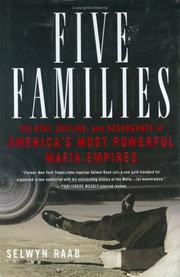
The standard narrative history of the New York families by a New York Times reporter who covered them for decades. Journalism, long, and the best single frame for everything else in this stage — read it first so the memoirs have a structure to sit inside.
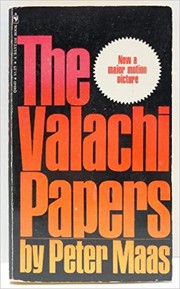
The 1968 book based on Joseph Valachi's testimony, the first insider account and the one that put the phrase Cosa Nostra into public use. Read it as a primary document and a contested one: historians have disputed how much of Valachi's picture of a national structure reflects the organisation and how much reflects what his federal handlers wanted to hear.
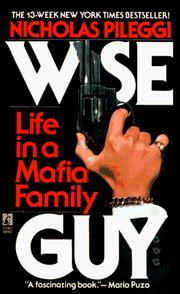
Henry Hill's life as an associate, and the most vivid account of the day-to-day economics — the earning, the tribute, the constant hustling. An as-told-to memoir by a subject who later acknowledged embellishing, so read it for texture rather than fact, which is exactly what it is best at.
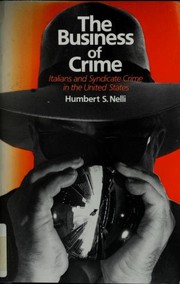
The academic corrective to the three above: a historian's account of Italian-American organized crime from 1890 to 1940, arguing against the imported-conspiracy model that Valachi's testimony encouraged. Dry and short, and the book that shows how much of the popular story is a construction.
Sicily and Italy
IntermediateRead the Italian mafias on their own ground — Cosa Nostra, the Camorra, the 'Ndrangheta — where the scholarship is strongest and the stakes for the writers have been highest.
▸ Study plan for this stage
Pace: Five to six weeks for roughly 1,650 pages. Dickie's Cosa Nostra is 483 pages of academic history of the Sicilian mafia from 1860, and it is the single most reliable narrative on this path - read it first, because it supplies the chronology the other three assume. Stille's Excellent Cadavers is 458 p
- The nineteenth-century origins Dickie establishes: the citrus estates, the gap left by a weak state, and protection as a service sold from the beginning
- Why the Sicilian record is so much better documented than the American one - court proceedings, parliamentary inquiries and state archives going back to the 1870s
- The maxi-trial and the pentiti: what Tommaso Buscetta's collaboration made prosecutable, and why supergrass testimony transformed Italian mafia law
- Falcone and Borsellino's method - following money and structure rather than individual crimes - and the 1992 murders that followed
- The political dimension Robb and Stille both pursue: the relationship between the organisation and national politics, and how far it can be documented
- The Camorra as a different animal from Cosa Nostra: looser, more fragmented, more directly embedded in legitimate industry
- The contested standing of Gomorrah, and the general problem of a book that is factually serious and formally novelistic at once
- How much of the romantic material about the mafia - honour, tradition, a code - Dickie shows to be self-mythology produced for outside consumption
- What service did the early Sicilian mafia sell, to whom, and why was there a market for it?
- What made the maxi-trial possible, and what did the Italian state have to change legally to run it?
- Robb writes reportage that refuses to separate the mafia from Sicilian public life. What does that method show that a straight history cannot, and what does it cost in precision?
- Which specific features of Gomorrah make it disputed, and does the dispute affect its account of the waste and textile industries or only its scenes?
- How do Dickie's origins for the Sicilian mafia bear on Nelli's argument about the American one?
- Add all four books to your evidence table, and for Gomorrah write two rows - one for the industrial reporting and one for the narrated scenes - because they are not the same kind of claim and the book invites you to read them as one.
- Build a single dated timeline of the Sicilian mafia from Dickie alone, 1860 to the present, then read Stille and add nothing but what Stille documents in detail. The overlap tells you which events are firmly established and which rest on one account.
- Take one episode covered by both Dickie and Robb and write out the two versions side by side. The difference is not fact but method, and seeing it clearly is what stops literary reportage from being mistaken for history in the rest of your reading.
- Read Gomorrah's chapters on the waste disposal and clothing industries with a pen, and mark every claim that is attributed to a document, an interview, or nothing. The proportions are the honest answer to what the book is.
Next up: You now have two national narratives and a growing suspicion that neither explains why these organisations exist; the next stage is the literature that tries to answer that question analytically.
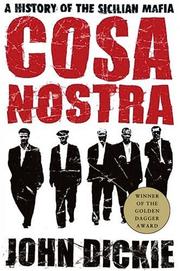
The standard scholarly history of the Sicilian mafia from 1860, by an academic historian of Italy, and the single most reliable narrative on this path. Read it before anything else on Italy; it dismantles most of the romantic material as it goes.
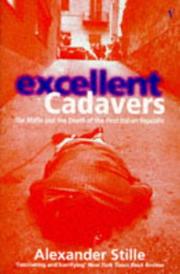
Journalism, built around the magistrates Giovanni Falcone and Paolo Borsellino and the maxi-trial, ending in their murders in 1992. Catalogued here under a truncated title; the book is Excellent Cadavers: The Mafia and the Death of the First Italian Republic.
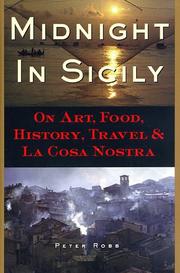
Literary reportage rather than history — Robb lived in southern Italy for years, and the book moves between food, art, Andreotti and the mafia trials without separating them. Read after Dickie, who supplies the chronology this book assumes.
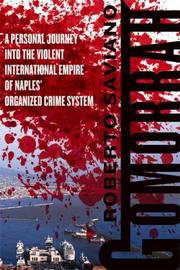
The Camorra as a business empire in waste, concrete and couture, by a writer who has lived under police protection since publishing it. Its status is genuinely contested: it is written as reportage but uses composite scenes and a first-person narrator who is sometimes a device, and some named parties have disputed specific claims in court. Read it as testimony about a system rather than as a documentary record.
Crime as an Industry
IntermediateMove from narrative to theory: what a mafia actually sells, why it emerges in some markets and not others, and why it is hard to transplant.
▸ Study plan for this stage
Pace: Four to five weeks for about 970 pages, and the most demanding stage here - all three are academic works and they are arguing with each other. Gambetta's The Sicilian Mafia is 378 pages of economics: the argument that the mafia's product is private protection, sold where the state cannot supply trus
- Protection as a commodity: Gambetta's claim that the mafia sells a real service in markets where property rights are insecure and contracts unenforceable
- Trust as the scarce good, and why the industry that supplies it has the particular features it does - territory, reputation, brand, and violence as advertising
- Why protection is naturally monopolistic and territorial, and what that predicts about internal conflict
- Paoli's alternative: ritual initiation, fictive kinship and a status contract binding the member for life, which she argues no firm-based account can explain
- The status contract versus the service contract, and the different predictions each makes about member behaviour
- Varese's transplantation conditions - what has to be true of a destination market for a mafia to take root - and why most attempted transplants fail
- Migration is not transplantation: the finding that criminals moving somewhere does not produce a mafia there, and what does
- How a theoretical dispute is turned into a testable one, which is the methodological lesson of this stage regardless of who is right
- What exactly is the product in Gambetta's account, who buys it, and what would they otherwise do without it?
- Why does Paoli think the ritual and kinship material is fatal to the firm model? What would Gambetta say in reply?
- Which of the two accounts better explains the Henry Hill ledger you built in stage one, and which better explains the initiation rites Valachi described?
- State Varese's conditions for successful transplantation, and apply them to one case from stage one or two.
- What kind of evidence would decide between Gambetta and Paoli, and does any book on this path supply it?
- Write the two theories as competing predictions on a single page: for each of territory, violence, recruitment, ritual and diversification, what does the protection-firm model predict and what does the kinship-brotherhood model predict? Then go back to Dickie and Raab and score the historical record against both columns.
- Apply Varese's transplantation framework to a specific case - the New York families, the 'Ndrangheta in northern Italy, or the Russian groups - and write down which of his conditions held and which did not. He supplies the method; doing it once on a case of your own choosing is what makes it yours.
- Take the Gomorrah material on waste disposal and analyse it with Gambetta's tools: what is being sold, to whom, and what does the buyer get that the state does not provide? This is the exercise that shows why the analytical stage belongs after the reportage rather than before it.
- Return to your evidence table and add a column: for each of the twelve books so far, does its material support, undercut or fail to bear on the protection-firm model? The completed column is a short course in how theory and narrative evidence relate.
Next up: With a theory of what these organisations sell, the global material stops being a catalogue of colourful crime and becomes a set of test cases.
The most important analytical book on the subject: an economist's argument that the mafia's product is private protection, sold where the state cannot supply trust. It reframes everything in the previous two stages, which is why it belongs after them and not before.
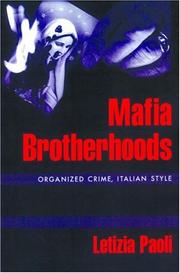
A criminologist's study of Cosa Nostra and the 'Ndrangheta based on judicial records, and the strongest counter-argument to Gambetta: Paoli holds that these are ritual kinship organisations with political ambitions, not firms. Read the two together and take a side.

Varese tests why mafias successfully transplant to some territories and fail in others, across Italy, the United States, Russia and China. The book that turns the Gambetta-Paoli dispute into an empirical question, and the best demonstration on this path of how you would settle it.
The Global Picture
IntermediateSee organized crime after 1989 — as a transnational service industry entangled with legitimate finance, and in its non-Italian forms.
▸ Study plan for this stage
Pace: Three weeks for about 880 pages, all of it faster reading than stage three. Glenny's McMafia is 388 pages of journalism surveying the post-Cold-War landscape - Balkan smuggling, Russian privatisation, Nigerian fraud, Japanese and Chinese networks - and it is the widest angle available in one volume.
- The 1989-1991 opening: what the end of the Soviet system and the wars in the Balkans did to the supply of weapons, unpoliced borders and men with military training
- Russian privatisation as the largest single transfer of property in modern history conducted without enforceable property rights, and the demand for private protection that followed
- The vory tradition - the thieves' code, the prison origins, the tattoos - and Galeotti's account of how completely it has been displaced by state-entangled criminal business
- The point at which criminal and legitimate economies stop being separable, which is Glenny's central claim and the hardest one to test
- Cartels as governance: protection, taxation, dispute resolution and public services supplied where the state has withdrawn, which is Gambetta's argument observed live
- Why drug prohibition creates exactly the market conditions the protection theory predicts will be filled
- Violence as strategy rather than as pathology - what the Mexican escalation was for, and what changed when the state attacked cartel leadership directly
- The limits of journalism on this subject: access, source protection, and what a reporter can establish that a criminologist cannot, and vice versa
- Which of Glenny's regional cases best fits Gambetta's protection model, and which fits it worst?
- What did the vory code originally do for its members, and what replaced its function once the Soviet state collapsed?
- Where do Galeotti and Varese disagree about Russian organized crime, and is the disagreement about facts or about categories?
- In what specific respects do the Mexican cartels behave like a state, and in what respects do they not?
- Having read the whole path: state in three sentences what a mafia is. Then say which of the twelve authors you have just contradicted.
- Complete the evidence table for all fifteen books and read the finished column of what each is good evidence about. That single page is the deliverable of this path and the thing that makes you a competent reader of the next book on the subject, whatever it turns out to be.
- Apply Varese's transplantation conditions to three of Glenny's cases and score each one. Where the framework does not fit, say what it is missing. Testing a theory on cases the theorist did not use is the whole point of reading them in this order.
- Read Galeotti's Russian chapters and Varese's Russian chapters consecutively and write a page on how a specialist academic and an empirical criminologist handle the same material differently. It is the cleanest available comparison of two kinds of scholarship on one subject.
- Take El Narco and write out the cartel's business model as an organisation chart with revenue lines - what is produced, who is paid, what is bought from the state. Then set it beside the Henry Hill ledger from stage one. Fifty years and four thousand miles apart, the two documents are recognisably the same industry, which is the argument this path has been building.
Next up: This is the last stage, and it closes the path on its strongest live case: everything the Italian scholarship and the protection theory predicted, happening now in a country where the state has stopped supplying what the market wants.
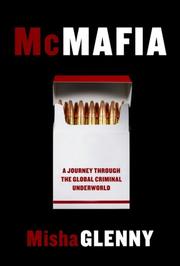
The post-Cold-War survey: Balkan smuggling, Russian privatisation, Nigerian fraud, Japanese and Chinese networks, and the point at which criminal and legitimate economies stop being separable. Journalism, and the widest angle available in one volume.
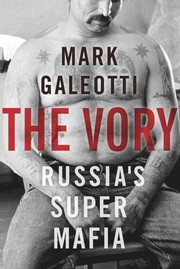
The best book in English on Russian organized crime, by a specialist academic, tracing the thieves-in-law from the gulag to their entanglement with the modern state. Read it against Varese's Russian chapters, which cover the same ground more narrowly and more formally.

The Mexican cartels as an insurgency with a business model, from a reporter who covered them for a decade. The right last book because it is the clearest case of the thing the earlier theory predicts — a criminal organisation supplying protection and governance where the state has stopped.
Discussion
Keep reading
Paths that share books, cover the same subject, or open a related topic.