This is the most contested subject on the site, and the honest approach is to be explicit about it. There is no consensus history of Israel — there are competing accounts, written from different national perspectives and different archival bases, that disagree about the causes of the 1948 refugee exodus, the intentions behind the 1967 war, and who bears responsibility for the failure of the peace process. This path deliberately includes authors who contradict one another. It does not adjudicate between them, and you should be suspicious of any list that does.
What can be sequenced usefully is the ground: a chronological survey first, then the individual wars in the order they happened, then the interpretive and polemical books that argue about what those events meant. Reading the arguments before the chronology is how people end up with confident opinions and shaky facts.
Start with the narrative
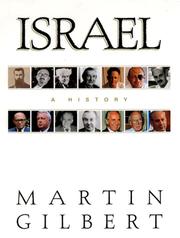
Israel by Martin Gilbert is a long, conventional narrative history sympathetic to the Zionist project, and it gives you the chronology, the institutions, and the personalities in one place. Read it for the sequence of events, knowing its perspective.
Against it, Invention of the Jewish People by Shlomo Sand argues that Jewish national identity was substantially constructed in the modern period. Sand is an Israeli historian and his thesis has been sharply disputed by scholars across the political spectrum, including on the genetic and historical evidence. It is here because it is influential and because encountering the strongest challenge to the founding narrative early is more useful than meeting it as an internet argument later.
Then the wars, in order
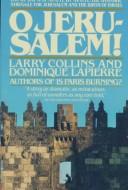
O Jerusalem! by Larry Collins and Dominique Lapierre is the narrative reconstruction of the 1948 battle for the city, built from extensive interviews on both sides. It is journalism rather than academic history and it reads like a novel.
Six Days of War by Michael Oren is the standard account of 1967, notable for its use of Israeli, Arab, and Soviet sources; Oren later served as Israel's ambassador to the United States, which readers should factor in. The Yom Kippur War by Abraham Rabinovich covers 1973 — the intelligence failure, the crossing of the canal, and how close the war came to a different outcome.
Then the interpretive core
The Iron Wall by Avi Shlaim is the central revisionist account of Israeli policy toward the Arab world, arguing from declassified material that Israeli governments repeatedly preferred force to available diplomatic openings. Shlaim is one of the "New Historians" and his reading is contested by Oren among others.
My Promised Land by Ari Shavit is a Zionist journalist's reckoning with the founding, including an unflinching chapter on the 1948 expulsion at Lydda — the book that made that episode unavoidable for many mainstream readers. The Missing Peace by Dennis Ross is the American negotiator's inside account of Oslo and Camp David; it assigns most of the blame for failure to Arafat, a judgment that other participants and historians dispute.
Then the hardest positions
Israel's Moment by Jeffrey Herf examines how the great powers and the international left actually positioned themselves around 1948, complicating several later narratives. The Ethnic Cleansing of Palestine by Ilan Pappé makes the strongest case that the 1948 displacement was a deliberate, planned expulsion; Pappé's use of sources has been criticized by other historians, including Benny Morris, who documents much of the same displacement while rejecting Pappé's framing. Read them together and you will see exactly where the disagreement lies.
Close with Start-Up Nation by Dan Senor and Saul Singer on the technology economy — a narrow, mostly celebratory business book that explains a real phenomenon and makes no attempt at the political questions.
Follow the full path to keep the order, and see the political-adjacent hubs for other contested national histories.
Follow the full ordered path here: Best Books on the History of Israel, in Reading Order.