The Best Books on the Race to the Moon
This curriculum traces the Space Race from its Cold War origins through the triumph of Apollo 11, building knowledge in four stages. Each stage deepens the reader's understanding — starting with vivid narrative histories, moving into the human drama of the astronauts, then into the engineering and decision-making behind the missions, and finally into the broader geopolitical and cultural legacy of the Moon race.
Foundations: The Cold War & the Birth of the Space Race
BeginnerUnderstand the geopolitical context of the Space Race — why the US and USSR raced to space, what Sputnik meant, and how NASA was born — with no prior background required.
▸ Study plan for this stage
Pace: 6–7 weeks, ~40–50 pages/day. Start with "Rocket Men" (400 pages, ~2 weeks), then move to "The Right Stuff" (500+ pages, ~3–4 weeks). Include 1 week for review and synthesis.
- Cold War rivalry as the driving force behind the Space Race—how nuclear anxiety and geopolitical competition pushed both superpowers toward space exploration
- Sputnik's shock value (1957) and its political/psychological impact on American confidence and the urgency to reach space first
- The creation of NASA (1958) as a direct response to Soviet advances and the need for centralized American space leadership
- The Mercury program as America's first crewed spaceflight initiative and the selection of the original seven astronauts
- The culture of test pilots and the 'Right Stuff'—the psychological and physical qualities that defined early astronauts and shaped American space heroism
- The technological and human challenges of early spaceflight, from rocket design to the physiological demands on pilots
- How political pressure and Cold War stakes transformed space exploration from scientific curiosity into a high-stakes national competition
- Why did the Soviet Union and United States both prioritize space exploration in the 1950s, and what role did Cold War tensions play?
- What was the significance of Sputnik's launch in 1957, and how did it change American public opinion and government priorities?
- How did NASA's creation in 1958 represent a turning point in American space policy, and what was its mandate?
- Who were the Mercury Seven, and what qualities did NASA and the test pilot community value in selecting the first American astronauts?
- What does 'the Right Stuff' mean, and how did it define the culture and identity of early American astronauts?
- How did the technological limitations and dangers of early spaceflight shape the training, selection, and public perception of astronauts?
- Timeline creation: Build a detailed chronology of key events from 1957–1962 (Sputnik, NASA's founding, Mercury-Redstone flights) using details from both books. Annotate with political and technological milestones.
- Character profiles: Write one-page profiles of 3–4 Mercury Seven astronauts (e.g., John Glenn, Gus Grissom, Alan Shepard) based on Wolfe's descriptions, noting their backgrounds, personalities, and what made them stand out.
- Cold War context map: Create a visual diagram showing how Soviet achievements (Sputnik, Gagarin's flight) and American responses (NASA founding, Mercury program) were interconnected, with political pressure as the central driver.
- Sputnik impact analysis: Write a 2–3 page reflection on how Sputnik's launch would have felt to an American in 1957, using evidence from 'Rocket Men' about the public reaction and government panic.
- Test pilot culture deep dive: Identify and explain 3–5 key characteristics of the 'Right Stuff' culture from 'The Right Stuff,' with specific examples from the book (e.g., risk-taking, competitiveness, cool under pressure).
- Comparative reading notes: Create a side-by-side comparison of how 'Rocket Men' and 'The Right Stuff' each explain the origins of the Space Race—what does each book emphasize, and where do they overlap?
Next up: This stage establishes the political urgency, institutional birth, and human character that launched the Space Race, preparing you to dive into the actual missions, technological innovations, and personal stakes of the race to the Moon itself in the next stage.

A gripping, accessible narrative of Apollo 8 — the first mission to orbit the Moon — that doubles as a perfect introduction to the Cold War stakes and NASA's early ambitions. Its thriller pacing makes it ideal for beginners.

Wolfe's classic captures the culture, bravado, and human drama of the Mercury astronauts and test pilots who started it all. Reading it second gives the reader the human faces behind the institutional story.
The Full Story: From Sputnik to the Moon Landing
BeginnerGain a comprehensive, chronological understanding of the entire Space Race — from the Soviet Sputnik shock through Mercury, Gemini, and Apollo — told in authoritative but accessible narrative history.
▸ Study plan for this stage
Pace: 8–10 weeks, ~40–50 pages/day (mix of both books, alternating sections for narrative flow)
- The Sputnik shock and its geopolitical impact on American space policy and public perception
- Mercury program: early human spaceflight challenges, suborbital and orbital missions, and the race to put a man in space
- Gemini program: the critical stepping stones (EVA, rendezvous, docking, long-duration flight) that made the Moon landing possible
- Apollo program architecture: the Saturn V, the Lunar Module, the Command Module, and the engineering decisions that enabled lunar landing
- Neil Armstrong's character, training, and the human element behind the technical achievement
- The role of NASA leadership, mission control, and the broader Cold War context driving the Space Race
- The technical and human challenges of the Apollo 11 mission itself: descent, landing, moonwalk, and return
- How incremental missions and failures (Gus Grissom, the Apollo 1 fire, near-disasters) shaped the path to success
- What was the 'Sputnik shock' and how did it change American attitudes toward space exploration and the Cold War?
- Describe the progression of missions in Mercury, Gemini, and Apollo programs—what critical capability did each program add?
- What were the major technical and human obstacles overcome in the Gemini program that directly enabled the Apollo Moon landing?
- Explain the role of Michael Collins during the Apollo 11 mission and why his contribution was essential, even though he did not land on the Moon
- What was Neil Armstrong's background and training, and how did his character shape his approach to the Apollo 11 mission?
- Describe the Apollo 1 fire and its aftermath—how did this tragedy influence the path to the Moon landing?
- Create a detailed timeline of all major Space Race milestones (Sputnik through Apollo 11), noting key Soviet and American achievements and their dates
- Write a 2–3 page narrative comparing Michael Collins's firsthand account in 'Carrying the Fire' with Hansen's biographical perspective in 'First Man' on the same event (e.g., a specific mission or training moment)
- Map out the technical progression of spacecraft design across Mercury, Gemini, and Apollo—sketch or diagram how each program's vehicles solved new problems
- Conduct a 'mission control' simulation: read the Apollo 11 descent sequence from both books and write a brief analysis of the decision-making and communication that led to the successful landing
- Create character profiles of 5–6 key figures (Armstrong, Collins, Grissom, Wernher von Braun, Chris Kraft, etc.) using details from both books, noting their contributions and personalities
- Write a reflective essay (3–4 pages) on how the human cost of the Space Race (deaths, near-misses, sacrifices) is portrayed in both books and what it reveals about the era
Next up: This stage establishes the complete historical narrative and human drama of the Space Race, providing the foundation to explore deeper technical details, alternative histories, and the legacy of the Apollo program in the next stage.
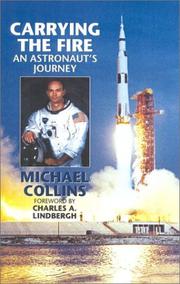
Widely considered the finest astronaut memoir ever written, Collins's account of Gemini and Apollo 11 is honest, witty, and technically illuminating — a perfect bridge from narrative history into the astronaut's own voice.
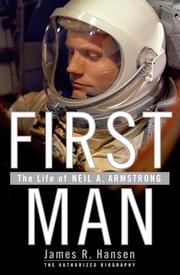
The authorized biography of Neil Armstrong provides the definitive account of Apollo 11's commander, grounding the Moon landing in one man's extraordinary life and filling in details no other book covers.
Going Deeper: Engineering, Risk & the Apollo Program
IntermediateUnderstand how Apollo was actually built — the engineering decisions, near-disasters, management challenges, and the human cost of pushing the boundaries of technology under extreme pressure.
▸ Study plan for this stage
Pace: 8–10 weeks, ~40–50 pages/day (mix of narrative and technical sections; allow extra time for Kranz's dense mission-control chapters)
- Mission Control as a human system: how Kranz built a culture of accountability, real-time problem-solving, and 'failure is not an option' mentality under extreme pressure
- The Apollo 13 crisis as a case study in systems failure, improvisation, and teamwork—how ground control and crew recovered from near-catastrophic equipment failure
- Engineering trade-offs and constraints: how Apollo engineers balanced weight, power, reliability, and cost across the Command Module, Lunar Module, and life-support systems
- Risk management in human spaceflight: how NASA assessed, communicated, and accepted risks that could kill astronauts, and how this shaped design decisions
- The human cost of Apollo: the toll on families, the pressure on engineers and astronauts, and the organizational culture that demanded perfection while accepting danger
- Systems integration and testing: how Pellegrino details the actual hardware, manufacturing, and integration challenges that made Apollo possible despite 1960s technology
- Decision-making under uncertainty: how Kranz and his team made split-second calls during emergencies with incomplete information and high stakes
- What was Gene Kranz's philosophy of Mission Control leadership, and how did he instill a culture where 'failure is not an option'? How did this approach both help and strain his team?
- Walk through the Apollo 13 crisis: what failed, why did it fail, and what specific decisions by Mission Control and the crew prevented a tragedy? What role did improvisation play?
- Describe the engineering constraints Apollo designers faced (weight, power, thermal management, reliability). How did these constraints force trade-offs in the design of the Command Module and Lunar Module?
- How did NASA and its contractors assess and communicate the risks of Apollo missions to astronauts and the public? What were the known dangers, and how did engineers try to mitigate them?
- Based on Pellegrino's account, what were the major manufacturing and integration challenges in building Apollo hardware, and how did these affect the final design?
- What does the Apollo program reveal about the relationship between organizational culture, technical excellence, and human cost? How did the pressure to succeed affect the people involved?
- Create a timeline of the Apollo 13 mission with key failure points: for each, note what failed, the immediate symptom, and the solution implemented. Use both Lovell's and Kranz's accounts to cross-check details.
- Write a 2–3 page 'failure analysis' of one major Apollo system (e.g., the Lunar Module ascent engine, the Command Module heat shield, or the oxygen tanks). Use Pellegrino's technical descriptions and Kranz's mission accounts to explain the failure mode and how it was addressed.
- Interview someone in a high-stakes field (medicine, engineering, aviation, emergency services) about how they manage risk and failure. Compare their approach to Kranz's philosophy—what's similar, what's different?
- Build a simple systems diagram of the Apollo Command/Service Module and Lunar Module, labeling critical subsystems (life support, power, propulsion, communications). Annotate with one key design constraint or failure risk for each, drawn from the books.
- Debate: Was the 'failure is not an option' culture at Mission Control essential to Apollo's success, or did it create unnecessary pressure and risk? Use specific examples from Kranz and Lovell.
- Create a 'decision log' for Kranz's three most difficult real-time decisions during a mission (e.g., Apollo 13's return trajectory). For each, note the information available, the options, the choice made, and the outcome.
Next up: This stage equips you with deep knowledge of how Apollo was actually engineered and managed—the systems, the risks, and the human decisions—preparing you to explore the broader historical, political, and scientific context of the Space Race and its legacy in the next stage.

Written by NASA's legendary flight director, this memoir takes the reader inside Mission Control for every major crisis from Mercury through Apollo 13, building essential technical and operational vocabulary.
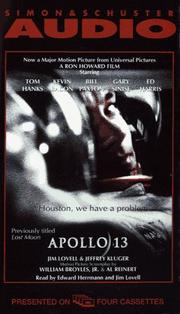
The firsthand account of NASA's most dramatic near-tragedy deepens the reader's understanding of mission operations, spacecraft systems, and the culture of problem-solving that defined the program.

A detailed technical and human history of the Apollo spacecraft's design and construction, ideal at this stage now that the reader has the context to appreciate the engineering decisions involved.
Mastery: The Geopolitical Race & the Soviet Side
ExpertAchieve a complete, nuanced understanding of the Space Race as a geopolitical competition — including the secret Soviet lunar program, the role of Wernher von Braun, and the lasting cultural legacy of Apollo.
▸ Study plan for this stage
Pace: 4–5 weeks, ~40–50 pages/day (approximately 250 pages total)
- The Soviet lunar program's parallel ambitions and technical achievements (N1 rocket, Korolev's vision) versus its ultimate failure to reach the Moon
- The psychological and existential toll of the Space Race on astronauts and cosmonauts, and how Cold War competition shaped their legacies
- Wernher von Braun's trajectory from Nazi Germany to becoming the architect of American lunar success, and the moral complexities this raises
- How the Apollo program functioned as geopolitical theater—a proxy for Cold War ideological supremacy and technological dominance
- The lasting cultural mythology of the Moon landing and how it has been reinterpreted, mythologized, and contested over time
- The human cost of the Space Race: deaths, accidents, and psychological trauma across both American and Soviet programs
- The role of secrecy, propaganda, and competing national narratives in shaping public understanding of the Space Race
- What were the key technical and organizational reasons for the Soviet failure to reach the Moon, despite early advantages in the space program?
- How does Andrew Smith portray the psychological and emotional aftermath of the Space Race for the astronauts and cosmonauts who lived through it?
- What is Wernher von Braun's role in American lunar success, and what moral ambiguities does Smith explore about his Nazi past and postwar career?
- How did Cold War geopolitics shape not only the competition to reach the Moon but also the cultural memory and mythology of Apollo afterward?
- What evidence does Smith present about the human costs (deaths, injuries, trauma) of both the American and Soviet space programs?
- How has the Apollo legacy been reinterpreted or contested in the decades since 1969, and what does this reveal about changing cultural values?
- Create a detailed timeline comparing Soviet and American lunar program milestones, noting where each program led and where it fell behind—use Smith's account to annotate key decision points
- Write a character profile of one astronaut or cosmonaut featured in Moondust, analyzing how Smith portrays their psychological state and relationship to the Space Race legacy
- Research and write a 2–3 page analysis of Wernher von Braun's biography as presented in Smith's work, then compare it to one external source to identify gaps or alternative interpretations
- Create a visual map or infographic showing the geopolitical stakes of the Space Race (ideological, technological, military) and how Smith connects Apollo's success to Cold War victory narratives
- Conduct a close reading of Smith's passages about the Moon landing's cultural mythology—identify 3–4 instances where he shows how the event has been mythologized vs. how it actually unfolded
- Write a reflective essay: 'What does Moondust reveal about the human cost of technological achievement?' drawing on specific examples from the book
Next up: This stage grounds you in the full geopolitical and human dimensions of the Space Race, preparing you to explore how Cold War competition shaped not only space exploration but also broader questions about technology, nationalism, and collective memory in the modern era.
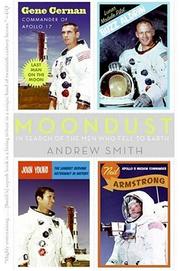
Smith interviews the surviving Moon walkers decades later, asking what the experience meant — a reflective, literary capstone that closes the curriculum by asking what the Moon race ultimately did to the people who lived it.
Discussion
Keep reading
Paths that share books, cover the same subject, or open a related topic.