Ancient Mesopotamia: the best books on the first civilizations
This curriculum takes you from a vivid, story-driven introduction to ancient Mesopotamia all the way through primary sources and specialist scholarship. Each stage builds on the last — first establishing the big picture and key civilizations, then diving into specific institutions (writing, law, religion, empire), and finally engaging with the raw evidence and cutting-edge debates that professional historians wrestle with.
Foundations: The Big Picture
BeginnerGain a confident, chronological overview of Mesopotamian civilization — who the Sumerians, Babylonians, and Assyrians were, where they lived, and why they matter to world history.
▸ Study plan for this stage
Pace: 4–5 weeks, ~25–30 pages/day (approximately 150–175 pages per week). Start with Leick's "Mesopotamia" (weeks 1–2.5), then move to Podany's "The Ancient Near East" (weeks 2.5–5) to deepen and contextualize the overview.
- Chronological framework: the major periods of Mesopotamian civilization (Sumerian, Akkadian, Babylonian, Assyrian) and their approximate dates
- Geographic and environmental context: the Tigris-Euphrates river system, the role of irrigation, and why this region was a cradle of civilization
- The Sumerians as innovators: their contributions to writing (cuneiform), city-states, law codes, and religious institutions
- The rise and fall of empires: how the Akkadians, Babylonians, and Assyrians conquered, ruled, and declined
- Interconnection with the broader Ancient Near East: trade networks, cultural exchange, and relationships with Egypt and other civilizations
- Daily life and social structure: the role of kings, priests, scribes, merchants, and common people in Mesopotamian society
- Why Mesopotamia matters: its legacy in law, writing, mathematics, astronomy, and governance to the modern world
- What were the major civilizations of Mesopotamia in chronological order, and approximately when did each flourish?
- How did the geography and climate of the Tigris-Euphrates region shape the development of Mesopotamian civilization?
- What were the Sumerians' most significant innovations, and how did cuneiform writing develop and spread?
- How did the Akkadians, Babylonians, and Assyrians each leave their mark on Mesopotamian history, and what caused their decline?
- What was the social and political structure of a typical Mesopotamian city-state or empire, and who held power?
- How did Mesopotamia interact with neighboring civilizations like Egypt, and what evidence exists for trade and cultural exchange?
- What aspects of Mesopotamian civilization (law, writing, mathematics, astronomy) continue to influence the modern world?
- Create a visual timeline spanning 3500 BCE to 500 BCE, marking the major periods (Sumerian, Akkadian, Old Babylonian, Assyrian) and key events from both books. Include dates and brief descriptions of each civilization's defining characteristics.
- Draw a map of ancient Mesopotamia showing the Tigris and Euphrates rivers, major city-states (Uruk, Lagash, Babylon, Nineveh), and neighboring regions. Annotate how geography influenced settlement patterns and trade routes.
- Write a one-page comparison chart contrasting the Sumerians, Akkadians, Babylonians, and Assyrians across categories: time period, origins, major achievements, government structure, and reasons for decline.
- Read and summarize 2–3 excerpts from cuneiform texts or law codes (such as Hammurabi's Code, referenced in both books) and explain what they reveal about Mesopotamian values and social hierarchy.
- Create a 'day in the life' narrative for three different social roles in Mesopotamia (e.g., a scribe, a merchant, a farmer) based on details from Leick and Podany, showing how daily life differed by status.
- Compile a list of Mesopotamian innovations and trace their influence into the modern world (e.g., the 60-second minute, written law codes, irrigation systems). Cite specific passages from the books that explain each innovation.
Next up: This stage establishes the chronological and geographic foundations necessary to understand Mesopotamian civilization as a coherent whole; the next stage will likely zoom in on specific aspects—such as religion, literature, science, or political structures—allowing you to explore how these foundational civilizations actually functioned and thought.
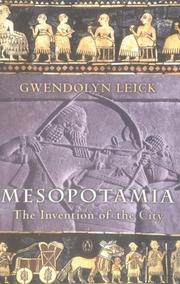
A highly readable city-by-city tour of the great Mesopotamian urban centers — Eridu, Ur, Babylon, Nineveh — that immediately grounds the learner in real places and people. Perfect as a first book because it builds geographic and cultural intuition without demanding prior knowledge.
A concise, authoritative primer that situates Mesopotamia within the broader ancient Near East, clarifying key terms and timelines. Reading it second reinforces and organizes what Leick introduced, filling in political and cultural context.
Core Civilizations: Sumer, Babylon, and Assyria
BeginnerUnderstand the distinct character of each major Mesopotamian civilization — Sumer's city-states, Babylon's law and cosmology, and Assyria's military empire — and how they succeeded one another.
▸ Study plan for this stage
Pace: 12–14 weeks, ~25–30 pages/day (approximately 4–5 weeks per book, with 1–2 weeks for review and synthesis)
- Sumer's decentralized city-state system: how independent cities like Uruk, Lagash, and Ur competed and cooperated, and how this fragmentation left them vulnerable to conquest
- Sumerian foundational innovations: writing (cuneiform), law codes, temple-centered governance, and their lasting influence on later Mesopotamian cultures
- Babylon's rise to dominance through Hammurabi's Code: the shift from city-state autonomy to centralized imperial rule, and how law became an instrument of state power
- Babylonian cosmology and the Enuma Elish: how mythology reinforced Marduk's supremacy and justified Babylon's political hegemony
- Assyria's military-industrial complex: how systematic conquest, deportation, and administrative efficiency created the ancient world's first true territorial empire
- Succession and transformation: how each civilization inherited, adapted, and ultimately superseded the previous one's political and cultural models
- Continuity and change: shared Mesopotamian elements (writing, law, religion) that persisted across all three civilizations despite their distinct characters
- What were the defining characteristics of Sumerian city-states, and why did their political fragmentation make them vulnerable to conquest?
- How did Hammurabi's Code represent a shift in Mesopotamian governance, and what role did law play in consolidating Babylonian power?
- What is the Enuma Elish, and how did Babylonian creation mythology serve political purposes?
- How did Assyria's military organization and administrative system differ from the city-state model of Sumer and the centralized monarchy of Babylon?
- What evidence from these three civilizations shows both continuity (shared cultural elements) and change (distinct political systems) across Mesopotamian history?
- How did each civilization's approach to writing, law, and religion reflect its political structure and values?
- Create a comparative timeline chart (Sumer, Babylon, Assyria) marking major political transitions, key rulers, and technological/cultural innovations; identify overlaps and gaps
- Read and annotate excerpts from Hammurabi's Code (in Kriwaczek) and compare 3–4 laws to Sumerian legal practices (in Kramer); write a 1-page analysis of how law evolved as a tool of state control
- Map the three civilizations' territorial extent at their height using the books' descriptions; note how each expanded or contracted, and hypothesize why based on their political systems
- Write character sketches of 2–3 key figures from each civilization (e.g., Gilgamesh/Hammurabi/Sargon II) based on the books, focusing on how their leadership reflected their civilization's values
- Analyze a passage from the Enuma Elish (quoted in Kriwaczek) and explain how it legitimizes Babylon's political dominance; compare to any Sumerian or Assyrian religious texts mentioned in the other books
- Create a visual diagram showing how cuneiform writing, temple institutions, and law codes were inherited and transformed across all three civilizations
Next up: This stage establishes the three foundational Mesopotamian civilizations and their distinct political models (city-states, centralized monarchy, military empire), preparing you to explore how later empires and external powers (Persia, Greece) challenged and ultimately absorbed Mesopotamian culture.

The classic, still-unmatched popular account of Sumerian civilization by one of the twentieth century's greatest Assyriologists. Kramer's enthusiasm is infectious, and his translations of Sumerian literature give the culture a human voice early in the curriculum.
A sweeping, narrative-driven history from the earliest settlements to the fall of Babylon, with particular depth on Hammurabi, the Kassites, and Nebuchadnezzar. It bridges Sumer and the later empires, making the transition to Assyria feel natural.

The definitive English-language introduction to Assyrian civilization — its warfare, administration, art, and eventual collapse. Saggs is rigorous but accessible, and reading it here completes the learner's panoramic view of all three major civilizations.
Key Institutions: Writing, Law, and Religion
IntermediateUnderstand the specific inventions and institutions that made Mesopotamia the cradle of civilization — cuneiform writing, codified law, and a rich mythological worldview — and how they shaped later cultures including our own.
▸ Study plan for this stage
Pace: 8–10 weeks, ~25–30 pages/day. Allocate roughly 2–3 weeks to "The Writing Revolution" (180 pages), 3–4 weeks to "The Epic of Gilgamesh" (including re-reads and annotation), and 2–3 weeks to "Gods, Demons, and Symbols" (200+ pages), with overlap for synthesis.
- Cuneiform as a technological and cognitive breakthrough: how the shift from pictographic to abstract symbols enabled recording of language, law, and literature
- The relationship between writing systems and social organization: how cuneiform facilitated administration, commerce, and the consolidation of state power
- The Epic of Gilgamesh as a foundational literary text: its role in preserving Mesopotamian values, mortality, friendship, and the human condition
- Codified law and justice in Mesopotamia: the function of written law codes (implied through Gilgamesh and explicit in later traditions) in establishing social order
- Mesopotamian cosmology and mythology: the pantheon, creation myths, and the relationship between gods, humans, and the natural world
- Symbols and ritual practice: how religious symbols embedded in art, architecture, and daily life reinforced Mesopotamian worldview and social hierarchy
- Cultural transmission: how Mesopotamian institutions (writing, law, mythology) influenced later civilizations including Egypt, Greece, and the Near East
- How did the evolution from pictographic to cuneiform writing enable Mesopotamians to record abstract concepts, laws, and stories, and why was this a revolutionary cognitive shift?
- What does the Epic of Gilgamesh reveal about Mesopotamian values regarding mortality, friendship, kingship, and the human relationship to the divine?
- How did the invention of writing support the development of centralized state institutions and codified law in ancient Mesopotamia?
- Identify and explain the roles of at least five major Mesopotamian deities and their significance in the mythological worldview presented in Black's work.
- How do the symbols, demons, and religious practices described in Black's book reflect and reinforce Mesopotamian social hierarchy and cosmological beliefs?
- What evidence from these three texts suggests that Mesopotamian institutions (writing, law, mythology) were transmitted to and influenced later civilizations?
- Create a timeline of writing system evolution using Gnanadesikan's framework: sketch or describe the transition from proto-cuneiform to mature cuneiform, noting which concepts became recordable at each stage.
- Annotate a passage from the Epic of Gilgamesh (e.g., the flood narrative or Gilgamesh's lament for Enkidu) identifying Mesopotamian values, religious beliefs, and social norms embedded in the text.
- Cuneiform transcription exercise: Using Gnanadesikan's explanations, attempt to decode or sketch a simple cuneiform sign and explain how its pictographic origin relates to its abstract meaning.
- Comparative mythology chart: Map out the major Mesopotamian deities from Black's work (Anu, Enlil, Enuma Elish figures, etc.) with their domains, symbols, and relationships; compare to one later mythological system (Egyptian, Greek, or Hebrew).
- Write a 2–3 page reflection connecting a specific symbol or demon from Black's work to a scene or theme in the Epic of Gilgamesh, showing how religious worldview shaped the narrative.
- Research and present: Identify one Mesopotamian law or institution mentioned implicitly in Gilgamesh or explicitly in later codes, trace its influence on a later civilization (e.g., Hammurabi's Code → Hebrew law, or cuneiform → alphabetic writing), and write a 1–2 page analysis.
Next up: This stage establishes the foundational technologies and belief systems that enabled Mesopotamian civilization to flourish and influence the wider ancient world, preparing you to explore how these institutions were adapted, challenged, and transformed by neighboring and successor civilizations in the next stage.

Places the invention of cuneiform in a global history of writing systems, helping the learner appreciate exactly what was revolutionary about Sumerian script. Reading it here, after the historical overview, transforms cuneiform from a curiosity into a world-changing technology.
The George Penguin Classics translation is the gold-standard readable edition of humanity's oldest great literary work. Engaging with the primary text at this stage — flood myth, friendship, the fear of death — makes all subsequent scholarship feel alive and grounded.
An illustrated dictionary of Mesopotamian religion and mythology that serves as an essential reference companion. Reading it after Gilgamesh allows the learner to decode the symbolic world encountered in the epic and in later specialist texts.
Advanced Scholarship: History, Society, and Empire
ExpertEngage with professional historical analysis of Mesopotamian society, economy, diplomacy, and imperial power, developing the critical vocabulary to read academic literature independently.
▸ Study plan for this stage
Pace: 8–10 weeks, ~40–50 pages/day (with 2–3 days per week for review and exercises)
- Diplomatic networks and treaty-making in the ancient Near East: how kings maintained power through correspondence, gift-exchange, and strategic alliances
- The role of language and writing systems (cuneiform, Akkadian, Sumerian) as tools of administration, diplomacy, and cultural identity across Mesopotamian empires
- Economic structures in Mesopotamia: temple economies, merchant networks, taxation, and labor systems that sustained imperial power
- Social hierarchy and gender roles: the stratification of Mesopotamian society from royalty through merchants, scribes, farmers, and enslaved persons
- Imperial expansion and consolidation: how Mesopotamian states (Akkad, Babylon, Assyria) built and maintained territorial control through military, administrative, and ideological means
- Daily material culture as evidence: how archaeology and textual sources reveal the lived experience of ordinary Mesopotamians and validate or complicate elite narratives
- Scholarly methodology: how to read cuneiform sources critically, evaluate competing interpretations of fragmentary evidence, and distinguish primary from secondary analysis
- How did Mesopotamian kings use diplomatic correspondence and gift-exchange to maintain power and prevent conflict, and what does Podany's analysis reveal about the limits of these strategies?
- What role did writing systems and language play in Mesopotamian imperial administration and cultural identity, and how does Allan's handbook contextualize cuneiform within broader linguistic history?
- How were Mesopotamian economies structured, and what evidence do we have (from both texts and archaeology) about who controlled resources and labor?
- What can material remains and household archaeology tell us about daily life that elite royal inscriptions and administrative texts do not, and why is this distinction important for historical understanding?
- How did gender, class, and occupation shape an individual's legal status, economic opportunities, and social mobility in ancient Mesopotamia?
- What are the key differences between Akkadian, Babylonian, and Assyrian imperial strategies, and what factors explain their relative success or failure?
- Create a comparative timeline of three Mesopotamian empires (Akkad, Babylon, Assyria) showing key diplomatic events, military campaigns, and economic policies from Podany; annotate with linguistic or administrative innovations from Allan and daily-life evidence from Nemet-Nejat
- Select one cuneiform text referenced in Podany (e.g., a royal letter or treaty) and write a 2–3 page analysis addressing: What does this source reveal about diplomatic relationships? What does it assume about the reader's knowledge? What gaps or biases might it contain?
- Map the social hierarchy of a Mesopotamian city-state using evidence from all three books: identify at least 6–8 social categories, describe their economic roles and legal status, and note how gender intersected with class
- Conduct a 'material culture case study': choose one artifact or household type discussed in Nemet-Nejat (e.g., a merchant's house, a temple workshop, a farmer's tools) and write a 2–page reflection on what it reveals about economic life and social relationships that royal inscriptions might obscure
- Debate exercise: Divide into two positions—(1) Mesopotamian empires were held together primarily by military force and (2) they relied on economic interdependence and cultural legitimacy—and construct arguments using evidence from all three books
- Create an annotated bibliography of 3–5 scholarly articles on a single Mesopotamian topic (diplomacy, trade, gender, language, or daily life) and write a 1-page synthesis comparing their methodologies and conclusions to those in your three assigned books
Next up: This stage equips you with the critical vocabulary, methodological awareness, and interpretive depth to engage with specialized monographs and primary sources independently, preparing you to either pursue deeper regional expertise (e.g., Assyrian imperial ideology, women's economic roles) or transition to comparative ancient history that contextualizes Mesopotamia within broader patterns of state

A groundbreaking work on ancient diplomacy, trade, and inter-state relations that reveals Mesopotamia as part of a sophisticated international system. It introduces the learner to how historians use cuneiform archives — letters, treaties, gift lists — as evidence.

Provides rigorous scholarly context for understanding how Akkadian and Sumerian have been deciphered and studied, deepening appreciation for the evidentiary basis of everything learned so far.
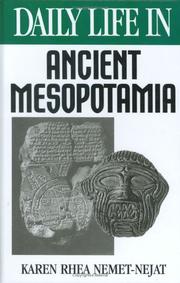
A meticulous, source-based reconstruction of ordinary Mesopotamian life — family, medicine, trade, education, and gender — that rounds out the curriculum by shifting focus from kings and empires to the people who actually lived there.
Discussion
Keep reading
Paths that share books, cover the same subject, or open a related topic.