Best Books on the History of Iran, in Reading Order
Iran is one of the few places where a continuous cultural identity runs from antiquity to the present, and reading it well means refusing to treat 1979 as the beginning. This path starts with a single-volume history of the whole span, goes back to the Achaemenids and the epic that preserved their memory, then works forward through the Qajar and Pahlavi state, oil and coup, and ends with the revolution and the republic it built. Later stages assume the dynastic vocabulary the earlier ones establish.
The long view first
BeginnerCarry the full 2,500-year arc — Achaemenid, Islamic, Safavid, Qajar, Pahlavi, Islamic Republic — as one continuous story before specialising.
▸ Study plan for this stage
Pace: Five weeks. A History of Iran is 341 pages covering two and a half millennia, so it moves fast — two to three weeks, with a dynastic timeline being built as you go. The Persians is 448 pages and takes two to three; read it second and read it as an argument rather than as a survey, because its value
- The dynastic spine you will need for every later stage: Achaemenid, Parthian, Sasanian, the Arab conquest, the Persian revival under the Abbasid caliphate, Seljuk and Mongol rule, Timurid, Safavid, Qajar, Pahlavi, Islamic Republic
- Axworthy's central claim — that Persian identity survived repeated conquest because it was carried in language, literature and administrative practice rather than in a state, which is what the subtitle means by an empire of the mind
- The conquerors absorbed rather than absorbing: Arab, Turkic and Mongol rulers governed through Persian bureaucrats and adopted Persian court culture, which is the mechanism behind the survival
- The Safavid decision of 1501 to impose Twelver Shi'ism on a largely Sunni population, which is the single most consequential act in Iranian history for everything after it
- The clerical hierarchy that Shi'ism produced — a body of scholars with independent income and authority, structurally unlike Sunni religious establishments, and therefore capable of opposing the state
- Katouzian's thesis of arbitrary rule: government unconstrained by law or by a hereditary landed class, so property and status are insecure and every generation starts over
- The 'short-term society' consequence he draws from it — no accumulation of institutions, and an oscillation between arbitrary government and chaos rather than between reform and reaction
- The standard objection to Katouzian, which is that a thesis explaining two and a half thousand years by one cultural pattern is close to unfalsifiable
- Iran was conquered repeatedly and remained recognisably Persian. What is Axworthy's explanation, and what evidence would test it?
- The Safavids made Iran Shia by state decision. Name three consequences that are still operative
- State Katouzian's arbitrary-rule thesis in your own words, then state the strongest objection to it
- Where do Axworthy and Katouzian actually disagree — about facts, about weighting, or about what level of explanation is appropriate?
- List the dynasties in order with a century attached to each. If you cannot do this, the next three stages will not work
- Build a twenty-entry dynastic timeline from Cyrus to 1979. Keep it visible for the remainder of the path
- Map the extent of Iranian-ruled territory at four moments: Achaemenid peak, Sasanian, Safavid, and 1900. The nineteenth-century contraction is the story of the third stage
- Write 300 words applying Katouzian's short-term society idea to one specific episode Axworthy narrates, and then say honestly whether it fits or is being made to fit
- Build a glossary you will need throughout: shah, shahanshah, vizier, ulama, marja, bazaar, Twelver Shi'ism, the Occultation, mujtahid. Add to it in every later stage
- Write a paragraph on what makes Persian a different case from, say, Egyptian or Anatolian continuity — the comparison sharpens Axworthy's claim considerably
Next up: You now carry the whole arc, which means the ancient material can be read as the foundation of a living identity rather than as a separate classical subject.
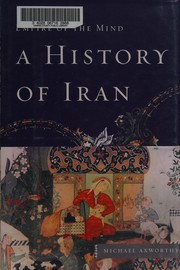
The best single volume on the whole span, and unusually good at showing how Persian culture survived conquest after conquest. Everything later in this path is a chapter of it opened out.

Katouzian writes from inside the tradition and argues for a distinctive pattern of arbitrary rule and periodic upheaval. Read as a counterweight to Axworthy's more narrative approach.
Ancient Persia and its memory
IntermediateSeparate the historical Achaemenid empire from the Greek and Persian literary traditions that have transmitted it, and see why both still matter to Iranian self-understanding.
▸ Study plan for this stage
Pace: Eight weeks. Persian Fire is accessible narrative history and reads fast — two weeks. The Persian Empire is only 208 pages but is source-led and dense; two weeks, read slowly with attention to the inscriptions and objects it reproduces. The Shahnameh is 928 pages of epic poetry and should not be rus
- The Achaemenid empire as an administrative achievement: satrapies, a road system, standardised tribute, and multiple languages of record — an empire held by organisation rather than by permanent garrison
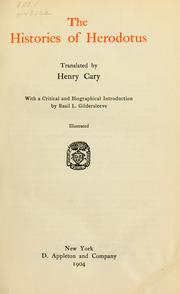
- The evidence problem: the narrative of the Greek wars comes almost entirely from Herodotus, a Greek writing for Greeks, while the Persian record is inscriptions, administrative tablets and royal art with no continuous narrative at all
- Royal ideology in the inscriptions — kingship granted by Ahura Mazda, the king as restorer of order against the lie — and Persepolis as the same argument built in stone
- The Cyrus Cylinder, what it actually says as a Mesopotamian royal accession text, and the modern political uses it has been put to by two very different Iranian regimes
- Holland's corrective: telling the Greco-Persian wars with Persia at the centre reveals a great power dealing with a peripheral problem, not a duel between equals
- The Shahnameh as a preservation project — the pre-Islamic Persian past carried through a millennium of Arabic and Turkic rule in a Persian that deliberately minimises Arabic vocabulary
- The epic's three registers, mythical, heroic and historical, and the fact that the transition between legend and record is gradual rather than marked
- Rostam as the central figure, and the Rostam and Sohrab episode as the passage that most Iranians can quote — which is itself a fact about how the past is transmitted
- What sources does Achaemenid history rest on, and what specifically does each kind fail to tell you?
- The Cyrus Cylinder is often described as the first charter of human rights. What does the text actually say, and who has needed that description to be true?
- Name three instruments by which the Achaemenids governed an empire of that size, and say which of them the Greeks understood least
- Where in the Shahnameh does legend give way to something like record, and how can a reader tell?
- What did Ferdowsi's project do for Persian identity that a prose chronicle could not have done?
- Map the satrapies and the royal road, and mark the distances. The logistics are the empire
- Read the Behistun inscription in translation and write a paragraph on it as a political document: who is the audience, what is claimed, and what is conspicuously not said
- Read the Rostam and Sohrab episode closely and write 300 words on why this, of all the epic's episodes, is the one that everyone knows
- Take one Greek battle and write the Persian account of it: the strategic aim, the constraints, and what the defeat actually cost the empire. Then compare with the version you were taught
- Add every ancient term and name you needed to look up to your glossary from the first stage
Next up: With the ancient inheritance and the literature that carried it, you can read the modern state as a country negotiating with a very long memory rather than as a new nation.

The Greco-Persian wars told with Persia at the centre rather than as the enemy, which is the necessary corrective to a Herodotus-shaped education. Accessible enough to read fast.
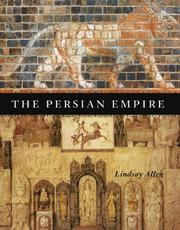
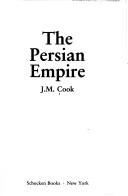
A short, source-led account of Achaemenid administration and imperial art, which grounds Holland's narrative in inscriptions and archaeology.
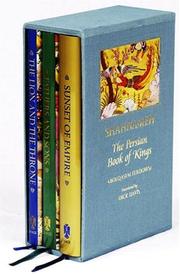
The national epic that carried the pre-Islamic Persian past through a millennium of Arabic and Turkic rule. Read after the histories, so you can hear where legend replaces record.
The making of the modern state
IntermediateTrace how Qajar weakness, constitutionalism, oil concessions and foreign intervention produced the Pahlavi state and the grievances that ended it.
▸ Study plan for this stage
Pace: Nine weeks. A History of Modern Iran is 288 pages and is the scaffolding — two weeks, read first. Iran: A Modern History is 979 pages beginning in 1501 and takes five to six; it is the most complete account available and it is slow going, so read it in chapter-sized portions against Abrahamian's out
- Qajar weakness as the enabling condition: territorial losses to Russia, capitulations granting foreigners legal privileges, and a state that sold concessions because it could not tax
- The tobacco protest of the 1890s, in which clergy and bazaar merchants combined to force the cancellation of a foreign monopoly — the template for every subsequent mass mobilisation including 1979
- The Constitutional Revolution and the founding of a parliament, and the reasons constitutional government failed to consolidate — foreign intervention, a divided reformist coalition, and the ulama split over what a constitution meant
- The 1907 division of the country into Russian and British spheres, agreed without Iranian participation, which is the founding fact of modern Iranian suspicion of great powers
- The oil concession and the company that grew from it, and the specific terms that made the arrangement intolerable — the accounting the Iranian government was never permitted to see
- Reza Shah's state-building: conscription, a national bureaucracy, railways, secular courts, the assault on clerical authority and on tribal autonomy, and the forced unveiling — real modernisation that created its own opposition
- Mosaddegh, the nationalisation of oil, and the 1953 coup — the covert operation, the domestic actors who made it work, and the eventual official acknowledgement of the American role
- Abrahamian's class-based reading against Amanat's longer cultural and institutional frame, which produce different accounts of the same events
- What did the tobacco protest establish about the alliance between clergy and bazaar? Where does that alliance reappear later, and where does it fail to?
- What was the Constitutional Revolution trying to achieve, and why did constitutional government fail to take root?
- Reza Shah's modernisation was substantial. What did it build, and which constituencies did it create in opposition to itself?
- Separate the foreign role in 1953 from the domestic one. What does each account require you to believe, and what evidence supports each?
- Abrahamian explains by class, Amanat by longer institutional and cultural continuity. Which better explains 1953, and which better explains 1979?
- Build a twenty-five-entry timeline from the early Qajar period to 1953. The nineteenth century is the part most readers skip and it is where the grievances are formed
- Write out the terms of the oil concession and how they changed at each renegotiation, including the share that reached the Iranian treasury. The arithmetic explains the politics
- Write two 500-word accounts of the 1953 coup — one centred on foreign agency, one on domestic politics — and make both defensible. Then say which you think is closer to right
- Write 300 words on what the first parliament actually did in its early sessions, rather than on what it symbolised
- Take one of Reza Shah's reforms and trace who benefited and who was dispossessed by it. That ledger is the prehistory of 1979
Next up: Everything needed to read 1979 as an outcome rather than an eruption is now in place — including the specific grievances that the revolution's coalition was assembled from.
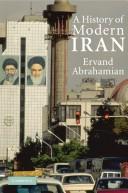
The standard concise account of the last two centuries, strong on class and social structure where the surveys are strong on dynasties. The scaffolding for the rest of the stage.
Amanat's much longer treatment starts in 1501 and shows the Safavid inheritance that Abrahamian largely assumes. Slow, but the most complete modern history available.
The 1953 coup against Mosaddegh, narrated hour by hour — the single episode that does most to explain later Iranian distrust of Britain and the United States.
Revolution and the Islamic Republic
IntermediateAccount for 1979 as an outcome of everything above rather than a rupture, and understand how the republic's institutions actually work.
▸ Study plan for this stage
Pace: Ten weeks. The Shah is 488 pages and takes three; read it first so you know what fell before reading accounts of the fall. Shah of Shahs is 162 pages and takes two or three evenings, read as testimony. Revolutionary Iran is 528 pages and takes three to four, and is the book that carries the story pa
- Milani's archival access and what it shows: a ruler who was indecisive under pressure, isolated from information by his own security apparatus, and concealing a terminal illness during the decisive year
- The post-1953 consolidation, the security service, and the systematic destruction of the secular opposition — which is a large part of why the eventual opposition was religious
- The White Revolution's land reform and enfranchisement, the clerical opposition it provoked, and the exile that made a provincial cleric into a national symbol
- The revolutionary sequence of 1977 to 1979: the mourning cycle that turned each round of deaths into the next demonstration, the oil workers' strikes that made the country ungovernable, and the army's eventual declaration of neutrality
- The breadth of the coalition — leftists, nationalists, liberals, bazaar merchants, clergy — and the speed with which Khomeini consolidated against every part of it that was not his own
- Velayat-e faqih, the guardianship of the jurist, as a genuine doctrinal innovation rather than an inherited Shia position, and the constitutional structure built on it
- The Iran–Iraq war as the regime's consolidating event: eight years that militarised the state, created the Revolutionary Guard as a political and economic actor, and made dissent equivalent to disloyalty
- Takeyh's framework of factional politics, in which foreign policy is an output of internal contests rather than a coherent national strategy
- What does Milani's archival access reveal about why the regime fell that an account written from outside could not?
- Why did such a broad coalition unite behind Khomeini, and by what specific steps did he eliminate the rest of it within two years?
- What is velayat-e faqih, and in what sense was it an innovation? What did traditional Shia political thought hold instead?
- What did the war with Iraq do to the republic's internal politics, and would the regime have consolidated as completely without it?
- Kapuściński is impressionistic and has been challenged on accuracy. What is his book good evidence for, and what should not be taken from it?
- Build a month-by-month timeline from early 1977 to the end of 1981. The compression of events in that period is the thing most accounts blur
- Diagram the institutions of the Islamic Republic showing who appoints whom, who can veto whom, and which bodies are elected. It is not a simple hierarchy and drawing it is the fastest way to understand it
- Read Kapuściński's photograph sections and write a paragraph on the technique — what it captures and what it licenses him to leave out
- Take a current news story about Iran and analyse it using Takeyh's factional framework. Note explicitly what you needed to know that the article did not supply
- Write the closing essay: 1,500 words on whether 1979 is better read as rupture or as continuation, citing a book from every stage of this path and naming which author most disagrees with you
Next up: This closes the path; the natural continuations are Persian literature in translation from Hafez to the modern novel, the social history of the Iranian diaspora, the nuclear negotiation record, and Iranian cinema as the country's most legible export.

A biography built on the Pahlavi archives that explains the regime's collapse from inside its own decision-making. Read before the revolution narratives so you know what fell.
A reporter's impressionistic account of the revolution as it happened, best read as testimony rather than history. Its power depends on already knowing the chronology.
Axworthy returns to carry the story from 1979 through the Iran-Iraq war and after, which is where most general histories stop.

A study of the republic's foreign policy and factional politics, and the most useful book here for reading current Iranian news intelligently.
Discussion
Keep reading
Paths that share books, cover the same subject, or open a related topic.