The Iranian Revolution: essential books on Iran's 1979 upheaval
This curriculum takes the reader from accessible narrative histories through firsthand memoirs and into rigorous analytical scholarship, building a complete picture of the Iranian Revolution. Each stage assumes the vocabulary and context established in the previous one, so that by the final stage the reader can engage with competing ideological and geopolitical interpretations of one of the twentieth century's most consequential upheavals.
Foundations: The Story of the Revolution
BeginnerGrasp the essential narrative — who the key players were, why the Shah fell, how Khomeini rose, and what the Islamic Republic looked like in its first years — before tackling deeper analysis.
▸ Study plan for this stage
Pace: 8–10 weeks, ~40–50 pages/day. Start with "All the Shah's Men" (4–5 weeks, ~25 pages/day for a ~350-page book), then move to "Destiny Disrupted" (4–5 weeks, ~25 pages/day for the relevant sections covering the revolution and early Islamic Republic).
- The Shah's authoritarian rule, modernization agenda, and dependence on Western (especially American) support, as detailed in Kinzer's account of his rise and consolidation of power
- The 1953 CIA-backed coup that overthrew Prime Minister Mossadegh and its long-term consequences for Iranian nationalism and anti-Western sentiment
- The role of religious institutions, Shia clergy, and Ayatollah Khomeini's ideology in mobilizing opposition to the Shah's secular modernization
- The economic grievances, social inequality, and cultural tensions that fueled mass discontent across Iranian society by the late 1970s
- Khomeini's vision for an Islamic Republic as an alternative to both the Shah's authoritarianism and Western-style secular governance
- The revolutionary process itself—protests, strikes, military defection, and the Shah's flight in early 1979—as a narrative arc
- The consolidation of power by Khomeini and the early Islamic Republic's institutional structure, including the role of the Revolutionary Guards and the Constitution of 1979
- How Ansary's broader historical context (Islamic history, Persian culture, regional dynamics) illuminates why the revolution took the form it did
- What were the main reasons the Shah fell in 1979, and how did the 1953 coup contribute to his eventual downfall?
- Who was Ayatollah Khomeini, what was his vision for Iran, and how did he come to lead the revolution from exile?
- How did the Shah's modernization policies and relationship with the West create the conditions for revolution?
- What role did religious institutions and Shia clergy play in organizing and sustaining the revolutionary movement?
- What was the Islamic Republic's early institutional structure, and how did Khomeini consolidate power after 1979?
- How does Iran's longer Islamic and Persian history (as presented in Ansary) help explain why the revolution took an Islamic rather than secular form?
- Create a timeline of key events from the 1953 coup through 1979, marking the Shah's major policies, Khomeini's milestones, and turning points in popular discontent
- Write a one-page character sketch of the Shah and Khomeini, contrasting their visions for Iran and their sources of power
- Map the Shah's supporters (military, secret police, Western allies) versus the revolution's coalition (clergy, bazaar merchants, students, workers) using evidence from Kinzer
- Annotate 3–4 key passages from Kinzer that explain the 1953 coup's long-term impact on Iranian nationalism
- Create a visual diagram showing the early Islamic Republic's power structure (Supreme Leader, Revolutionary Guards, Parliament, judiciary) as described in both books
- Write a short reflection (500 words) on how Ansary's account of Islamic and Persian history deepens your understanding of why Khomeini's Islamic vision resonated with Iranians
Next up: This stage equips you with the narrative backbone and key actors needed to move into deeper analysis—whether examining the ideological foundations of Khomeini's thought, the geopolitical consequences of the revolution, or the internal power struggles that shaped Iran's subsequent decades.
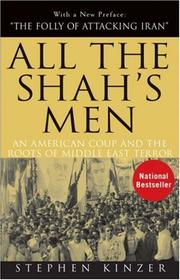
Kinzer's gripping account of the 1953 CIA-backed coup that restored the Shah establishes the crucial backstory without which the revolution makes little sense. Its journalistic clarity makes it the perfect entry point for beginners.
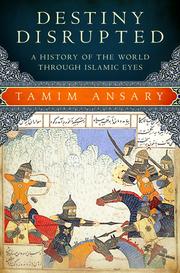
A sweeping, readable history of the Islamic world from its own perspective, giving the reader the cultural and religious framework — Islam, Shia identity, the concept of clerical authority — needed to understand Khomeini's appeal.
Living It: Memoirs from Inside the Revolution
BeginnerDevelop an emotional and human understanding of what the revolution felt like on the ground — for ordinary Iranians, women, intellectuals, and those who eventually fled — grounding the abstract history in lived experience.
▸ Study plan for this stage
Pace: 8–10 weeks, ~20–25 pages/day (Persepolis: 4–5 weeks, ~25 pages/day; Reading Lolita: 4–5 weeks, ~20 pages/day). Include weekly reflection days.
- The revolution as lived experience: how ordinary Iranians—especially women and intellectuals—experienced daily life, fear, and loss during and after 1979
- The tension between public conformity and private resistance: how Iranians maintained identity and freedom in secret (Persepolis's hidden parties, Reading Lolita's clandestine book club)
- Coming of age under revolution: how young people like Marjane navigated identity formation amid political upheaval and ideological pressure
- The role of women under Islamic rule: restrictions on dress, behavior, and autonomy, and women's creative strategies for agency and self-expression
- Exile and displacement: the psychological and emotional cost of leaving Iran, losing home, and living between two worlds
- Art, literature, and humor as survival tools: how creative expression and forbidden books became acts of resistance and emotional sustenance
- The gap between revolutionary ideology and reality: disillusionment with the revolution's promises and the human cost of political transformation
- How does Marjane's perspective on the revolution change from the beginning to the end of Persepolis, and what specific events trigger these shifts?
- What role do forbidden activities (parties, music, books, Western culture) play in Persepolis and Reading Lolita, and what do they reveal about resistance?
- How do the women in both texts navigate restrictions on their freedom, and what strategies do they use to maintain their sense of self?
- What does 'home' mean to Marjane and Azar's students, and how does exile or displacement change that meaning?
- How do Satrapi's illustrations and Nafisi's literary analysis each convey emotional truths that statistics or political history alone cannot?
- What parallels exist between Marjane's coming-of-age story and the experiences of Azar's female students in Reading Lolita, despite their different ages and circumstances?
- Create a visual timeline of Marjane's emotional journey through Persepolis (using sketches, colors, or symbols) that mirrors Satrapi's graphic style—mark moments of hope, fear, anger, and loss.
- Write a 'secret diary entry' from the perspective of one character (Marjane, Azar, or one of her students) describing a forbidden activity or private moment of resistance—focus on sensory details and emotional truth.
- Analyze one illustration from Persepolis and one passage from Reading Lolita that both deal with restriction or resistance; compare how image and text convey similar emotional truths differently.
- Create a 'banned books' list for revolutionary Iran based on the texts, then write a brief reflection on why each book mattered to the characters and what reading them risked.
- Interview someone who has experienced displacement, exile, or living under a restrictive regime (if possible), or write a fictional interview with Marjane or Azar based on the texts—focus on the emotional weight of leaving home.
- Design a 'secret space' (real or imagined) where you could maintain freedom and identity under oppressive conditions—describe what you'd keep there, why, and what it would mean to you. Reflect on how this mirrors the spaces in both texts.
Next up: This stage has grounded the revolution in human emotion and lived experience; the next stage will zoom out to examine the historical, political, and ideological forces that created the conditions for revolution and shaped its trajectory.
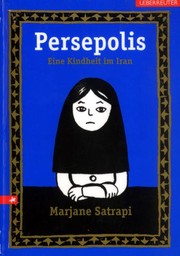
This celebrated graphic memoir places the reader inside a Tehran childhood spanning the revolution and the Iran-Iraq War. Its accessibility and intimacy make complex political shifts viscerally real, and it is the ideal bridge from overview to personal testimony.

Nafisi's memoir of running a secret women's literature circle under the Islamic Republic illuminates how the revolution reshaped private life, gender, and intellectual freedom — essential dimensions that political histories often underplay.
Going Deeper: Serious Histories and Key Figures
IntermediateMove from narrative and memoir into rigorous historical scholarship, understanding the ideological roots of the revolution, Khomeini's political theology, and the internal power struggles that shaped the Islamic Republic.
One of the first serious biographies of Khomeini, tracing his life, theology, and political strategy. Reading it here gives the reader a detailed portrait of the revolution's architect before tackling structural analyses.
A landmark scholarly history of the Islamic Republic's turbulent first decade — factional conflicts, the hostage crisis, the war with Iraq, and the consolidation of clerical power. Bakhash's depth rewards readers who now have the foundational context.
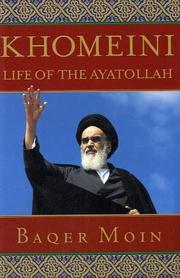
The most authoritative and balanced biography of Khomeini available in English, drawing on Persian sources. It deepens and corrects the picture built by earlier readings and is best appreciated after Bakhash's institutional history.
Advanced Analysis: Ideology, Society, and Global Consequences
ExpertEngage with the revolution as a world-historical event — analyzing its ideological DNA, its export of political Islam, its role in reshaping the Middle East, and its ongoing consequences for U.S. foreign policy and global order.
▸ Study plan for this stage
Pace: 8–10 weeks, ~40–50 pages/day, with 1–2 weeks per book for deep engagement and synthesis
- Khomeini's ideological framework: velayat-e faqih (guardianship of the jurist) as a revolutionary doctrine that fused Islamic law with modern state power
- The concept of 'export of revolution' and how Iran positioned itself as the vanguard of Islamic resistance against Western imperialism and secular Arab regimes
- Habeck's analysis of how Western policymakers misunderstood Iran's revolutionary ideology and the role of religious conviction in shaping Iranian foreign policy
- The triangular dynamics between Iran, Israel, and the United States: how the revolution reframed regional geopolitics and created new alliance patterns
- Parsi's argument about the structural contradictions in U.S.–Iran relations: the impossibility of stable coexistence given competing regional ambitions and ideological opposition
- The role of Shiite theology and messianism in legitimizing revolutionary action and state violence
- How the Iranian Revolution challenged the post-WWII international order by asserting a non-aligned, anti-hegemonic model of state power
- The long-term consequences of the revolution for Middle Eastern state formation, sectarian conflict, and the rise of non-state actors (Hezbollah, proxy militias)
- What is velayat-e faqih, and how did Khomeini use this concept to legitimize both the revolution and the structure of the Islamic Republic?
- According to Habeck, what were the key misunderstandings Western analysts had about Iranian revolutionary ideology, and how did these misunderstandings shape U.S. policy?
- How did Iran's revolutionary government justify the 'export of revolution,' and what role did anti-imperialism and Shiite identity play in this doctrine?
- What does Parsi mean by a 'treacherous alliance,' and how does he explain the structural impossibility of U.S.–Iran rapprochement given their competing interests in the Middle East?
- How did the Iranian Revolution reshape regional power dynamics, particularly in relation to Israel, Saudi Arabia, and the Arab states?
- What is the connection between Shiite theology (particularly concepts of martyrdom and the Hidden Imam) and the revolutionary state's use of violence and militarism?
- Close-read 3–4 key passages from Khomeini's 'Islam and Revolution' (e.g., on velayat-e faqih, the nature of Islamic government) and write a 2–3 page exegesis explaining how each passage functions as both theological argument and political manifesto
- Create a detailed comparison chart: map Khomeini's stated ideological goals against Habeck's analysis of how the U.S. intelligence community and policymakers interpreted (or misinterpreted) those goals—identify at least 5 points of divergence
- Construct a timeline of Iran's regional interventions (1979–2000s) using Parsi's account, then annotate it with the ideological justifications from Khomeini's writings—show how doctrine translated into action
- Write a policy memo (2–3 pages) from the perspective of a U.S. State Department analyst in 1980, using only Habeck's evidence about what Western experts knew and believed about Iran's revolutionary ideology—then write a second memo correcting the first with hindsight
- Debate exercise: one person argues (using Parsi) that U.S.–Iran conflict is structurally inevitable; the other argues (using evidence from all three books) that it was contingent on specific policy choices—prepare evidence from each text
- Create a concept map showing how Shiite theology, Khomeini's political philosophy, and Iran's regional strategy are interconnected—use specific examples from all three books to illustrate causal links
Next up: This stage equips you to understand the Iranian Revolution not as an isolated event but as a world-historical rupture that fundamentally altered the ideological landscape of global politics and regional power; the next stage will likely examine how these revolutionary principles played out in specific crises, conflicts, and diplomatic moments, or how they evolved and faced internal contradictions
Reading Khomeini's own political writings — especially his theory of velayat-e faqih (guardianship of the jurist) — is essential for any serious student. Having built up context across three stages, the reader can now engage critically with the primary source.
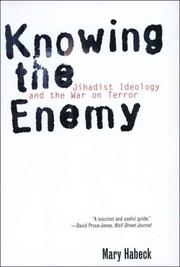
Habeck situates the Iranian Revolution within the broader rise of jihadist and Islamist ideology globally, helping the reader trace how the revolution's ideas spread and mutated far beyond Iran's borders.
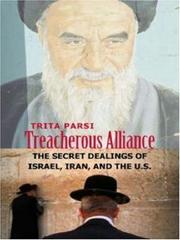
A meticulously researched study of the secret and shifting strategic relationship between Iran, Israel, and the United States from 1948 to the present. It is the ideal capstone, showing how the Islamic Republic became a central axis of global geopolitics.
Discussion
Keep reading
Paths that share books, cover the same subject, or open a related topic.