Almost every English-language reading list on Iran starts with the revolution, and that is the mistake this path is built to avoid. Begin in 1979 and everything before it becomes prologue — a country that only acquires a history at the moment it becomes a foreign policy problem. Begin at the other end and the revolution becomes what it actually was: one more episode in a very long argument between a centralising state, a clerical establishment and a population with a strong sense of its own antiquity.
The second reason for order here is vocabulary. Achaemenid, Safavid, Qajar, Pahlavi, the constitutional revolution, the oil concession — the late books assume all of it. A survey read first costs you a week and saves you from bouncing off everything after.
The long arc first
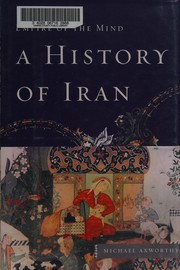
A History of Iran is the best single volume on the whole span and is particularly good on how Persian culture survived conquest after conquest without dissolving into it. Everything later in this path is one of its chapters opened out.
The Persians is the counterweight. Katouzian writes from inside the tradition and argues for a recurring pattern of arbitrary rule followed by upheaval — a structural claim rather than a narrative one, and not everyone in the field accepts it. Reading the two together is more useful than picking one.
Antiquity, and how it was remembered
Persian Fire tells the Greco-Persian wars with Persia at the centre instead of as the antagonist, which is the necessary corrective to an education shaped by Herodotus. Our catalogue holds it under a record flagged as a duplicate, so the title may look odd on the path page — that is our data, not the book.
The Persian empire is short and source-led, grounding the narrative in inscriptions, administration and imperial art rather than in battles. The catalogue lists the author in inverted form, another of ours.
Shahnameh comes after the histories on purpose. Ferdowsi's epic is what carried the pre-Islamic past through a thousand years of Arabic and Turkic rule, and it matters enormously to how Iranians understand themselves — but you want to be able to hear where legend has replaced record, which requires having read the record first.
The making of the modern state
A history of modern Iran is the standard concise account of the last two centuries and is strong on class and social structure where the general surveys are strong on dynasties. Treat it as the scaffolding for this stage.
Iran is Amanat's much longer treatment, beginning in 1501 and supplying the Safavid inheritance that Abrahamian largely assumes. It is slow going and it is the most complete modern history available in English.
All the Shah's Men narrates the 1953 coup against Mosaddegh almost hour by hour. No single episode does more to explain later Iranian distrust of Britain and the United States, and the account of Western responsibility for it is not seriously contested any longer.
Revolution, and the republic it produced
The Shah is built on Pahlavi archives and explains the regime's collapse from inside its own decision-making. Read it before the revolution narratives so that you know what fell and why it was more fragile than it looked.
Shah of Shahs is a reporter's impressionistic account of the revolution as it unfolded. Kapuściński's factual reliability has been questioned by later scholars and by his own biographers; read it as testimony with a voice rather than as a record, and read it only once you have the chronology from elsewhere.
Revolutionary Iran carries the story from 1979 through the Iran-Iraq war and beyond, which is exactly where most general histories stop. Guardians of the Revolution closes the path with the republic's factional politics and foreign policy, and is the book that makes current Iranian news legible rather than baffling.
Follow the full path and 1979 stops being a starting point and becomes a consequence.
Follow the full ordered path here: How to Learn the History of Iran from Books, in Order.