Best Persian Literature to Read, in Order
This curriculum moves from essential cultural and historical grounding through the great classical poets — Ferdowsi, Rumi, and Hafez — and then into the rich landscape of modern Iranian fiction. Because the learner starts at an intermediate level, the path skips basic introductions and instead opens with a focused contextual primer before diving straight into the masterworks, ensuring each stage builds the literary and cultural intuition needed for the next.
Cultural & Historical Foundations
IntermediateBuild the mythological, historical, and aesthetic framework of Persian civilization so that the classical poets feel alive and rooted rather than ornamental.
▸ Study plan for this stage
Pace: 6–7 weeks, ~25–30 pages/day (alternating between the two books to build context in parallel)
- The Achaemenid, Parthian, and Sassanid empires as foundational to Persian identity and aesthetic values
- The role of Zoroastrianism in shaping Persian cosmology, ethics, and literary symbolism (light vs. darkness, good vs. evil)
- The Silk Road and cultural synthesis: how Persian civilization absorbed and transformed Greek, Indian, and Central Asian influences
- The pre-Islamic Persian court tradition: patronage systems, royal ideology, and the institution of the poet-advisor
- Islamic conquest and the Persian literary renaissance: how Persian language and literature survived and flourished under Arab rule
- Key aesthetic principles: the concept of *adab* (refined culture), *firdawsi* (eternal glory), and the role of memory and storytelling in preserving civilization
- Geography and climate as shapers of Persian thought: the oasis, the desert, and the importance of water in both practical and metaphorical terms
- The historical continuity of Persian civilization across dynasties and religions as a source of literary pride and mythic consciousness
- How did Zoroastrianism's dualistic worldview (light/darkness, good/evil) become embedded in Persian literary imagery and moral frameworks?
- What was the role of the Persian court in patronizing poets and literature, and how did this shape the relationship between power and artistic expression?
- How did Persian civilization maintain cultural continuity and literary identity after the Islamic conquest, and why did the Persian language survive and flourish?
- What is *adab*, and how does it function as an aesthetic and ethical ideal in Persian literature?
- How did Persian civilization's position on the Silk Road lead to cultural synthesis, and what foreign influences are visible in Persian literary traditions?
- Why is the concept of *firdawsi* (eternal glory through memory and storytelling) central to understanding Persian poets' ambitions and worldview?
- Create a timeline of Persian dynasties (Achaemenid through early Islamic period) with key cultural achievements and literary developments for each; annotate with how each era's values appear in later poetry
- Map the Silk Road and identify 3–4 major cultural contact points; research one specific example of how a foreign influence (Greek philosophy, Indian astronomy, Central Asian oral traditions) entered Persian literature
- Read selections from Garthwaite on Zoroastrianism and create a visual glossary of key Zoroastrian concepts (Ahura Mazda, Ahriman, asha, druj) with their metaphorical uses in poetry
- Analyze Levy's discussion of court patronage: identify 2–3 historical patron-poet relationships and write a short paragraph on how patronage shaped the poet's role and subject matter
- Write a comparative reflection (500 words) on how Persian identity survived the Islamic conquest—what cultural elements persisted, and why did the Persian language become the vehicle for Islamic-era literature?
- Create a one-page reference sheet on *adab* and *firdawsi* with historical examples from Garthwaite and Levy; use this as a lens to predict what themes you'll encounter in classical Persian poetry
Next up: This stage establishes the mythological, historical, and ethical vocabulary—Zoroastrian symbolism, court culture, the concept of *adab*, the Silk Road synthesis—that will allow you to read classical Persian poets (like Firdawsi, Hafiz, and Rumi) not as isolated voices but as inheritors of a living, coherent civilization with its own logic and obsessions.
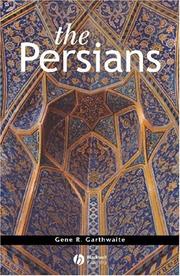
A concise, authoritative history of Iran from antiquity to the modern era; reading this first gives the learner the dynastic and cultural backdrop that Ferdowsi's Shahnameh dramatizes.
A classic scholarly overview of the forms, themes, and major figures of Persian poetry and prose; it maps the entire tradition so the learner knows where each masterwork sits before encountering it.
The Epic: Ferdowsi's Shahnameh
IntermediateRead and deeply appreciate the Shahnameh — the national epic of Iran — understanding its heroic cycles, moral vision, and place as the foundation of Persian literary identity.
▸ Study plan for this stage
Pace: 8–10 weeks, ~40–50 pages/day (with reflection pauses). Shahnameh: 5–6 weeks (~1,000 pages); Fathers and Sons: 2–3 weeks (~200 pages). Allocate 1 week for synthesis and review.
- The Shahnameh as Iran's foundational epic: its role in preserving Persian language, culture, and identity after the Arab conquest
- The heroic cycles and dynasties: Pishdadian, Kayanid, and Sassanid periods as frameworks for understanding virtue, duty, and fate
- The concept of kherad (wisdom) and farr (divine glory/charisma) as moral and political ideals in heroic action
- Generational conflict and the father-son relationship as a central motif exploring legacy, ambition, and tragic inevitability
- The tension between individual heroism and cosmic order: how personal desire clashes with destiny and divine will
- Ferdowsi's narrative technique: the use of dialogue, digression, and poetic form to embed moral lessons within epic action
- The Shahnameh's influence on Persian literary identity and its function as a repository of pre-Islamic Persian values
- Fathers and Sons as a thematic microcosm: how the epic's exploration of generational strife crystallizes in intimate family drama
- What role did Ferdowsi's Shahnameh play in preserving and reviving Persian cultural identity, and how does the epic's language reflect this mission?
- Identify and compare two major heroic cycles in the Shahnameh (e.g., the Pishdadian and Kayanid periods). What moral or political lessons does each cycle impart?
- How do the concepts of kherad (wisdom) and farr (divine glory) function as measures of heroic virtue in the Shahnameh? Provide examples from specific heroes.
- What is the significance of father-son relationships in both the Shahnameh and Fathers and Sons? How does generational conflict drive the narrative and reveal deeper truths about duty and fate?
- Analyze the tension between individual will and cosmic destiny in the Shahnameh. How do heroes respond when their desires conflict with fate?
- How does Ferdowsi use poetic form, dialogue, and digression to convey moral wisdom? Cite specific passages or episodes.
- Create a genealogical chart of the major dynasties and heroes in the Shahnameh (Pishdadian, Kayanid, Sassanid). Annotate each with their defining virtue or fatal flaw.
- Select three pivotal father-son pairs from the Shahnameh (e.g., Rostam and Sohrab, Kavus and Siyavosh) and write a comparative analysis of how each relationship embodies the epic's themes of legacy and tragedy.
- Read a key episode from the Shahnameh (e.g., the Rostam-Sohrab duel, Siyavosh's trial by fire) and identify how Ferdowsi uses dialogue and internal monologue to reveal character and moral complexity.
- Write a short reflective essay: 'What does the Shahnameh reveal about Persian values and identity?' Use specific textual evidence.
- Trace the concept of farr (divine glory) through 3–4 major heroes. How does the presence or absence of farr determine their fate? Create a visual or written map of this pattern.
- After reading Fathers and Sons, write a dialogue or scene that could appear in the Shahnameh, using Ferdowsi's narrative style and moral framework to explore a contemporary or personal conflict.
Next up: Mastery of the Shahnameh's heroic cycles, moral vision, and narrative techniques establishes the foundation for understanding how subsequent Persian poets—from Nizami to Hafez—engaged with, reinterpreted, and transcended the epic tradition, moving from grand historical narratives toward lyric intimacy and mystical philosophy.
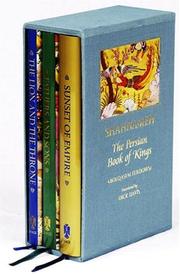
Dick Davis's acclaimed verse-and-prose translation is the gold standard in English — faithful, readable, and complete enough to convey the epic's full sweep from creation myth to the Arab conquest; this is the centerpiece of the entire curriculum.
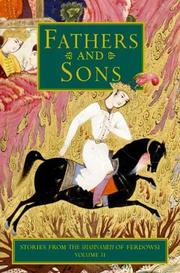
Davis's scholarly essay collection on the Shahnameh illuminates its central tragic relationships and narrative architecture, deepening comprehension immediately after a first reading of the epic.
The Mystic Poets: Rumi & Hafez
IntermediateEncounter the two supreme lyric voices of Persian Sufic poetry in translations that preserve their spiritual depth and formal beauty, and understand how they build on the world Ferdowsi established.
▸ Study plan for this stage
Pace: 8–10 weeks, ~25–30 pages/day. Start with *The Masnavi, Book One* (4–5 weeks, ~20 pages/day); move to *The Essential Rumi* (2 weeks, ~25 pages/day); conclude with *The Poems of Hafez* (2–3 weeks, ~30 pages/day).
- The Masnavi as spiritual autobiography and teaching narrative: how Rumi uses the frame story of the reed flute to explore the soul's longing for reunion with the divine
- Sufi metaphor and symbolism: recognizing how love, intoxication, annihilation of self (fana), and the journey inward function as vehicles for mystical experience across both poets
- Rumi's didactic method: how stories, parables, and direct address in the Masnavi teach spiritual truths through narrative rather than abstract doctrine
- The ghazal form in Hafez: understanding the independent couplets, the radif-qafia rhyme scheme, and how formal constraints paradoxically enable spiritual freedom and multiplicity of meaning
- The beloved as divine presence: how both poets collapse the distinction between earthly and heavenly love, using erotic and romantic language to express union with God
- Continuity with Ferdowsi's legacy: recognizing how Rumi and Hafez inherit the Persian literary tradition of elevated language and moral/spiritual instruction, but redirect it toward inner mystical experience
- Ecstatic utterance and intoxication: the role of wine, dancing, music, and ecstatic states as metaphors for and pathways to mystical knowledge
- Translation and preservation: understanding how English translations (particularly Coleman Barks for Rumi and various translators for Hafez) navigate the tension between literal meaning and spiritual resonance
- What is the significance of the reed flute's opening complaint in the Masnavi, and how does it establish the poem's central spiritual theme?
- How does Rumi use narrative and parable in Book One of the Masnavi to teach spiritual lessons, and what makes this method distinct from purely doctrinal instruction?
- What is the role of the beloved in both Rumi and Hafez, and how do they use erotic or romantic language to express mystical union with the divine?
- How does the ghazal form (as used by Hafez) differ from the masnavi form (as used by Rumi), and what spiritual or aesthetic advantages does each form offer?
- What does 'fana' (annihilation of self) mean in Sufi mysticism, and how is this concept explored in the selections from both poets?
- How do Rumi and Hafez build upon or transform the literary and spiritual inheritance they receive from Ferdowsi and earlier Persian tradition?
- Close-read the opening 50–100 lines of the Masnavi (the reed flute's lament) and write a 2–3 page reflection on how Rumi establishes his central metaphor for spiritual longing; annotate the text for key symbols (reed, separation, music, reunion).
- Select three parables or teaching stories from the Masnavi (e.g., the elephant in the dark house, the chickpea in the pot, the king and the handmaiden) and analyze how each one encodes a spiritual lesson; write out the literal narrative and then the mystical interpretation.
- Read 10–15 ghazals from Hafez and identify the radif (repeated word) and qafia (rhyming word before the radif) in each; note how the independent couplets create multiple layers of meaning and how this form differs from the continuous narrative of the Masnavi.
- Create a comparative chart mapping how Rumi and Hafez use the same or similar symbols (wine, the beloved, intoxication, the mirror, the garden) and what spiritual meanings each assigns to them.
- Memorize and recite aloud 2–3 complete ghazals from Hafez and 2–3 extended passages from the Masnavi; pay attention to rhythm, repetition, and how the sound reinforces the spiritual content.
- Write a personal essay (3–4 pages) exploring how the concept of divine love in Rumi and Hafez resonates with or challenges your own understanding of spirituality, using specific lines from the texts as evidence.
Next up: This stage establishes the mystical and formal foundations of Persian lyric poetry, preparing you to encounter how later poets (such as Sa'di, Jami, and modern voices) either inherit, refine, or subvert the Sufi tradition and the ghazal form that Rumi and Hafez perfected.
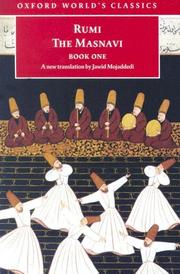
Jawid Mojaddedi's Oxford translation is both scholarly and poetic; starting with Book One introduces Rumi's narrative parables and mystical logic before tackling his shorter lyrics, making the transition from epic to lyric poetry natural.

Coleman Barks's widely beloved selection of ghazals and quatrains offers the emotional and ecstatic register of Rumi's shorter verse, best read after the Masnavi so the reader has structural context for the imagery.

Peter Avery and John Heath-Stubbs's translation is considered one of the most faithful to Hafez's layered ambiguity; reading Hafez after Rumi reveals how the ghazal form can be simultaneously erotic, mystical, and political.
Modern Iranian Fiction
ExpertDiscover how 20th- and 21st-century Iranian writers absorbed, subverted, and transformed the classical tradition under the pressures of modernity, revolution, and exile.
▸ Study plan for this stage
Pace: 8–10 weeks, ~40–50 pages/day, with 1–2 weeks per novel for close reading and reflection
- Narrative unreliability and the fragmentation of perspective as responses to political and social upheaval in 20th-century Iran
- The tension between classical Persian literary forms (ghazal, frame narrative, mystical allegory) and modernist techniques (stream of consciousness, metafiction, graphic narrative)
- Domestic space as a microcosm of national trauma: family dynamics reflecting broader historical ruptures in 'My Uncle Napoleon,' 'Savushun,' and 'Persepolis'
- Exile, displacement, and the loss of cultural continuity as central preoccupations across all four works
- Gender, agency, and the female voice in modernist Iranian fiction: Dānishvar's and Satrapi's interventions into a male-dominated literary tradition
- Allegory and symbol as strategies for encoding political critique under censorship, particularly in 'The Blind Owl' and 'My Uncle Napoleon'
- The role of memory, nostalgia, and historical consciousness in negotiating modernity and tradition
- How does Pizishkzād use the unreliable narrator and comedic exaggeration in 'My Uncle Napoleon' to critique both traditional and modernizing forces in Iranian society?
- Compare the treatment of domestic space in 'My Uncle Napoleon' and 'Savushun': how do family homes become sites where national history is enacted and contested?
- What is the relationship between Hidāyat's use of dream logic and fragmentation in 'The Blind Owl' and the modernist rejection of linear narrative? How does this connect to Persian mystical traditions?
- How does Satrapi's graphic medium in 'Persepolis' allow her to represent the experience of revolution and exile differently than the prose narratives of the other three works?
- Trace the figure of the intellectual or artist across these four works: how do Pizishkzād, Dānishvar, Hidāyat, and Satrapi each portray the position of the creative individual in a society undergoing radical transformation?
- What strategies do these writers employ to encode political and social critique in their narratives, and how do these strategies reflect the historical contexts in which they wrote?
- Create a character map for 'My Uncle Napoleon' tracking how each family member embodies different responses to modernity and tradition; annotate with specific scenes that reveal their ideological positions
- Write a comparative close reading (2–3 pages) of a domestic scene from 'My Uncle Napoleon' and 'Savushun,' analyzing how each author uses interior space to reflect historical consciousness
- Trace the dream sequences and fragmented imagery in 'The Blind Owl'; create a visual or written map of recurring symbols (the owl, the garden, the woman) and propose what they might allegorize about Iranian modernity
- Rewrite a key scene from one of the prose novels (Pizishkzād, Dānishvar, or Hidāyat) as a graphic narrative sequence in the style of 'Persepolis,' considering what is gained and lost in the translation between media
- Identify and analyze three instances of narrative unreliability or metafictional self-awareness across the four works; write a brief essay on how these techniques serve as responses to historical instability
- Create a timeline of major 20th-century Iranian historical events (constitutional revolution, Pahlavi era, 1979 revolution, Iran-Iraq War, post-revolutionary period) and annotate it with the publication dates and historical references in each text
Next up: This stage establishes how modern Iranian writers negotiated the collision between classical tradition and modernist form under historical pressure; the next stage will likely examine how contemporary Iranian literature continues to grapple with these tensions while engaging new global contexts, digital media, and transnational audiences.
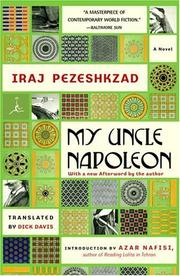
This beloved satirical novel — the most widely read Persian novel of the 20th century — is the ideal entry into modern Iranian fiction because its humor and social critique are deeply rooted in the classical literary culture the learner has just studied.
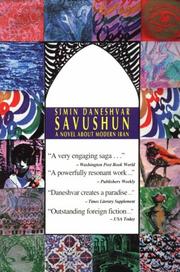
Iran's first major novel by a woman, set during the Allied occupation of WWII; its elegiac tone and allusions to the Shahnameh directly reward the reader who has completed the earlier stages.

Hedayat's hallucinatory modernist masterpiece is the most internationally celebrated work of Persian prose fiction; placed here, after grounding in the tradition, its deliberate inversions of classical imagery become fully legible.
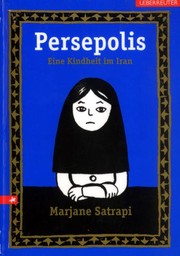
This graphic memoir of the Islamic Revolution and its aftermath brings the curriculum into the contemporary moment and offers a personal, accessible bridge between the literary tradition and lived Iranian experience.
Discussion
Keep reading
Paths that share books, cover the same subject, or open a related topic.