Best Books on the History of Hungary, in Order
This curriculum takes an intermediate learner from a solid narrative overview of Hungarian history through the deep complexities of Habsburg rule, the 1956 Revolution, communist Hungary, and the post-1989 transition. Each stage builds conceptual and contextual scaffolding so that later, more specialized or scholarly works can be fully appreciated. The path moves from broad chronological sweep to focused thematic depth, ending with modern Hungary's political identity.
The Grand Sweep: Magyars to Modernity
IntermediateGain a confident, chronological command of Hungarian history from the Magyar conquest through the 20th century — the essential framework for everything that follows.
▸ Study plan for this stage
Pace: 8–10 weeks, ~40–50 pages/day. Begin with Sugar's comprehensive narrative (weeks 1–6, ~35 pages/day), then move to Stone's analytical synthesis (weeks 7–10, ~45 pages/day). Allocate 1–2 days per week for review and note consolidation.
- The Magyar conquest and settlement (9th century): tribal confederation, Christianization under Stephen I, and the establishment of the Hungarian kingdom as a Central European power
- The medieval kingdom's structure: feudalism, the role of the nobility, and Hungary's position between Western Christendom and Eastern threats (Mongol invasions, Ottoman expansion)
- The Ottoman occupation and partition (16th–18th centuries): the fragmentation of Hungarian territory and the experience of foreign rule under Ottoman, Habsburg, and Transylvanian administrations
- The Habsburg era and the Austro-Hungarian Compromise (1867): the dual monarchy system, Hungarian nationalism, and the tension between imperial integration and national autonomy
- The 19th-century reform movements and 1848 Revolution: Lajos Kossuth, the drive for constitutional government, and the failed independence struggle
- The 20th-century trajectory: World War I, the Treaty of Trianon and territorial losses, interwar authoritarianism, World War II, and Soviet domination—establishing Hungary's modern geopolitical vulnerability
- The role of Hungarian culture and intellectualism: how literature, language, and national identity persisted as sources of resistance and continuity across foreign rule
- Economic and social transformation: the shift from agrarian feudalism through industrial development to modern economic structures, and the persistent rural–urban divide
- How did the Magyar conquest and Christianization under Stephen I establish Hungary as a distinct Central European kingdom, and what were the consequences of this dual process?
- What were the major consequences of the Ottoman occupation for Hungarian territorial integrity, political structure, and cultural identity?
- How did the 1867 Austro-Hungarian Compromise reshape Hungarian governance and nationalism, and why did it ultimately fail to satisfy Hungarian aspirations?
- What role did the 1848 Revolution and figures like Lajos Kossuth play in shaping Hungarian national consciousness, and why did the revolution ultimately fail?
- How did the Treaty of Trianon (1920) transform Hungary's geopolitical position and national psychology, and what were its long-term consequences?
- Trace the arc of Hungarian sovereignty across the 20th century: how did Hungary experience World War I, interwar authoritarianism, World War II, and Soviet domination as successive losses of independence?
- Create a detailed chronological timeline from the 9th century to 1956, marking major political transitions, territorial changes, and cultural milestones. Use Sugar's narrative as your primary source and cross-reference with Stone's analysis.
- Map Hungary's territorial boundaries at five key moments: the medieval kingdom (11th century), the Ottoman partition (16th century), the Austro-Hungarian Compromise (1867), post-Trianon (1920), and post-1945. Annotate each with the political circumstances that shaped the borders.
- Write a 2–3 page analytical essay comparing the 1848 Revolution and the 1956 Hungarian Revolution: What were the underlying causes in each case? How did the international context differ? Why did one fail and the other become a symbol of resistance?
- Compile a 'key figures' dossier with 8–10 major Hungarian historical actors (e.g., Stephen I, Matthias Corvinus, Lajos Kossuth, Ferenc Deák, Miklós Horthy, Imre Nagy). For each, note their era, primary achievement, and legacy. Use both Sugar and Stone to triangulate interpretations.
- Create a comparative chart analyzing Hungary's experience under three foreign powers: Ottoman rule, Habsburg rule, and Soviet rule. Columns should include: duration, administrative structure, cultural/religious policies, economic impact, and resistance movements.
- Read Sugar's chapters on the 19th century and Stone's treatment of the same period side-by-side, then write a 1–2 page reflection on how their interpretations differ. What does Sugar emphasize that Stone downplays, and vice versa? What accounts for these differences?
Next up: By mastering this chronological framework and understanding the recurring patterns of foreign domination, cultural resilience, and nationalist aspiration, you will be equipped to examine the specific ideological, cultural, and political movements that defined Hungarian identity in the modern era—preparing you to engage deeply with Hungary's intellectual history, Cold War experience, and post-1989
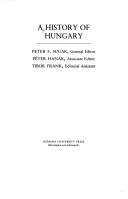
This multi-author scholarly survey is the standard English-language reference on Hungarian history from the Magyars to the late communist era. Reading it first establishes the full chronological spine and key terminology the rest of the curriculum assumes.

Stone's concise, opinionated narrative gives the same sweep in a far more readable voice, reinforcing the timeline with vivid interpretation. Reading it second lets you test and deepen what Sugar's survey established.
The Magyar Kingdom and the Habsburg World
IntermediateUnderstand the medieval Hungarian kingdom, the Ottoman conquest, and the long Habsburg era — including the Compromise of 1867 and the dual monarchy — as lived political and cultural realities.
▸ Study plan for this stage
Pace: 8–10 weeks, ~40–50 pages/day (Engel ~400 pages in 2–3 weeks; Judson ~500 pages in 5–7 weeks)
- The medieval Hungarian kingdom's structure, territorial extent, and relationship to Western Christendom under the Árpádian and Angevin dynasties
- Ottoman expansion into Hungary and the fragmentation of the kingdom into Ottoman-occupied, Habsburg-ruled, and Transylvanian territories (16th–17th centuries)
- Habsburg consolidation of power in Hungary and the integration of Hungarian nobility into imperial governance structures
- The Compromise of 1867 (Ausgleich) and the creation of the Austro-Hungarian dual monarchy as a response to Hungarian nationalism and imperial crisis
- The lived experience of the dual monarchy: administrative separation, economic interdependence, and cultural tensions between Vienna and Budapest
- The role of the Hungarian nobility and gentry in negotiating power within both medieval and Habsburg frameworks
- Religious and ethnic diversity in Hungary as a persistent feature shaping medieval and early modern political development
- How did the medieval Hungarian kingdom under the Árpádian and Angevin dynasties establish itself as a major European power, and what were its key territorial and institutional features?
- What were the causes and consequences of the Ottoman conquest of central Hungary in the 16th century, and how did it reshape Hungarian political geography?
- How did the Habsburg dynasty come to dominate Hungary, and what strategies did they use to consolidate control over Hungarian nobility and territory?
- What was the Compromise of 1867, why was it necessary, and how did it fundamentally alter the structure of the Habsburg realm?
- How did the dual monarchy actually function as a political system, and what were the main sources of tension between Austria and Hungary within it?
- How did the experience of living under Habsburg rule differ between the medieval period and the 19th-century dual monarchy, and what continuities existed?
- Create a detailed timeline of Hungarian territorial changes from the Árpádian dynasty through 1867, marking key conquests, losses, and political shifts; cross-reference Engel's medieval narrative with Judson's account of Ottoman and Habsburg expansion
- Map the three-way division of Hungary after the Ottoman conquest (Ottoman-occupied, Habsburg-ruled, and Transylvanian territories) and track how this fragmentation persisted and was resolved by 1867
- Write a 500-word essay comparing the sources of Hungarian noble power in the medieval kingdom (Engel) versus the dual monarchy (Judson)—how did their political leverage change?
- Identify and analyze 3–4 key moments of Hungarian resistance or negotiation with Habsburg authority (e.g., the Rákóczi Rebellion, the 1848 Revolution, the Compromise itself) and explain their outcomes using both texts
- Create a comparative chart of the administrative, economic, and cultural relationships between Hungary and the Habsburg center in three periods: medieval kingdom, post-Ottoman fragmentation, and dual monarchy
- Read and annotate Judson's chapters on the Compromise of 1867 and the dual monarchy's functioning, then write a detailed explanation of how the system was supposed to work versus how it actually worked in practice
Next up: This stage establishes Hungary's long experience of negotiating power within larger imperial frameworks and the persistent tensions between Hungarian autonomy and external control, preparing you to examine how these contradictions exploded in the 20th century and shaped modern Hungarian identity.
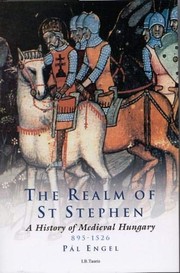
Engel's authoritative account of medieval Hungary from the Árpáds through the Ottoman disaster is the definitive English work on the kingdom at its height. It gives the pre-Habsburg foundation that makes the later imperial story intelligible.
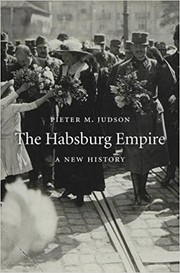
Judson reframes the Habsburg Empire from the perspective of its peoples rather than Vienna alone, making Hungary's role in the dual monarchy vivid and nuanced. Reading it after Engel shows how medieval Hungarian statehood was both preserved and transformed under Habsburg rule.
Catastrophe and Occupation: WWI to Stalinism
IntermediateGrasp the trauma of Trianon, the interwar Horthy regime, Hungary's role in WWII, and the Stalinist takeover — the essential prelude to 1956.
▸ Study plan for this stage
Pace: 4–5 weeks, ~40–50 pages/day (approximately 250–300 pages total)
- The collapse of the Austro-Hungarian Empire and Hungary's territorial losses under the Treaty of Trianon (1920)
- The brief communist revolution under Béla Kun (1919) and its violent suppression, shaping Hungary's anti-communist reaction
- Admiral Miklós Horthy's regency and the authoritarian Horthy regime's consolidation of power between the wars
- Hungary's ideological and strategic alignment with Nazi Germany, driven by revisionism and the desire to recover lost territories
- The role of Hungarian forces in WWII, including the invasion of Yugoslavia and participation on the Eastern Front
- The transition from Nazi occupation to Soviet occupation and the imposition of Stalinist communist rule after 1945
- The trauma of national humiliation, territorial dismemberment, and foreign domination as psychological and political drivers of Hungarian identity
- The interplay between Hungarian nationalism, anti-communism, and authoritarianism as responses to perceived existential threats
- What were the main territorial losses Hungary suffered at Trianon, and why did this create such deep national trauma?
- How did Béla Kun's communist revolution and its defeat shape Hungary's political culture and foreign policy choices in the interwar period?
- What was the nature of Horthy's regency, and how did he consolidate authoritarian rule while maintaining the façade of a monarchy?
- Why did Hungary align with Nazi Germany in the 1930s and 1940s, and what were the consequences of this alliance?
- What role did Hungarian forces play in WWII, particularly on the Eastern Front, and how did this lead to Soviet occupation?
- How did the transition from Nazi to Soviet occupation set the stage for the imposition of Stalinism in Hungary after 1945?
- Create a timeline of major events from 1918–1948 (Armistice, Trianon, Kun's revolution, Horthy's rise, WWII, Soviet occupation) and annotate each with its geopolitical consequences for Hungary
- Map Hungary's territorial losses at Trianon and identify which regions were lost to which successor states; reflect on how this redrew ethnic and economic boundaries
- Write a 500-word analysis of why anti-communism became so central to Hungarian identity after 1919, using Pastor's account of Kun's revolution
- Compare Horthy's authoritarian methods with those of other interwar European regimes (e.g., Poland, Romania); identify what made Hungary's path distinctive
- Trace Hungary's diplomatic and military decisions from 1933–1944 (alliances, territorial gains, military campaigns) and evaluate the extent to which revisionism drove policy
- Create a chart showing the shifting occupying powers in Hungary (Austro-Hungarian, Romanian, French, Nazi, Soviet) and the political/social upheaval each brought
Next up: This stage establishes the historical grievances, authoritarian structures, and foreign domination that made Hungary a pressure cooker by 1956, preparing you to understand the Hungarian Revolution as both a nationalist uprising against Soviet occupation and an anti-Stalinist rebellion rooted in decades of humiliation and control.

Pastor's focused study of the 1918–1919 revolutionary period and the Trianon peace settlement explains the wound that shaped all 20th-century Hungarian politics. It belongs here because Trianon is the key to understanding both the Horthy era and communist legitimacy struggles.
1956 and the Communist Decades
IntermediateAchieve a deep, multi-dimensional understanding of the 1956 Revolution and the Kádár era of 'goulash communism' that followed, including daily life, dissent, and the slow unraveling of the system.
▸ Study plan for this stage
Pace: 6–7 weeks, ~40–50 pages/day. "Twelve Days" (~400 pages) over 3 weeks, then "The Hungarian Revolution of 1956" (~300 pages) over 3–4 weeks, with 1 week for review and synthesis.
- The immediate causes of the 1956 Revolution: Soviet control, economic hardship, intellectual ferment, and the Twentieth Congress shock
- The twelve days of uprising: street fighting, worker councils, the formation of a multi-party system, and the role of key figures like Imre Nagy
- Soviet decision-making and the decision to intervene militarily despite initial withdrawal signals
- The Kádár era and 'goulash communism': economic pragmatism, limited consumer goods, and the social contract of depoliticization
- Daily life under communism: surveillance, censorship, work culture, and the psychology of living under an authoritarian system
- Forms of dissent and resistance: intellectual circles, samizdat, the church, and everyday non-compliance
- The long-term consequences of 1956: trauma, memory, and how the revolution shaped Hungarian identity and politics through the Cold War
- What were the key political and economic grievances that made Hungary ripe for revolution in 1956, and how did the Twentieth Congress contribute to the uprising?
- Describe the sequence of events during the twelve days of the revolution. Who were the main actors, and what did they attempt to achieve?
- Why did the Soviet Union decide to intervene militarily in Hungary, and what does this reveal about Soviet priorities during the Cold War?
- What was 'goulash communism,' and how did it differ from Stalinist communism? What was the social bargain it offered Hungarians?
- How did ordinary Hungarians experience daily life under the Kádár regime? What forms of dissent and resistance emerged?
- How did the memory and trauma of 1956 shape Hungarian society and politics in the decades that followed?
- Create a detailed timeline of the twelve days (October 23–November 4, 1956) using 'Twelve Days,' marking key military, political, and symbolic moments.
- Write character sketches of 3–4 major figures from the revolution (e.g., Imre Nagy, János Kádár, Soviet commanders) based on Sebestyén's portrayal, noting their motivations and decisions.
- Compare and contrast Stalinist communism with Kádár's 'goulash communism' using evidence from both books; create a two-column chart of differences.
- Document 4–5 examples of daily life under communism from the books (work, consumption, surveillance, family) and analyze what they reveal about the system's control mechanisms.
- Identify and analyze 3–4 forms of dissent or resistance mentioned in Litván's work; assess their effectiveness and limitations.
- Write a 1,500–2,000 word analytical essay: 'Why did the 1956 Revolution fail, and what were its long-term consequences?' using both books as evidence.
Next up: This stage establishes the traumatic rupture of 1956 and the subsequent decades of managed authoritarianism, providing essential context for understanding how Hungary's unique position within the Eastern Bloc—with its relative openness and pragmatism—set the stage for the peaceful transition to democracy in 1989.
Sebestyen's gripping, deeply researched narrative is the best single-volume account of the revolution in English. It humanizes the events day by day and is the natural starting point for this stage.
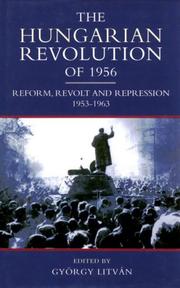
Litván, a Hungarian historian who lived through the revolution, provides the scholarly and documentary depth that complements Sebestyen's narrative, covering causes, course, and international dimensions with primary-source authority.
Post-Communism and Modern Hungary
ExpertCritically analyze Hungary's 1989 transition, the rise of Viktor Orbán, democratic backsliding, and Hungary's contested place in 21st-century Europe.
▸ Study plan for this stage
Pace: 8–10 weeks, ~40–50 pages/day (approximately 2–3 weeks per book, with overlap for synthesis)
- The 1989 'refolution' in Eastern Europe: why peaceful transitions happened and what they promised versus what they delivered
- Krastev's thesis on the 'imitation' problem: post-communist societies copying Western models while losing their own narratives and identity
- Viktor Orbán's political evolution: from anti-communist dissident and liberal reformer to illiberal democratic leader
- The mechanics of democratic backsliding: how constitutional amendments, media capture, and institutional erosion undermine liberal democracy from within
- Hungary's dual crisis: EU integration versus nationalist sovereignty; the tension between Brussels and Budapest
- The role of historical grievance and the Treaty of Trianon in shaping modern Hungarian nationalism and Orbán's appeal
- Orbán's 'illiberal democracy' model: what it claims, how it functions, and why it resonates in post-communist contexts
- Hungary's contested European identity: caught between Western integration and Eastern/Russian geopolitical influence
- What does Krastev mean by the 'imitation' problem in post-communist Europe, and how does this concept explain Hungary's political trajectory?
- Trace Viktor Orbán's ideological journey from his 1989 speech against Soviet occupation to his 2010 consolidation of power—what changed and why?
- How has Orbán used constitutional reform and institutional redesign to entrench power while maintaining electoral legitimacy?
- What is 'illiberal democracy' as Orbán defines it, and how does it differ from liberal democracy? What are its stated justifications?
- How do historical grievances (particularly Trianon) and national identity narratives fuel support for Orbán's political project?
- What are the key mechanisms of democratic backsliding in Hungary, and how do they operate in practice (media, courts, civil society)?
- Timeline exercise: Create a detailed chronology of Hungary's political turning points (1989–2024), marking key elections, constitutional changes, and EU conflicts. Annotate each with Krastev's and Lendvai's interpretations.
- Comparative analysis: Write a 2–3 page essay comparing Hungary's transition to one other post-communist country (Poland, Czech Republic, or Romania). How did 'imitation' play out differently?
- Primary source close-reading: Analyze Orbán's 1989 speech and a major speech from 2010–2015. Identify shifts in rhetoric, framing of enemies, and vision for Hungary.
- Media landscape audit: Research and document how Hungarian state media (MTI, MTVA) and pro-Orbán outlets (Index.hu before 2016, Origo) covered a specific political crisis. Compare to international coverage.
- Constitutional amendment mapping: Chart Hungary's major constitutional changes (2010 Fundamental Law, 2012 amendments, etc.). For each, identify what power it shifted and to whom.
- Debate preparation: Prepare arguments for and against the claim 'Orbán's illiberal democracy is a legitimate response to post-communist instability' using evidence from both books.
Next up: This stage equips you to understand Hungary not as a simple case of democratic failure, but as a complex negotiation between post-communist legacies, European integration, and nationalist reassertion—preparing you to examine how these tensions play out in contemporary EU politics, regional geopolitics, and the broader question of whether liberal democracy is the inevitable endpoint of political de

Krastev and Holmes place Hungary's illiberal turn within the broader story of post-communist disillusionment across Eastern Europe, providing the comparative framework needed to understand Orbán's appeal without reducing it to simple nationalism.

Lendvai, Austria's foremost Hungary expert, delivers the definitive political biography of Viktor Orbán and the Fidesz system. Reading it last synthesizes everything — history, identity, communism's legacy, and European politics — into a portrait of where Hungary stands today.
Discussion
Keep reading
Paths that share books, cover the same subject, or open a related topic.