Best Books on the History of Austria, in Order
This curriculum traces Austrian history from the rise of the Habsburg dynasty through the turbulent twentieth century to the modern republic, building in four stages. Starting at an intermediate level, the path moves from broad dynastic narrative to cultural and intellectual depth, then confronts the catastrophe of Nazism and war, before closing with the postwar republic and Austria's reckoning with its past. Each stage assumes the conceptual vocabulary built in the one before it.
The Habsburg World: Foundations
IntermediateGrasp the sweep of Habsburg power — its dynastic logic, multi-ethnic structure, and long decline — giving you the essential framework for everything that follows.
▸ Study plan for this stage
Pace: 4–5 weeks, ~40–50 pages/day (approximately 280–350 pages total)
- The Habsburg dynasty's claim to legitimacy through dynastic marriage, inheritance law, and the concept of 'house' rather than territorial nation
- The multi-ethnic, multi-lingual structure of the Habsburg realm and how it was held together administratively and culturally despite centrifugal pressures
- The relationship between Habsburg rule and the Catholic Counter-Reformation as a unifying ideological force
- The gradual erosion of Habsburg power from the 18th century onward, including military defeats, economic stagnation, and nationalist movements
- The distinction between the Holy Roman Empire and the Austrian Empire, and how territorial reorganization shaped Habsburg identity
- The role of Vienna as the cultural and administrative center that projected Habsburg power across diverse lands
- How Judson frames Habsburg decline not as inevitable but as contingent on specific political, economic, and social choices
- How did the Habsburgs use dynastic marriage and inheritance law to accumulate and maintain their territories, and what made this strategy vulnerable over time?
- What were the main ethnic and linguistic groups within the Habsburg realm, and what mechanisms did the Habsburgs use to govern this diversity?
- How did the Catholic Counter-Reformation serve as a unifying force in the Habsburg lands, and what role did it play in Habsburg identity?
- What were the major military and territorial losses the Habsburgs experienced from the 18th century onward, and how did these affect their power?
- How did nationalism and the rise of nation-states challenge the Habsburg multi-ethnic model, and what responses did the Habsburgs attempt?
- According to Judson, what were the key turning points or decisions that accelerated Habsburg decline, and were these inevitable or contingent?
- Create a timeline of major Habsburg territorial acquisitions and losses from the 16th to 20th century, annotating each with the mechanism (marriage, conquest, treaty, loss) and the ethnic/linguistic composition of each territory
- Map the Habsburg realm at three key moments (e.g., 1648, 1815, 1900), color-coding by ethnic/linguistic group, and note how the boundaries and internal composition changed
- Write a one-page explanation of how a single Habsburg ruler (e.g., Charles V, Maria Theresa, or Franz Joseph) used dynastic logic to justify their rule over diverse peoples
- Identify 3–4 moments of Habsburg decline in Judson's narrative and for each, write a paragraph explaining whether it was caused by external forces (military defeat, economic competition) or internal contradictions (nationalist movements, administrative failure)
- Create a comparison chart of the Holy Roman Empire and the Austrian Empire, noting territorial extent, legal structure, and the role of the Habsburgs in each
- Discuss in 2–3 pages how Vienna functioned as a symbol and instrument of Habsburg power, drawing on specific examples from Judson's account
Next up: This stage establishes the long-term structural dynamics of the Habsburg realm—its strengths, contradictions, and vulnerabilities—so that subsequent stages can examine how specific crises (wars, revolutions, nationalist movements) exploited these weaknesses and ultimately dismantled the empire.
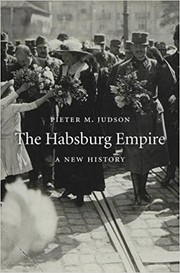
The ideal starting point: a revisionist, accessible synthesis that reframes the empire not as a doomed anachronism but as a functioning, negotiated polity. It establishes the key political and ethnic tensions you will encounter in every subsequent book.
Fin-de-Siècle Vienna: Culture, Crisis, and Modernity
IntermediateUnderstand how Vienna around 1900 became the crucible of modernism — in art, music, psychology, and politics — and how cultural brilliance coexisted with deep political anxiety.
▸ Study plan for this stage
Pace: 8–10 weeks, ~40–50 pages/day. Begin with Schorske (3–4 weeks), move to Zweig (2–3 weeks), then Janik (2–3 weeks). Allow 1 week for integration and review.
- The crisis of liberal politics in Austria-Hungary and how it drove cultural innovation as a refuge
- The Secession movement and modernist aesthetics as responses to imperial stagnation
- Psychoanalysis, Wittgenstein, and the philosophical revolution emerging from Viennese intellectual circles
- The coexistence of imperial grandeur and social fragmentation in the Austro-Hungarian state
- Zweig's memoir as a primary source documenting the lived experience of this cultural moment
- The relationship between psychological insight and artistic expression in fin-de-siècle Vienna
- How Vienna's multilingual, multinational character shaped its intellectual ferment
- The role of the coffeehouse and salon culture in incubating modernist thought
- How did the failure of Austrian liberalism in the 1880s–1890s redirect intellectual energy into cultural and artistic domains, according to Schorske?
- What was the Vienna Secession, and how did it represent a break with both academic tradition and the political establishment?
- How does Zweig's memoir illustrate the psychological and social texture of Viennese life before 1914, and what does it reveal about the era's sense of security and impending collapse?
- What is the connection between Wittgenstein's philosophical work and the broader intellectual ferment of fin-de-siècle Vienna described by Janik?
- How did psychoanalysis emerge as a distinctly Viennese phenomenon, and what does this reveal about the city's intellectual preoccupations?
- What role did the coffeehouse and salon culture play in fostering the interconnections between art, music, psychology, and philosophy in Vienna around 1900?
- Create a timeline mapping key political crises in Austria-Hungary (1880–1900) alongside major cultural events (Secession founding, Freud's publications, Wittgenstein's early work) to visualize Schorske's argument about the relationship between political failure and cultural innovation.
- Read selections from Schorske on the Secession (Part II) and then examine reproductions of Secession artworks (Klimt, Schiele, Wagner). Write a 2–3 page analysis of how these works embody the aesthetic and psychological principles Schorske identifies.
- Keep a reading journal while working through Zweig's memoir, noting passages that illustrate the psychological security of the pre-1914 world, the role of the coffeehouse, and encounters with major intellectual figures. Reflect on how Zweig's retrospective narration shapes the reader's understanding of the era.
- Construct a concept map showing the intellectual connections Janik traces between Wittgenstein, Freud, the Secession, and other Viennese thinkers. Use Janik's text to identify the shared preoccupations and methods that linked these seemingly disparate figures.
- Write a comparative essay (4–5 pages) on how Schorske (analytical history), Zweig (memoir), and Janik (intellectual biography) each offer different perspectives on the same historical moment. What does each author emphasize, and what gaps does each leave?
- Research and write a short profile (2–3 pages) of one major Viennese intellectual or artist mentioned across all three books (e.g., Freud, Klimt, Wittgenstein, Hofmannsthal). Use all three texts to triangulate different interpretations of this figure's significance.
Next up: This stage establishes Vienna 1900 as the epicenter of modernist thought and aesthetic revolution, providing the intellectual and cultural foundation necessary to understand how this ferment was shattered by World War I and how its survivors grappled with the collapse of the Austro-Hungarian world.
The canonical masterwork on the subject. Schorske shows how Viennese artists and thinkers — Klimt, Freud, Herzl, Mahler — responded to the collapse of liberal politics with revolutionary cultural forms. Read first to build the cultural vocabulary.
A memoir by one of the era's greatest writers, offering an intimate, elegiac portrait of Habsburg Vienna from the inside. Reading it after Schorske lets you feel the lived experience behind the cultural analysis.
Deepens the intellectual picture by situating Wittgenstein's philosophy within the broader crisis of Viennese culture and language, connecting the fin-de-siècle to the philosophical revolution of the early twentieth century.
Catastrophe: Anschluss, War, and the Holocaust
IntermediateConfront how Austria went from the collapse of empire through the First Republic's civil strife to the Nazi annexation, and understand Austrian complicity in the crimes of the Third Reich.
▸ Study plan for this stage
Pace: 8–10 weeks, ~40–50 pages/day. Start with Evans (weeks 1–3, ~350 pages), move to Brook-Shepherd (weeks 4–6, ~300 pages), finish with Hamann (weeks 7–10, ~400 pages). Allow 1 week buffer for review and synthesis.
- The structural weaknesses of the Weimar Republic and First Austrian Republic that enabled authoritarian movements
- How economic crisis, national humiliation, and political fragmentation created conditions for Nazi rise to power
- The role of Austrian elites, industrialists, and the Catholic Church in either enabling or failing to resist Nazism
- Vienna's cultural and political significance as a microcosm of Austrian society and its vulnerability to Nazi ideology
- The distinction between German and Austrian Nazism, and how Austrian Nazis exploited pan-Germanic nationalism
- The mechanisms and psychology of the Anschluss—both the political maneuvering and popular consent
- Austrian complicity in Nazi crimes, including the disproportionate role of Austrians in the SS and Holocaust administration
- How historical memory and post-war Austrian identity have grappled with or obscured this complicity
- What were the key institutional and economic failures of the Austrian First Republic that made it vulnerable to Nazi takeover?
- How did Evans explain the broader European conditions that enabled the rise of the Third Reich, and how did Austria fit into this pattern?
- What role did pan-Germanic nationalism and the prohibition of Anschluss in the Treaty of Versailles play in Austrian politics before 1938?
- How did Brook-Shepherd characterize the Anschluss itself—was it purely imposed by Hitler, or did significant segments of Austrian society welcome it?
- What does Hamann reveal about Vienna's political culture and intellectual history that made it susceptible to Nazi ideology?
- What evidence do these three books provide of Austrian complicity in Nazi crimes, and how did Austrians justify or rationalize their participation?
- Create a timeline mapping the collapse of the Austro-Hungarian Empire through the First Republic to the Anschluss, marking key political crises, economic shocks, and ideological shifts from Evans and Brook-Shepherd.
- Construct a comparative chart of Weimar Germany and the Austrian First Republic using Evans and Brook-Shepherd: what structural similarities made both vulnerable, and where did they diverge?
- Write a 2–3 page analysis of Vienna's role as described by Hamann: how did the city's history, culture, and politics from the 19th century through the 1930s create conditions for Nazi acceptance?
- Track the Anschluss crisis day-by-day using Brook-Shepherd's account, identifying the key decision points, actors, and moments where the outcome might have been different.
- Create character profiles of 5–6 major Austrian political figures mentioned across all three books (e.g., Dollfuss, Schuschnigg, Göring's role in pressuring Austria), noting their positions, constraints, and choices.
- Compile a list of Austrian Nazis and Nazi collaborators mentioned in Hamann and Brook-Shepherd, researching how many later held positions in the SS or Holocaust administration, then reflect on what this reveals about Austrian society.
Next up: This stage establishes how Austria became complicit in Nazi crimes through political collapse and ideological capture; the next stage will likely examine how Austrians experienced, resisted, or perpetuated the Holocaust itself, and how post-war Austria has reckoned with this legacy.
Essential context: Evans's authoritative account of Nazism's rise explains the broader German-Austrian ideological world that made the Anschluss possible. Read this first to understand the forces pressing on Austria from outside and within.
A focused, detailed narrative of the 1938 annexation itself — the political maneuvering, Hitler's ultimatums, and the shocking speed of capitulation — building directly on the contextual foundation Evans provides.

Traces Hitler's formative years in Vienna, revealing how Austrian antisemitism and pan-German nationalism shaped his ideology. It reframes Austria not merely as a victim but as a seedbed of the ideas that destroyed it.
The Modern Republic: Memory, Identity, and Reckoning
ExpertUnderstand how postwar Austria constructed a 'victim myth,' how that myth was challenged, and what kind of nation emerged from the long process of confronting its past.
▸ Study plan for this stage
Pace: 5–6 weeks, ~40–50 pages/day. Week 1–2: *The Hare With Amber Eyes* (complete, ~350 pages). Week 3–5: *Austria In The Twentieth Century* (complete, ~400+ pages). Week 6: Review, synthesis, and exercises.
- The 'victim myth': Austria's postwar self-identification as Hitler's first victim rather than a willing participant in Nazi aggression
- Family memory and inherited trauma: how personal narratives (De Waal's family story) illuminate collective historical amnesia
- The Austro-Hungarian legacy and its role in shaping 20th-century Austrian identity and fragmentation
- Denazification, Cold War division, and the Austrian State Treaty (1955) as turning points in national reconstruction
- The 1986 Waldheim Affair as the pivotal moment when the victim myth was publicly challenged and fractured
- Competing narratives of Austrian identity: victim, perpetrator, neutral nation, and European democracy
- The long process of historical reckoning: from silence and denial to confrontation with complicity and responsibility
- How Austria's geographic and political position shaped its postwar choices and memory politics
- How does Edmund De Waal's family history in *The Hare With Amber Eyes* exemplify the broader Austrian experience of loss, displacement, and the difficulty of confronting complicity during the Nazi era?
- What was the 'victim myth' and why did postwar Austria adopt this narrative? What historical events and political decisions reinforced it?
- How did the Austrian State Treaty of 1955 and Austria's declaration of permanent neutrality shape the nation's postwar identity and its relationship to its Nazi past?
- What was the Waldheim Affair and why did it fundamentally challenge Austria's self-understanding? How did it expose the limitations of the victim myth?
- According to Steininger, what were the key stages in Austria's confrontation with its 20th-century history, and how did each stage represent a shift in national consciousness?
- How do the personal, family-centered narrative of De Waal's work and the broader political-historical analysis of Steininger complement each other in understanding Austrian identity formation?
- Create a timeline of Austria's 20th-century history (1900–1990s) marking key events: Austro-Hungarian collapse, Nazi annexation, postwar division, State Treaty, Waldheim Affair, and EU accession. Annotate each with how it affected Austria's national narrative.
- Write a comparative character study of the De Waal family members featured in *The Hare With Amber Eyes*—tracing how each one navigated, survived, or was destroyed by the Nazi period. Reflect on what their individual choices reveal about Austrian complicity and victimhood.
- Analyze the 'victim myth' by collecting and examining 3–5 primary source excerpts (speeches, official documents, or media from 1945–1985) that reflect Austria's self-presentation. Identify the rhetorical strategies used to claim victimhood.
- Research and write a 2–3 page essay on the Waldheim Affair: Who was Kurt Waldheim? What was revealed about his past? Why did this scandal shatter the victim myth? What were the consequences for Austrian politics and memory?
- Create a visual map or concept diagram showing the relationship between the Austro-Hungarian Empire, the First Republic, Nazi annexation, postwar occupation, the Second Republic, and modern Austria. Use De Waal and Steininger to explain the transitions.
- Conduct a 'memory interview' exercise: Write imagined testimonies from three different Austrian perspectives (a Nazi-era perpetrator, a Jewish refugee, a postwar citizen) on how they would have understood Austria's identity in 1950, 1970, and 1990. Use evidence from both books to ground these voices.
Next up: This stage equips you with a deep understanding of how Austria constructed and eventually deconstructed its postwar identity myth, preparing you to examine how other European nations have grappled with similar reckoning processes and how Austria's experience informs contemporary debates about historical responsibility, memory, and national identity in Europe.
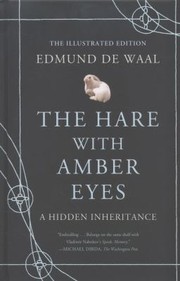
A beautifully written family memoir tracing a Jewish dynasty's Viennese rise and Nazi-era dispossession. It makes the abstract history of expropriation and loss viscerally personal, and bridges the wartime and postwar sections.
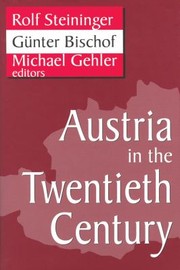
A scholarly synthesis of Austria's postwar political development — the State Treaty, neutrality, the Waldheim affair, and EU accession — providing the analytical framework to understand how the republic was built and how it faced its past.
Discussion
Keep reading
Paths that share books, cover the same subject, or open a related topic.