Hungarian history is dominated by discontinuities: the Mongol invasion, the Ottoman century, Habsburg absorption, the 1867 Compromise, the Treaty of Trianon, 1956, 1989. Each rupture reframes what came before, and books that start at any one of them assume you already know the rest. Reading in sequence is the only way to make the pattern legible rather than merely dramatic.
Trianon deserves particular attention. The 1920 settlement left roughly a third of ethnic Hungarians outside the new borders, and that fact has structured Hungarian politics for a century — through the interwar revisionism, the wartime alliance, and into current disputes with neighbouring states. It is not a historical footnote there.
Start with the surveys
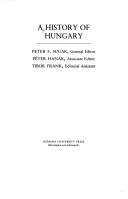
A History of Hungary, edited by Peter Sugar, Péter Hanák, and Tibor Frank, is the standard English-language collaborative history, running from the Magyar settlement to the late twentieth century. It is a multi-author volume, so the chapters vary in style, but it is the most complete single reference.
Norman Stone's Hungary is the short, opinionated counterpart — a compressed narrative with strong judgments, useful precisely because it argues where the collaborative volume balances. Read Sugar for coverage and Stone for a point of view.
Then the kingdom and the empire
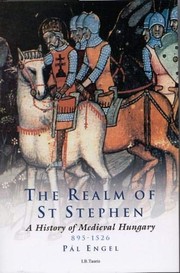
The realm of St. Stephen by Pál Engel is the authoritative medieval history, covering the Árpád dynasty, the Mongol devastation of 1241, and the kingdom's late-medieval peak under Matthias Corvinus before the Ottoman catastrophe at Mohács. It is a serious scholarly book and the best thing available in English on the period.
Pieter Judson's The Habsburg empire is the current standard on the imperial framework Hungary sat inside after 1699, and it is essential for understanding the 1867 Compromise that made the Dual Monarchy. Judson's revisionist account — an empire that worked better than its reputation — puts the Hungarian nationalist story in a wider frame.
Then the twentieth-century ruptures
Hungary between Wilson and Lenin by Peter Pastor covers the chaotic 1918–19 period: the Károlyi republic, Béla Kun's short-lived Soviet republic, the Romanian occupation, and the Allied decisions that produced Trianon. It is where the interwar grievance is manufactured.
Twelve Days by Victor Sebestyen is the vivid narrative of the 1956 revolution — the Budapest street fighting, Imre Nagy's impossible position, and the Soviet return. Follow it with The Hungarian Revolution of 1956, edited by György Litván, which is the scholarly documentary treatment: reform-communist origins, the workers' councils, and the reprisals. Sebestyen for the story, Litván for the evidence; the pairing is deliberate.
Then the present argument
Light That Failed by Ivan Krastev and Stephen Holmes is the wider Central European argument — that the post-1989 demand to imitate the West produced a backlash across the region. It is an essay in political analysis rather than a history of Hungary specifically, and it frames the final book.
Close with Paul Lendvai's Orbán, a biography by a Hungarian-born journalist who has covered the country for decades. Lendvai is openly critical, and readers should note that; there is no neutral account of a sitting government, and the honest move is to read this knowing its stance rather than pretending one exists.
The comparative material on regime change and democratic backsliding sits in the history of Argentina hub's neighbourhood of political histories as well.
Follow the full path to keep these in sequence.
Follow the full ordered path here: The Best Books on Hungarian History, in Order.