Best Books About Alan Turing, in Reading Order
Turing is three separate subjects wearing one name: the mathematician who defined computability in 1936, the cryptanalyst who helped break Enigma at Bletchley Park, and the man the British state prosecuted for homosexuality in 1952 and who died two years later. Most books do one of the three well and the others badly. This path takes the short introductions first, then the biography that does all three at once, then splits deliberately — the mathematics on one side, the codebreaking on the other — before finishing with what his ideas became. Several of these books are catalogued under bare or truncated display titles, noted where it matters.
The Short Introductions
BeginnerGet the whole life in under three hundred pages, and decide which of the three Turings you actually want to pursue.
▸ Study plan for this stage
Pace: Two to three weeks for around 620 pages, both of them trade non-fiction written for general readers with no mathematics required. Copeland's Turing runs about 300 pages and can be read at 30 pages a day; Leavitt's The Man Who Knew Too Much is a similar length but reads faster because it is essayisti
- The three Turings — the 1936 logician, the wartime cryptanalyst, and the man prosecuted in 1952 — and the fact that most books do one well and the others thinly
- What the imitation game actually proposes in the 1950 paper, as distinct from what 'the Turing test' has come to mean in popular usage
- The postwar computer work — the ACE design at the National Physical Laboratory and the Manchester machine — which Copeland covers unusually well and which most accounts skip
- Morphogenesis: Turing's last research programme, on how chemical reaction and diffusion can generate biological pattern
- The 1952 conviction and its terms, and the difference between what the court ordered and what popular retellings claim it ordered
- The dispute over the death: Copeland's argument for accidental cyanide inhalation against the coroner's suicide verdict
- Biography as genre — Leavitt is a novelist writing about identity and concealment, and reads Turing's life as a text
- What does the 1936 result prove, in the form Copeland states it, and what does he say it does not prove?
- What are the actual grounds for Copeland's doubt about the suicide verdict, and how strong do you find them after reading his version alone?
- Where does Leavitt's reading of the imitation game as a piece of writing about concealment become an argument about Turing rather than about the paper?
- Which of the three Turings does each of these books handle best, and which one do you now want to pursue?
- What did Turing actually build or design after 1945, and why does that period get so little attention elsewhere?
- Read Turing's 1950 imitation game proposal as Copeland describes it, then write out the test's rules in your own words in five lines. Compare with the popular version you already had in your head; the gap is usually large.
- List, from Copeland, every claim he makes about the death and mark each as documentary evidence, inference, or speculation. Keep the list — you will test it against Hodges and against Sara Turing in the next stage.
- After Leavitt, go back to any three pages of Copeland covering the same episode and note what each author leaves out. This is the cheapest possible demonstration of why this path uses more than one biography.
- Decide, in writing, which of the three Turings you are reading this path for. The next four stages split along exactly that line and you can legitimately take them out of order once you know.
Next up: With the shape of the life established in under 700 pages, you are ready for the biography that everything you have just read was itself working from.

Copeland runs the Turing Archive and this is the best short life: accurate on the mathematics, unusually strong on the postwar computer work, and clear-headed about the death. Catalogued under the bare title Turing. Start here — it is a fifth the length of Hodges and gets you most of the way.
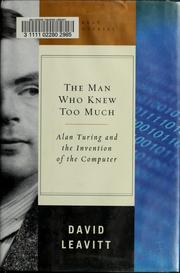
A novelist's short biography in the Great Discoveries series, built around Turing's sexuality and the imitation game as a piece of writing about identity. Weakest on the mathematics of the three biographies here and the best on the texture of the life; read it second as the counterweight to Copeland.
The Definitive Biography
IntermediateRead the book that established the modern understanding of Turing, and set it against the one primary account written by someone who knew him from birth.
▸ Study plan for this stage
Pace: Six to eight weeks. Hodges's Alan Turing is 592 dense pages and genuinely demanding — he is a mathematician and he explains the 1936 paper properly rather than gesturing at it, so the mathematical stretches need slower reading than the narrative ones. Twenty pages a day is realistic. Sara Turing's A
- Hodges is the source text: essentially every later Turing book, including the two you just read, works from his research
- Turing's Cambridge context — Hardy, Newman, the Moral Sciences Club, Wittgenstein's lectures — which explains why he was posing the 1936 question at all
- The Enigma work reconstructed from documents rather than legend, including what Turing personally contributed as against Welchman, Knox and the Polish cryptanalysts
- Hodges as a writer with a position: he is a gay mathematician writing in 1983, and the book is partly an argument about how Turing was treated
- A primary source versus a biography: Sara Turing knew things no researcher can recover and is unreliable about things any researcher can check
- What a mother's 1959 memoir could not say — the Official Secrets Act still covered Bletchley, so the wartime work is largely absent from her account
- Reading two accounts of one death: the coroner's verdict, Sara Turing's refusal of it, and Hodges's handling of both
- How does Hodges explain the 1936 diagonal argument, and could you reproduce his explanation to someone else?
- What specifically did Turing contribute to breaking Enigma, on Hodges's reconstruction, and what did he not?
- Sara Turing's memoir omits Bletchley almost entirely. What was she legally unable to say, and what does she appear simply not to have known?
- Where does Sara Turing's account of the last months contradict the coroner, and what does Hodges say about her objection?
- Hodges writes with an evident argument about Turing's treatment by the British state. Does that sharpen the biography or distort it?
- Take the list of claims about the death you made in the previous stage and test each one against Hodges, then against Sara Turing. Three accounts, one event: write down where all three agree, which is less than you expect.
- Read Hodges's chapter on the 1936 paper and stop at every point where he introduces notation. Write the notation out on a separate sheet with a plain-English gloss. You will need exactly this sheet for Petzold in the next stage.
- Mark every point in Sara Turing's memoir where she reports something she personally witnessed, as against something she was told. The book's value is concentrated almost entirely in the first category.
- After both books, write a paragraph naming one thing Hodges gets from documents that his mother could not have known, and one thing she supplies that no document contains.
Next up: Hodges explains the 1936 result well enough that you now know what it says; the next stage is about being able to follow the proof yourself rather than take his word for it.
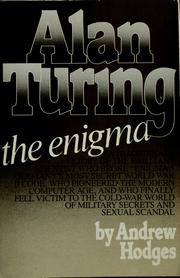
Hodges is a mathematician, and this is the biography every later book works from — the 1936 paper explained properly, the Bletchley work reconstructed, the prosecution and the death handled with real care. It is long and demanding, and it is the reason the rest of this literature exists. Our catalogue displays it as simply Alan Turing.

His mother's 1959 memoir, written five years after his death and largely refusing the suicide verdict. As biography it is unreliable and as a primary document it is irreplaceable — read it after Hodges, who tells you exactly what she is leaving out and why.
The Mathematics
IntermediateUnderstand what On Computable Numbers actually proves — the Turing machine, the universal machine, the halting problem — rather than what popular accounts say it proves.
▸ Study plan for this stage
Pace: Two to three months, and this stage is genuinely different in kind from the rest of the path. Bernhardt's Turing's Vision is a popular exposition — 208 pages, no prerequisite beyond school algebra, readable at 15 pages a day. Petzold's The Annotated Turing is not popular science: it reproduces the w
- The Turing machine as a definition, not a device: a formalisation of what it means for a procedure to be effectively calculable
- The universal machine — one machine that can simulate any other given its description — which is the idea the stored-program computer is built on
- Decidability and the Entscheidungsproblem, the question Turing was actually answering in 1936
- The diagonal argument and the halting problem, and why the impossibility result is a theorem rather than a statement about current technology
- Computable numbers as the paper's actual subject, which is not the same as computable functions and is where most popular accounts go wrong
- Turing's own errors in the 1936 paper, which Petzold points out and works through — a paper is a human document, not a scripture
- The Essential Turing as primary source: Turing's own words on computability, Enigma, machine intelligence and morphogenesis, each with Copeland's framing
- State the halting problem precisely, and give the diagonal argument for its undecidability without looking at the book.
- What is a computable number, and why did Turing frame the paper around numbers rather than functions?
- How does the universal machine work — what is it doing with the description tape — and why is that the step that makes the modern computer conceivable?
- Which errors in the 1936 paper does Petzold identify, and do they affect the main result?
- What does Computing Machinery and Intelligence, read in Copeland's edition with his introduction, argue that a summary of 'the Turing test' leaves out?
- Work Bernhardt's machine tables by hand on paper: take one of his example machines and run it through at least twenty steps, writing out the tape at each step. Do not do this mentally and do not skip it — everything in Petzold assumes this is automatic.
- Build the description number for one small machine following Petzold's encoding scheme, then decode a different one back into its table. This is the mechanical core of the universal machine and it takes an afternoon.
- Work through Petzold's treatment of the diagonal argument twice, a week apart, without notes on the second pass. If you cannot reconstruct it, the gap will be in the encoding, not the logic.
- Read the 1936 paper straight through in The Essential Turing after finishing Petzold, without the commentary. The point of the exercise is to find out how much of it you can now carry unaided.
- Read Turing's morphogenesis paper in The Essential Turing with Copeland's introduction. It uses different mathematics entirely — differential equations, not logic — which is the clearest evidence for how wide his range was.
Next up: You now understand the theoretical work on its own terms, which is the right position from which to look at the wartime job — where the problem was not what is computable in principle but what could be computed by Tuesday.

A short, genuinely accessible explanation of computability, decidability and the halting problem for readers with no more than school algebra. The right first mathematical book: it makes the 1936 result intelligible before you attempt the paper itself.
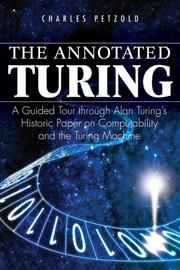
The 1936 paper reproduced in full with Petzold's commentary running alongside it, line by line, including the errors Turing made. This is the closest a non-specialist can get to actually reading the paper, and it needs Bernhardt first.
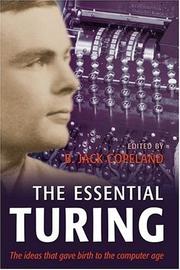
Copeland's edited collection of Turing's own papers — computability, the Enigma work, Computing Machinery and Intelligence, morphogenesis — each with an introduction. The reference volume for the whole path, and where you go once Petzold has taught you how to read one of these.
Bletchley Park
IntermediatePlace Turing inside the codebreaking operation rather than at the centre of it, and understand what the Bombe actually did.
▸ Study plan for this stage
Pace: Six to eight weeks, with one reference volume that you do not read end to end. Michael Smith's Station X is 216 pages of readable narrative history and takes about a week. Sinclair McKay's The Secret Life of Bletchley Park is 336 pages of social history, a fortnight. Copeland's Colossus is an edited
- Scale: Bletchley employed thousands, most of them women, and Turing was one important part of a large industrial operation rather than its centre
- What the Bombe actually did — it eliminated contradictory rotor settings using a crib, and it was not a computer
- The distinction between the Bombe and Colossus, which is the single most common popular confusion and the reason Copeland's book is on this list
- The Polish contribution — Rejewski, Różycki and Zygalski broke Enigma before the war, and the British work began from theirs
- The crib as a cryptanalytic method: guessing known plaintext and using it as a lever
- Enforced silence, and its cost — participants could not speak about the work for decades, which shaped both the historiography and the individual lives McKay documents
- Kahn's long view: Enigma as one episode in a several-thousand-year contest, which is what makes the problem legible as a problem
- What does a Bombe do, mechanically, and what does it need supplied to it before it can do anything?
- What is the difference between the Bombe and Colossus, in machine terms and in what each was attacking?
- What did the Polish cryptanalysts achieve before 1939, and what did they hand over?
- Who else at Bletchley did work comparable to Turing's, and why do popular accounts collapse the operation into one man?
- After McKay, what did the Official Secrets Act cost the people who worked there, and how does that explain the shape of the surviving record?
- Work through Smith's account of a crib-driven attack with pencil and paper on a toy example of your own devising — a short known plaintext, a simple substitution — until the elimination logic is concrete rather than described.
- Draw the Bombe and Colossus side by side from Copeland's descriptions: input, mechanism, output, cipher attacked. One page. This single diagram fixes the distinction that most Turing books blur.
- Read Kahn's chapters on Enigma, then use the index to find one pre-twentieth-century cipher he treats at length and read that too. The exercise is to see the Enigma problem as an instance rather than a singularity.
- Take three of McKay's interviewees and write down what each actually did. Then check how many of them appear in the Turing-centred accounts you read in the earlier stages — the answer is usually none, which is the stage's point.
Next up: You now have both halves of the wartime and theoretical record; the last stage follows the ideas past 1954, into hardware, artificial intelligence and the scholarly literature that now surrounds the papers.
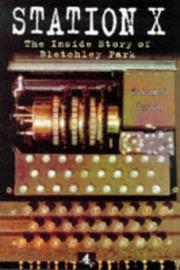
The most readable general history of Bletchley Park, written around interviews with the people who worked there. It gets the scale right — thousands of staff, of whom Turing was one important part — which most Turing-centred accounts do not.
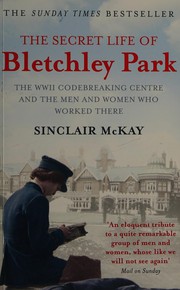
The social history: who the codebreakers were, how they lived, the recruitment through crossword puzzles, the decades of enforced silence afterwards. Read it after Smith for the human texture the operational account skips.

Copeland's edited technical history of Colossus and the Lorenz cipher — the part of Bletchley that was genuinely a computer, and which Turing did not build. Included precisely to correct the popular conflation of the Bombe with Colossus.
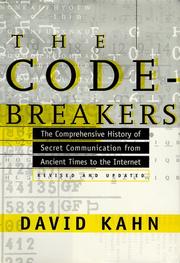
Kahn's 1967 history of cryptology from antiquity onward, and still the standard work. It supplies the millennia of context that make the Enigma problem legible as a problem; use it as a reference rather than reading it end to end.
What Came After
IntermediateFollow the ideas past 1954 — into stored-program computers, artificial intelligence and mathematical biology — and see the scholarly apparatus that now surrounds the work.
▸ Study plan for this stage
Pace: Two to three months, and the two books are unlike each other. George Dyson's Turing's Cathedral is 400 pages of narrative history for general readers and moves at a normal reading pace. The Cooper and van Leeuwen volume — catalogued here, confusingly, as Alan Turing, the same display title as the Ho
- The gap between a universal machine as a mathematical object and a stored-program machine as physical hardware, which is the decade Dyson documents
- The Institute for Advanced Study machine, von Neumann's role, and how much of the design descends from Turing's paper as against from engineering necessity
- Early computing's entanglement with weapons work — the IAS machine's first serious problem was thermonuclear calculation
- The morphogenesis programme's afterlife: reaction-diffusion patterns turned out to be a real and productive piece of mathematical biology, and Cooper and van Leeuwen's volume is one of the few places it is properly covered
- Machine intelligence from 1950 to now, and how much of the current debate is a re-run of arguments Turing anticipated in the objections section of his own paper
- Scholarly apparatus: what commissioned specialist commentary adds to a primary paper, and why an edited collection is read by section rather than sequentially
- Dyson's position — he grew up around the Institute, so his book is partly a participant's account of a place, which shows in its texture and its sympathies
- How much of the modern computer is Turing's idea and how much is von Neumann's, on Dyson's account — and does Dyson give you the evidence to disagree with him?
- What was the IAS machine first used to compute, and what does that say about who funded early computing?
- What does the morphogenesis commentary in the Cooper and van Leeuwen volume claim the 1952 paper got right, and what has been superseded?
- Which of the objections Turing raises against himself in Computing Machinery and Intelligence is still the strongest, seventy years on?
- You have now read three books displaying as 'Alan Turing'. What is each one actually for, and to whom would you give which?
- Draw the line of descent from the 1936 universal machine to the IAS hardware as Dyson tells it, marking each step as documented, inferred, or Dyson's own reading. The book is stronger on atmosphere than on attribution, and the diagram shows you where.
- Pick one paper in the Cooper and van Leeuwen collection that you already read in The Essential Turing, and read the new commentary on it. Two editors, two framings of one document — write down what each editor wanted you to notice.
- Read the morphogenesis material in the Cooper and van Leeuwen volume, then reproduce the basic reaction-diffusion idea in a sentence and a sketch. This is the part of Turing's work most books on this path never reach.
- Write a one-page reading recommendation for someone who has asked you where to start with Turing, naming Copeland, Hodges, Bernhardt, Petzold, Smith and Dyson by author rather than by title. Given the collisions in this catalogue, distinguishing them by author is the practical skill this path has actually taught.
Next up: This closes the path: you have the life from three biographers, the mathematics from the paper itself, the codebreaking in its real scale, and the afterlife of the ideas — which is as complete a view of Turing as the literature currently supports.
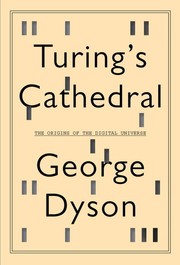
Ostensibly about von Neumann's machine at Princeton, and really about how Turing's universal machine became physical hardware. Dyson grew up around the institute, which gives the book its texture; it is the best account of the decade in which a theorem turned into an industry.

A very large edited volume by Cooper and van Leeuwen collecting Turing's papers with commissioned commentary by specialists, including on the morphogenesis work almost nobody else covers. The scholarly end of the path, and also catalogued as Alan Turing — check the author to distinguish it from the Hodges biography.
Discussion
Keep reading
Paths that share books, cover the same subject, or open a related topic.