Best Books on Bletchley Park and the Enigma Code, in Reading Order
Bletchley Park is two stories that are usually told as one: a mathematical problem — how do you break a machine cipher with a hundred quintillion settings — and an industrial operation employing nearly ten thousand people, most of them women, under total secrecy. This path starts with cryptography itself so the Enigma problem makes sense, then walks through the wartime organisation, then gets into how the break was actually achieved, then follows Turing and the machines that grew out of it. It closes with the official history and the great reference work, which are where the myths get corrected.
What a Cipher Is
BeginnerUnderstand substitution, polyalphabetic ciphers and rotor machines well enough that Enigma stops being magic and becomes a specific engineering problem.
▸ Study plan for this stage
Pace: 1–2 weeks, ~40 pages/day. The Code Book is 416 pages but front-loaded for this path: the Mary Queen of Scots and Vigenère chapters build the vocabulary, and the long Enigma chapter in the middle is the one to read twice.
- Monoalphabetic substitution and why frequency analysis destroys it — the Babington plot is Singh's worked example
- Polyalphabetic ciphers and the Vigenère square, and the Kasiski/Babbage attack that broke them
- The rotor: how three stepping wheels turn a substitution alphabet into a different one every keystroke
- The plugboard (Steckerbrett) as the real multiplier of Enigma's keyspace, and why the Germans trusted it
- The distinction between the daily key and the message key, and why key distribution is the weak joint in any cipher system
- The reflector, and the reciprocal property it forces — no letter ever encrypts to itself
- Operational versus theoretical security: cribs, stereotyped message openings and lazy operators, not mathematics, are what gave the break its way in
- The one-time pad as the only provably unbreakable system, and why nobody could use it at wartime scale
- Frequency analysis broke the Babington cipher in a single sitting. Precisely which feature of Enigma makes that same technique useless?
- What does the plugboard multiply the keyspace by, and why did that enormous number not make Enigma unbreakable in practice?
- Singh gives the Poles — Rejewski in particular — the first credit. What did Rejewski have access to that the British did not, and what did he do with it?
- Why is the reflector's guarantee that no letter encrypts to itself a cryptographic weakness rather than a strength?
- What is a crib, and why does a predictable weather report matter more to a codebreaker than an extra rotor?
- Encipher a 200-word paragraph by hand with a Vigenère square using a six-letter key, then set it aside for a day and break it yourself using the Kasiski test exactly as Singh describes it — measure repeated trigram spacings, find the common factor, then run frequency analysis on each column.
- Write a 60-line Enigma simulator in Python: three rotors with fixed wirings, ring settings, the stepping mechanism (including double-stepping), a reflector and a plugboard. Verify two things by test — that encryption and decryption are the same operation, and that no letter ever maps to itself.
- Compute the keyspace yourself before reading Singh's figure: rotor choice and order from five wheels, 26 ring settings each, and plugboard pairings for ten leads. Write down each factor, multiply, then compare with his number and account for any difference.
- Take a plaintext you enciphered with your simulator, then attack it as a codebreaker would: assume the first six letters are WETTER and use the no-letter-encrypts-to-itself rule to eliminate every alignment of that crib that is impossible. Record how many alignments survive.
Next up: With rotors, plugboards and cribs understood as a specific engineering problem rather than a mystery, you can read the social and organisational histories of Bletchley without the technical passages sliding past.
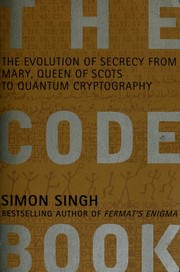
A popular history of cryptography from Mary Queen of Scots to public-key encryption, with a long and unusually clear chapter on Enigma. Read it first — everything after this assumes you know what a rotor does and why the plugboard mattered.
The Place and the People
BeginnerPicture the operation: the huts, the shifts, the Wrens on the bombes, and the secrecy that held for thirty years afterwards.
▸ Study plan for this stage
Pace: 3 weeks, ~40 pages/day. Read McKay's 336 pages first for texture, then Smith's short 216-page Station X in two or three sittings for the structure, then Dunlop. Keep a note of the hut numbers as they appear — Huts 3, 4, 6 and 8 recur constantly across the rest of the path.
- The hut system as a production line: Hut 6 broke Army and Air Force Enigma, Hut 3 translated and evaluated it, Hut 8 broke naval, Hut 4 handled naval intelligence
- Ultra as a distribution problem — intelligence so good it could betray its own source, and the cover stories built to protect it
- The scale and composition of the workforce: roughly ten thousand people at peak, around three quarters of them women, most of them doing shift work they could not describe
- The Wrens on the bombes: operating machines whose purpose they were not told, which McKay and Dunlop both treat as the defining experience of the place
- Recruitment by crossword, chess and personal connection, and what that selected for as well as what it missed
- The thirty-year silence after 1945, and Dunlop's veterans describing marriages and careers conducted around a secret
- The gap between Bletchley as a workplace — billets, food, boredom, romance — and Bletchley as a legend
- Trace one decrypted German message through the huts from interception to a commander's desk. Which hut does what, and where is the intelligence first turned into English?
- Why did Ultra's value create a distribution problem, and what mechanisms were used to act on it without revealing that Enigma had been broken?
- McKay's veterans and Dunlop's veterans describe the same site. What does each book see that the other does not, and why?
- Dunlop notes that roughly three quarters of the staff were women. What kinds of work did they actually do, and what does the standard cast list of Bletchley leave out as a result?
- Smith is stronger than McKay on organisational structure. What specific change in how the Park was run does he identify as the turning point, and when?
- Draw the Bletchley workflow as a single-page diagram: interception stations, Hut 6, Hut 3, Hut 8, Hut 4, the bombe bays, and the outward intelligence channel. Annotate each box with the number of people and the job title Smith gives it.
- Build a timeline from Station X of the Park's expansion, from the 1938 purchase of the mansion through the 1941–42 growth to the 1945 wind-down, marking on it the four or five moments Smith treats as decisive.
- Pick three of Dunlop's fifteen women and write 150 words on each: what she was recruited for, what she actually did, and what she was told about why. Then note which of the three would appear in a standard narrative of Bletchley and which would not.
- Write a one-page comparison of how McKay and Smith handle the same episode — the naval Enigma blackout of 1942 is the easiest to find in both — and identify which sources each author is leaning on.
Next up: You now know who worked where and under what conditions, which is exactly the context needed to follow Kahn's and Welchman's technical accounts of how the break was actually achieved.
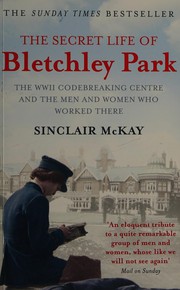
A social history built on interviews with surviving veterans — billets, boredom, romances and the strain of not being able to tell anyone. The best book for grasping that this was a workplace before it was a legend.
A compact narrative history of the Park from the 1938 purchase to the 1945 wind-down, stronger than McKay on the organisational structure and the intelligence output. Read it second for the skeleton beneath the anecdotes.

The women's side of the operation told through fifteen surviving veterans, which matters because roughly three-quarters of the staff were women and most accounts have been written about the men. Closes this stage by correcting the standard cast list.
How Enigma Was Actually Broken
IntermediateFollow the break in technical detail — the Polish contribution, cribs, the bombe, and the naval Enigma problem that captured material solved.
▸ Study plan for this stage
Pace: 3–4 weeks. Kahn's Seizing the Enigma is 336 readable pages; Welchman's 326 are the hardest in the path and should be taken at ~15 pages a day with a pencil. Expect to re-read the diagonal board chapter.
- The Polish foundation: Rejewski's exploitation of the doubled message key, the cyclometer, and what Poland handed over in July 1939
- Naval Enigma's extra difficulty — the fourth rotor on the M4, the bigraph tables, and the shorter, less stereotyped traffic
- Pinches: Kahn's central argument that captured key tables, machines and weather short signals from U-boats and weather ships were not a supplement to cryptanalysis but a precondition for it
- The crib-based attack: guessing plaintext, testing it against ciphertext, and using the reciprocal property to eliminate impossible alignments
- The bombe as a machine for testing rotor hypotheses at speed, and what a 'stop' actually means
- Welchman's diagonal board, which exploited the plugboard's own reciprocity to cut the number of false stops enough to make the bombe practical
- Hut 6's daily working method — Banburismus, menus, and the difference between breaking a key and reading traffic
- The 1942 Shark blackout and what ended it
- Kahn's title is an argument. State it in one sentence, then give the two strongest pieces of evidence he offers that cryptanalysis alone would not have been enough against naval Enigma.
- What is a menu, and how does a bombe use one to eliminate rotor settings rather than test them exhaustively?
- Explain the diagonal board in your own words. What property of the plugboard does it exploit, and what quantitative effect did it have on false stops?
- Welchman was writing from inside Hut Six and lost his security clearance over it. What specifically was he judged to have disclosed, and does the book read as an operational manual or a memoir?
- Why was the introduction of the fourth rotor in February 1942 catastrophic, and what combination of capture and cryptanalysis restored readability?
- Take Welchman's worked menu diagram and reconstruct it from scratch on paper for a short crib of your own — letters as nodes, crib-to-cipher correspondences as edges — and identify the closed loops that make it usable.
- Extend the Enigma simulator you wrote in stage one into a crude bombe: given a known crib and ciphertext, brute-force rotor orders and start positions, rejecting any setting where a letter maps to itself. Count how many candidate settings survive without a plugboard model, then reason about why Welchman's diagonal board was necessary.
- Build a two-column chronology of the naval Enigma war from Kahn: capture events in one column, cryptanalytic advances in the other. Then write 200 words on whether the columns are independent.
- Summarise Welchman's account of his own contribution in 300 words, then compare it with how Hodges describes Hut 6 when you reach the next stage, and note where the two participants' emphases diverge.
Next up: Having followed the cryptanalysis in detail, you can now read Hodges on Turing's mathematics and Copeland on Colossus without mistaking one machine, or one cipher, for another.
The naval Enigma story, and the best account of how much depended on physically capturing keys and machines from U-boats and weather ships. Read it first here: it makes plain that cryptanalysis alone was not enough.
Written by the man who ran Hut Six and designed the diagonal board that made the bombe practical — a participant explaining the method from the inside, and controversial enough on publication that it cost him his security clearance. The most technical book on the path, and the most authoritative.
Turing and the Machines
IntermediateUnderstand Turing's actual contribution, separate it from the film version, and see how Bletchley's engineering fed directly into the first computers.
▸ Study plan for this stage
Pace: 4–5 weeks. Hodges is 592 dense pages and the mathematical chapters — the 1936 computability paper and the Bayesian sequential analysis behind Banburismus — deserve slow reading; budget three weeks for it alone. Copeland's Colossus is an edited collection of 480 pages, so read it by chapter rather th
- Turing's 1936 'On Computable Numbers' and the universal machine, written before the war and independent of it
- Turing's actual Bletchley contributions: the bombe design that Welchman then improved, Banburismus, and the sequential statistical scoring in bans and decibans
- The distinction the film version collapses — Enigma is a rotor cipher attacked by the bombe; Lorenz is a teleprinter cipher attacked by Colossus
- Colossus as a programmable electronic machine built by Tommy Flowers at the Post Office Research Station, and the argument over whether it counts as the first computer
- Tunny, Fish and the Newmanry: the second, largely separate breaking effort at Bletchley
- The line from Bletchley engineering to the post-war British machines — Turing's ACE, the Manchester Baby, and the people who moved between them
- The destruction of the Colossus machines and the secrecy that erased Flowers from the history for decades
- Turing's 1952 prosecution and death, and Hodges's handling of it as biography rather than martyrology
- State the difference between Enigma and Lorenz precisely — cipher mechanism, traffic type, and attacking machine — and explain why popular accounts conflate them.
- What did Turing personally design at Bletchley, and where does Welchman's contribution begin? Compare Hodges's account with Welchman's own from the previous stage.
- What is a ban, and how does Banburismus use sequential evidence to rank rotor hypotheses before a bombe run?
- Copeland's contributors argue Colossus was a computer. What capability does it have, and what capability does it lack, relative to the stored-program machines that followed?
- How does Hodges connect the 1936 universal machine to the wartime work — as direct application, or as something more oblique?
- Write a 400-word technical note distinguishing Enigma from Lorenz for someone who has only seen the film, naming the machine, the cipher principle and the attack in each case, and citing Copeland for the Lorenz side.
- Implement a Turing machine simulator in the language of your choice (~100 lines), then encode one of the machines from Hodges's chapter on the 1936 paper and run it. Note what the universality argument requires that your simulator provides.
- Work through a small Banburismus scoring example on paper: given two message texts, count coincidences at each relative offset and convert the counts to decibans using Hodges's account. State what the peak offset tells you.
- Build a two-column table of the Bletchley machines — bombe, Heath Robinson, Colossus Mark 1, Colossus Mark 2 — with builder, target cipher, technology and year, sourced from Copeland, and mark which survived 1945.
Next up: With the mathematics and the machinery separated and understood, you are ready to test everything you have read against the insiders' official record and the field's standard reference.
The definitive biography, written by a mathematician, and serious about the mathematics as well as the life and the prosecution that ended it. Long, and worth every page; read it after the cryptanalysis so you can follow what he was doing.

An edited collection on the Lorenz cipher and the Colossus machines, by the engineers and codebreakers who built and used them. It corrects the common conflation of Colossus with Enigma — different cipher, different machine — and takes the story to the birth of computing.
The Record
BeginnerRead the insiders' official-history volume and the standard reference work on cryptology, and learn where the popular accounts overstate the case.
▸ Study plan for this stage
Pace: Open-ended, 4+ weeks, and deliberately not a straight read. Hinsley's Codebreakers is 333 pages of thirty short first-hand chapters — read it through in a fortnight. Kahn's The Codebreakers is 1,164 pages and is a reference: read the Enigma and World War II chapters, then keep it for lookup. Note th
- The difference between a participant memoir, an official history and a popular narrative, and what each can and cannot establish
- Sections of the Park that no single narrative reaches — Hinsley's contributors cover traffic analysis, the Italian and Japanese work, Sixta and the diplomatic sections
- Hinsley's own famous and heavily qualified estimate of how much Ultra shortened the war, and how it should be read
- Cryptology's long history before 1939, which Kahn establishes and which makes Bletchley an episode rather than an origin
- What Kahn could not say in 1967, and what the 1974 lifting of the Ultra secret changed about every account written afterwards
- The standard overstatements — Turing as sole breaker, Enigma as unbreakable, Ultra as decisive — and how to check a claim against these two books
- Signals intelligence as a system: interception, traffic analysis, cryptanalysis, translation and dissemination, only one of which is codebreaking
- Pick three claims you accepted from Ambrose-style popular accounts earlier in this path and test each against Hinsley's contributors. Which survive intact?
- What does Hinsley actually say about Ultra's effect on the length of the war, including his qualifications, and how is that sentence usually misquoted?
- Which parts of Bletchley's work does the Codebreakers collection cover that McKay, Smith and Welchman do not touch at all?
- Kahn wrote the bulk of The Codebreakers without knowing about Ultra. Reading his 1967 chapters, what does he get right about Enigma anyway, and what is visibly missing?
- What is traffic analysis, why does it produce intelligence even when nothing is decrypted, and where does each of these two books treat it?
- Take one contested claim — that Coventry was deliberately sacrificed to protect Ultra is the standard test case — and write a 500-word note assembling what Hinsley's contributors and Kahn each say, ending with what the evidence does and does not support.
- Compile a one-page index for yourself of which Hinsley chapter covers which section of the Park, so the volume is usable as the reference it is.
- Read Kahn's chapters on the Zimmermann telegram and on Pearl Harbor, then write 300 words on what those two cases show about signals intelligence being an organisational problem as much as a mathematical one.
- Go back through your notes from all five stages and write a single page listing every factual disagreement you found between two books on this path, with the source of each. That page is the real output of the path.
Next up: This is the end of the path: from here you read primary documents at the National Archives or move sideways into modern cryptography, where Singh's closing chapters on public-key encryption are the natural bridge.
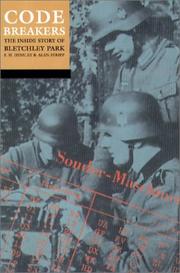
Thirty first-hand chapters edited by the official historian of British intelligence, covering sections of the Park that no single narrative reaches. The closest thing to a primary source collection, and the place to check any claim you have read elsewhere.
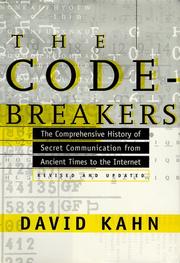
Kahn's 1967 history of cryptology from antiquity onward — the field's foundational reference, written before the Ultra secret was public and revised afterwards. Kept for last as the book you return to rather than read straight through.
Discussion
Keep reading
Paths that share books, cover the same subject, or open a related topic.