The history of the internet: books to read, in order
The internet was not invented once, and the popular story compresses at least four separate histories into one: a military-funded research network, a set of protocols argued out in public by graduate students, a hypertext system built at a physics lab, and a commercial industry that arrived last and now owns the result. This path keeps them apart. It starts with the network itself, moves to the web and the machines it ran on, then to the cultures — hacker, countercultural, and the user communities that standard histories leave out — and ends with the physical wires, the money and the law, which is where the story stops being about invention.
How the network was built
BeginnerExplain packet switching and why it was a genuinely radical idea, know who ARPA funded and why, and be able to describe the RFC process — the reason the internet's standards were argued out in the open rather than decided by a company.
▸ Study plan for this stage
Pace: Six weeks for four books and 1,346 pages, read in a deliberate order rather than by length. Where Wizards Stay Up Late is 304 pages of narrative journalism and the easiest reading here — a week, and it gives you the cast every other book refers back to. The Dream Machine is 528 pages, the longest in
- Packet switching and why it was radical: breaking a message into independently routed pieces reassembled at the destination, against a telephone industry organised entirely around dedicated circuits.
- The independent arrival of the idea — Baran at RAND, Davies at the National Physical Laboratory, Kleinrock's queueing work — and what it means that a technology can be invented several times in different institutional settings.
- ARPA's funding model: block grants to principal investigators with unusual latitude, an office run by researchers rather than administrators, and no requirement that any of it produce a weapon.
- The IMPs and the layering they embodied — putting the network's intelligence in separate machines so that host computers of incompatible designs could interconnect without agreeing on anything else.
- The RFC process: standards proposed as Requests for Comments by graduate students, argued in public, adopted by rough consensus and running code. This is why the internet's specifications are open documents rather than corporate property.
- TCP/IP and the end-to-end principle as Abbate describes them — a deliberately dumb network with complexity at the edges — and the design commitments that decision locked in.
- The OSI standards effort and its defeat, which Abbate treats as the most instructive episode in the book: a formally superior process losing to a working implementation with an installed base.
- That ARPANET was one of several networks and that internetworking, not the ARPANET itself, is the achievement the word internet actually names.
- Explain packet switching to someone who understands the telephone network. What does the telephone company have to give up for it to work?
- Why did ARPA fund this? Give the argument as Licklider and Taylor would have made it, not as it is retrospectively justified.
- What is the end-to-end principle, and name two consequences of it that are still visible in how the internet behaves.
- Abbate treats the OSI defeat at length. What were OSI's advantages, and what actually decided the outcome?
- What does the RFC process assume about the people using it, and what would have had to be different for standards to have been set by a company instead?
- Hafner, Waldrop and Abbate cover overlapping ground. What can each see that the other two cannot, given how each is sourced?
- Draw the four-node ARPANET from Hafner and Lyon, with the hosts, the IMPs and the leased lines labelled. Then draw what the same connection would have required as circuits.
- Read one early RFC — they are all still online — after finishing Abbate, and write half a page on its tone and its assumptions about who would read it.
- From Waldrop, extract Licklider's description of what interactive computing would be for, and mark every prediction. Score them, and note that the misses are as informative as the hits.
- Build a two-track timeline of the founding period: what was engineered, and who paid for it. Keep it — the later stages of this path are mostly about what happened to both tracks.
- Using Abbate, write a paragraph on a design decision that could plausibly have gone the other way, and what the internet would be like if it had.
Next up: You now have the network and its protocols, which is exactly the layer the web sits on top of and is constantly confused with.
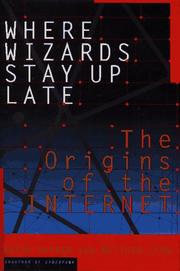
The best narrative account of the ARPANET's construction: BBN's Interface Message Processors, the first four nodes, the people in the room. Start here — it is the most readable book on the subject and it gives you the cast everything else refers back to. Hafner wrote it with Matthew Lyon, who is not always credited in catalogue records.
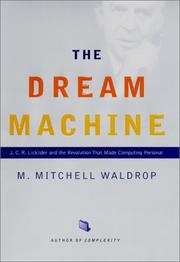
The intellectual prehistory, told through J. C. R. Licklider, the psychologist who ran ARPA's computing office and articulated interactive computing and the 'intergalactic network' before either existed. Read it second: it explains why anyone funded the machine Hafner describes being built.

The scholarly history, and the one that takes the protocols seriously. Abbate is the best source on TCP/IP, on the competing OSI standards effort, and on how design decisions embedded particular assumptions. Harder going than the previous two and much the most useful if you want to understand what was actually engineered.

A brisk single-volume overview that carries the story past the founding period into the commercial and social internet. Useful here as the through-line before the path splits into specialised threads — read it as a map rather than for depth.
The web, and the machines it ran on
BeginnerUnderstand that the web is an application built on top of the internet rather than a synonym for it, know why Berners-Lee's design won over better-funded hypertext systems, and see where the graphical interface it assumed actually came from.
▸ Study plan for this stage
Pace: Four to five weeks for 1,070 pages, and the three books are three genres. Berners-Lee's Weaving the Web is 251 pages, a short inventor's memoir and manifesto, readable in under a week — read it first, and read it as advocacy as well as history, because he is arguing for a particular vision of the we
- That the web is an application running over the internet, not the internet itself — HTTP is one protocol among many, and the network stack from the previous stage is what it rides on.
- The three pieces Berners-Lee actually specified — a naming scheme (URLs), a transfer protocol (HTTP), and a markup language (HTML) — and how modest each is on its own.
- Why this design beat better-funded and more sophisticated hypertext systems: broken links are permitted, no central registry is required, and anyone can publish without asking. Its weaknesses are what let it scale.
- The decision not to patent or charge for the specifications, and CERN's release of them, which is a licensing fact with as much causal weight as any technical one.
- What PARC produced and what Xerox did with it: the bitmapped display, the graphical interface, the mouse, Ethernet, the laser printer, and a corporate failure to commercialise almost any of it.
- The dependency this stage exists to establish — the web became usable because the machines people had were shaped by PARC's ideas, which arrived by a route that had nothing to do with networking research.
- The commercial sequence McCullough traces: Mosaic, Netscape, the browser wars, the bubble and its collapse, search as the business model that survived, and the shift to mobile.
- Reading a primary source and an industry history side by side — Berners-Lee has an interest in the web's origins being principled, and McCullough writes for readers who care mainly about the companies.
- Name three things the internet does that have nothing to do with the web. Why does the distinction keep collapsing in ordinary usage?
- What did competing hypertext systems offer that the web did not, and why did those advantages not win?
- What follows from the fact that a web link can break? Argue that it is a design flaw, then argue that it is the design.
- Where is Berners-Lee's account advocacy rather than history? Point to a specific passage and say what a sceptical historian would want to check.
- Which PARC inventions matter for the web specifically, and which are simply part of the story of personal computing?
- McCullough starts where the research era ends. Name something his framing makes visible and something it obscures.
- Write out a single HTTP request and response by hand from Berners-Lee's description, then compare it to the current specification. The distance is smaller than you expect and that is the point.
- List the PARC technologies from Hiltzik and, for each, name the company that eventually commercialised it. Then write a paragraph on what Xerox would have had to be, institutionally, to have done it itself.
- Take one company from McCullough and reconstruct its business model at three points in time. Note where the model changed and whether the technology did.
- Return to your founding-period timeline from stage one and add a third track for commercialisation. The gap between the tracks is the subject of the rest of the path.
Next up: Both stages so far have told the story through institutions and companies, which leaves the cultures and the people those accounts pass over as the obvious next question.
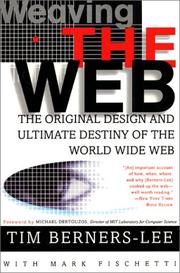
The inventor's own account of URLs, HTTP and HTML, and of the decision not to patent any of it. A primary source, and correspondingly partial — Berners-Lee is arguing for a particular vision of the web as much as recounting how it was made. Read it as advocacy as well as history.
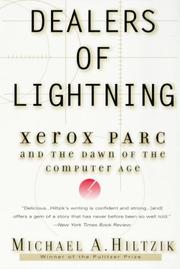
Xerox PARC in the 1970s: the graphical interface, the mouse, Ethernet, the laser printer, and Xerox's failure to commercialise almost any of it. It sits here because the web only became usable on machines PARC's ideas had shaped, and because it is the definitive account of the most productive research lab in computing.

The commercial history the previous books stop short of: Mosaic and Netscape, the browser wars, the bubble, Google, the iPhone. Written from the industry's perspective and light on the research era, which is exactly why it works as the fourth book rather than the first.
The cultures: hackers, hippies and the users nobody counted
IntermediateBe able to trace the specific route by which 1960s countercultural ideas reached Silicon Valley, and to say who is systematically missing from the standard origin story and what changes when they are put back.
▸ Study plan for this stage
Pace: Six weeks for four books and 1,389 pages, and the sequence here is an argument. Levy's Hackers is 456 pages, the longest in the stage, and is fast, anecdotal reading — a fortnight; read it first because it is the source most later writing about computing culture is implicitly quoting. Markoff's What
- The hacker ethic as Levy codified it — access, free information, mistrust of authority, judgement by output — and the fact that it is a codification, made by a journalist, that the culture then adopted as its self-description.
- That Levy's admiration is a historical artefact in its own right, and that a founding document of a culture's self-image is evidence about the moment it was written as much as about the moment it describes.
- Markoff's specific mechanism: the personal computer emerged from the same Bay Area milieu as psychedelics and the antiwar movement, with Engelbart's Augmentation Research Center as the concrete point of contact rather than a vague zeitgeist.
- Engelbart's actual programme — augmenting human intellect, the demonstration that introduced the mouse and shared-screen collaboration — and how different it is from the hobbyist story of personal computing.
- Turner's more sceptical account: Stewart Brand and the Whole Earth network as a translation layer converting communal-movement ideas into a market ideology, with the counterculture supplying vocabulary rather than politics.
- The concept of a network forum in Turner — the specific institutions, publications and events through which people from incompatible worlds came to share a language.
- What Evans documents: the ENIAC programmers, Grace Hopper's work on compilers, Wendy Hall's hypertext research, the women who built and moderated early online communities — and that these are omissions from the canon rather than from the record.
- That 'the users nobody counted' is a claim about historiography, not sentiment: origin stories select for inventors over maintainers and communities, and the selection determines what the technology appears to have been for.
- State the hacker ethic in Levy's terms. Which of its tenets survive intact in the industry that grew out of it, and which were abandoned?
- What is Markoff's evidence that the counterculture influenced the personal computer, as opposed to merely coexisting with it?
- Where does Turner think Markoff's story goes wrong? Answer with his account of what was actually transferred and what was not.
- Explain Turner's network forum with one worked example from the book. What made it work as a translation device?
- Take one figure from Evans and ask why she is absent from Levy, Markoff and Turner. Is the reason the same in each case?
- After all four books, whose account of where Silicon Valley's ideology comes from would you defend, and what would change your mind?
- Read Levy's Homebrew chapters and Turner's account of the same milieu within a week and write a two-column comparison: what each treats as the important thing happening in the room.
- Take three claims about the counterculture's influence that you held before this stage and test each against Turner. Record which survive and in what modified form.
- For each of the four books, list the ten people it treats as central. Lay the four lists side by side. The overlaps and the absences are the stage's actual finding, and they take twenty minutes to produce.
- Using Evans, write a paragraph-length correction to a specific passage in Levy or Markoff. Cite what she establishes and what she does not.
- Write half a page on what a history of the internet organised around users and maintainers rather than inventors would have to include. Then note which books on this whole path would fall out of it.
Next up: Having taken the story through ideas and cultures, the last stage grounds it in cables, capital and law, where what the internet permits is actually decided.

The 1984 book that defined the hacker ethic — MIT's Tech Model Railroad Club, the Homebrew Computer Club, the early game companies. Read it first in this stage because it is the source most later writing about computing culture is implicitly quoting, and because Levy's admiration is itself a historical artefact.
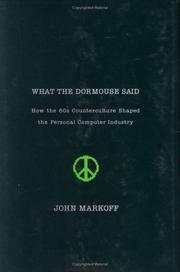
Markoff's argument that the personal computer emerged from the same Bay Area milieu as psychedelics and the antiwar movement, centred on Doug Engelbart's lab. It is the specific mechanism behind the vague claim that the counterculture made the computer industry.
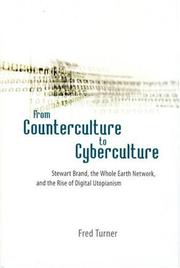
The scholarly version of Markoff's story, and considerably more sceptical: Turner follows Stewart Brand and the Whole Earth network to show how communal-movement ideas were converted into a market ideology. The most intellectually serious book in this stage; read it third so you can see it correcting the other two.

The women written out of the standard account — the ENIAC programmers, Grace Hopper, hypertext pioneer Wendy Hall, the women who built early online communities. Read it against the previous three deliberately: the omissions it documents are omissions in the books you have just finished.
What it became: wires, money and law
IntermediateStop thinking of the internet as immaterial. Locate it in specific buildings and cables, understand the historical pattern by which open communications technologies get consolidated, and see how code itself functions as regulation.
▸ Study plan for this stage
Pace: Four to five weeks for 1,097 pages, and none of the three books is difficult. Blum's Tubes is 304 pages of travel reportage — exchange points, undersea landing stations, data centres — and reads in under a week; put it first, because its job is to break the abstraction the previous stages build. Wu'
- The internet's physical geography: it lands in specific buildings, runs through a small number of major exchange points, and crosses oceans on cables whose routes are matters of public record — which makes it a much more concentrated system than the cloud metaphor suggests.
- Peering and interconnection as commercial arrangements between companies, and what it means that the network's topology follows contracts rather than geography.
- Wu's Cycle: the historical pattern by which an open information technology — telephony, radio, film, television — moves from a decentralised early period to consolidation under a dominant firm, usually with government cooperation.
- The question Wu's book poses rather than answers: whether the internet is exempt from the Cycle, and what would count as evidence either way. Read the platform era against it.
- Lessig's central claim: the architecture of a system regulates behaviour as effectively as law does, so the design of code is a form of governance exercised by people nobody elected.
- Lessig's four modalities of regulation — law, norms, market and architecture — and the analytical work that framework does when applied to any dispute about online conduct.
- That architecture is not fixed. Lessig's argument is not that technology determines outcomes but that design choices are political choices, which puts him against the technological determinism the printing-press and internet literatures both grapple with.
- How the three books connect: Blum shows the physical chokepoints, Wu shows what historically happens at chokepoints, and Lessig shows what controlling one lets you do.
- Name the physical components of the internet Blum visited and say what would happen if each failed. Which failures would be local and which would not?
- State Wu's Cycle as a sequence of stages with a mechanism at each transition. What drives consolidation, on his account — technology, capital, or regulation?
- Is the internet exempt from the Cycle? Argue both sides using evidence from McCullough's commercial history in stage two as well as from Wu.
- Explain code is law with an example from Lessig, then with an example of your own from something you used this week.
- Apply Lessig's four modalities to a single contemporary dispute about online behaviour. Which modality is doing most of the work, and who controls it?
- The path opened with an open, publicly argued standards process. Given these three books, what happened to that openness, and where exactly did it go?
- Trace the physical route of a request from your own machine to a service you use daily — network, upstream provider, exchange point, data centre — as far as public information allows. Blum's book is the model.
- Apply Wu's Cycle to a specific industry he covers and then to one platform market of the present, filling in the same stages. Where the analogy breaks, say why.
- Take one design decision from Abbate in stage one and analyse it with Lessig's four modalities. This is the exercise that ties the two ends of the path together.
- Write a page on who decides what the internet permits, naming actual institutions and the mechanism each uses. Then mark which of them existed when the ARPANET was built.
- Return to the founding-period timeline you built in stage one and write one final line at the end of each track. The exercise is to state, in your own words, what the network became on each of the dimensions you have been following.
Next up: The path ends on the question that replaced how it was built — who now decides what it permits, and by what right.

Blum went looking for the physical internet — exchange points, undersea landing stations, the data centres — and wrote the best correction to the metaphor of the cloud. A short, concrete book, and the right one to break the abstraction the earlier stages build.
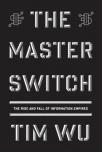
Wu's history of American information industries — telephone, radio, film, television — arguing that each ran from open to consolidated, and asking whether the internet is exempt. The strongest available frame for reading everything that has happened since 2000. His The Attention Merchants extends the argument to advertising.

The 1999 book that established 'code is law': the architecture of a system regulates behaviour as effectively as statute, and it is written by people nobody elected. It ends the path on the right question — not how the internet was built, but who decides what it now permits. Catalogued simply as Code.
Discussion
Keep reading
Paths that share books, cover the same subject, or open a related topic.