Austrian history has an unusual shape: an empire of a dozen nationalities, then a rump state nobody thought viable, then annexation, then a neutral republic that spent decades insisting it had been Hitler's first victim. Each phase requires different books, and the temptation to jump straight to 1938 skips the part that explains it.
The other thing worth knowing early is that the Habsburg empire's reputation has been substantially rewritten. The old story — a doomed prison of nations, decaying toward inevitable collapse — has given way to a picture of a functioning multinational state that was destroyed by war rather than by internal rot. Read the revisionist account first or you will spend the rest of the path un-learning the old one.
Start with the empire
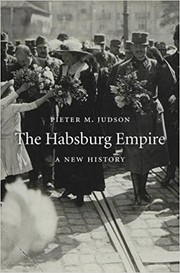
The Habsburg empire by Pieter Judson is the current standard, and it is the book that makes the revisionist case: a state with real administrative reach, expanding literacy and rail, and nationalist politics that were often produced by imperial institutions rather than simply threatening them. It changes what 1918 means.
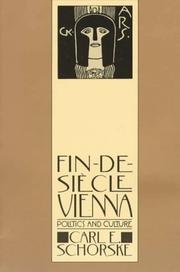
Then read Fin-de-siècle Vienna by Carl Schorske, the classic essay collection linking Freud, Klimt, Schnitzler, Wagner, and Viennese liberalism's political failure. Schorske's thesis — that the retreat into aesthetics and psychology followed the collapse of liberal politics — is decades old and much argued with, and it is still the most stimulating book on the period.
Then the world as its inhabitants knew it
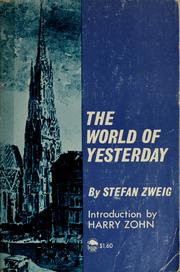
The World of Yesterday is Stefan Zweig's memoir, written in exile and finished just before his suicide in 1942. It is the great elegy for pre-1914 Habsburg Europe, and it is nostalgic in ways that need qualifying against Judson — but nothing conveys the texture of that world better.
Wittgenstein's Vienna Revisited by Allan Janik extends the intellectual story, arguing that Wittgenstein's philosophy is unintelligible without the Viennese debates about language, ethics, and cultural crisis he grew up inside. Read it if the ideas rather than the politics are your interest; it is the most demanding book on the path.
Then the collapse
The coming of the Third Reich by Richard Evans is a German rather than Austrian history, but it is the necessary background for what arrives in 1938, and Evans is precise about the mechanisms of a democracy dismantling itself. Anschluss: The Rape of Austria by Gordon Brook-Shepherd is the older, closely narrated account of the annexation itself, still useful for the sequence of days in March 1938.
Hitler's Vienna by Brigitte Hamann examines Hitler's years in the city and what he absorbed there from Karl Lueger's mass antisemitic politics. Hamann is careful about what the sources actually support, and she pushes back on some of Hitler's own account in Mein Kampf.
Then aftermath and memory
The Hare With Amber Eyes is Edmund de Waal's family history, tracing a collection of netsuke through the Ephrussi banking dynasty in Vienna and the Aryanization that destroyed it. It is the book that makes the dispossession concrete. Close with Rolf Steininger's Austria In The Twentieth Century, which covers the Second Republic, the 1955 State Treaty and neutrality, and the long-delayed reckoning with the victim myth.
Follow the full path to keep these in sequence.
Follow the full ordered path here: Austria's History in Books: What to Read, in Order.