Stefan Zweig Reading Order: Where to Start
Stefan Zweig was the most translated writer in the world in the 1930s, and the reason is obvious the moment you read one of his novellas: they are short, propulsive, and built around a single confession. Start with those, then read the two full-length novels, then the memoir that made him famous again after decades of neglect, and finish with the popular biographies that were his other career. Nothing here requires prior reading, which is why this path is a genuinely gentle entry into serious European fiction.
Start with the Novellas
BeginnerLearn the Zweig shape — a stranger tells you the story of the one obsession that wrecked their life — in four books you can each finish in an evening.
▸ Study plan for this stage
Pace: Two weeks, one book per two or three evenings. Chess Story is 112 pages and should be read in a single sitting if you can manage it — the tension is built to be taken in one go. Letter From an Unknown Woman and Other Stories is 153 pages; read the title story on its own night. Burning Secret and Jou
- The Zweig shape, which almost never varies: a frame narrator meets a stranger, the stranger confesses the one obsession that destroyed their life, and the frame closes. Once you see it you will see it everywhere, and the interest becomes what he does inside it
- Zweig knew Freud personally and the debt is unhidden — these are case studies with plots, built on the idea that a single suppressed compulsion can organise an entire biography
- Chess Story runs two obsessives against each other: a peasant grandmaster who can do nothing but play, and a man who taught himself chess in Gestapo solitary confinement from a stolen book of grandmaster games. The second man's story is the point and the match is the delivery mechanism
- It was the last thing Zweig wrote, in Brazil, immediately before his suicide in 1942, and the confinement it describes is the closest he came to writing directly about what had happened to Europe
- Letter From an Unknown Woman is the structure at its purest — the entire novella is a document, the addressee learns everything at once, and the reader is put in the position of a man who never noticed
- Burning Secret works the same machinery from a child's viewpoint: Edgar half-understands his mother's affair at a mountain hotel, and the horror is comprehension arriving in fragments
- Journey into the Past is about a return that comes nine years too late, and it is the one that most clearly turns private feeling into a statement about the interwar years
- Zweig's pacing is his real technique: he withholds one fact, keeps the sentences short around it, and releases it about two-thirds through. Watch for the hinge in each book
- In Chess Story, what exactly did the isolation do to Dr B, and why does Zweig make the cure and the illness the same activity?
- Where in each novella does the frame narrator disappear, and what happens to your trust when he does?
- Letter From an Unknown Woman gives you one voice and no corroboration. What in the text, if anything, invites you to doubt it?
- In Burning Secret, name the moment the boy understands. How much does Zweig show and how much does he rely on you supplying it?
- All four books turn on a single suppressed compulsion. Is that a psychological insight or a formula? Argue both sides — the question follows Zweig through his whole reputation.
- Zweig is often accused of slickness and sentimentality, including by translators who admire other writers of his generation. After four novellas, where do you think the charge lands and where does it miss?
- Read Chess Story in one sitting, without stopping. It is short enough and it was built for it; reading it across three nights measurably weakens it.
- Write the plot of each novella in one sentence, then set the four sentences side by side. The identical shape is either the discovery of the stage or an indictment, and you should decide which before going further.
- Mark the hinge sentence in each book — the one where the withheld fact lands. Four data points is enough to see his timing as a technique.
- Zweig is served by several competing English translations of very different vintages. If a passage reads stiffly, check the copyright page: the mid-century versions and the recent ones are not the same reading experience, and the modern ones are markedly faster.
- Watch a film adaptation of one of these after reading it. Zweig was the most adapted serious writer of his era and seeing what a director keeps shows you what the structure is carrying.
Next up: You know the machine now, so the two novels can be read for the thing the novellas have no room for — the society around the obsession, and what it costs everyone else.

The best first Zweig and the last thing he wrote: a chess match on an ocean liner opens onto a Gestapo interrogation cell. Perfectly built, under 100 pages, and it carries the whole weight of his exile.
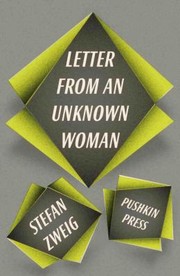
A novelist receives a letter from a woman he never noticed loving him. The purest example of Zweig's confessional structure, and the one that shows why filmmakers kept adapting him.

A boy half-understands his mother's affair at a mountain resort. Read third: it is the clearest demonstration of Zweig's other great subject, the moment a child's view of adults collapses.

A love affair interrupted by war and resumed, disastrously, nine years later. Unpublished in his lifetime and the most melancholy of the short books — a good bridge to the novels.
The Two Novels
BeginnerSee what Zweig does with 300 pages instead of 80 — the same psychology, but with a whole society around it.
▸ Study plan for this stage
Pace: Three to four weeks. Beware of Pity is 372 pages and is the more conventionally gripping, moving at about 30 pages a night without effort. The Post-Office Girl is 258 pages and comes second, but leave a few days between them — it is a much colder book and reads badly on the momentum of the first. Ne
- Beware of Pity opens by distinguishing two kinds of pity: the weak, sentimental kind that is really about relieving your own discomfort, and the hard, creative kind that stays until the job is finished. The entire novel is a demonstration of the first
- The trap is structural, not villainous. A young cavalry officer's small politenesses to a disabled girl compound into obligation, and Zweig makes every individual step reasonable — which is what makes the outcome unbearable
- The garrison setting matters: honour, gossip and the impossibility of a private life in a small officer corps are what convert a personal misjudgement into a catastrophe
- It is the only novel Zweig completed and published in his lifetime, in 1939, and its account of a man destroyed by his own agreeableness reads very differently once you know what he was watching happen in Europe
- The Post-Office Girl was left unfinished and published four decades after his death, and it is the angriest thing he wrote: Christine, a provincial clerk, is given two weeks of borrowed wealth at a resort hotel and then sent back to the counter
- The class writing here is unusual for Zweig — the poverty is specified, itemised and material rather than atmospheric, and the resentment is allowed to be political
- The second half turns on a disabled veteran and a plan, and the book breaks off at exactly the point where Zweig would have had to commit to a politics. The incompleteness is legible and worth reading as such
- Read as a pair, the two novels bracket his range: one is the pity of a man with power, the other the fury of a woman with none
- At what point in Beware of Pity could Hofmiller still have got out, and what is the specific social pressure that closes each exit?
- Zweig gives you the two-kinds-of-pity distinction early. Does the novel actually support it, or does it end up showing that the distinction is unusable in practice?
- How is Edith written — as a person, or as an instrument of the plot? This is the sharpest available test of the sentimentality charge.
- What does Christine actually acquire during her fortnight at the hotel, and why is losing it worse than never having had it?
- Compare how the two novels handle money. One is full of it and never mentions it; the other counts it. What does that tell you about who each book is watching?
- The Post-Office Girl stops rather than ends. What would Zweig have had to decide in order to finish it?
- Keep a tally of every social obligation Hofmiller accepts in the first hundred pages. Seeing the list is more persuasive than any summary of why he cannot leave.
- Read Christine's first day at the hotel and her first day back behind the counter one after the other. Zweig wrote them as a mirrored pair and the transposition of the same details is the whole argument.
- Write 300 words on what the war has done to each novel's Austria, using only what the text states rather than what you know from history. Zweig assumes a great deal and it is instructive to see how much.
- Reread the frame of one novella from the previous stage. The novels quietly abandon the confession structure, and noticing what replaced it tells you what 300 pages bought him.
- Decide now, before the memoir, whether you think Zweig is a major novelist or a superb novelist of small forms. Write one paragraph. The next stage will test the answer.
Next up: Both novels mourn a world they never quite describe, and the memoir is where Zweig finally describes it — which is why it lands hardest read after the fiction rather than before.
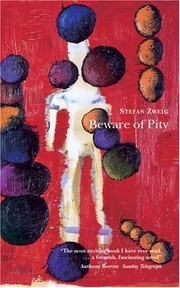
The only novel he completed and published: a young officer's kindness to a disabled girl turns into a trap neither can escape. Read it before The Post Office Girl, because it is the more conventional and more immediately gripping of the two.

Left unfinished and published posthumously, this is Zweig at his angriest — a rural clerk given two weeks of wealth and then sent back. It is the one book of his that reads like a political novel, so it lands hardest once you know the more genteel Zweig.
The Memoir and the Essays
IntermediateUnderstand the vanished Europe the fiction keeps mourning, in Zweig's own voice.
▸ Study plan for this stage
Pace: Four to five weeks. The World of Yesterday is 455 pages and reads like very good journalism — 25 pages a day is three weeks — but it is worth pausing at the chapter breaks, because each covers years and the compression is deliberate. Montaigne is 109 pages and takes two evenings; read it immediately
- Zweig's organising idea is the world of security — a pre-1914 Europe in which passports were unnecessary, savings held their value and progress was assumed. He knows this was an illusion available mainly to prosperous people, and he says so, and he mourns it anyway
- The memoir is a deliberate act of self-erasure: Zweig writes his own life as a vantage point rather than a subject, and the famous figures pass through while he stays deliberately thin. This is a stylistic decision worth interrogating rather than a modesty
- The chapters on schooling and on sexual hypocrisy in imperial Vienna are the sharpest social criticism he ever wrote, and they undercut the nostalgia the book is usually quoted for
- It was written in exile in Brazil and mailed to the publisher the day before he and his wife killed themselves in February 1942. The manuscript is what he chose to leave behind
- Fact-check the memoir as you read: it was composed without archives or papers, from memory, and its errors of date and detail are well documented. It is a testimony, not a chronicle
- The Montaigne is unfinished and was written in the last months, and its subject is exactly Zweig's problem — how a man keeps an inner life intact while his country tears itself apart over belief
- Montaigne's answer is withdrawal into the self, and Zweig endorses it. Whether that is wisdom or capitulation is the question the book leaves you holding, and it is inseparable from how he died
- The pre-1914 Vienna described here is the same city standing behind the fiction — read the memoir and Burning Secret together and the resort hotels stop being scenery
- What does Zweig mean by the golden age of security, and which of his own pages contradict it?
- Why does he keep himself out of his own memoir, and what is the effect on your trust in it?
- The book was written from memory in exile. Where does that show — in what kind of detail is he strongest and in what kind is he vaguest?
- What does Zweig identify as the moment Europe became unrecoverable, and does the fiction you have read agree with him?
- What exactly does he admire in Montaigne, and how honest is the parallel he is drawing with himself?
- Having read the memoir, reconsider the novellas. Which of them now looks less like a psychological case and more like a report on a specific historical moment?
- Read the chapter on Viennese sexual morality and then Burning Secret again. The novella turns out to be documentary, and this is the single best demonstration in the path of how the fiction was fed.
- Pick three factual claims from the memoir and check them. Not to catch him out — to calibrate what kind of book you are reading.
- List the writers, composers and public figures who pass through the memoir. The list is the argument: Zweig is describing a shared European culture by enumerating it.
- Read the last five pages of The World of Yesterday with the date of composition in mind, then set the book down for a day before starting Montaigne.
- Write a paragraph on whether the withdrawal Montaigne recommends is available to anyone today, and whether Zweig's own end is evidence for or against it.
Next up: The memoir explains what Zweig thought he was defending, which is the necessary context for the biographies — they are not costume history but arguments about people crushed by a role that history assigned them.
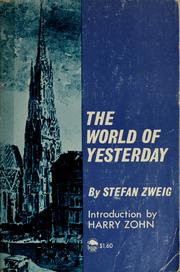
The memoir of pre-1914 Vienna and its destruction, finished days before his suicide. It is the single most important book for making sense of everything else, but read it after the fiction so the elegy has something to be an elegy for.

A short late study of the one writer he thought had solved how to keep an inner life through a collapsing age. Effectively a coda to The World of Yesterday, and the best of his shorter non-fiction.
The Biographies
IntermediateMeet Zweig's other career — the popular historical portraits that outsold his fiction — and know which ones still hold up.
▸ Study plan for this stage
Pace: Six to eight weeks, and this stage is a shelf rather than a queue — take the three in the order given but feel free to stop after any of them. Marie Antoinette is 476 pages and reads at novel speed. Mary Stuart is the denser book and wants a slower pace, three or four weeks. Erasmus of Rotterdam is
- Zweig's thesis in all three: character is fate only when the role is larger than the person, and his subjects are chosen for the mismatch between what they were and what they were required to be
- Marie Antoinette is subtitled as the portrait of an average woman, and the argument is exactly that — an unremarkable person placed under a pressure that would have broken anyone, then blamed for breaking
- The narrative technique is imported wholesale from the fiction: withheld information, a hinge, and a psychological reading of documented behaviour. Where the sources run out, Zweig infers, and he is not always careful about signalling it
- Mary Stuart is the better book on how Zweig actually reads a character — it is structured around a single interpretive problem, the disputed casket letters, and around a rivalry with a woman he portrays as her opposite in every temperamental respect
- Zweig's habit of pairing opposed temperaments — the passionate and the calculating, the moderate and the fanatic — is the organising device of all three biographies and is more schematic than history usually permits
- Erasmus of Rotterdam was written in 1934, as the Nazi regime consolidated and Zweig's own position in Austria collapsed, and it is transparently about him: the humanist who will not join either camp and is made irrelevant by both
- Read as a coded self-portrait, Erasmus states the position that The World of Yesterday enacts and that Montaigne endorses — moderation as a vocation, and its complete practical failure
- Modern scholarship has moved past all three books on the facts. They survive as psychological narrative and as evidence of what Zweig believed history was, not as current biography
- What does Zweig mean by calling Marie Antoinette average, and does the book maintain the claim or quietly promote her?
- Where in Marie Antoinette does Zweig infer beyond the evidence? Find a passage and identify what it is standing in for.
- In Mary Stuart, how does Zweig handle the casket letters, and what does his handling reveal about his method when the sources conflict?
- Both queens are read through temperament. What is Zweig unable to explain in either life because he insists on that frame?
- What is Erasmus's position in the Reformation quarrel as Zweig presents it, and what does the book concede about where it leads?
- After all three: is Zweig a historian, a novelist working with real names, or a moralist? Cite one passage from each book to support your answer.
- Read the Erasmus chapters on the break with Luther, then reread the closing pages of The World of Yesterday. The two are the same argument in different costume and the sequence makes it unmissable.
- Take one scene from Marie Antoinette and find a modern historian's account of the same episode. The comparison is the fastest way to see exactly where Zweig's novelistic instinct takes over.
- Chart the paired opposites in each biography — who is set against whom, and on what temperamental axis. Three books is enough to see the device become a formula.
- Write 400 words on Zweig's ideal of the reasonable European, drawing on Erasmus, Montaigne and the memoir, and then say honestly what you think it was worth in 1934.
- Go back to Chess Story, the first book you read in this path. With the biographies and the memoir behind you, the man who memorised a chess book in a cell is no longer a psychological curiosity but the whole of Zweig's Europe compressed into a hundred pages.
Next up: That is both careers — the confessional novellas and the popular histories — and you can now say which Zweig you think will last, on evidence rather than on the reputation that has swung twice already.
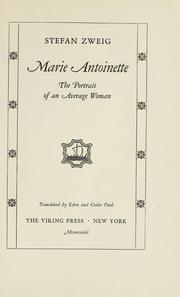
The most famous of the biographies and the most novelistic: an average woman crushed by an extraordinary role. Start the biographies here, because the storytelling instinct is at its strongest.

Mary Queen of Scots as a study in the psychology of catastrophic decisions. Denser than Marie Antoinette and the better book on how Zweig actually reads character.
Written in 1934 as a coded self-portrait: the moderate humanist made irrelevant by fanatics on both sides. The most personal of the biographies, and the right one to end on.
Discussion
Keep reading
Paths that share books, cover the same subject, or open a related topic.