Understanding Kierkegaard: Best Books, in Order
This curriculum builds a rigorous, layered understanding of Søren Kierkegaard — moving from accessible biographical and thematic introductions, through his core pseudonymous works on anxiety and selfhood, into his explicitly religious writings on faith, and finally to advanced scholarly interpretation that situates him as the father of existentialism. Because the learner starts at an intermediate level, we skip surface-level philosophy primers and dive straight into substantive secondary literature before tackling Kierkegaard's own demanding texts.
Orientation: The Man, the Method, and the Mission
IntermediateUnderstand who Kierkegaard was, why he wrote under pseudonyms, and what central problems — the self, despair, faith, and existence — he spent his life wrestling with, so that his primary texts feel navigable rather than alien.
▸ Study plan for this stage
Pace: 4–5 weeks, ~25–30 pages/day (Gardiner's "Kierkegaard" is ~200 pages; allows time for reflection and note-taking)
- Kierkegaard's life as a Danish thinker shaped by personal crisis, religious intensity, and social alienation—how biography informs philosophy
- The pseudonym strategy: why Kierkegaard wrote under assumed names (Johannes Climacus, Anti-Climacus, Victor Eremita) and what each persona reveals about different modes of existence
- The three stages of existence (aesthetic, ethical, religious) and how despair marks the transition between them
- Subjectivity as truth: Kierkegaard's inversion of Hegelian objectivity and the claim that truth is how one exists, not what one believes abstractly
- Anxiety (Angst) and freedom as intertwined—the vertigo of human choice and the groundlessness of selfhood
- The paradox of faith: the 'absurd' leap required to believe in the incarnation and become a Christian in truth, not merely by cultural inheritance
- Kierkegaard's critique of Christendom: the distinction between nominal Christianity (cultural conformity) and authentic Christian existence
- The concept of the self as a relation that must be grounded—the self as task, not given, and the role of God in that grounding
- Who was Kierkegaard as a person, and what major life events (family trauma, broken engagement, religious crisis) shaped his philosophical concerns?
- Why did Kierkegaard use pseudonyms, and what is the difference between writing under a pseudonym and writing under his own name? What does this method reveal about his view of truth and communication?
- What are the three stages of existence Kierkegaard describes, and how does despair function as a catalyst for moving from one stage to the next?
- What does Kierkegaard mean by 'subjectivity is truth,' and how does this challenge the Hegelian philosophy dominant in his time?
- How does Kierkegaard distinguish between anxiety and fear, and why is anxiety central to understanding human freedom and the self?
- What is the 'absurd' in Kierkegaard's philosophy, and why does authentic faith require a leap into it rather than rational demonstration?
- Timeline exercise: Create a chronological chart of Kierkegaard's life (birth, family events, broken engagement, religious awakening, major publications) alongside the historical context (Hegelian dominance in Denmark, Christendom critique). Annotate how each life event connects to a philosophical concern.
- Pseudonym mapping: For each major pseudonym Gardiner discusses (Johannes Climacus, Anti-Climacus, Victor Eremita, etc.), write a one-page character sketch explaining what worldview or mode of existence that persona embodies and why Kierkegaard needed that mask.
- Stages of existence diagram: Draw or describe the three stages (aesthetic, ethical, religious) as a progression, marking the role of despair at each transition. Give concrete examples from Gardiner's text or your own life of how someone might move through these stages.
- Subjectivity vs. objectivity debate: Write a short dialogue (1–2 pages) between Hegel and Kierkegaard in which Kierkegaard defends the claim that 'subjectivity is truth' against Hegel's systematic objectivity. Use concepts from Gardiner.
- Anxiety reflection: Identify a moment in your own life when you felt Kierkegaardian anxiety (the vertigo of freedom, not mere fear). Write 1–2 pages analyzing that moment using Kierkegaard's vocabulary: freedom, choice, groundlessness, the self as task.
- Faith and the absurd: Reread Gardiner's discussion of the paradox of faith and the incarnation. Write a brief essay (2–3 pages) explaining why, for Kierkegaard, faith cannot be rational and why that is not a weakness but the very condition of authentic belief.
Next up: This stage establishes Kierkegaard's life, method, and core preoccupations—the existential and religious problems he identified—so that when you encounter his primary texts (such as *Either/Or*, *Fear and Trembling*, or *The Concept of Anxiety*), you will recognize the pseudonyms, understand the stakes of his arguments, and see how his philosophy emerges from lived struggle rather than abstract sp
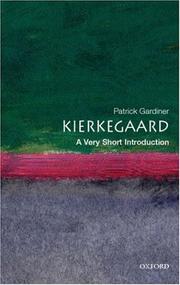
A concise, reliable map of Kierkegaard's major themes and stages of existence. Reading this first gives you the conceptual scaffolding — aesthetic, ethical, religious — before you encounter it in Kierkegaard's own dense prose.
The Aesthetic and Ethical Self
IntermediateGrasp Kierkegaard's first two 'stages on life's way' — the aesthetic and the ethical — and understand his diagnosis of despair as the universal human condition, preparing the ground for his leap to faith.
▸ Study plan for this stage
Pace: 8–10 weeks, ~40–50 pages/day (accounting for Kierkegaard's dense prose and frequent re-reading of key passages)
- The Aesthetic Stage: pleasure-seeking, immediacy, and the rotation method as a strategy to avoid boredom and despair
- The Ethical Stage: duty, universal principles, marriage, and the assumption that reason and morality can resolve human contradiction
- Despair as the sickness unto death: the universal human condition arising from the contradiction between finitude and infinitude, possibility and necessity
- The Either/Or structure: Kierkegaard's argument that one must choose between aesthetic and ethical existence; there is no synthesis or middle ground
- Subjectivity as truth: the inward passion and commitment required for authentic existence, not merely intellectual assent
- The teleological suspension of the ethical: Abraham's leap of faith in Fear and Trembling as the model for moving beyond the ethical stage
- Anxiety and freedom: the vertigo of infinite possibility that drives both aesthetic despair and the existential choice required for faith
- The individual versus the universal: how the ethical stage demands conformity to universal principles, yet the religious stage calls for singular, paradoxical commitment
- What is the aesthetic life according to Either/Or, and why does Kierkegaard argue it inevitably leads to despair and boredom?
- How does the ethical stage differ from the aesthetic stage, and why does Kierkegaard believe the ethical cannot ultimately resolve the human condition?
- What does Kierkegaard mean by 'despair is the sickness unto death,' and how does this diagnosis apply to both the aesthetic and ethical individual?
- Explain the concept of 'subjectivity is truth' in Kierkegaard's thought. How does this relate to authentic existence?
- What is the 'teleological suspension of the ethical,' and how does Abraham's story in Fear and Trembling illustrate this concept?
- How does Kierkegaard use the Either/Or structure to argue that one must make a radical, passionate choice rather than seek a rational compromise between life stages?
- Create a detailed character sketch of the aesthete (Don Juan, the seducer) from Either/Or: list his values, his strategies for avoiding despair, and the contradictions that ultimately undermine his existence.
- Write a dialogue between an aesthete and an ethicist debating the good life, drawing on specific arguments from Either/Or. Identify where each position breaks down.
- Keep a 'despair journal' for one week: identify moments in your own life or observations of others that reflect the despair Kierkegaard diagnoses—the contradiction between desire and reality, possibility and actuality.
- Analyze a key passage from Fear and Trembling (e.g., the discussion of Abraham's faith) and write a 2–3 page reflection on how the 'teleological suspension of the ethical' challenges rational morality.
- Map out Kierkegaard's three 'rotations' of the aesthetic method (the rotation of crops, the rotation of social positions, and erotic rotation) and explain why each fails to sustain aesthetic pleasure.
- Construct a personal case study: identify a decision or commitment in your own life (or a historical/fictional figure's) and analyze it through Kierkegaard's framework—is it aesthetic, ethical, or does it gesture toward the religious?
Next up: This stage establishes the diagnosis of human despair and the inadequacy of reason and ethics alone, creating the existential crisis that makes the leap to faith—explored in the next stage through Kierkegaard's explicitly religious works—not merely an intellectual option but a necessary response to the absurdity of existence.
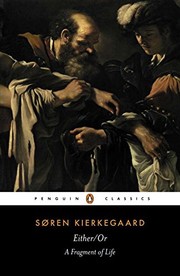
Kierkegaard's breakthrough work, presenting the aesthetic life (seduction, immediacy, boredom) against the ethical life (commitment, duty, selfhood) through two fictional voices. Reading it first among the primary texts establishes his literary-philosophical method and the stakes of choosing how to live.
Written under the pseudonym Anti-Climacus, this is Kierkegaard's masterwork on the self and despair — the failure to become who one truly is. It is shorter and more systematic than Either/Or and crystallizes everything the earlier work dramatized.
Anxiety, the Leap, and the Knight of Faith
IntermediateConfront Kierkegaard's most celebrated and influential ideas — the concept of anxiety as the dizziness of freedom, and the 'teleological suspension of the ethical' in the leap of faith — which are the heart of his existentialist legacy.
▸ Study plan for this stage
Pace: 8–10 weeks, ~25–30 pages/day, with 2–3 days per week for reflection and exercises
- Anxiety as the 'dizziness of freedom' — the vertigo that arises from confronting infinite possibility and the burden of choice
- The distinction between fear (object-directed) and anxiety (objectless, rooted in possibility itself)
- The paradox of the leap of faith — the existential jump beyond reason that cannot be rationalized or mediated
- The teleological suspension of the ethical — how faith can override moral law, exemplified in Abraham's willingness to sacrifice Isaac
- The Knight of Faith as the existential ideal — the individual who lives in absolute relation to the absolute while remaining fully engaged in the finite world
- Subjectivity as truth — the notion that authentic existence requires passionate inwardness and commitment, not objective certainty
- The sickness unto death as despair — the spiritual condition of willing not to be oneself or willing desperately to be oneself
- Anxiety as both the precondition for freedom and the gateway to authentic selfhood
- What is the relationship between anxiety and freedom in Kierkegaard's thought, and why does he call anxiety the 'dizziness of freedom'?
- How does Kierkegaard distinguish between fear and anxiety, and what is the existential significance of this distinction?
- What does Kierkegaard mean by the 'teleological suspension of the ethical,' and how does the Abraham story in Fear and Trembling illustrate this concept?
- Who is the Knight of Faith, and what is the paradox at the heart of his existence as Kierkegaard describes it?
- How does Kierkegaard define the 'sickness unto death,' and what role does despair play in his account of human existence?
- What does Kierkegaard mean by 'subjectivity is truth,' and how does this relate to the leap of faith?
- Close reading exercise: Select three passages from The Concept of Anxiety that define anxiety, and write a 500-word analysis of how each passage builds on or complicates the others.
- Existential autobiography: Write a personal narrative (800–1000 words) describing a moment when you experienced the 'dizziness of freedom' — a choice where infinite possibilities opened before you — and reflect on how Kierkegaard's analysis illuminates that experience.
- Comparative analysis: Create a detailed chart comparing fear and anxiety across multiple dimensions (object, temporality, relation to possibility, ethical significance) using textual evidence from The Concept of Anxiety.
- Abraham case study: Write a 1000-word essay analyzing the Abraham narrative in Fear and Trembling, focusing on how the teleological suspension of the ethical operates and why this act cannot be rationalized or universalized.
- Knight of Faith portrait: Construct a detailed character sketch of the Knight of Faith based on Kierkegaard's descriptions in Fear and Trembling, then identify a historical or literary figure who approximates this ideal and justify your choice.
- Despair inventory: Identify and describe three forms of despair from The Sickness Unto Death (e.g., despair of not willing to be oneself, despair of willing to be oneself through one's own power) and locate examples of each in literature, film, or your own observation of human behavior.
Next up: This stage establishes Kierkegaard's existentialist foundations — anxiety, faith, and authentic selfhood — which will enable you to understand how these concepts unfold in his later writings on subjectivity, communication, and the individual's relation to society and history.
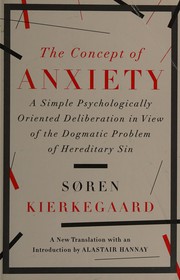
Kierkegaard's philosophical psychology of anxiety as the precondition of both sin and freedom. This text directly influenced Heidegger and Sartre and must be read before Fear and Trembling to understand why the leap of faith is so costly.
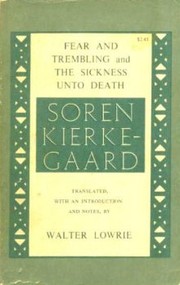
Through a meditation on Abraham's willingness to sacrifice Isaac, Kierkegaard defines the religious stage and the 'knight of faith.' This is his most read and most debated work — the anxiety from the previous book makes the leap here feel existentially real, not merely abstract.
Subjectivity, Truth, and Becoming a Christian
ExpertEngage Kierkegaard's most philosophically ambitious and demanding primary texts, where he develops his epistemology of subjective truth and his radical critique of Christendom — completing the full arc of his thought.
▸ Study plan for this stage
Pace: 12–14 weeks, ~40–50 pages/day (with intensive philosophical engagement and re-reading of dense passages)
- Subjectivity as truth: the epistemological claim that truth is not objective correspondence but passionate, inward appropriation—'truth is subjectivity' in the existential sense
- The leap of faith and the absurd: how Christian faith requires a radical, non-rational commitment that cannot be mediated by reason or systematic philosophy
- Existence and becoming: the distinction between abstract essence and concrete existence; the self as a task that must be chosen and continually renewed
- Kierkegaard's critique of Christendom: the exposure of institutional Christianity as a betrayal of authentic Christian existence, reducing faith to cultural conformity
- The stages of existence: aesthetic, ethical, and religious modes of being, with the religious as the highest and most demanding form of subjectivity
- Anxiety, despair, and the sickness unto death: the psychological and existential conditions that drive the human subject toward authentic selfhood and faith
- Love as the fundamental Christian category: agape as distinct from erotic and friendly love, grounded in duty and the paradox of loving the invisible God through the visible neighbor
- Repetition and recollection: how Christian existence involves a constant renewal and re-appropriation of faith, not a static achievement
- What does Kierkegaard mean by 'truth is subjectivity,' and how does this epistemological claim challenge Hegelian systematic philosophy and objective truth claims?
- How does Kierkegaard distinguish between faith as a rational belief and faith as a 'leap' into the absurd, and why is this distinction crucial to his critique of Christendom?
- What is the relationship between existence and essence in Kierkegaard's thought, and how does this inform his understanding of the self as a task of becoming?
- How does Kierkegaard's analysis of the aesthetic, ethical, and religious stages illuminate the progression toward authentic Christian existence?
- What is Kierkegaard's critique of Christendom, and how does he argue that institutional Christianity has obscured rather than embodied authentic faith?
- In Works of Love, how does Kierkegaard define Christian love (agape) in relation to erotic and friendly love, and what role does duty play in this definition?
- How do anxiety, despair, and the 'sickness unto death' function as existential conditions that propel the individual toward faith and authentic selfhood?
- Close reading and annotation: Select 5–7 key passages from the Postscript (e.g., on subjectivity as truth, the absurd, the knight of faith) and annotate them thoroughly, identifying Kierkegaard's argumentative moves and his implicit dialogue with Hegel.
- Comparative analysis: Create a detailed table comparing the aesthetic, ethical, and religious stages as Kierkegaard presents them in the Postscript, noting the characteristic anxieties, values, and modes of self-relation at each stage.
- Critique of Christendom essay: Write a 2,000–2,500 word essay articulating Kierkegaard's specific charges against institutional Christianity in the Postscript—what has been lost, and why does he see it as a betrayal of authentic faith?
- Love and duty analysis: Using Works of Love as your primary text, write a philosophical reflection (1,500–2,000 words) on how Kierkegaard's notion of Christian love as duty differs from modern sentimentalist conceptions of love, with concrete examples.
- Existential self-assessment: Reflect in writing (500–800 words) on which of the three stages (aesthetic, ethical, religious) most characterizes your own current mode of existence, and what obstacles or anxieties might prevent movement toward the religious stage.
- Dialogue with contemporary thought: Choose one contemporary philosopher or theologian (e.g., Heidegger, Tillich, Levinas) who has engaged Kierkegaard's thought, and write a 1,500-word response showing how their interpretation illuminates or challenges Kierkegaard's claims about subjectivity and faith.
Next up: This stage completes Kierkegaard's systematic critique of Christendom and his existential epistemology, positioning you to explore how later thinkers (existentialists, theologians, and phenomenologists) have inherited, transformed, and contested his radical vision of faith, subjectivity, and human becoming.
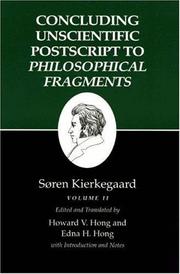
Kierkegaard's longest and most philosophically rigorous work, containing his famous claim that 'subjectivity is truth' and his sustained attack on Hegelian system-building. It synthesizes everything that came before and is best read after the other primary texts.
Kierkegaard's most constructive religious work, arguing that genuine Christian love (agape) is a duty rather than a feeling. It rounds out his religious stage with a positive vision, balancing the anguish of Fear and Trembling and The Sickness Unto Death.
Kierkegaard and Existentialism: Scholarly Synthesis
ExpertStep back and see Kierkegaard whole — his influence on 20th-century existentialism, his continuing relevance to philosophy and theology, and the scholarly debates that define how he is read today.
▸ Study plan for this stage
Pace: 4–5 weeks, ~25–30 pages/day (Shestov ~200 pages in weeks 1–2; Adorno ~150 pages in weeks 3–5, with overlap for synthesis)
- Kierkegaard as the father of existentialism: how his emphasis on individual existence, choice, and anxiety precedes and shapes 20th-century existentialist thought
- The leap of faith and absurdity: Shestov's reading of Kierkegaard's radical irrationalism versus rationalist philosophy, and its existential implications
- Subjectivity as truth: the inversion of objective knowledge in favor of passionate, lived commitment—central to both Shestov and Adorno's interpretations
- Kierkegaard's critique of Christendom: how his attack on institutional religion and bourgeois comfort anticipates existentialist alienation and authenticity
- Adorno's negative dialectics and Kierkegaard: how Adorno reads Kierkegaard through the lens of dialectical critique, resisting systematic totality
- The problem of mediation: Shestov's emphasis on the unmediated encounter with existence versus Adorno's concern with how thought itself mediates reality
- Kierkegaard's relevance to post-Enlightenment philosophy: his challenge to reason, progress, and systematic thought as responses to modern fragmentation
- Scholarly debates on Kierkegaard's legacy: tensions between existentialist, theological, and dialectical readings, and what is at stake in each interpretation
- How does Shestov argue that Kierkegaard's philosophy of the absurd and the leap of faith constitute a break from rationalist philosophy, and what existential consequences does this have?
- What does it mean for Kierkegaard (as Shestov presents him) that 'subjectivity is truth,' and how does this invert traditional epistemology?
- How does Adorno's reading of Kierkegaard differ from Shestov's, particularly regarding the role of mediation, dialectics, and the possibility of systematic thought?
- What is Kierkegaard's critique of Christendom, and how do both Shestov and Adorno see this critique as relevant to modern existential and philosophical problems?
- In what ways does Kierkegaard anticipate or prefigure the concerns of 20th-century existentialism (anxiety, authenticity, individual choice, absurdity)?
- What are the key scholarly disagreements about how to read Kierkegaard—as a proto-existentialist, as a theological thinker, as a dialectical critic—and what philosophical stakes are involved in each?
- Close reading: Select one key passage from Shestov on the leap of faith (e.g., his discussion of Abraham) and one from Adorno on Kierkegaard's critique of mediation. Annotate both, noting where they agree and diverge in their interpretation.
- Comparative chart: Create a two-column table comparing Shestov's and Adorno's readings of Kierkegaard across five dimensions: subjectivity, rationalism, mediation, Christendom, and existential relevance. Identify which tensions are philosophical versus interpretive.
- Existentialist genealogy: Trace one existentialist concept (e.g., authenticity, anxiety, absurdity, freedom) from Kierkegaard through Shestov's reading, then forward to Sartre or Camus. Write a 2–3 page genealogy showing how Kierkegaard's thought becomes existentialism.
- Critique of Christendom exercise: Reread Kierkegaard's attack on institutional Christianity (as presented in both texts). Write a short essay (3–4 pages) applying his critique to a modern religious or ideological institution, using Kierkegaard's logic.
- Dialectical reconstruction: Using Adorno's method, take one of Shestov's claims about Kierkegaard and attempt to 'negate' it dialectically—show how the opposite is also true, and what this reveals about Kierkegaard's actual position.
- Scholarly debate synthesis: Read the introductions and conclusions of both books carefully. Write a 2-page memo identifying the three most important disagreements between Shestov and Adorno about Kierkegaard, and propose which reading you find more compelling and why.
Next up: This stage establishes Kierkegaard's foundational role in modern thought and maps the major interpretive schools (existentialist, theological, dialectical) that will frame how you engage with his work in subsequent stages, preparing you to read primary texts with sophisticated awareness of their contested meanings.

A passionate, philosophically serious account of how Kierkegaard's revolt against Hegelian reason opened the door to existentialism. Shestov's outsider perspective sharpens what is truly radical in Kierkegaard's project.
Adorno's early masterwork reads Kierkegaard through the lens of critical theory, revealing the social and historical dimensions hidden inside his inward philosophy. It is demanding but rewards readers who have worked through the primary texts, offering a genuinely new angle on everything encountered so far.
Discussion
Keep reading
Paths that share books, cover the same subject, or open a related topic.