The Thirty Years' War: the best books on Europe's great catastrophe
This curriculum takes the reader from a clear narrative overview of the Thirty Years' War through its religious, political, and diplomatic dimensions, before arriving at specialist scholarship on its causes, conduct, and lasting consequences. Each stage builds the conceptual vocabulary — confessional politics, the Holy Roman Empire, dynastic rivalry, and the Peace of Westphalia — needed to absorb the deeper analysis that follows.
Foundations: Getting the Story Straight
BeginnerGrasp the basic chronology, key actors, and major phases of the war, and understand why it began as a religious conflict and evolved into a European power struggle.
▸ Study plan for this stage
Pace: 4–5 weeks, ~40–50 pages/day. Wedgwood's narrative is engaging but dense with names, dates, and shifting allegiances; this pace allows time for note-taking and review of key events without rushing through the political complexity.
- The religious origins of the war: the Reformation, the Peace of Augsburg, and the Palatinate crisis as the immediate trigger (1618)
- The four major phases: Palatinate War (1618–1623), Danish War (1625–1629), Swedish War (1630–1635), and Franco-Swedish War (1635–1648)
- Key actors and their motivations: the Habsburgs (Catholic), the German Protestant princes, Denmark, Sweden, France, and the Papacy
- How the conflict transformed from a religious civil war within the Holy Roman Empire into a broader European power struggle, especially after French entry in 1635
- The role of mercenary armies, military commanders (Wallenstein, Gustavus Adolphus, Tilly), and the devastation of German territories
- The Peace of Westphalia (1648) as the resolution and its significance for European sovereignty and religious settlement
- The human and economic costs of the war: population loss, famine, disease, and the fragmentation of German lands
- What were the immediate religious and political causes of the Thirty Years' War, and how did the Palatinate crisis trigger the conflict?
- Identify the four major phases of the war and name at least one key military or political event in each phase.
- How did the war's character change from a religious conflict to a European power struggle? What role did France's entry play in this transformation?
- Who were the major actors in the war (both states and military leaders), and what were their primary objectives?
- What was the Peace of Westphalia, and why was it significant for ending the war and reshaping European politics?
- How did the Thirty Years' War affect the populations and territories of the Holy Roman Empire, particularly the German lands?
- Create a timeline of the war's four phases with 3–4 major events per phase, noting which powers were dominant in each period.
- Construct a table of the main actors (Habsburg Empire, German Protestant princes, Denmark, Sweden, France, Spain, the Papacy) with their religious affiliation, key objectives, and how their involvement changed over time.
- Read Wedgwood's account of the Palatinate crisis (opening chapters) and write a 1–2 page summary explaining why this regional dispute escalated into a continental war.
- Track the role of one major military commander (e.g., Wallenstein or Gustavus Adolphus) through Wedgwood's narrative, noting how their strategies and fortunes reflected the broader shift in the war's nature.
- Create a map or sketch showing the major territories affected by the war (Palatinate, Bohemia, Pomerania, etc.) and annotate how they changed hands or were devastated during different phases.
- Write a short reflection (1 page) on how Wedgwood portrays the human cost of the war—famine, disease, displacement—and what this reveals about early modern warfare.
Next up: This stage establishes the narrative arc and cast of characters essential for deeper analysis; the next stage will examine the ideological, diplomatic, and military complexities that Wedgwood's chronological account introduces.
The classic English-language narrative of the war, written with literary clarity and sweep. It is the ideal first book because it tells the full story from 1618 to 1648 in a compelling, accessible way that makes the chaos comprehensible.
Context: The World the War Was Born Into
BeginnerUnderstand the religious fractures of the Reformation, the structure of the Holy Roman Empire, and the dynastic ambitions that made a thirty-year war possible.
▸ Study plan for this stage
Pace: 8–10 weeks, ~40–50 pages/day (MacCulloch first: 4–5 weeks; Wilson second: 4–5 weeks)
- The theological and political causes of the Reformation: Luther's challenge to papal authority, the doctrine of justification by faith, and the fracturing of Western Christendom
- The spread of Protestantism across Europe and the emergence of competing confessional identities (Lutheran, Reformed, Catholic Counter-Reformation)
- The structure and fragmentation of the Holy Roman Empire: the role of the Emperor, the German princes, the Peace of Augsburg (1555), and the principle of cuius regio, eius religio
- The relationship between religious division and political power in the Empire: how religious allegiance became inseparable from dynastic and territorial ambition
- The major dynastic powers within and around the Empire: the Habsburgs, the Wittelsbachs, the Palatinate, and their competing interests
- The weakness and complexity of imperial institutions: why the Emperor could not simply impose unity and how this created space for conflict
- The role of the Thirty Years' War as the inevitable collision of unresolved religious tensions and dynastic rivalries
- What were Martin Luther's core theological objections to the Catholic Church, and how did they evolve from personal reform to a continental schism?
- How did the Peace of Augsburg attempt to resolve religious conflict in the Holy Roman Empire, and why did it ultimately fail to prevent the Thirty Years' War?
- What was the structure of the Holy Roman Empire in the early 17th century, and why was the Emperor's power so limited despite his title?
- How did the Reformation create competing religious blocs (Lutheran, Reformed, Catholic) within the Empire, and how did these blocs align with dynastic interests?
- What role did the Palatinate and other German principalities play in destabilizing the Empire's religious settlement before 1618?
- How were religious identity and political ambition intertwined for the major dynasties (Habsburgs, Wittelsbachs, etc.) in the century before the war?
- Create a timeline of the Reformation (1517–1555) marking Luther's key writings, major theological splits, and political turning points; annotate how each event shifted the religious map of Europe
- Draw a map of the Holy Roman Empire circa 1600 showing the territorial distribution of Lutheran, Reformed, and Catholic principalities; color-code by confession and label the major dynastic holdings
- Write a one-page summary of the Peace of Augsburg (1555) explaining what it settled and what it left unresolved; then list 3–4 specific tensions that would explode into war
- Create a dynastic chart of the major German and Habsburg families (Habsburgs, Wittelsbachs, Palatinate, Saxony, Brandenburg) showing their territorial holdings, religious allegiances, and marriage alliances circa 1600
- Compare and contrast the theological positions of Luther, Calvin, and the Catholic Counter-Reformation using a three-column chart; note how each position had political implications for rulers
- Write a 2–3 page analytical essay: 'Why did religious division in the Holy Roman Empire inevitably lead to war?' Use specific examples from MacCulloch and Wilson to support your argument
Next up: This stage establishes the ideological fault lines (Reformation theology), institutional weaknesses (fragmented Empire), and dynastic tensions (competing powers) that made the Thirty Years' War not merely possible but nearly inevitable—preparing you to understand the war itself as the violent collision of these forces.
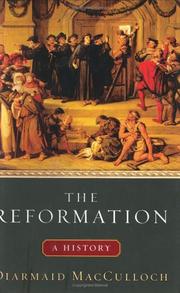
Before the war's confessional politics can be fully grasped, the reader needs a firm grounding in the Protestant-Catholic divide. MacCulloch's magisterial survey explains how Europe's religious landscape became a tinderbox by 1618.

The war was fought largely within the Empire's peculiar constitutional framework. This concise, authoritative account explains how the Empire actually functioned — its princes, diets, and confessional blocs — making the political maneuvering of the war suddenly legible.
Going Deeper: Key Actors and Turning Points
IntermediateExamine the war through the lives of its central figures and pivotal moments, developing a richer understanding of how individual decisions and contingency shaped the conflict.
Sweden's intervention under Gustavus Adolphus was the war's great turning point. Roberts, the forefather of Swedish military history in English, provides the essential account of the king whose campaigns transformed both the war and early modern warfare itself.

Reading primary sources — manifestos, letters, peace treaties — at this stage anchors the reader's understanding in the actual words of participants and gives texture and immediacy that no secondary account can fully replicate.
Discussion
Keep reading
Paths that share books, cover the same subject, or open a related topic.