Best Books on the Irish Famine, in Reading Order
This curriculum moves from vivid narrative history through rigorous political and economic analysis to revisionist scholarship and, finally, the long cultural afterlife of the Famine. Because the learner starts at an intermediate level, the path skips basic survey texts and opens instead with the most celebrated single-volume account, then layers in British policy, regional experience, emigration, and memory studies, each stage assuming the vocabulary and context built by the one before.
The Essential Narrative
IntermediateGain a vivid, authoritative command of the core events — the blight, the scale of death, the failure of relief, and the exodus — through the most celebrated single-volume account of the Great Hunger.
▸ Study plan for this stage
Pace: 4–5 weeks, ~40–50 pages/day (approximately 250 pages total)
- The potato blight of 1845–1852: its biological origins, spread across Ireland, and why the potato crop was so critical to Irish survival
- Demographic catastrophe: the scale of mortality (approximately 1 million deaths) and the regional variation in death rates across Irish counties
- The failure of relief systems: inadequate government response, the limitations of the Poor Law, and the role of landlords in exacerbating suffering
- Mass emigration as survival strategy: the exodus to America, Australia, and elsewhere, and how famine trauma shaped Irish-American identity
- Ó Gráda's analytical framework: how economic and social structures (not just weather) determined who lived and who died
- Class and survival: the differential impact of famine on tenant farmers, laborers, and the rural poor versus merchants and landowners
- The role of ideology and policy: how Malthusian thinking and laissez-faire economics influenced British government inaction
- What was the biological nature of the potato blight, and why did it recur across multiple years rather than striking once?
- Approximately how many people died during the Great Famine, and which regions of Ireland were hit hardest?
- How did the Poor Law system fail to prevent mass starvation, and what were its structural limitations?
- What were the primary destinations for Irish emigrants fleeing the famine, and how did emigration reshape Irish society?
- According to Ó Gráda, what role did landlord behavior and land tenure systems play in determining survival rates?
- How did British economic ideology (particularly Malthusianism and laissez-faire doctrine) shape the government's response to the crisis?
- Create a timeline of the blight's progression (1845–1852) with annotations on mortality spikes, relief efforts, and emigration waves in each year
- Map the regional variation in death rates across Irish counties using Ó Gráda's data; identify which areas were most and least affected and hypothesize why
- Write a 500-word analysis comparing the survival strategies of three different social groups (e.g., tenant farmer, agricultural laborer, small merchant) based on Ó Gráda's evidence
- Construct a diagram showing how the Poor Law system was supposed to work versus how it actually functioned during the famine; annotate the breaking points
- Research and summarize one specific emigrant letter or memoir referenced or discussed in the book; connect it to Ó Gráda's broader patterns
- Debate or write a response: To what extent was the famine a natural disaster versus a man-made catastrophe? Use Ó Gráda's evidence to support your position
Next up: This stage establishes the authoritative factual and analytical foundation of the famine—its scale, mechanisms, and immediate human consequences—preparing you to examine specific dimensions (social history, cultural memory, comparative famines, or historiographical debates) in greater depth in subsequent stages.
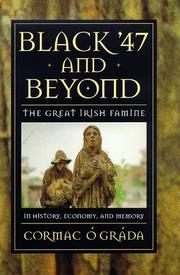
Ó Gráda's accessible essay collection immediately follows Woodham-Smith to introduce quantitative and economic perspectives — mortality estimates, regional variation, food exports — that complicate and deepen the narrative just absorbed.
British Policy and Political Economy
IntermediateUnderstand the ideological, political, and administrative forces — laissez-faire doctrine, Treasury obstruction, Poor Law reform — that shaped the British response and turned a crop failure into a catastrophe.
▸ Study plan for this stage
Pace: 4–5 weeks, ~40–50 pages/day, with 2–3 days per week dedicated to synthesis and note-taking
- Laissez-faire ideology and its application to Irish famine relief: how free-market doctrine constrained government intervention
- The role of the Treasury and Charles Trevelyon: administrative obstruction and cost-cutting measures that prioritized fiscal stability over humanitarian response
- The Poor Law Amendment Act of 1834 and its extension to Ireland: how workhouse-based relief was inadequate for mass starvation
- Pre-famine Irish economy and society: understanding the structural vulnerabilities (land tenure, poverty, dependence on potatoes) that made the crisis catastrophic
- The political economy of grain exports: why Ireland continued exporting food while people starved, and the logic that justified this
- Malthusian thinking and moral economy: how contemporary beliefs about population, poverty, and 'natural' consequences shaped policy indifference
- How did laissez-faire economic doctrine specifically constrain British government responses to the famine, and who were its key advocates within the Treasury?
- What was the Poor Law Amendment Act of 1834, and why did its workhouse-based model prove catastrophically inadequate when extended to Ireland during the famine?
- What structural vulnerabilities existed in pre-famine Irish society and economy that transformed the potato blight from a crop failure into a mass starvation event?
- Why did Ireland continue to export grain and other food during the famine, and what economic logic justified allowing this while people starved?
- How did Malthusian and moral-economy thinking influence British policymakers' attitudes toward Irish suffering, and what role did these ideas play in shaping relief policy?
- What was Charles Trevelyon's role in famine administration, and how did Treasury priorities conflict with the scale of humanitarian need?
- Create a timeline of key pre-famine economic and social conditions in Ireland (1800–1845) based on Ó Gráda's analysis, noting which vulnerabilities made the population susceptible to mass starvation
- Construct a policy comparison chart: list the main provisions of the Poor Law Amendment Act of 1834 and annotate how each proved inadequate or harmful when applied to famine-era Ireland
- Write a 500-word policy brief from the perspective of a Treasury official in 1847, using Ó Gráda's evidence to explain the laissez-faire rationale for minimal intervention—then write a 500-word rebuttal from a contemporary critic
- Track grain and food exports from Ireland during the famine years using Ó Gráda's data; create a visual (chart or map) showing what was exported, where it went, and the economic logic that permitted this
- Identify 3–4 key passages in Ó Gráda where he explicitly connects pre-famine structural conditions to famine mortality; annotate each with your analysis of how that condition amplified the crisis
- Debate exercise: prepare arguments for both 'laissez-faire policy was ideologically consistent but morally catastrophic' and 'laissez-faire was a convenient cover for indifference to Irish suffering'—use Ó Gráda's evidence for both sides
Next up: This stage establishes the ideological and administrative architecture of the British response; the next stage will examine how these policies played out on the ground—the lived experience of famine, resistance, emigration, and the human toll that these economic doctrines produced.
Ó Gráda situates the Famine within the longer arc of Irish economic history, showing how pre-Famine poverty and post-Famine transformation were structurally connected — essential context for evaluating British culpability debates.
Regional Experience and Social History
IntermediateMove from national narrative to the ground level — how the Famine was lived in specific localities, workhouses, and communities, and what it meant for different social classes and genders.
▸ Study plan for this stage
Pace: 8–10 weeks, ~40–50 pages/day (with 2–3 days per week for reflection and exercises)
- Regional variation in Famine impact: how geography, local economy, and landlord policies shaped mortality and survival differently across Ireland
- Workhouse system as both refuge and instrument of social control: conditions, administration, and the experience of the destitute
- Gender and age dimensions of the Famine: differential vulnerability and coping strategies of women, children, and the elderly
- Class stratification during crisis: how tenant farmers, laborers, artisans, and the poor experienced distinct trajectories of suffering and adaptation
- Social networks and community resilience: the role of kinship, parish structures, and local institutions in mediating Famine suffering
- Long-term demographic and social consequences: emigration patterns, family dissolution, and shifts in inheritance and marriage practices
- Primary source literacy: extracting lived experience from workhouse records, letters, oral histories, and administrative documents
- How did regional differences in agriculture, landlord behavior, and local economy produce varying Famine outcomes across different Irish counties or districts?
- What were the conditions inside Irish workhouses during the Famine, and how did workhouse admission reflect broader social hierarchies and gender roles?
- How did the Famine affect women and children differently than men, and what coping strategies were specific to these groups?
- What distinguished the experience of tenant farmers, agricultural laborers, and artisans during the Famine, and how did their pre-Famine economic status shape their survival?
- How did emigration reshape Irish communities and family structures in the immediate aftermath of the Famine?
- What primary sources (workhouse records, letters, folklore) reveal about lived experience, and what are their limitations and biases?
- Create a comparative regional profile: select 2–3 Irish counties/regions and map their pre-Famine economy, landlord types, mortality rates, and emigration patterns using data from Daly and Crawford; present findings in a table or visual
- Workhouse case study: locate and analyze a specific workhouse record (or excerpt provided in the texts) and write a 500-word analysis of what it reveals about administration, conditions, and the lives of one or two individuals
- Gender analysis: collect 3–5 references to women's or children's experiences from the texts and write a short essay (800 words) on how gender shaped Famine vulnerability and adaptation
- Social class comparison: write three short character sketches (300 words each) of a tenant farmer, a landless laborer, and an artisan, based on textual evidence, showing how their pre-Famine position determined their Famine trajectory
- Primary source close reading: select one letter, oral history excerpt, or administrative document cited in Crawford or Daly; annotate it for tone, bias, what it reveals and what it obscures about lived experience
- Emigration mapping: using data from the texts, create a visual (map, chart, or diagram) showing emigration routes, destinations, and demographic patterns from a specific region, and write 300 words on its social consequences
Next up: This stage grounds you in the granular, human reality of the Famine—its regional complexity and social stratification—preparing you to examine the longer-term structural causes (economic systems, colonial policy, agricultural change) and the Famine's place in Irish political memory and identity in subsequent stages.
A concise but scholarly synthesis that foregrounds regional variation and the workhouse system, providing the social-history layer that large narrative accounts tend to flatten.
This edited collection of specialist essays places the Great Famine in a longer history of Irish subsistence crises, sharpening the learner's ability to identify what was truly unprecedented about 1845–52.
Emigration and the Diaspora
ExpertTrace the massive emigration triggered by the Famine — the coffin ships, reception in North America and Britain, and the formation of a traumatized but politically potent Irish diaspora.
▸ Study plan for this stage
Pace: 8–10 weeks, ~40–50 pages/day (accounting for dense historical analysis and primary source excerpts)
- The psychological and cultural trauma embedded in emigration narratives and how Irish emigrants constructed meaning around displacement
- The material conditions of transatlantic passage—mortality rates, disease, overcrowding on 'coffin ships,' and the economics of emigration brokers
- Regional and class variations in emigration patterns: who left, when, and why (subsistence farmers vs. skilled workers; specific counties and townlands)
- The reception and integration experiences of Irish immigrants in North America (US and Canada) and Britain—discrimination, labor markets, settlement patterns, and community formation
- The political mobilization of the diaspora: how trauma and displacement fueled nationalist movements, Fenianism, and Irish-American political power
- The role of chain migration, kinship networks, and remittances in sustaining transatlantic connections and shaping emigration flows
- Competing narratives of emigration: victimhood vs. agency, exile vs. voluntary migration, and how Irish emigrants themselves understood their departure
- What does Kerby Miller mean by the 'exile' vs. 'emigrant' distinction, and how did Irish emigrants' self-perception shape their adaptation and political consciousness?
- Describe the conditions aboard coffin ships: what were the primary causes of mortality, and how did these experiences traumatize Irish emigrants and their descendants?
- How did Irish immigrants' reception differ between North America and Britain, and what role did existing ethnic hierarchies and labor markets play in their integration?
- What evidence does Bielenberg present about the formation and political significance of Irish diaspora communities, particularly in relation to Irish nationalism?
- How did kinship networks and remittances function as mechanisms of chain migration, and what does this reveal about the agency of Irish emigrants?
- What regional and class differences existed among those who emigrated during and after the Famine, and how did these shape diaspora formation?
- Create a detailed timeline of Irish emigration waves (1845–1900) using Miller's periodization, marking key events (Famine years, legislative changes, economic shifts) and emigration volume peaks
- Analyze 3–4 primary source emigrant letters or testimonies cited in Miller's work; annotate them for emotional tone, economic concerns, and evidence of trauma or agency
- Map Irish settlement patterns in one North American city (Boston, New York, Philadelphia) and one British city (Liverpool, Manchester, Glasgow) using data from both books; identify correlations between arrival dates, occupations, and neighborhood formation
- Construct a biographical profile of an Irish emigrant family across two generations using Miller's case studies; trace how the first generation's 'exile' consciousness shaped the second generation's political engagement
- Debate the 'exile vs. emigrant' framework: prepare arguments for both interpretations using evidence from Miller, then assess which better explains diaspora political mobilization
- Research and present on one diaspora institution (Irish-American newspaper, fraternal organization, parish church, or nationalist club) mentioned in Bielenberg, tracing its role in community cohesion and political action
Next up: This stage establishes the human and structural consequences of the Famine—displacement, trauma, and diaspora formation—which sets up the next stage to examine how these dispersed communities mobilized politically and culturally to reshape both Ireland and their adopted homelands.
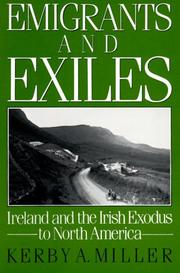
The definitive scholarly study of Irish emigration from the 17th to 20th centuries, with its richest chapters on the Famine exodus. Miller's analysis of the 'exile' mentality explains how emigrant identity shaped Irish-American nationalism for generations.
A focused edited volume on the global spread of the Irish diaspora that complements Miller by covering destinations beyond North America — Britain, Australia, Argentina — rounding out the full emigration picture.
Memory, Genocide Debate, and Legacy
ExpertEngage with the most contested historiographical questions — genocide, collective memory, post-colonial readings — and understand how the Famine has been remembered, politicized, and commemorated from the 1840s to today.
▸ Study plan for this stage
Pace: 4–5 weeks, ~40–50 pages/day, with 2–3 days per week dedicated to historiographical reflection and note-taking
- The genocide debate: definitions, evidence, and historiographical disagreement over intent vs. outcome in British policy during the Famine
- Collective memory and myth-making: how Irish communities preserved and transmitted Famine narratives orally and through cultural practice
- Politicization of the Famine: how nationalist, unionist, and post-colonial movements have weaponized Famine memory for competing political ends
- Commemoration and public history: monuments, museums, anniversaries, and how official memory differs from grassroots remembrance
- The role of trauma and intergenerational transmission: how Famine trauma shaped Irish-American identity and diaspora consciousness
- Historiographical shifts: how Famine scholarship has evolved from nationalist hagiography to social history to post-colonial critique
- What is the 'genocide debate' in Irish Famine historiography, and what evidence do scholars cite on both sides of the argument?
- How has Irish collective memory of the Famine been shaped by oral tradition, folklore, and family narratives, and how do these differ from academic accounts?
- In what ways has the Famine been politicized by different groups (nationalists, unionists, post-colonial scholars), and what purposes has this memory served?
- How have monuments, museums, and official commemorations represented the Famine, and whose voices or interpretations have been marginalized in public memory?
- What is the relationship between Famine trauma and Irish-American identity, and how has diaspora memory influenced how the Famine is understood today?
- How has Famine historiography itself changed over time, and what does this reveal about the relationship between history, politics, and memory?
- Create a detailed timeline of major Famine commemorations (1840s–present) and annotate each with the political context and whose memory it privileged
- Read Kissane's treatment of the genocide question and write a 2–3 page analytical essay taking a position on whether the term applies, citing his evidence
- Map the different narratives of the Famine (nationalist, unionist, post-colonial, academic) and identify where they converge and conflict
- Visit or research 3–4 major Famine monuments or museums (e.g., Famine Memorial in Dublin, Irish Famine Museum in Strokestown) and analyze how each frames the Famine's causes and meaning
- Conduct oral history: interview an Irish or Irish-American family member about Famine family stories and compare their account to Kissane's historical narrative
- Write a historiographical essay analyzing how Kissane's interpretation positions itself within broader debates about memory, genocide, and post-colonial history
Next up: This stage equips you to recognize how historical events are contested, remembered, and weaponized—skills essential for understanding how any traumatic past is narrated, commemorated, and used to construct identity and political claims in the present.
A rich primary-source anthology drawn from the National Library of Ireland's collections; reading original letters, government reports, and eyewitness accounts at this stage lets the learner test the interpretations encountered throughout the curriculum against the raw evidence.
Discussion
Keep reading
Paths that share books, cover the same subject, or open a related topic.